The short answer
No-food enrichment can include suitable play, toy searches, safe sniffing opportunities, time with familiar people, and choices about rest or exploration. Watch what your dog voluntarily chooses. Keep meals and water available as usual, and do not make access to basic needs depend on earning a reward.
Food is useful in many training and enrichment activities, but it is not the only thing dogs value. Some dogs are keen to carry a favorite toy. Others enjoy exploring a new safe route, sharing a low-key game, or resting beside someone they know. No-food dog enrichment begins with those preferences rather than a list of substitutes you expect every dog to like.
There are many reasons to want a food-free option: you may have already used the planned training portion, need a clean activity in a particular room, or want more variety. If food avoidance relates to illness, swallowing problems, allergies, or a prescribed diet, follow veterinary advice. A sudden loss of appetite is not a reason to solve everything with toys. This guide is about adding enjoyable experiences, not replacing feeding or medical care.
Before you start
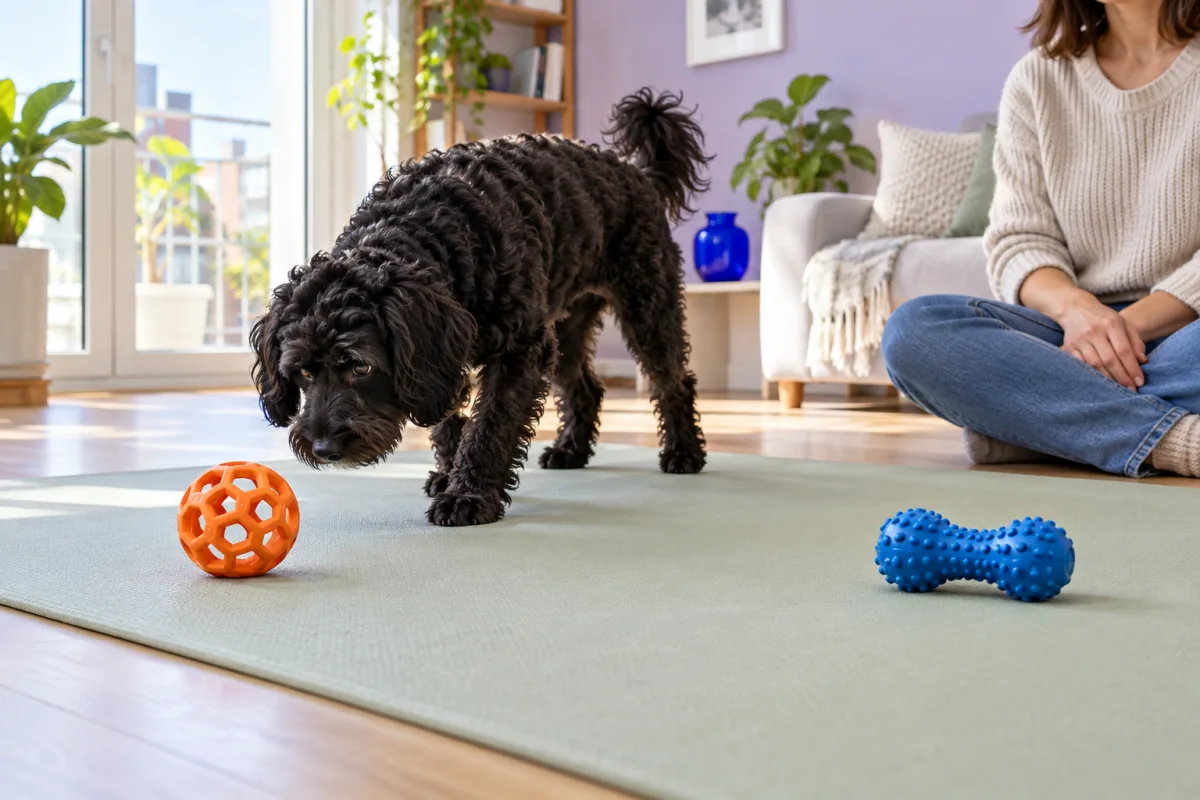
- One or two safe toys your dog already knows
- A secure nonslip space
- A quiet place to sit together
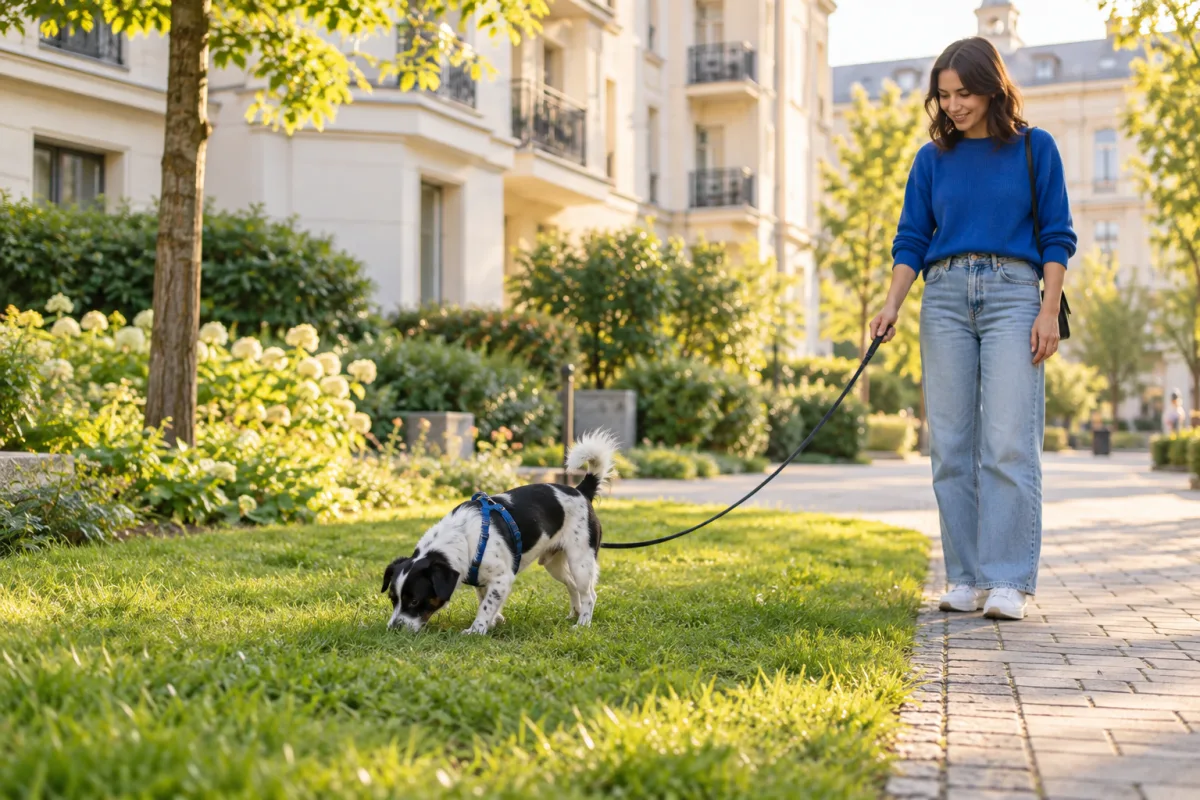
- A leash and well-fitted equipment for outdoor sniffing
- A note of what your dog approaches and leaves
A practical starting point
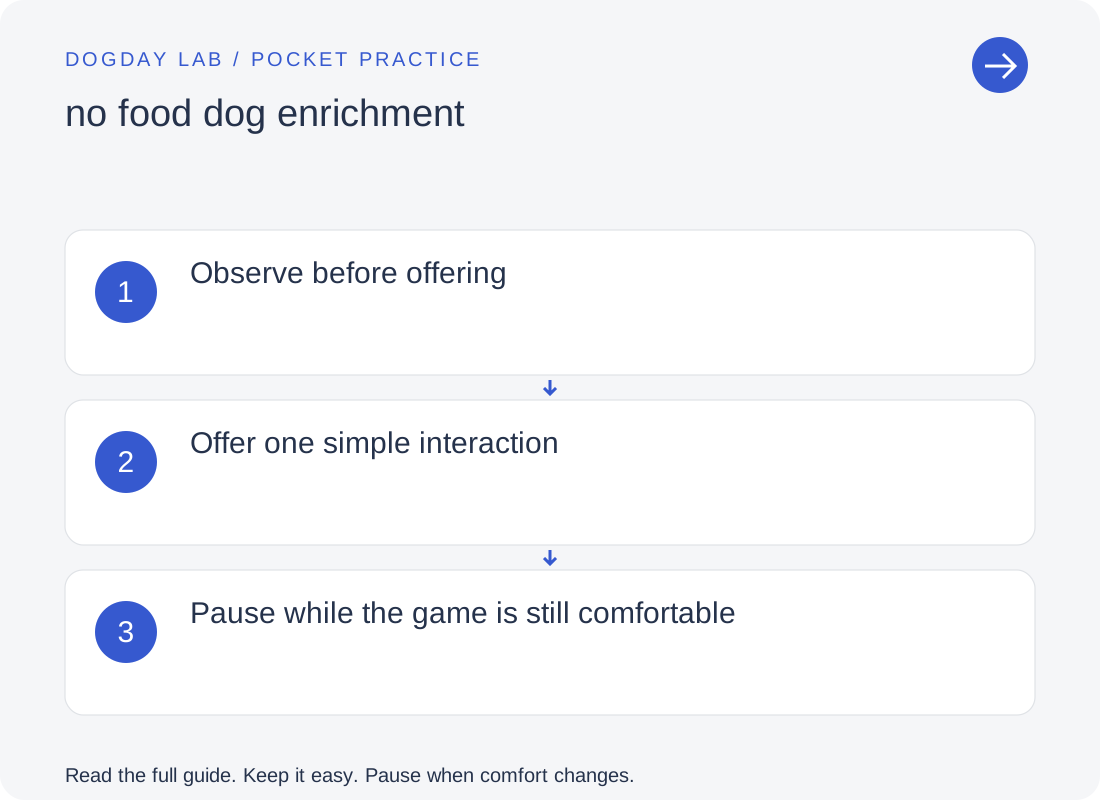
Observe before offering
Watch your dog during an ordinary relaxed period. Do they bring an object, lean toward a familiar person, investigate a doorway, or choose a resting place? Write down the behavior without deciding what it means yet. Look for repeated choices across more than one day. A dog who ignores a ball once may dislike that game, be tired, feel sore, or simply want something else at that moment.
Offer one simple interaction
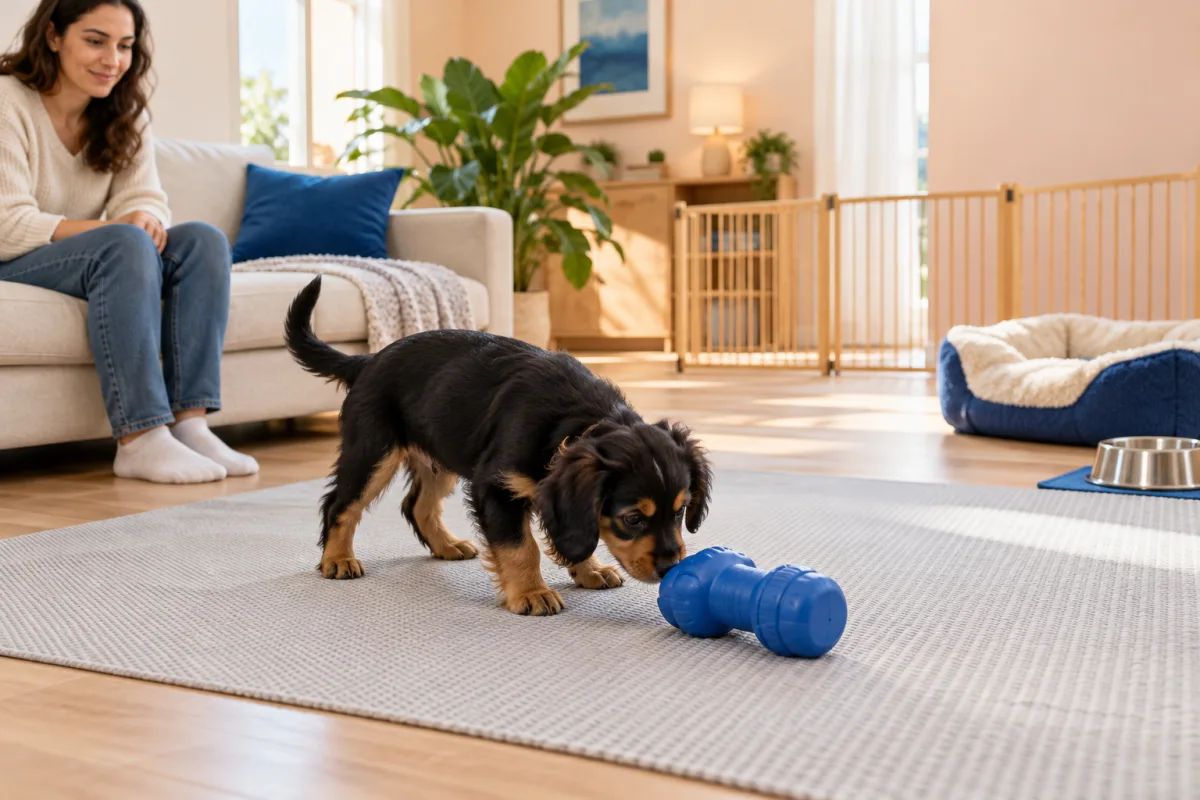
Present a familiar toy at a comfortable height and allow the dog to approach. Move it gently along the floor if that usually interests them, avoiding sharp turns or jumps. If the dog does not join in, stop inviting after a brief opportunity. Do not wave it in their face or use restraint to make them stay. An offer that can be declined gives you useful information.
Pause while the game is still comfortable
After a short exchange, become still and see whether the dog chooses to continue. They might bring the toy back, stay nearby, or leave. Follow the response. For a dog who likes carrying, the reward may be keeping the toy rather than giving it back. If a safe exchange is not established, avoid grabbing or chasing and choose a different activity until you have a suitable plan.
Try another kind of enrichment later
At a separate opportunity, offer a safe sniffing walk, a toy search in plain sight, or quiet company. Changing the type of experience helps you avoid treating every preference as a need for more intense play. Keep outdoor access secure and respect the dog’s comfort around people, traffic, and other animals. Sniffing beside a quiet patch can be more suitable than entering a busy park.
Keep the choices that work
Note whether the dog approached willingly, stayed loose and comfortable, could pause, and recovered afterward. Compare the practical details: person, place, toy, movement, and time of day. Keep two or three options you can offer safely. Do not rank your dog against someone else’s dog or assume food-free activities must produce the same behavior as a food puzzle.

Play can take several forms
A dog who likes toys may enjoy holding, carrying, tugging, searching, or gently retrieving. Those are different activities. If your dog carries a toy away, they have not failed a game unless a return was part of a separately taught task. Sit nearby, offer another appropriate toy, or let them enjoy the object in a safe place. Check for damage and remove broken items when it is safe to do so.
For tug, choose a suitable toy and keep the movement low and controlled. Avoid lifting the dog, twisting the neck, or making abrupt changes of direction. Stop if teeth contact skin, either participant becomes uncomfortable, or the dog struggles to disengage. Children should not be asked to manage high-energy toy play. Adult supervision, suitable space, and an easy finish matter more than whether a game looks impressive.
A toy search without a formal retrieve
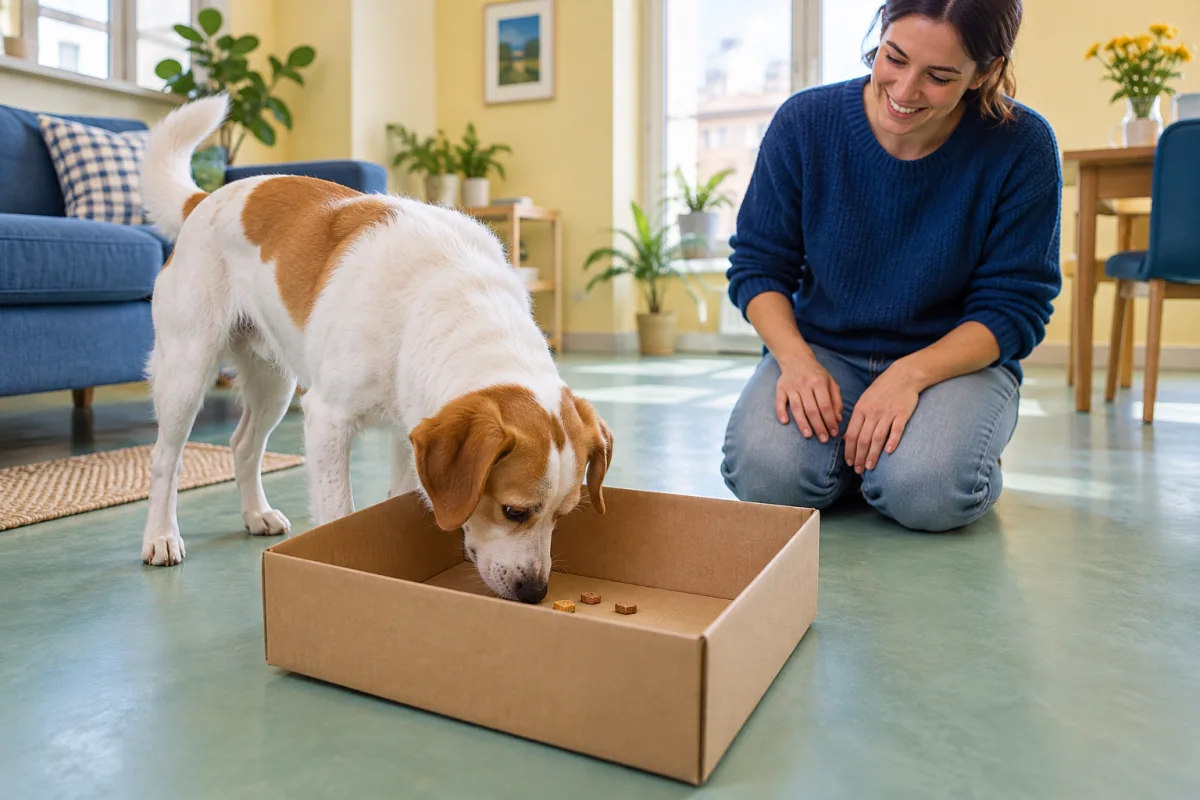
Let your dog watch you place a familiar toy a short distance away. Give them room to go and inspect it. If they pick it up, offer the kind of interaction they enjoy. If they simply sniff it and walk away, the game may not be interesting today. You can make the next offer more obvious or try another toy, but do not keep hiding it in harder places to provoke a response.
Once the simple version works, change one location while keeping the toy easy to reach. Avoid furniture gaps, bags, laundry, and anything the dog might damage or swallow. The search should not encourage climbing on unstable objects. A tiny apartment can offer several safe search locations without ever asking the dog to leap, squeeze under a bed, or dismantle a cushion.
Sniffing and exploration are not only food games
An outing can include time to investigate ordinary safe smells without scattering treats. Choose a route where you can maintain distance from hazards and let the dog pause within the limits of a secure leash. Keep them away from unknown substances, waste, sharp litter, and dangerous plants. The dog does not need to greet every person or animal for the outing to have value.
Inside, a modest environmental change can offer something to inspect: move a familiar safe bed to another comfortable spot, or bring a clean familiar toy into a room where it is not usually offered. Avoid introducing strong fragrances, essential oils, or unknown outdoor materials. Novelty is optional. Some dogs prefer stable surroundings, and a worried dog may benefit more from a predictable quiet space than from a surprise object.
Social enrichment can be gentle
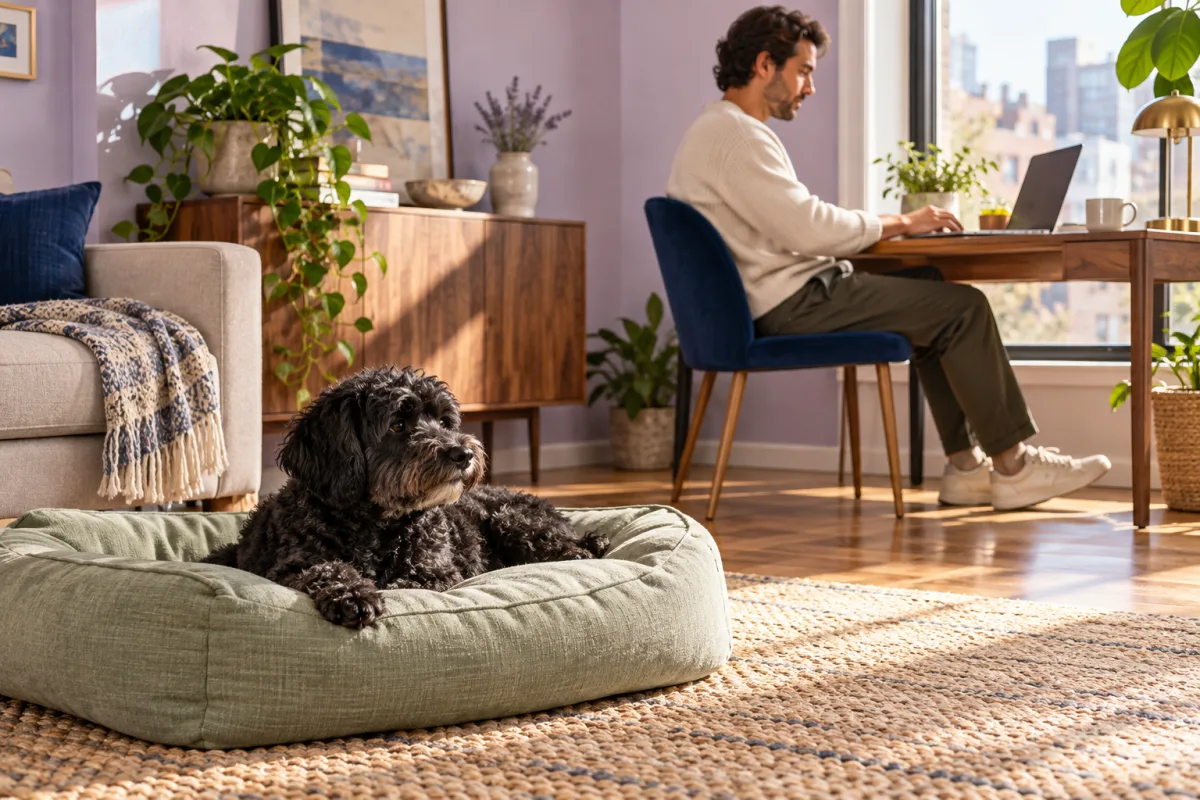
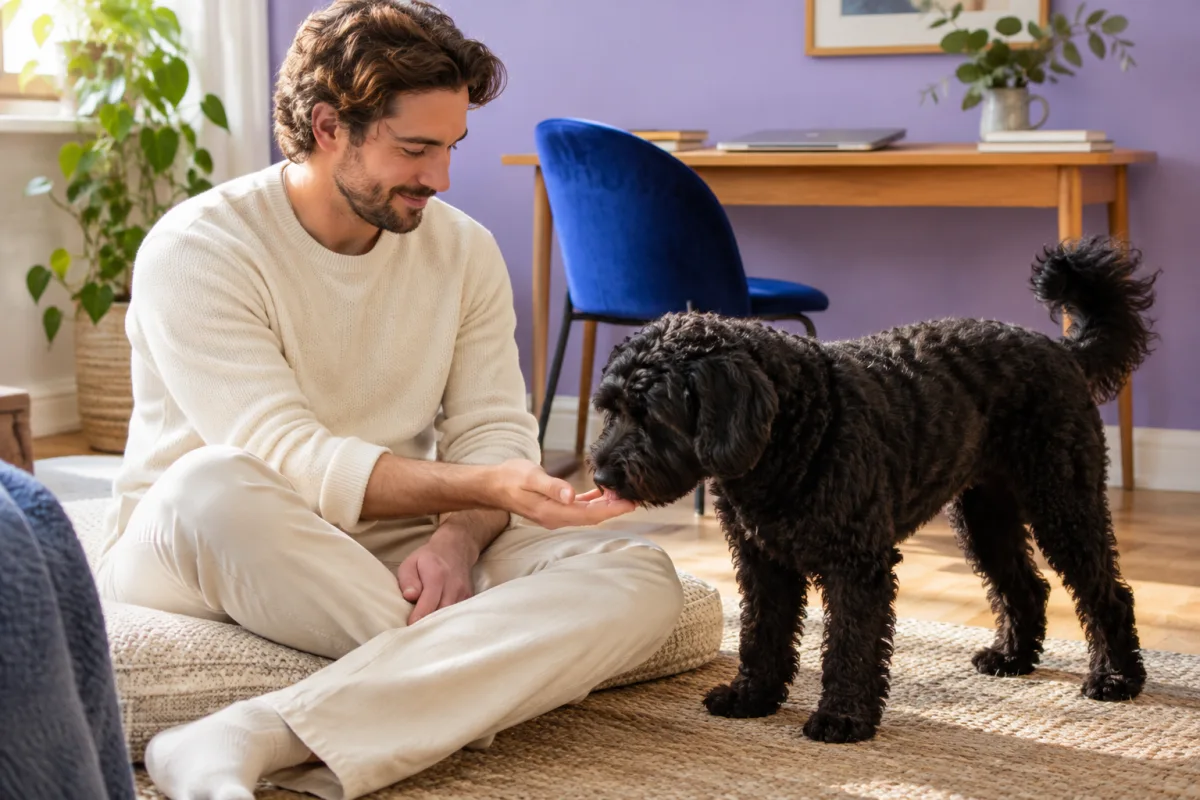
Company does not have to mean constant touch. A dog may enjoy lying near you while you read, sitting in a quiet outdoor place, or joining a calm household routine. Offer contact briefly in a place where the dog can move away, then pause. If they seek more, continue gently; if they turn away or leave, let the interaction end. Do not interpret staying still as a request for more handling.
Being near familiar people can be valuable even when the dog is not performing a skill. That does not mean every dog wants a visitor, crowded outing, or dog play date. Choose social opportunities from the individual’s history and current comfort. A dog who prefers distance from unfamiliar dogs is not missing a requirement that you must fill with a busy group session. Shared quiet time can be a complete activity.
Do not make basic needs into bargaining chips
Access to water, meals, comfortable rest, and necessary toilet breaks should not depend on completing a task. No-food enrichment is an addition to care, not a way to withhold food until a toy becomes rewarding. If a training goal requires a reinforcer your dog does not currently value, change the plan rather than making the dog increasingly hungry, thirsty, or frustrated.
You can use naturally enjoyable activities as rewards within a humane training plan, but keep the arrangement clear and fair. For example, a dog who enjoys a sniffing area might practice a brief easy check-in on the way there, then continue the walk. That is different from refusing all sniffing unless the dog maintains a perfect heel. Keep the ordinary outing worthwhile even when training is not the priority.
An example for a dog on a restricted diet
Imagine a dog whose vet has prescribed a specific diet. The owner wants a little variety between approved meals without adding unapproved treats. A suitable plan could include a familiar toy search, calm company while the dog rests, and a quiet sniffing route the dog already enjoys. Any food-based training remains within the veterinary plan. The owner does not test different fillings because a package calls them natural.
Compare the activities by voluntary engagement and comfort. If the toy search creates frustration but a slow outing is enjoyable, keep the outing and simplify the toy game. If energy or appetite changes, report that to the vet rather than treating it as a motivation issue. Enrichment choices should fit the care plan; they should never make a medical restriction harder to follow.
Build an easy weekly menu
Choose a few options from different types: one gentle play activity, one safe exploration opportunity, and one quiet social option. Repeat favorites. You do not need a different game every day, and a dog does not need to perform all three categories in one session. Keep notes simple enough to use: toy carry after the afternoon walk, quiet company during reading, familiar route with extra time to sniff.
Review the menu when circumstances change. Rain may make one route slippery; visitors may make the living room too busy; a sore dog may need a different activity approved by the vet. A good menu has alternatives and accepts rest as a valid outcome. The test is whether the dog has worthwhile choices within their abilities, not whether the calendar looks full.
Keep household play understandable
Agree on the same easy start and finish with other caregivers. One person might use a quiet invitation and bring out a particular toy, then put it away after a comfortable exchange. Another person can follow that pattern without copying every movement. Avoid mixing gentle carrying games with sudden attempts to snatch the toy. Clear, predictable handling helps everyone notice when the dog is choosing play and when they would prefer to stop. Review the arrangement if one person consistently finds the game harder to manage.
When it gets tricky
My dog ignores every toy I offer.
Check timing, health, space, and the way you present the toy. Offer quietly and allow a decline. Some dogs prefer sniffing, company, or rest. Sudden loss of interest in previously enjoyed activities deserves veterinary attention, particularly alongside other changes. You do not have to turn a dog into a toy enthusiast.
Play becomes too rough very quickly.
Shorten the game and lower the movement before excitement rises. Use more space, a safe surface, and a predictable pause. Avoid wrestling, chasing children, and high jumps. If the dog cannot disengage or there is bite risk, stop the game and seek qualified help with an appropriate play plan.
My dog will not let me take the toy back.
Do not grab, corner, or chase them. Choose games with safe objects they can keep, and work on comfortable exchanges separately with qualified help if needed. Guarding requires a safety plan. Ending a session should not become a conflict over possession.
Common questions
Is petting always a useful reward?
No. Whether touch is enjoyable depends on the dog, person, body area, timing, and situation. Offer briefly and pause to see whether the dog seeks more. A dog who leans away or becomes tense is giving a reason to stop, even if they normally enjoy affection.
Can I replace walks with indoor play?
Indoor play can complement suitable exercise and exploration, but it does not automatically meet toilet, movement, social, or environmental needs. Weather, health, age, and local conditions all affect the plan. Ask your vet about individual exercise restrictions and arrange appropriate outdoor opportunities when safe.
What if my dog only enjoys food?
Keep suitable food activities available within the feeding plan while observing other small preferences. Enjoying a resting place, sniffing, or company counts even if it is less dramatic than chasing a ball. Do not remove food rewards to force interest in something else.
How do I know whether a quiet activity counts?
Look for voluntary participation and a comfortable experience rather than visible excitement. A dog choosing to remain beside you, investigate at their own pace, or settle in a preferred spot may be benefiting. The purpose is a better daily experience, not a measurable performance every time.
Sources & further reading
These sources support the training and welfare principles discussed. Examples are illustrative; source organizations do not endorse this site.
General education, not an individual assessment. Pain, sudden behavior change, panic, aggression or bite risk need appropriate professional support. Editorial images are illustrative.