The short answer
Good small-apartment enrichment gives a dog safe ways to sniff, explore, play, make choices, and rest. Begin with one easy activity in a clear space, watch how your dog uses it, and keep the options that leave them comfortable rather than frustrated.
A small floor plan does not have to mean a small life for your dog. The useful question is not how many toys you can fit into a room. It is which experiences your dog can enjoy there without slipping, being crowded, or getting wound up by noise. A dog who loves searching may find a few visible food pieces more satisfying than a complicated gadget. Another may prefer a quiet game with you and then a bed near your desk.
This small apartment dog enrichment plan starts with the room you actually have. It does not replace outdoor toilet breaks, suitable exercise, company, or medical care. It helps you use the time between those things thoughtfully. Think of the suggestions as a menu: your dog does not need to complete every activity, and a peaceful day does not need a new project every hour.
Before you start
- A clear, nonslip patch of floor
- A washable mat or shallow dog-safe dish
- A familiar toy in good condition
- A small portion of your dog’s usual food, if suitable
- A place where your dog can rest undisturbed
A practical starting point
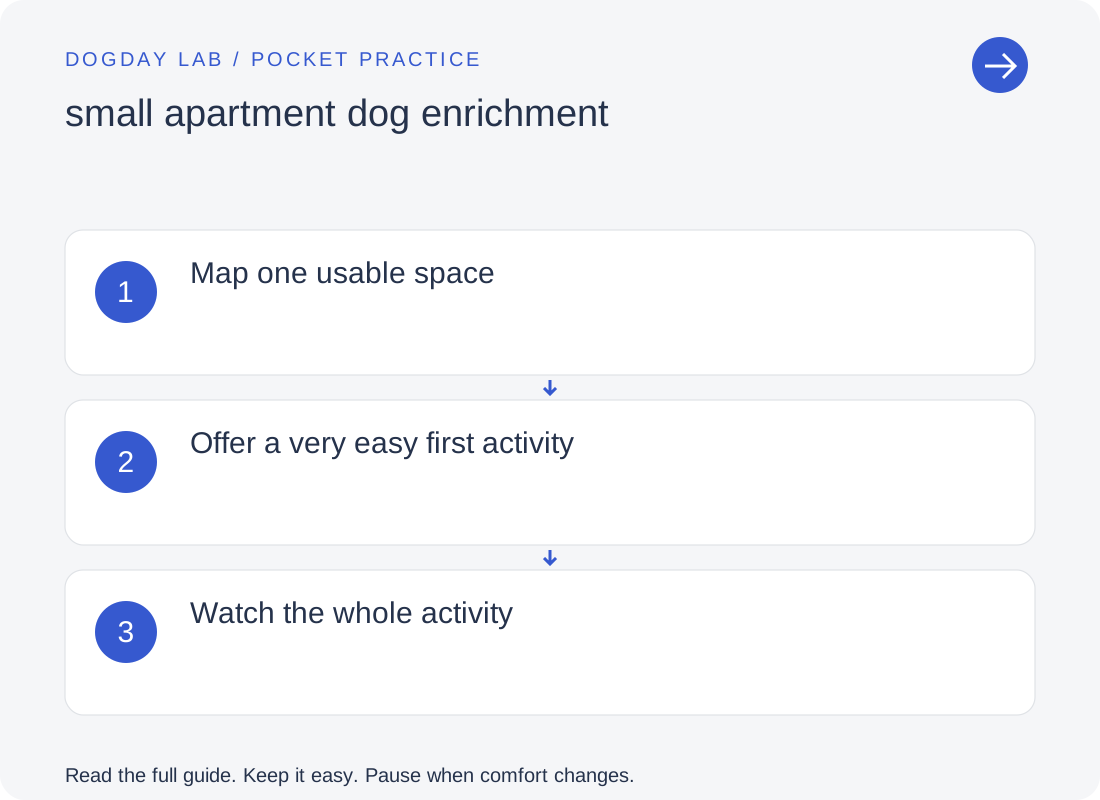
Map one usable space
Look at the room from your dog’s height. Move cables, loose shoes, fragile objects, and small items out of reach. Choose a patch where your dog can turn without hitting furniture. If the floor is slippery, secure a suitable mat rather than encouraging faster movement. Keep the route to water and a resting spot open. A hallway is useful only when nobody needs to step over the dog or open a door into the activity.
Offer a very easy first activity
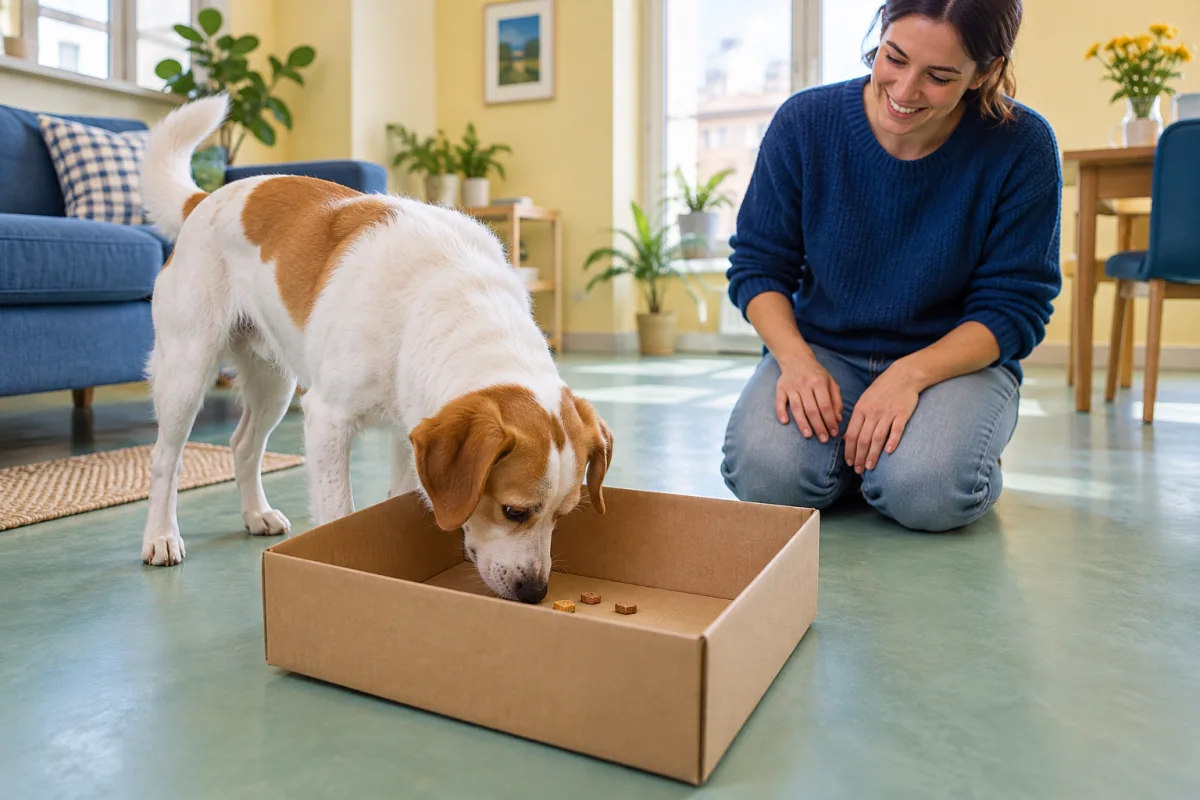
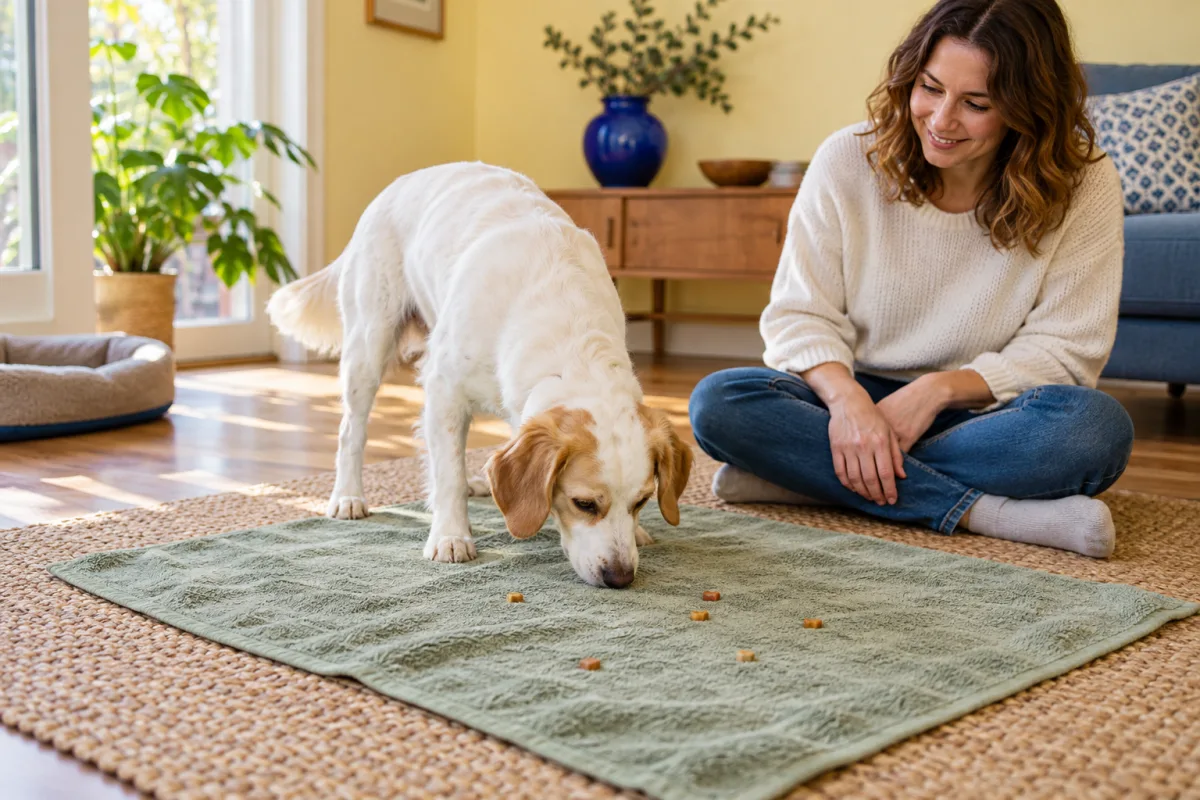
Place three pieces of permitted food in plain sight across a small area, or put one familiar toy a short distance away. Let your dog approach without a sit, wait, or other entry requirement. The first attempt should explain the game. If your dog seems unsure, make the item more obvious; do not hide it deeper or repeat a search cue louder. For dogs who swallow fabric or packaging, use a clear floor or suitable dish.
Watch the whole activity
Notice the pace, body movement, and ability to stop. Is your dog sniffing and finding things, or scratching at an unreachable gap? Can they move away and come back? Is a nearby dog or child watching in a way that creates pressure? End or simplify the setup before frustration builds. Separate pets for food activities when needed, and give children another activity rather than asking them to supervise.
Offer a different kind of choice later
After a break, try a different experience instead of a harder version of the same puzzle. A quiet toy exchange, a safe change of resting location, or a little scent exploration can add variety. Keep both options easy. If your dog chooses the familiar bed, accept that answer. Variety is available choice, not a schedule of things the dog must do to earn rest.
Keep one useful note
Write down what your dog chose and how they behaved afterward. For example: found four visible pieces, sniffed the mat once, then went to bed. That tells you more than calling the game tiring. Repeat successful arrangements before buying more equipment. If an activity reliably leads to barking, guarding, frantic chewing, or distress, pause it and work out why rather than simply making it longer.

Build a room with more than one job
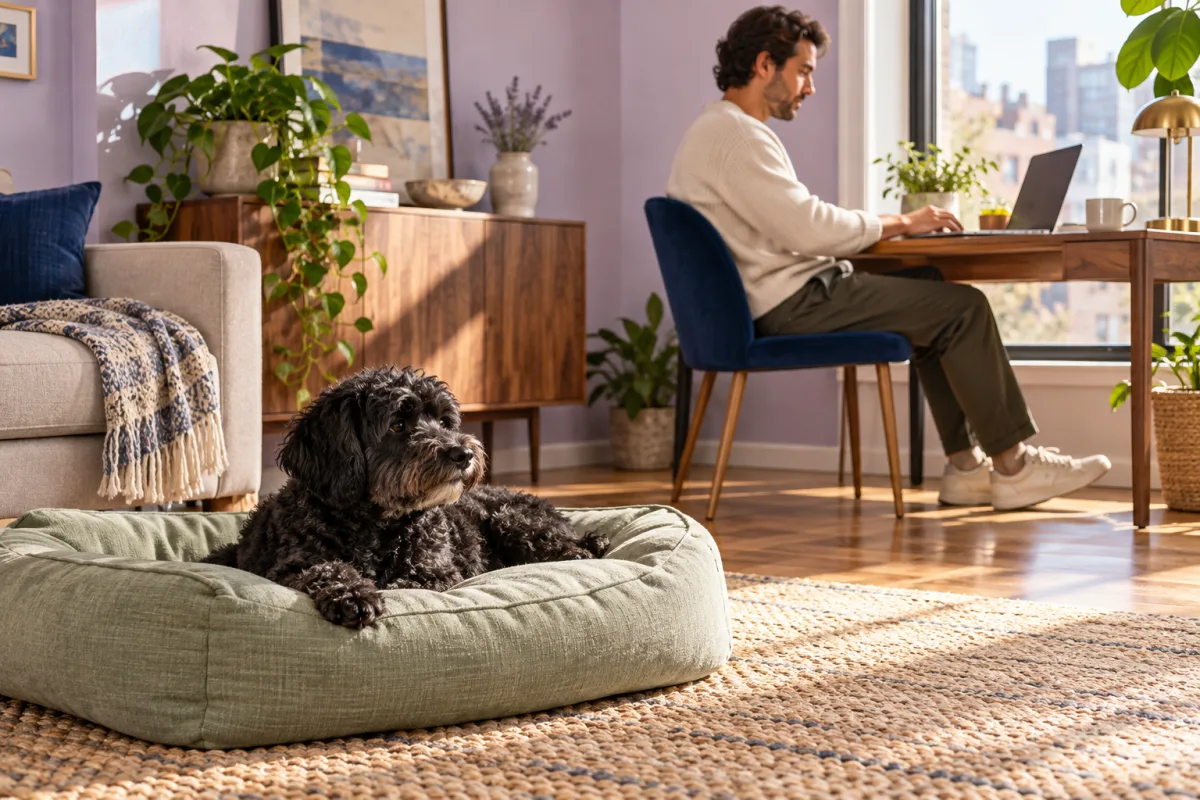
In a compact home, one room may hold the kitchen, sofa, work desk, and dog bed. Give those areas clear boundaries through placement rather than constant commands. A mat near a wall can be the quiet activity zone; a toy basket can sit somewhere you can reach without leaning across your dog; the bed can remain outside the route between the kitchen and front door. Leave enough space for the dog to walk away without squeezing past people.
The layout should suit the dog you have today. A young, bouncy dog may need fewer loose objects and more secure barriers around hazards. A dog with reduced mobility may need stable surfaces and activities within comfortable reach. A worried dog may need a place with less visual traffic. Do not move every familiar object at once just to create an attractive setup. Make one change and see whether the room becomes easier to use.
A quiet menu for a small space
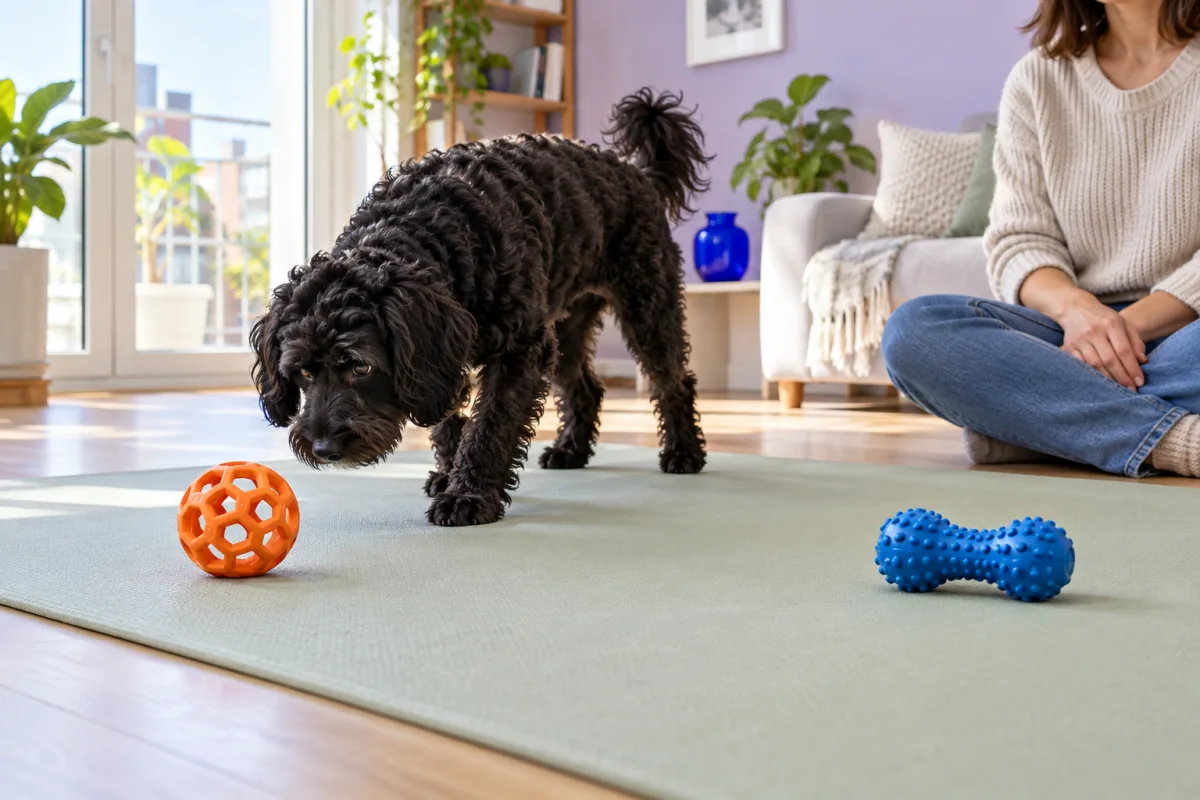
For a search-loving dog, start with an open search across a clean patch of floor. For a toy-loving dog, offer a low, gentle tug game with a suitable toy, keeping all feet on a secure surface. For a dog who prefers company, sit nearby while they investigate a safe object or rest. You can also teach a simple nose target at a comfortable height, provided the dog enjoys training and can step away freely.
Choose the activity by its effect, not by its label. A puzzle sold as calming may produce hard pawing and barking in one dog. A short game with a person may leave another pleasantly satisfied. Noise matters too: rolling hard plastic across a shared floor can bother neighbors and excite the dog. A stable dish or washable search surface may work better than a toy that ricochets under furniture.
Use an everyday rhythm, not a packed timetable
An illustrative day might include a short sniffing activity after a suitable outing, a familiar toy game when you finish work, and access to a quiet resting place throughout. That is an example, not a minimum exercise prescription. Puppies, adults, older dogs, and dogs with medical restrictions need different care. Build the day around toilet needs, meals, rest, appropriate movement, and human availability before inserting enrichment.
If you work from home, arrange an easy activity before a short, predictable work block rather than unveiling a difficult puzzle at the start of an important call. Practice the arrangement when you can respond. A food toy is not a promise that your dog will cope alone, and a dog who panics when separated needs a different plan. Keep a practical backup such as a pause in work, another caregiver, or a shorter block.
Make difficulty smaller before making the room bigger
When a search works, you can change a single detail. Place one piece slightly farther away, use a different safe corner, or show the dog a familiar toy before setting it partly beside a cushion. Avoid hiding food in furniture, electrical areas, or places where you do not want searching later. There is no need to cover everything or create a maze. Easy successful searching remains worthwhile.
If your dog keeps asking for help, uncover the item or guide attention gently toward the area without taking over every movement. If the dog leaves, leave the activity alone. A dog does not need to learn persistence against an impossible object. For some dogs, repeating the same easy game is the point. Record which change made the task less comfortable, then return to the last arrangement that felt straightforward.
Food, household materials, and shared spaces
Use food that is suitable for your dog and account for it within the overall feeding plan. Ask your vet about dietary restrictions rather than adding a rich filling because it appears in a recipe. Keep fresh water available. Wash reusable food items and clean up missed pieces so they do not attract pests or tempt a dog to search in unsafe places later. You can offer enrichment without food when that suits the dog.
Cardboard, towels, and DIY items are optional, not universally safe. Avoid loose parts, strings, staples, tape, sharp edges, and any material your dog is likely to swallow. Supervision means being close enough to notice and act, not leaving a camera running while you go out. If safe supervision is unavailable, provide a familiar safe environment and save the novel activity for another time.
Notice whether enrichment is solving the right problem
Enrichment cannot fix a painful body, an urgent toilet need, fear of the hallway, or being left beyond a dog’s current ability to cope. If restlessness continues, look at the whole situation. Did the dog have a chance to go out? Is the room hot or noisy? Does the dog settle anywhere else? Is the behavior new? A change that seems like boredom can deserve veterinary attention, especially alongside altered appetite, movement, sleep, or toileting.
For a simple review, choose three activities and compare them over several ordinary opportunities. Note setup effort, your dog’s voluntary engagement, any signs of strain, and what happens next. Keep the ones that fit your life and your dog’s preferences. The most useful collection may be a mat, a toy, a dish, and a good walking routine. Small-apartment enrichment succeeds when the dog has more comfortable options, not when every corner contains equipment.
An example for a studio apartment
Imagine a studio with a desk beside the front door and a dog bed under the window. The dog keeps leaving a puzzle to watch people in the hall. Adding a harder puzzle would not address the competing noise. First, move the activity away from the entrance if space allows, reduce the view of the doorway, and choose a time when the building is quieter. Keep the escape route open and do not shut the dog into a spot where they are uncomfortable.
The next trial might be four easy finds on a stable mat near the sofa while the person sits nearby. If the dog can search and then rest, that arrangement becomes a useful option. If they still monitor the hallway, work on the sound problem separately and keep enrichment simple. The record should say where the activity happened and what interrupted it. That makes the next choice practical: adjust the location or timing, rather than concluding that the dog needs more toys.
When it gets tricky
My dog grabs the entire mat instead of searching.
Switch to an easier open setup on a safe surface. The mat may be too difficult, too exciting, or something your dog enjoys chewing. Do not hold it down while the dog pulls harder. If fabric swallowing is a concern, remove fabric-based activities from the menu and ask your vet about ingestion risk.
The other dog comes over and steals everything.
Give each dog a separate comfortable area before food or valued toys appear. Use suitable barriers and supervise the transition. Finish and clear the activity before bringing the dogs together. If either dog guards objects, do not test their sharing; seek qualified help with a safe household plan.
My dog does the game and still wants attention.
The activity may have been enjoyable without meeting the need for company. Offer an appropriate interaction or check other needs. Enrichment is not a contract for silence. Use shorter work blocks and planned attention when possible, and seek help if distress rather than ordinary interest is driving the behavior.
Common questions
Can a large dog have enrichment in a small apartment?
Yes, if the setup fits their size, movement, health, and preferences. Keep turning room clear and avoid high-speed games in narrow spaces. Indoor activities complement suitable outdoor access and care; they do not make a home appropriate for every individual dog regardless of its circumstances.
Do I need to buy a puzzle toy?
No. A visible search, gentle play with a familiar toy, or a small reward-based learning game can be useful. Buy equipment to solve a specific need, and check size, durability, cleaning instructions, and your dog’s response rather than assuming a more complex toy is better.
How long should an enrichment session last?
There is no single correct duration. Begin briefly enough that you can watch the whole experience and stop while it remains easy. A dog who walks away, struggles, or seems tired has already given useful feedback. Quality of engagement and comfortable recovery matter more than a timer.
Sources & further reading
These sources support the training and welfare principles discussed. Examples are illustrative; source organizations do not endorse this site.
General education, not an individual assessment. Pain, sudden behavior change, panic, aggression or bite risk need appropriate professional support. Editorial images are illustrative.