
Play & enrichment
Small-apartment dog enrichment that fits real life
Build a small-apartment dog enrichment routine with quiet games, simple room layouts, useful choices, and activities that fit your dog’s needs.
Play & enrichment · 2 guides
Enrichment gives a dog opportunities to do things they value: sniff, explore, forage, play and make choices. It does not have to fill a room with products or leave everyone more excited than when they began.
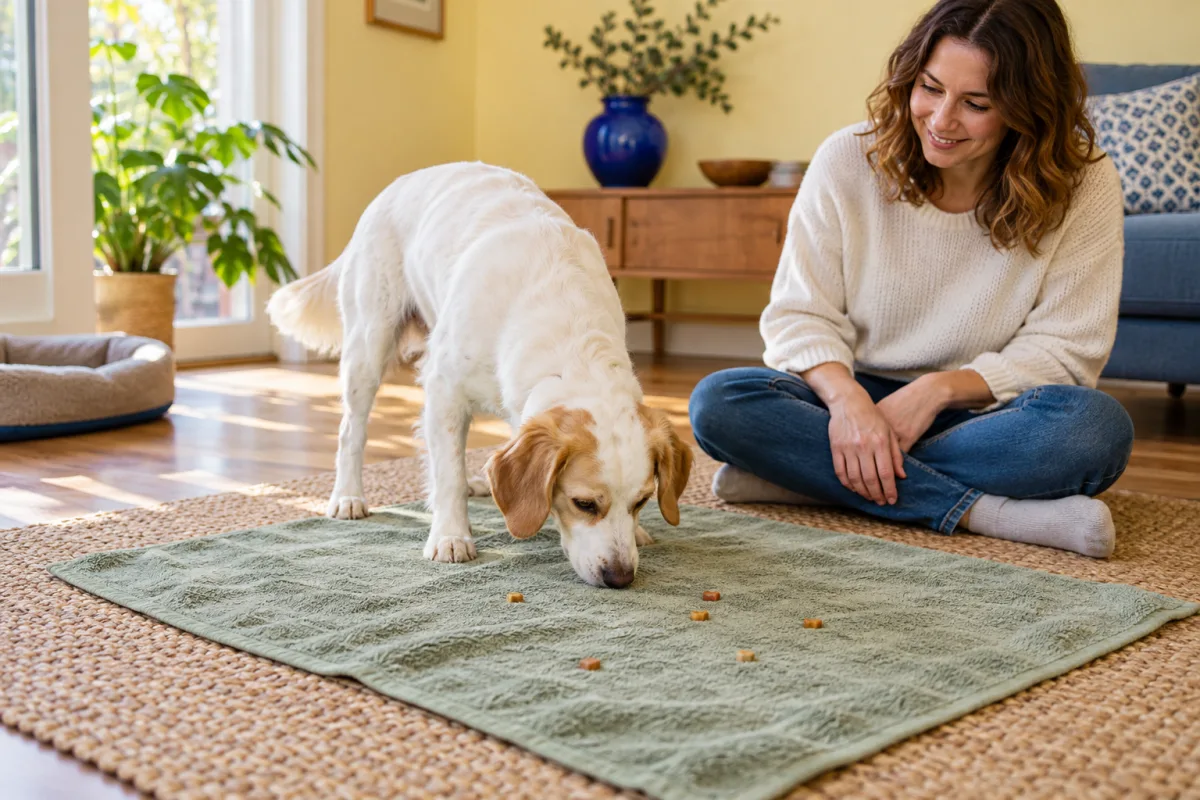
Offer an opportunity, then notice the choice
Enrichment is most useful when it gives a dog an accessible opportunity to do something they value. That might be sniffing, finding familiar food in an easy setup, investigating a toy, playing with a willing person or choosing a comfortable place to watch a quiet view. Novelty alone does not establish value. A complicated puzzle your dog cannot understand may be less useful than a simple opportunity they can approach, enjoy and leave without pressure.
In a smaller home, think about the quality of the available space rather than the number of activities you can fit into it. Clear slippery obstacles, protect circulation and separate animals around valued items when needed. Choose materials you can supervise safely and food that fits the dog’s diet and professional guidance. You do not need a different purchase every week. Familiar activities can remain worthwhile, and rest belongs in the plan alongside exploration and play.
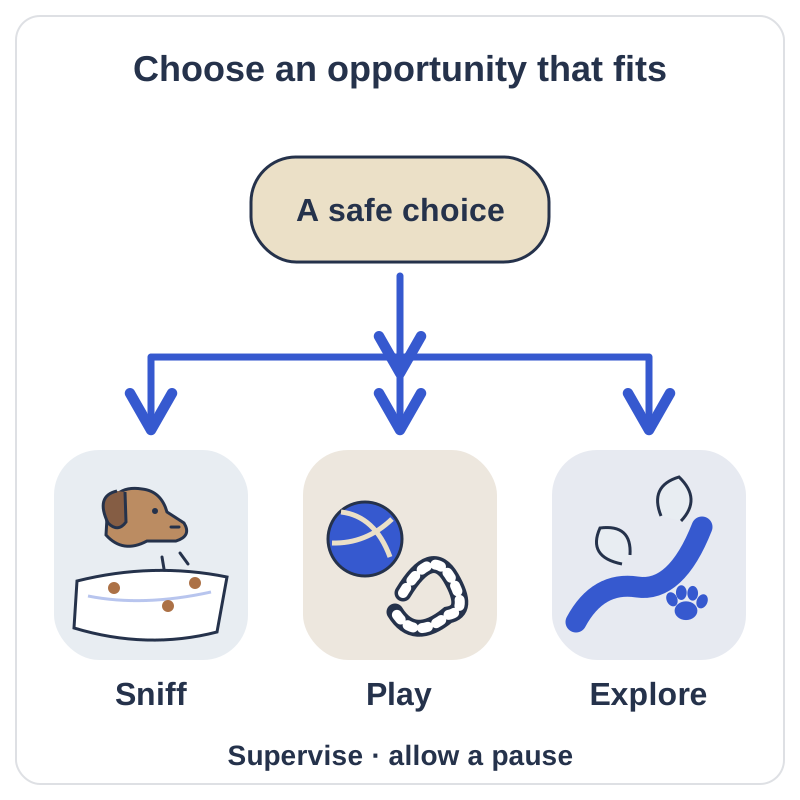
Begin with the setup
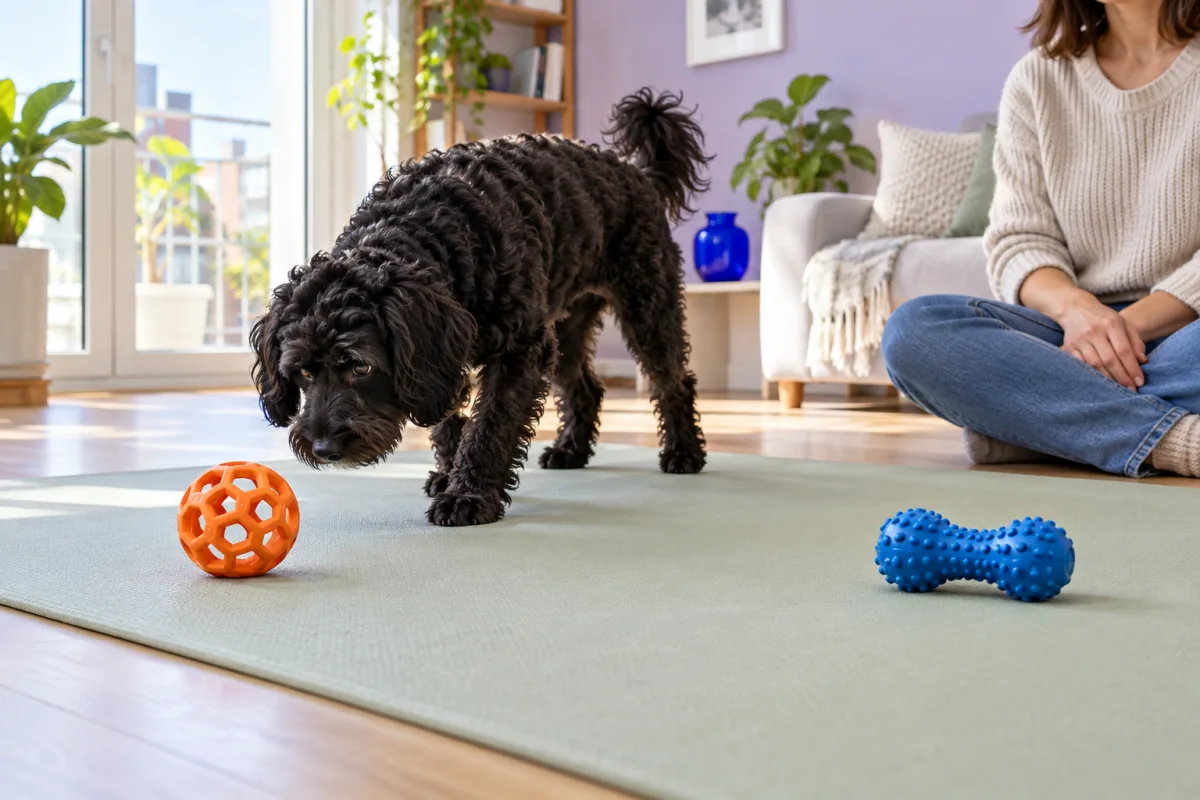
Begin with an obvious starting point. Put a few suitable food pieces in plain view on a safe surface, offer two familiar toys with space between them or choose a quiet sniffing area away from litter and traffic. Avoid shutting box flaps, tightening fabric or hiding an object deeply before the dog understands the activity. The first question is whether the setup invites comfortable participation. Difficulty is something to assess carefully later, not a requirement that makes an activity count.
Watch the whole attempt. A dog may approach confidently, pause to investigate, switch between options or leave. Those choices can guide the next setup. Frantic digging, repeated attempts to destroy a container or an inability to disengage are reasons to simplify or stop. Do not wait for frustration to prove the activity is mentally tiring. If your dog swallows fabric, cardboard or toy pieces, those materials are unsuitable; choose a different opportunity and obtain veterinary advice when ingestion may have occurred.
Your field guides
Choose the guide that answers your next practical question.
Play & enrichment
Build a small-apartment dog enrichment routine with quiet games, simple room layouts, useful choices, and activities that fit your dog’s needs.
Play & enrichment
Explore no-food dog enrichment through gentle play, toy searches, safe sniffing, social time, and simple choices tailored to your dog.
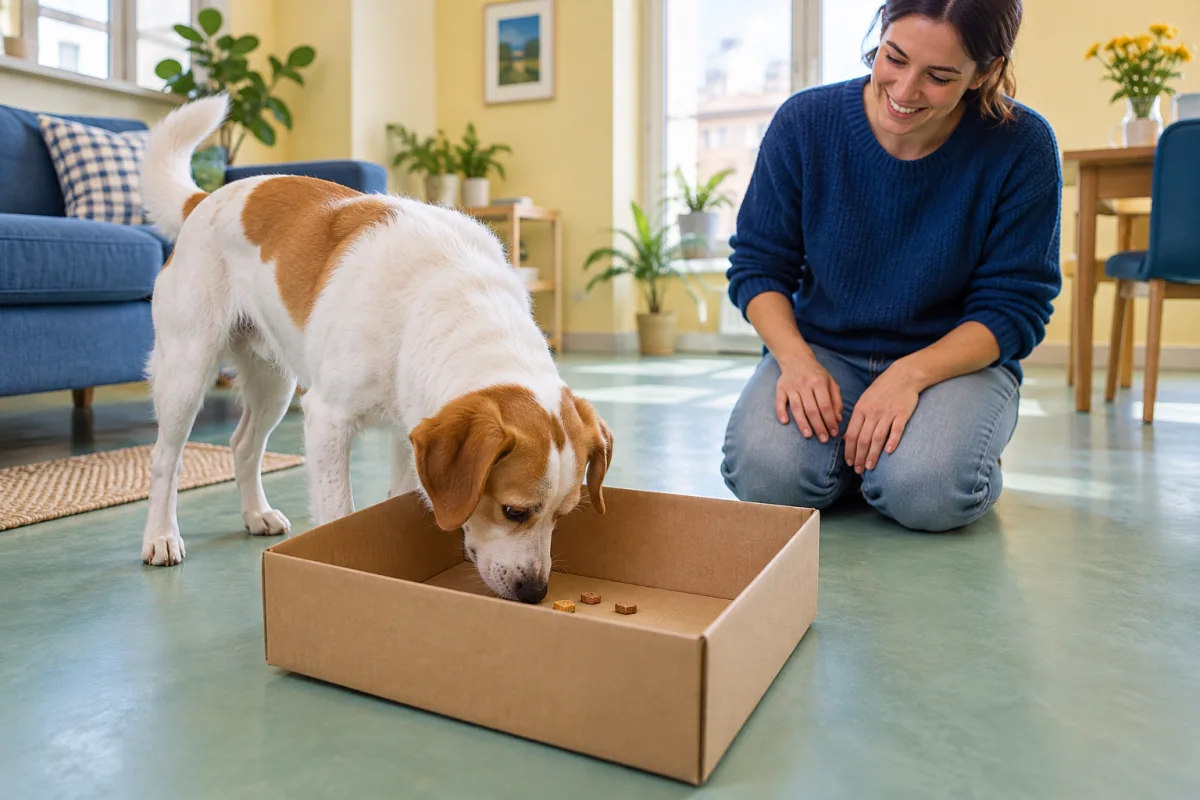
Put the ideas into practice
A useful menu can include different kinds of experience without making every day busy. One dog may enjoy a slow search in the morning and gentle social play later. Another may prefer investigating two toys and taking a quiet sniffing detour. Food-free options can be valuable where dietary restrictions, multiple dogs or a particular care plan make food activities unsuitable. Keep the activity matched to the dog’s current physical comfort, and discuss restrictions with the relevant professional.
Rotate only what helps. You might keep a familiar easy search while occasionally changing its location, or put toys away and reoffer a small choice later. Avoid removing all familiar opportunities in pursuit of novelty. If a dog loses interest, check whether the item, timing, surface or social situation changed before concluding that a harder puzzle is needed. A preference is information about this moment; it does not have to become a permanent label about the dog’s personality.
Put the ideas into practice
Choose an activity you can oversee at the time you offer it. A first cardboard search is not a sensible stand-in for care while you disappear into a long meeting. Remove tape, staples and loose packaging, check the material’s suitability and stay close enough to respond. Fabric activities need equally careful judgment. A dog who chews or swallows the towel needs another option, even if the setup looks simple and has worked for somebody else’s dog.
Afterward, notice whether your dog can move into ordinary life comfortably. They might seek water, rest, another familiar activity or social contact. Escalating pacing or persistent demands for an increasingly intense game are useful reasons to review the whole sequence. Enrichment cannot make an unsuitable environment, unaddressed pain or missing care disappear. Use it as one part of a balanced day, with appropriate professional support for medical restrictions, guarding, panic or other concerns beyond a general activity suggestion.
A useful check for tomorrow
Build your activity menu from what your dog has comfortably chosen in your own home. Write the setup beside the activity: which room, what materials, what supervision and how it ended. An idea called a scent game can mean several very different arrangements; the useful record describes the version you can prepare safely.
Choose from that menu according to today’s space and attention. An activity needing close supervision belongs in a part of the day when you can provide it. Leave an option for no game at all when rest or ordinary company fits better. Review the menu when an item is damaged, the household changes or your dog’s interests shift.
From an ordinary day
Imagine a handler in a studio apartment wants an interesting rainy afternoon without buying another puzzle. The dog sometimes chews cardboard, so a box search is not selected. Instead, the handler clears a nonslip area, offers two familiar intact toys and sits nearby. The dog approaches one toy and carries it to a comfortable space. The handler joins a brief gentle game when invited and leaves the other option available without repeatedly directing the dog.
On a later occasion, food is appropriate and supervision is available. A few pieces from the dog’s suitable allowance are placed openly on a clean safe surface. The dog can see the starting point and the search stays easy. The handler does not add layers of fabric just because the first attempt is quick. They observe whether the dog enjoys repeating the familiar version and remove materials when the activity ends.
The useful record names the preference and context: the toy choice worked well after a quiet rest, while a more energetic game was harder to leave after a busy outing. The next decision concerns timing and intensity, not automatically a more expensive item. This scenario is an illustration of choosing and adapting opportunities. It is not a recommendation for every dog, a dietary plan or evidence that a particular activity will produce relaxation.
Choose the next useful question
| What is happening | Start with | Keep reading |
|---|---|---|
| Space is limited and several activities feel messy. | Clear one safe area and offer a familiar easy choice with a simple cleanup plan. | Small-apartment dog enrichment that fits real life |
| Food is not suitable for this session. | Explore appropriate toys, gentle social play or safe sniffing without adding dietary complications. | No-food dog enrichment: find what your dog enjoys |
| The puzzle repeatedly ends in chewing or frustration. | Simplify the entry point or replace the material rather than waiting for persistence. | Small-apartment dog enrichment that fits real life |
| Activities seem to leave your dog more wound up. | Review intensity, timing, the ability to stop and the rest of the day. | Small-apartment dog enrichment that fits real life |
Before the next step
An activity does not need to last a long time to offer a useful choice or pleasant experience. Watch how the dog takes part and what happens afterward. A brief easy search can be enough for that moment. Do not make a puzzle frustrating to extend its duration, or use time spent interacting as proof that the material, activity or overall day is suitable.
Consider dietary guidance, physical comfort, resource guarding, supervision and the dog’s interest. You can offer an easy familiar option and observe rather than assuming every dog should enjoy the same category. Keep other animals separate where appropriate. If neither activity seems welcome, rest or a different care opportunity may be the better next step; participation should not have to be persuaded indefinitely.
Indoor activities can add suitable opportunities during a changed day, but they do not automatically replace toilet access, individual exercise needs, social support or veterinary recommendations. Arrange essential care safely and choose an appropriate alternative when conditions prevent the usual outing. A rainy-week plan should account for the whole dog and the actual environment rather than converting every missed outdoor minute into an indoor challenge.
Not necessarily. First consider whether it remains safe and whether your dog can return to it without conflict with others. Rotation can make household management easier, but there is no need to interrupt a comfortable choice constantly to preserve novelty. Remove damaged or unsuitable items, respect guarding concerns and notice which arrangements let the dog explore without pressure.
 Meet DogPath
Take a guided lesson, keep a daily practice rhythm and work on the moments that matter to you.
See how the app fits