
A little structure helps
Seven parts. Your dog’s pace.
Flexible practice plans for ordinary life. Repeat, simplify or pause any part. The calendar organizes your preparation; it does not set a deadline for your dog.
Structure for the people
A plan should make the day easier to arrange.
A flexible plan is a way to connect preparation, short practice and review. It helps the household remember what to arrange and gives each person a clearer role. It does not make a dog ready on a particular date. The seven parts are a readable sequence: some may be repeated, simplified or paused, and a necessary care task can take priority at any point.
Choose the plan closest to the moment you want to improve. Apartment reset focuses on shared-space routines; the workday plan considers meetings and protected rest; city walk foundations separates the pieces of an outing. Puppy care, enrichment and cooperative care each need their own starting conditions. Begin with one plan, then borrow another only when it addresses a specific missing piece.

Choose a practice plan

7 flexible practice days
The apartment reset
A more predictable home, with fewer rushed transitions.
See the plan
7 flexible practice days
A calmer workday
Predictable work transitions and a dog who has room to rest.
See the plan
7 flexible practice days
City walk foundations
More safe options when the street gets busy.
See the plan
7 flexible practice days
A puppy’s first week at home
A predictable care routine with gentle opportunities to learn.
See the plan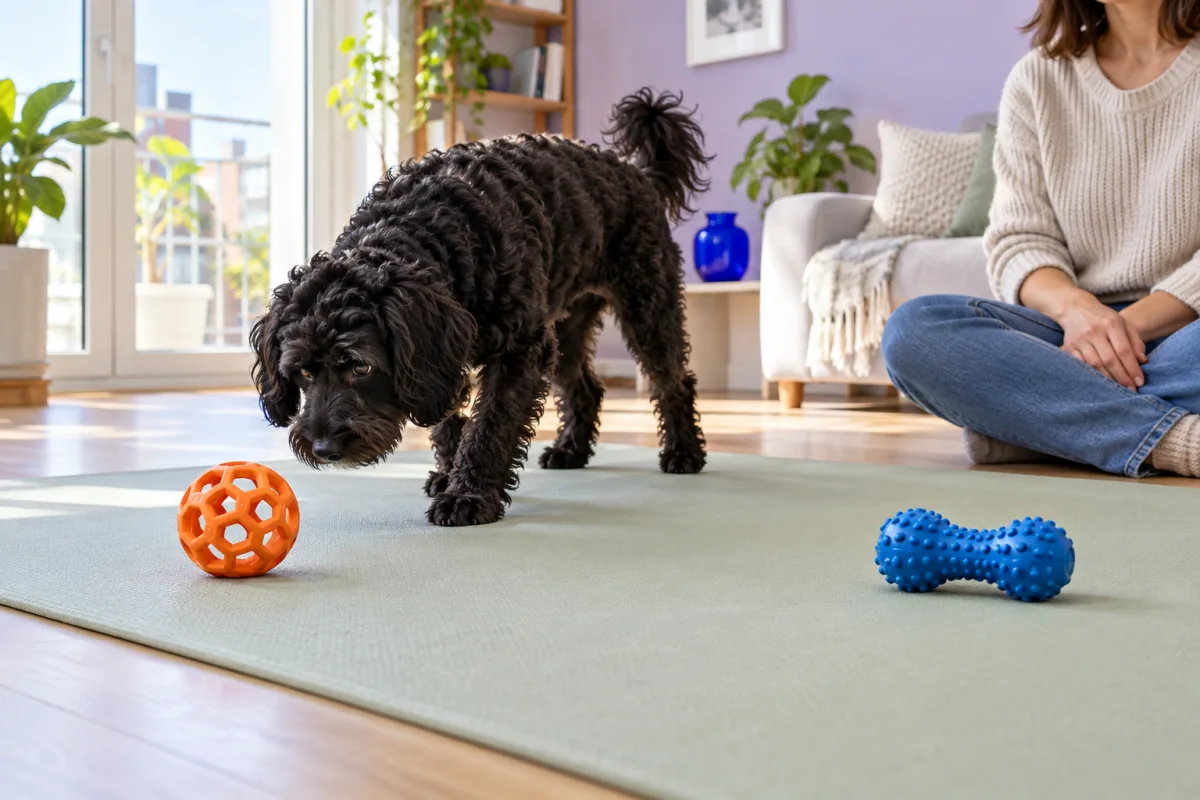
7 flexible practice days
A week of small-space enrichment
A small menu of activities your dog can enjoy comfortably.
See the plan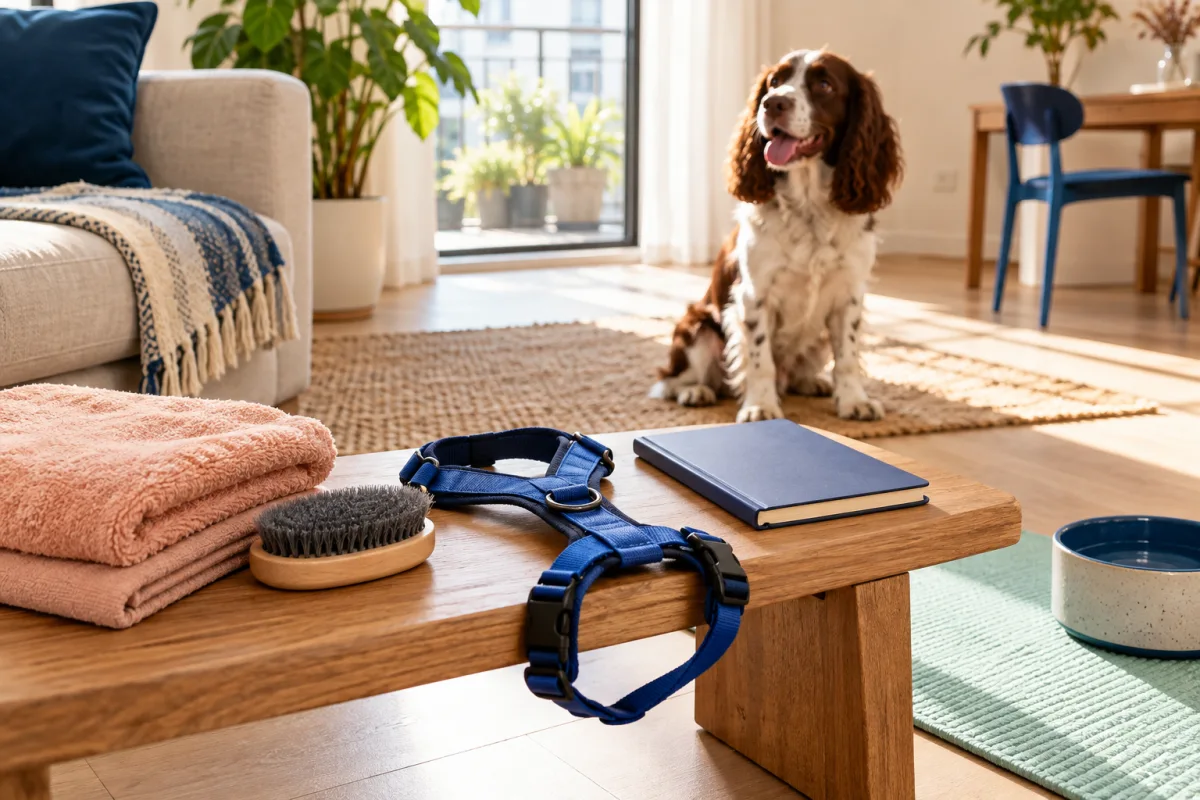
7 flexible practice days
A cooperative care starting plan
Clearer observations and more comfortable optional rehearsals.
See the planHow to use a plan
Read the full sequence first. Prepare the easy version before a real-life event. Keep notes about comfort and context, then repeat what helped. A single useful repetition can be enough for a session.
Build a routine for todayChoose by the bottleneck, not the longest wish list
Look at the part of the day that repeatedly creates pressure. Perhaps nobody knows who covers the puppy after an early meeting, the leash is difficult to attach near the entrance, or a dog has nowhere comfortable to recover from a busy outing. Those are different bottlenecks. A relevant plan should change the arrangement around that moment instead of adding more tasks to an already crowded day.
Read the goal and preparation list before choosing. Decide whether the household has the space, equipment and available supervision for the starting version. If essential care cannot fit the schedule, arrange suitable support rather than expecting a training plan to fill the gap. Planning can identify a practical limit honestly; it does not have to turn every limit into a cue to teach.
- Pick the recurring point where preparation would change the next event.
- Confirm that necessary care has a reliable person or arrangement.
- Use one plan as the main thread so that the household can follow it.
Use the resource thoughtfully
Give each part a comfortable entry and a real exit
Before beginning a part, name the easiest version and the reason you would stop. A care rehearsal might end after a voluntary look at a harmless item; a city exercise might remain inside the building. Prepare a normal break afterward. The plan should leave your dog free from additional optional demands, rather than turning every pause into another opportunity to test a behavior.
Move on because the previous version is comfortable and useful in context, not because the next numbered part is waiting. Difficulty can change after poor sleep, unfamiliar visitors, an outing or a health change. Repeating preparation is reasonable. So is choosing an entirely different arrangement when the original plan does not match the dog’s needs or the household’s actual capacity.
Review the arrangement rather than awarding a grade
Use a short note to separate what you arranged from what you observed. “Moved the bed away from the doorway” describes your change. “Rested through one ordinary passage in the hallway” describes an event. Together they suggest a useful arrangement to preserve, without proving that the same result will happen every time. Avoid scoring the dog against a calendar or comparing them with another household.
At a review point, choose among repeating, simplifying, changing the environment or asking for help. A plan can reveal that the main improvement came from better care coverage rather than the optional exercise. Keep that improvement. If notes show pain, sustained fear, panic or safety concerns, bring the facts to an appropriate professional instead of adding more challenging practice to make the plan look complete.
From an ordinary day
An illustrative example: a workday with an unpredictable call
Consider a person whose afternoon meeting sometimes runs over. Their dog often becomes restless during that block. They choose the calmer-workday plan and first record what happens before the call, including the last toilet opportunity, the return from a walk and any interruptions to rest. This is a planning example, not evidence that restlessness always has the same cause.
They arrange a care break and a familiar resting area before the meeting. At another quiet time, they rehearse one brief work signal, such as sitting in the chair without starting a call. A familiar caregiver is available if the real meeting exceeds the arrangement. The optional rehearsal remains separate from the practical responsibility to meet the dog’s needs.
On review, they keep the earlier break because it made the transition more manageable. They repeat the small chair rehearsal rather than moving to a longer session simply because it is the next day. If the dog remains unsettled, they revisit health, comfort and the broader routine. The useful outcome is a clearer workday arrangement and a specific next question, not a claim of silence throughout every future meeting.
Before the next step
A few more useful questions
Can we combine two plans during the same week?
Yes, when each part solves a clear practical problem and the total demands remain suitable. Keep one main plan and add only the relevant preparation from another. For example, workday care can include a simple household handover without adding a second full sequence of optional exercises.
What should we record when a planned part is skipped?
Record the useful reason: the environment was too busy, your dog needed rest, care took priority or the necessary setup was unavailable. That information helps you arrange a better occasion. A blank box is less informative than a short explanation of a sensible decision.
When does it make sense to restart a plan?
Return to earlier preparation after a move, a change in caregiver or an unfamiliar environment when it helps clarify the setup. You do not have to erase useful learning or begin every part again. Review what still fits, preserve comfortable routines and adapt the parts that have changed.