The short answer
Build your puppy’s day around events rather than a rigid clock: waking, eating, playing, going outside and resting. In an apartment, allow extra time for the route to the toilet area. Record your puppy’s actual patterns and arrange human help whenever work would outlast their current needs.
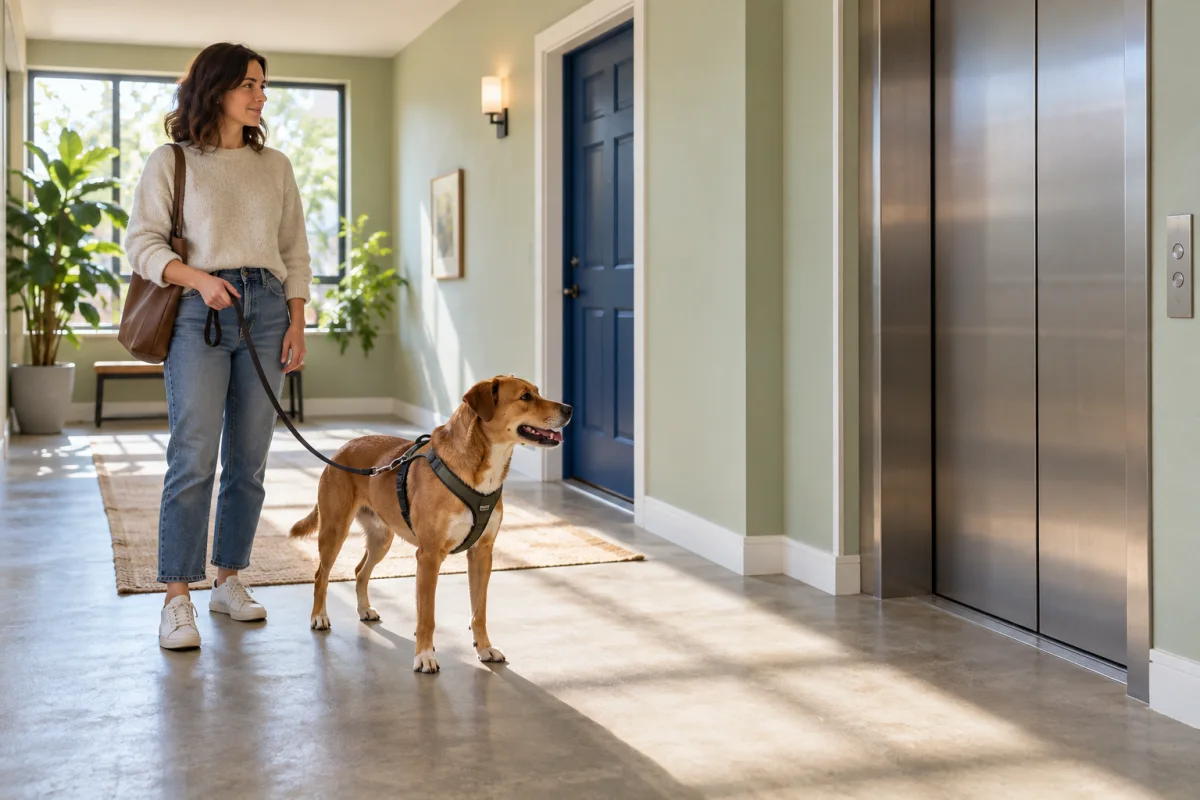
A puppy apartment schedule has to account for more than feeding times. Between your front door and the toilet area may be a hallway, an elevator, a busy lobby and a pavement that is still unfamiliar. Those minutes matter when your puppy has just woken up. A useful routine makes this journey easier before it asks the puppy for more control.
Treat a schedule as a shared household plan, not a test the puppy can fail. Sleep, toileting, comfort and companionship change with development, health and the environment. A timetable found online cannot tell you how long your individual puppy can wait. Your veterinarian can help you plan safe toilet locations before vaccination is complete and identify health concerns when patterns change.
Before you start
- A simple diary or notes app
- Harness and leash ready by the door
- Small suitable rewards
- A quiet sleeping area and fresh water
- Cleaning supplies suitable for the flooring
A practical starting point
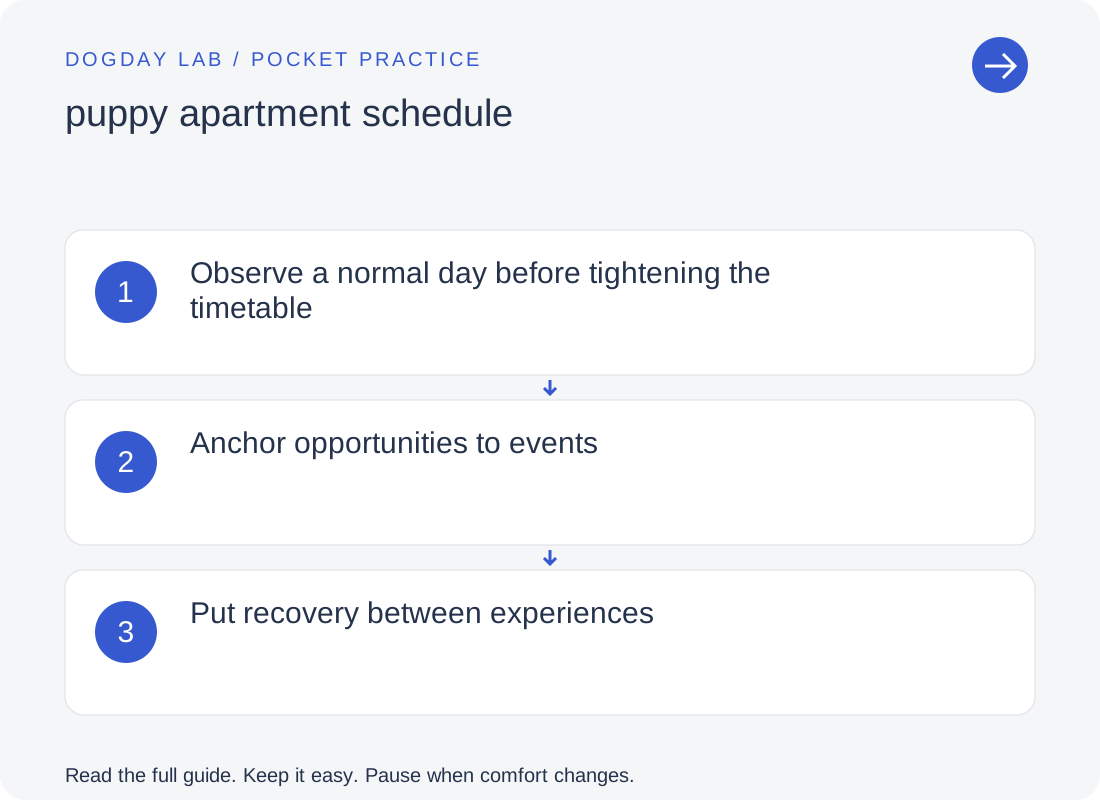
Observe a normal day before tightening the timetable
Write down when your puppy wakes, eats, drinks, plays, toilets and settles. Note the journey from your home to the toilet area separately from the time spent there. You are looking for repeatable sequences, such as waking followed quickly by urination, rather than trying to create a perfect spreadsheet. If there are accidents, record the preceding activity and the place without judging the puppy. Observation gives you something useful to adjust tomorrow.
Anchor opportunities to events
Offer a toilet opportunity after waking and around activities that your own notes show precede toileting, including meals or active play. Add regular opportunities between those events and respond promptly to your puppy’s signals. Do not wait for a scheduled time when they are circling, searching or heading toward their usual exit. Set up your shoes, keys and leash in advance so preparation does not consume the small window you have.
Put recovery between experiences
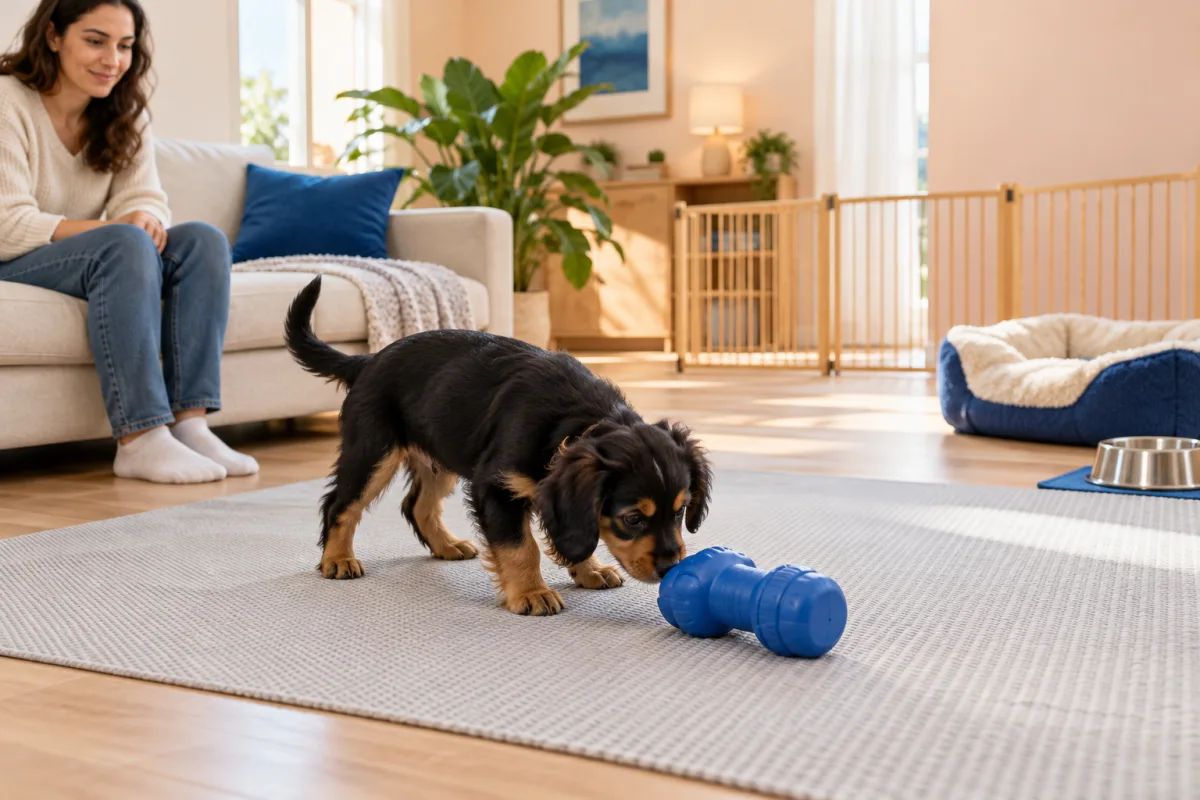
After a brief outing or play session, make the home quieter and offer a comfortable resting place. Stay close enough for your puppy to feel secure. An open pen or bed can help organize the room when it is already familiar, but closing a barrier is not a substitute for teaching comfort with it. Let a sleeping puppy rest; you do not need to wake them to meet a recreational training target.
Add training inside existing care moments
Use a few rewards while the harness appears, a name response before a meal, or one easy hand target before a short game. Keep these separate little opportunities instead of adding a long obedience block to an already busy day. End while your puppy is interested. If the puppy cannot eat normally or keeps moving away, remove the exercise and attend to the setting, comfort or need for rest.
Assign every care window to an actual person
Write a name beside each daytime care period, including the transition between shifts. A calendar entry saying puppy break is not enough if everyone thinks someone else is responsible. Arrange a trusted sitter or other suitable support before a meeting, commute or appointment creates a gap. The plan must fit the puppy’s present abilities; independence training does not make a full workday alone appropriate overnight.
Review one pattern at the end of the day
Choose a single change for tomorrow. You might leave shoes beside the door, move an outing earlier after breakfast, or shorten an exciting evening game. Keep other parts familiar so you can see whether the adjustment helps. Note comfortable moments as well as accidents. A quicker return to rest and an easier journey through the lobby are useful signs that the routine is becoming more manageable.

An illustrative day, without a bladder formula
Imagine a household where an adult starts work at home in the morning. The first sequence is wake, toilet trip, breakfast, another appropriate toilet opportunity, a small amount of gentle interaction and then a chance to rest. The adult works nearby while the puppy sleeps, with a care break available as soon as the puppy wakes. This is an order of events, not a requirement to make a puppy sleep through a certain meeting.
Later, a quiet observation outing might replace a game. After lunch, another caregiver could cover an awake period while the first adult takes a call. The evening includes ordinary companionship, a modest play opportunity and a predictable settling sequence. Overnight care follows the puppy’s needs and observed pattern. The same outline can work for different households because its structure is responsive rather than tied to a universal number of hours.
For a household with rotating shifts, use an event checklist instead of a single wall-clock timetable. The person taking over confirms the last toilet opportunity, food offered and current rest state. They then continue the sequence from that point rather than restarting the day. This prevents a puppy receiving duplicate meals while missing a needed trip outside.
- Wakeful periods need active supervision or an appropriate safe setup.
- Toilet opportunities should be available when needed, not earned through quiet behavior.
- Food follows the feeding plan agreed with your veterinarian or breeder; water is not restricted to make scheduling easier.
- Social exposure, play and training all contribute to the day’s workload.
The apartment exit is part of the schedule
Time the journey yourself while the puppy is safely with another adult. Include waiting for the elevator and reaching the approved toilet spot. If the lift regularly takes several minutes at commuting time, your plan needs that margin. You may need to leave earlier after waking or agree on a suitable temporary indoor toilet arrangement with your veterinarian. An indoor option is management, not a moral failure.
A ready-to-go station should be out of the puppy’s reach and include essentials that can be picked up quickly. Practice harness fitting separately when there is no urgency. The first moments after a nap are a poor time to teach your puppy to tolerate an unfamiliar strap. If carrying is necessary and comfortable for both of you, support the puppy securely; never rush down stairs with an animal you cannot safely hold.

Planning around employment rather than hoping for silence
Working from home offers proximity, but it does not automatically supply puppy care. A puppy may need attention during a presentation, and a new household member cannot be expected to understand the importance of a microphone. Identify your least interruptible periods and book help for them. Use shorter, flexible work blocks around the other care events where possible.
If you work away from home, arrange a realistic care plan before the puppy arrives. A brief midday visit may not meet a young puppy’s needs across a long absence. Ask potential carers about vaccination requirements, supervision, rest and how they handle distress. Choose a setup that matches your puppy rather than using a busy group environment merely because it fills the hours.
Make weekends recognizable
You do not need identical alarm times forever, but abrupt changes can make household life confusing. Keep useful sequences recognizable: the puppy still gets an opportunity to toilet after waking, a quiet area is still available, and meals do not become unpredictable simply because guests are visiting. More people at home should not mean the puppy loses every nap.
Before a weekend outing, decide what it replaces. A new environment may be plenty of activity for that period, so there may be no reason to add a training session immediately afterward. If you return late, arrange care rather than expecting your puppy to stretch to your social calendar. Flexibility works best when someone is still responsible for the underlying needs.
A shared record that people will actually use
Keep the log short enough to maintain. A useful line might read: woke, carried to quiet toilet spot, urinated, ate breakfast, brief toy play, settled beside desk. Add unusual details such as a crowded lift or loose stool because they may explain why the next period differed. Avoid scores that describe your puppy as naughty or stubborn; they do not tell the next caregiver what to do.
Review several ordinary days before changing many things. One unusual evening after visitors does not establish a new routine. However, repeated straining, pain, sudden increases in thirst or a marked change in elimination needs deserves veterinary attention. A schedule should reveal possible concerns, not explain them away as a training problem.
When the written plan stops matching your puppy
As your puppy matures, the sequence may remain useful even when individual intervals change. Let observations lead. If your puppy is consistently sleeping comfortably for longer, you can discuss appropriate adjustments rather than waking them only to satisfy an old recreational plan. If they need more frequent toilet trips again, investigate context and health before assuming a regression in learning.
Change one element at a time and keep care available. For example, move a quiet observation outing to a less busy time, then review rest afterward. Do not simultaneously lengthen alone time, remove a toilet opportunity and introduce a new sitter. Small changes make the cause of a problem easier to identify and the recovery easier to manage.
When it gets tricky
The puppy wakes just as my meeting starts.
Treat this as a care conflict, not a training failure. Arrange another adult to cover the meeting or change the timing of your work block. If possible, schedule important calls after you have observed several days of natural rest patterns, while keeping backup care available. Do not deliberately exhaust the puppy or withhold needs to create a predictable nap.
Accidents keep happening on the way downstairs.
Shorten the preparation sequence and start earlier relative to the preceding event. Practice harness handling outside urgent toilet moments. Discuss a suitable interim toilet location and infection-risk precautions with your veterinarian. If the puppy is urinating unusually often, straining or showing discomfort, seek veterinary advice instead of simply increasing discipline or confinement.
The puppy seems more frantic after a full schedule.
Count all the experiences in the day, including visitors, travel, handling and noise. Reduce the number of optional activities and provide quiet companionship. Frantic behavior does not automatically mean a puppy needs another game. If rest remains difficult despite a comfortable environment and needs being met, discuss the pattern with your veterinarian or a qualified reward-based professional.
Common questions
Should every puppy follow the same age-based timetable?
No. Age is only one factor, and a formula cannot account for health, individual development, drinking, activity, environment or the time needed to reach the toilet area. Use age to inform a conversation with your veterinarian and carer, then build a flexible plan from your own puppy’s observations. Respond to needs sooner whenever they arise.
Can I use meals as training rewards?
Often, a portion of an appropriate daily food allowance can be used for simple exercises if your puppy finds it rewarding. Keep the overall feeding plan suitable for growth and ask your veterinarian about dietary questions. Meals should not be withheld until the puppy performs. Some food can be offered normally so care does not become dependent on successful training.
Do I need to fill every awake minute?
No. Gentle exploration, watching the household and relaxed social contact also have value. Leave room for the puppy to choose between safe options. Constant entertainment can make a routine harder to sustain and may crowd out rest. Supervise awake periods without turning each one into a lesson, and end activities while your puppy remains comfortable.
How do I know the schedule is improving?
Look for easier transitions, fewer urgent scrambles, comfortable rest and caregivers who know what happens next. Toilet records may show that your timing is more reliable, but perfection is not a realistic immediate target. Measure the plan’s usefulness to the household and the puppy’s comfort rather than how closely the clock matches a downloaded template.
Sources & further reading
These sources support the training and welfare principles discussed. Examples are illustrative; source organizations do not endorse this site.
General education, not an individual assessment. Pain, sudden behavior change, panic, aggression or bite risk need appropriate professional support. Editorial images are illustrative.