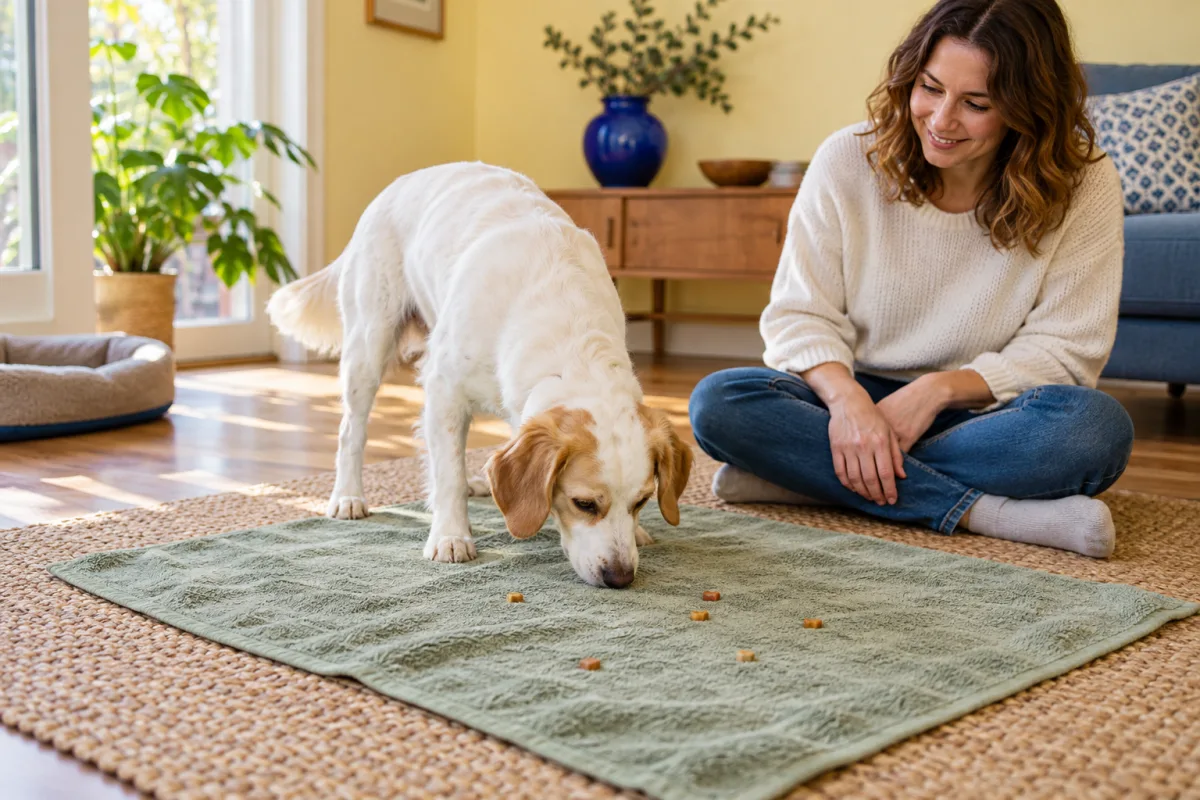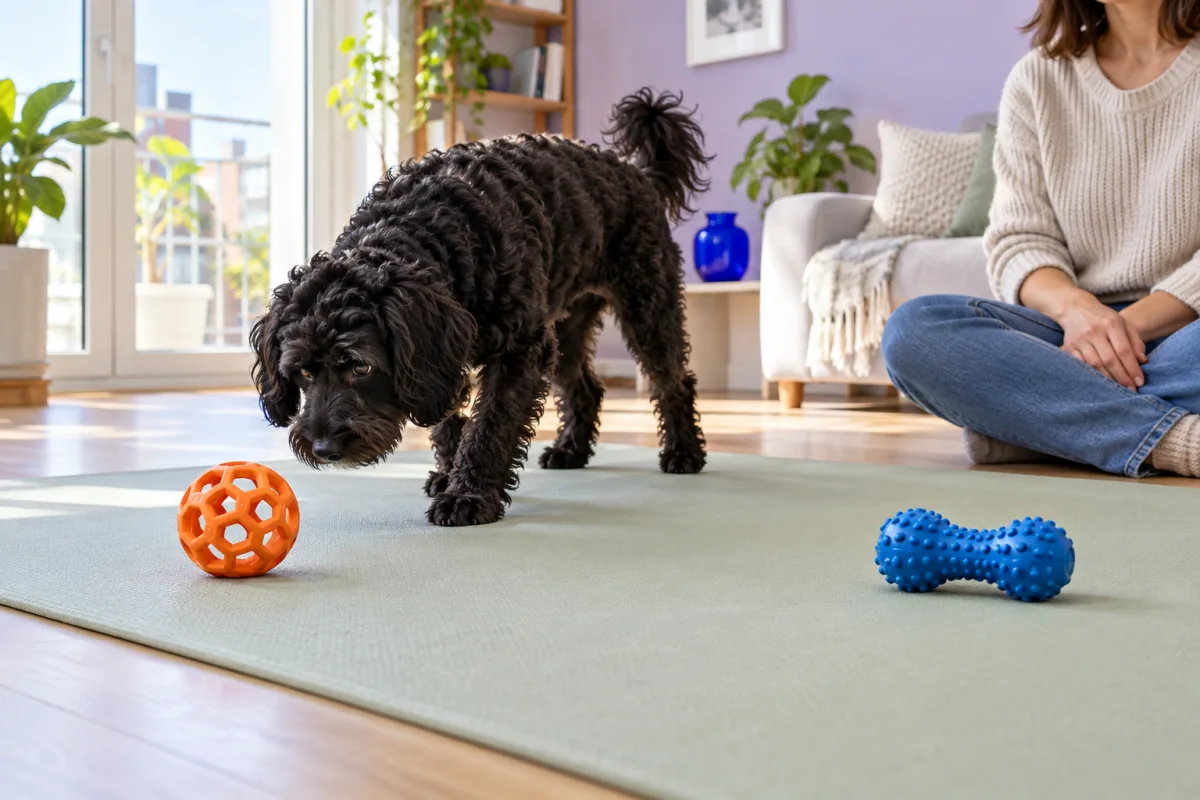
Reward useful behavior
Training changes the likelihood of behavior through its consequences and the conditions around it. Our everyday exercises focus on noticing useful choices and providing something the dog values. The aim is to make the desired behavior understandable and worthwhile.
A reward is not automatically effective because a person calls it a treat. A dog who enjoys food at home may struggle to eat on a noisy street. That can be information about the setting rather than a reason to bring more pressure. Make the context easier and consider the whole dog.
The American Veterinary Society of Animal Behavior recommends reward-based methods for dog training and behavior work. Its position statement also distinguishes everyday teaching from the individualized treatment needed for serious fear, anxiety and aggression.
Change the environment as well as the exercise
A quieter route, a secure barrier or a resting place away from the door can make a better choice easier. Management is part of the plan, not evidence that training has failed. It also protects the dog from repeatedly practicing something that is currently difficult.
Consider the apartment entrance. You can prepare the lead before opening the door, check the hallway and wait for space. Those choices help immediately while you build a separate check-in routine in an easier place.
Management must still meet welfare needs. A barrier that causes panic, a crate the dog fears or a schedule that delays urgent toilet needs is not a suitable solution just because it prevents a visible behavior. Observe the dog’s experience.
Use small, observable criteria
Define the next repetition in a way you can see: one voluntary look, two steps on a slack leash or a brief comfortable pause while an item remains at a distance. “Be good” and “calm down” do not tell either partner what happens next.
Change one part at a time. A familiar skill can become harder when the room changes, the person moves or a sound begins. When performance changes, look at those conditions before repeating the cue more loudly.
A short session is a practical container, not a universal dose. The timer on this site is a reminder to check in and take breaks. A single comfortable repetition can be enough.
Make participation and pauses meaningful
Where practice is optional, let the dog move away and respond when they do. A dog’s choice to return after a break provides useful information about the setup. Repeatedly following with a brush or holding the dog still removes that information.
Cooperative preparation does not eliminate the need for necessary care. Urgent treatment, painful procedures and safety concerns require a veterinary plan. Explain honestly what has been rehearsed and what has not; do not claim a finished exercise makes all handling comfortable.
Choice also belongs in ordinary play. Offer an easy starting point and observe whether the dog wants the same game, a different activity or rest. Making an activity more intense is not the only way to improve it.
Keep expectations proportionate
We do not promise a dog will stop barking, become reliable off leash or tolerate a difficult procedure within a fixed number of days. The plans organize human preparation and observation. They are not guarantees about an individual learner.
We do not use dominance labels to explain everyday mistakes. A dog’s behavior may be influenced by health, fear, learning history, access to resources, rest and the immediate environment. Useful plans ask which factors can be changed safely.
When a problem exceeds everyday practice, seek a professional who can assess the full situation. Ask about methods, relevant experience, referrals and how the dog’s welfare will be protected.