Name the situation, not a personality
“My dog is stubborn” does not tell you where to begin. “My dog runs to the door when a delivery arrives” gives you a setting, a trigger and something you can change. Start with an observable moment rather than a judgment about your dog.
Write down what happened just before, what your dog did and what happened next. Include where people were standing, what could be heard and whether there was room to move away. A short description can reveal a practical change that another cue would miss.
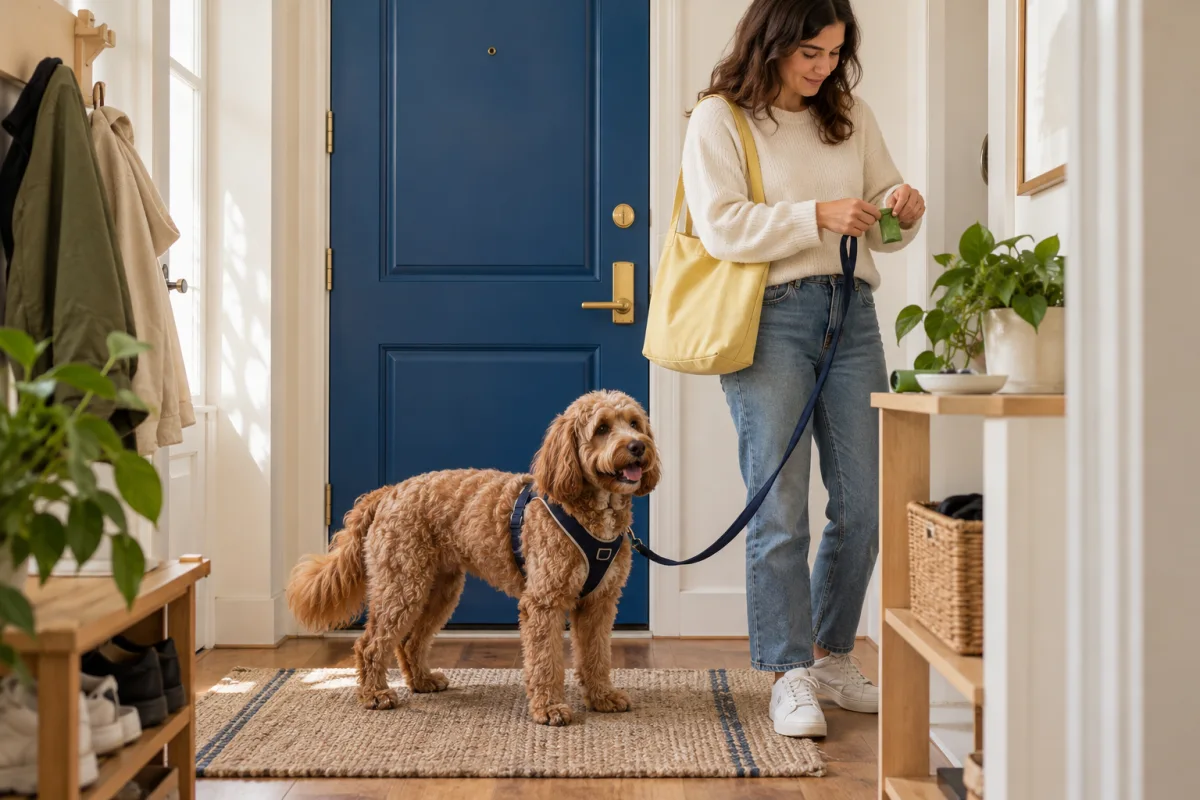
For example, a dog who barks from a bed beside the apartment entrance may need a quieter resting place and a different delivery arrangement before any sound rehearsal. A puppy who has an accident while someone finds the lead may need a ready-to-go station and earlier toilet opportunities.
Choose your starting point
Pick the collection that matches the setting. Apartment life covers space, sound and shared-building logistics. City walks covers route choices and movement around everyday distractions. Puppy days covers care routines and gentle foundations. A calmer home focuses on work, rest and household transitions. Enrichment and cooperative care help you add choice and prepare for ordinary needs.
The collections overlap because real life does. You do not need to read every guide before trying something useful. Read one complete guide, including the preparation, troubleshooting and stopping points, then choose the smallest relevant action.
Make the first attempt easy enough
Practice outside the difficult event. If a work call is the problem, briefly sit in the chair when you are free to respond. If a busy entrance is the problem, rehearse an easy check-in at an interior doorway first. Keep the actual care task simple while the skill develops.
Arrange secure equipment, suitable footing and room to leave. Offer rewards your dog enjoys and can safely have. A reward may be food, a toy, access to a safe sniff or another appropriate opportunity; what matters is whether it works for this dog in this setting.
Do not increase duration, distance and distraction together. Change one small detail, observe the result and return to the easier version when needed. Several comfortable repetitions spread across ordinary days can tell you more than one long session that ends in frustration.
Watch comfort as well as the visible behavior
A dog sitting still may be relaxed, waiting for the next reward or unable to find a way out of the situation. Consider the whole picture: posture, movement, breathing, orientation, willingness to take part and the option to leave. No single body-language signal gives the full answer.
If your dog repeatedly turns away, becomes tense, stops taking part or struggles to recover, reduce the demand or stop. Do not withhold necessary food, water, rest, toilet opportunities or reassurance to create motivation. Practice belongs inside good care.
New pain, abrupt behavior changes, panic, aggression or bite risk require appropriate veterinary or qualified behavior support. The purpose of these guides is everyday education, not an individual diagnosis or safety assessment.
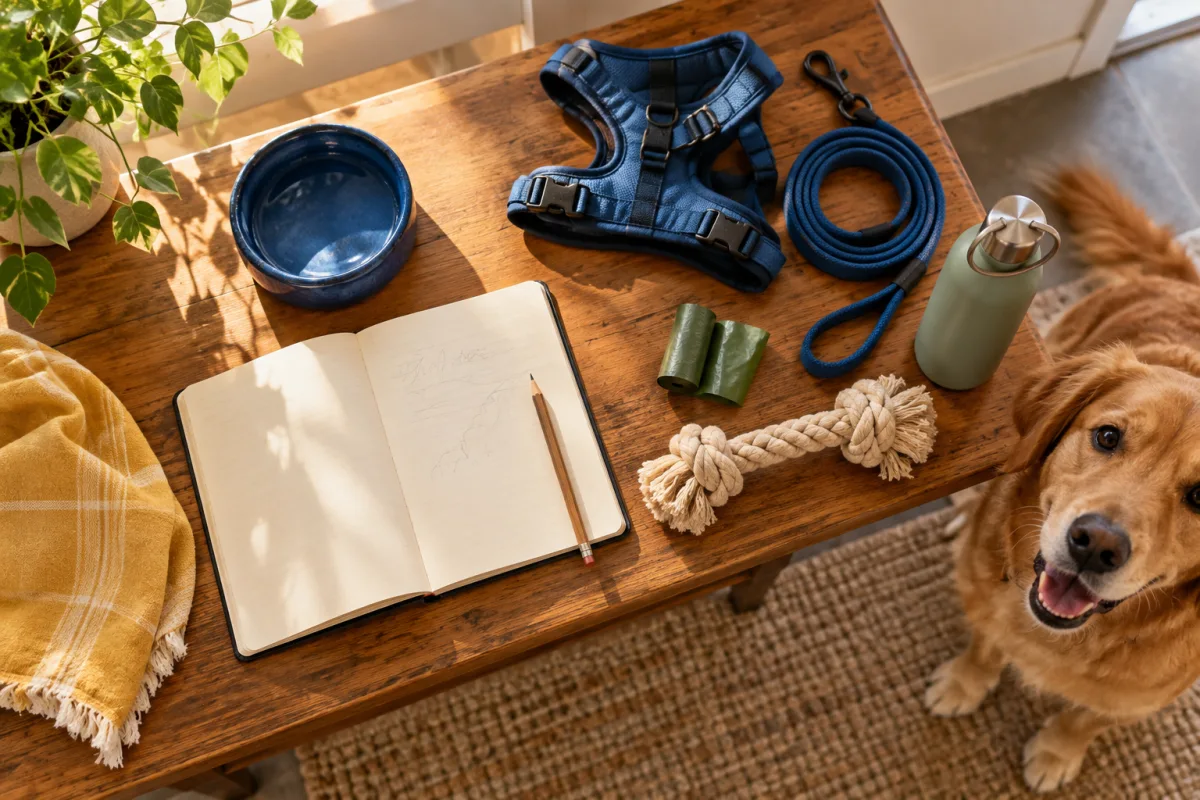
Keep one note and one next step
After the attempt, record the setup, what you observed and what you will repeat or change. “Three comfortable looks toward me in the quiet kitchen; try the same place tomorrow” is more useful than a score out of ten. The note should help you make the next decision.
A difficult session is not a debt to repay with extra training. Return to care and rest, then change the setup. If the same problem continues, your notes can make a conversation with a professional more specific.
Use a practice plan if you like a sequence, or the routine builder if you need a short starting point for today. Both are adaptable examples. DogPath is an optional app for people who want guided practice in a separate mobile experience.