Play & enrichment
Small-apartment dog enrichment that fits real life
Build a small-apartment dog enrichment routine with quiet games, simple room layouts, useful choices, and activities that fit your dog’s needs.
A flexible practice plan
Use this sequence to learn what your dog enjoys. You do not need a new purchase every day or a harder puzzle after every success. Choose safe materials, account for dietary and physical needs, and supervise each activity.
The aim
Use this sequence to learn what your dog enjoys. You do not need a new purchase every day or a harder puzzle after every success. Choose safe materials, account for dietary and physical needs, and supervise each activity.
Seven parts. Your dog’s pace.
Repeat or simplify a part when needed. The calendar organizes the humans; comfort guides the learning.
Part 1 · repeat as needed
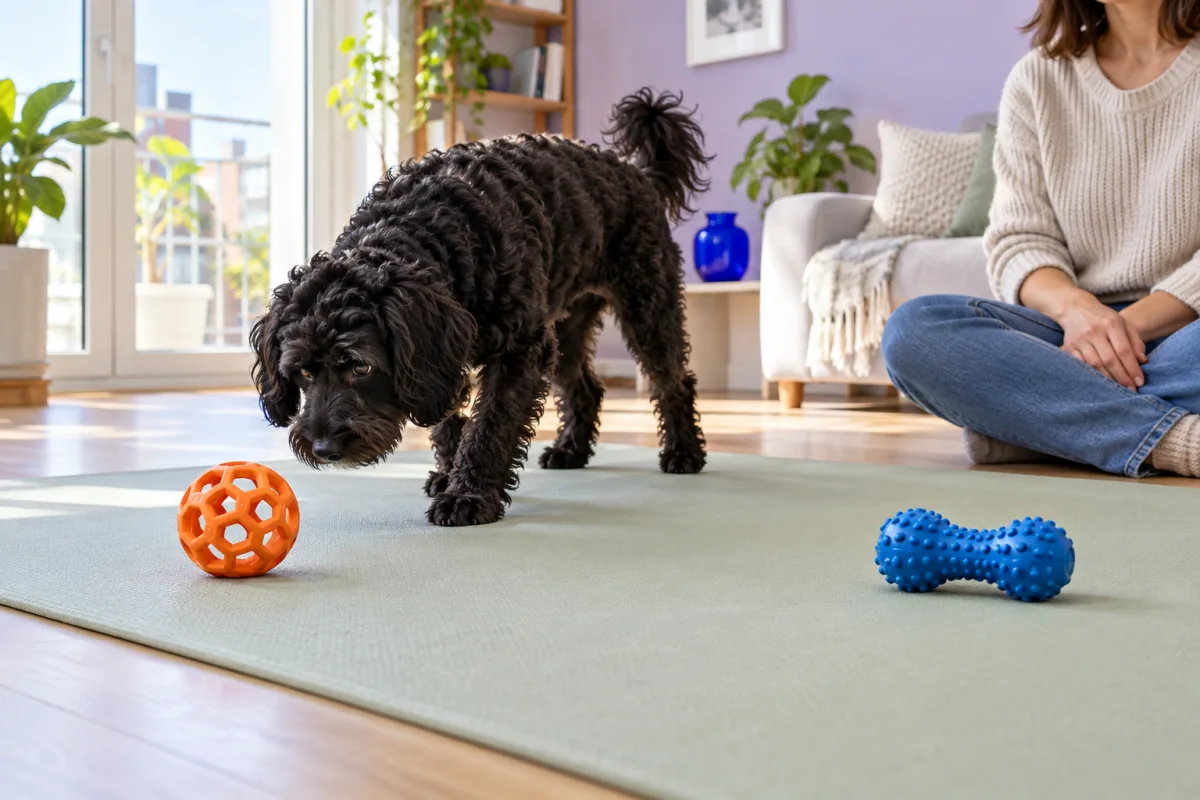
Offer two familiar safe toys with space between them and watch what your dog chooses. Avoid waving both at once or repeatedly redirecting the dog toward your preferred toy.
Write down the interaction rather than assigning a personality label. Did the dog carry, mouth, chase, ignore or invite you to join? Leaving the setup is a valid choice.
Part 2 · repeat as needed
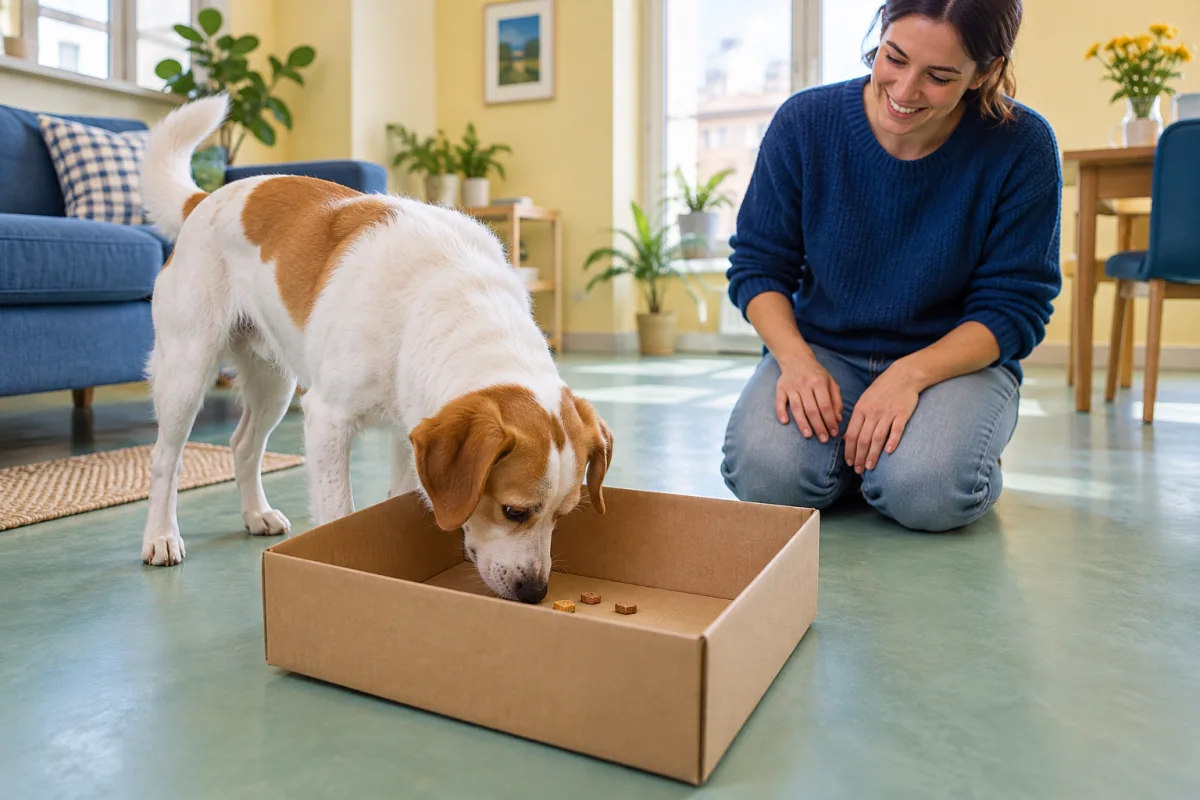
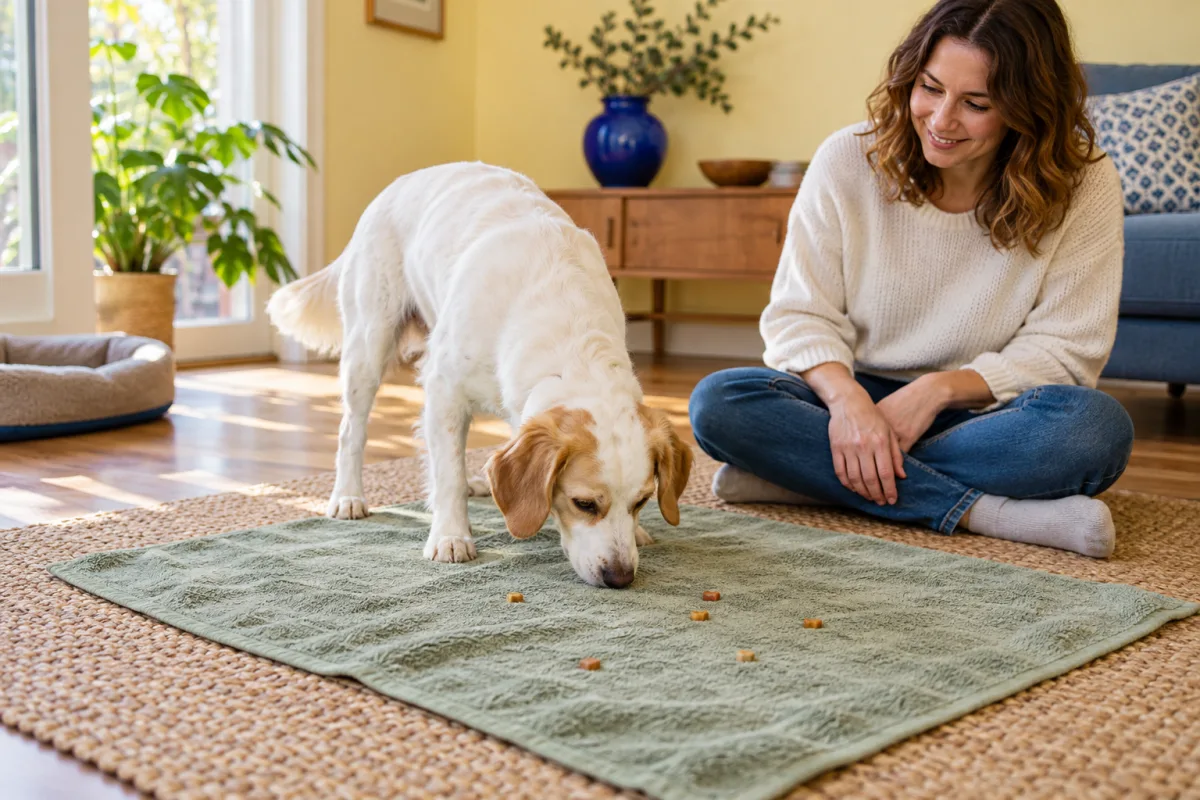
Place a few suitable food pieces openly on a clean surface where your dog is comfortable. Let them investigate at their pace. If food is unsuitable, use a familiar toy partly in view.
There is no need to add a search cue immediately. Keep the first problem simple enough that the dog can participate without repeated prompting.
Part 3 · repeat as needed
Use the play style your dog chose on the first day. Keep movements gentle and the footing secure. Pause your movement periodically to see whether the dog wants to re-engage.
Stop if excitement turns into grabbing, frantic behavior or difficulty disengaging. A game is more useful when the dog can move in and out of it comfortably.
Part 4 · repeat as needed
Choose quiet company, a familiar toy search or a safe sniffing opportunity. Enrichment is broader than dispensing food. Select something that fits the dog’s interests and the available space.
Notice the context. A dog may enjoy an interactive toy game after rest but prefer a quiet observation spot after an outing. There is no requirement to complete a planned activity if it does not fit.
Part 5 · repeat as needed
Repeat the activity that was easiest to enjoy. Keep the setup familiar enough that the dog can recognize the opportunity. Novelty is optional.
If you change something, change one small detail. Moving a search by a short distance can be enough; hiding food under many layers may simply make it frustrating.
Part 6 · repeat as needed
Use familiar routines and offer optional gentle interaction. A varied week can include a day without a novel enrichment task, especially after a busy event.
Observe rest and recovery. A dog who cannot settle after repeated activities may need a different balance, a simpler setup or a professional conversation about ongoing restlessness.
Part 7 · repeat as needed
Write down three activities with the materials, supervision and stop signs each requires. Include a quiet option and an option without food so that the menu works in more than one situation.
Keep the list short enough to use. The value is a set of known, comfortable opportunities, not the number of ideas collected. Review preferences as health, age and the household change.
Read the setup
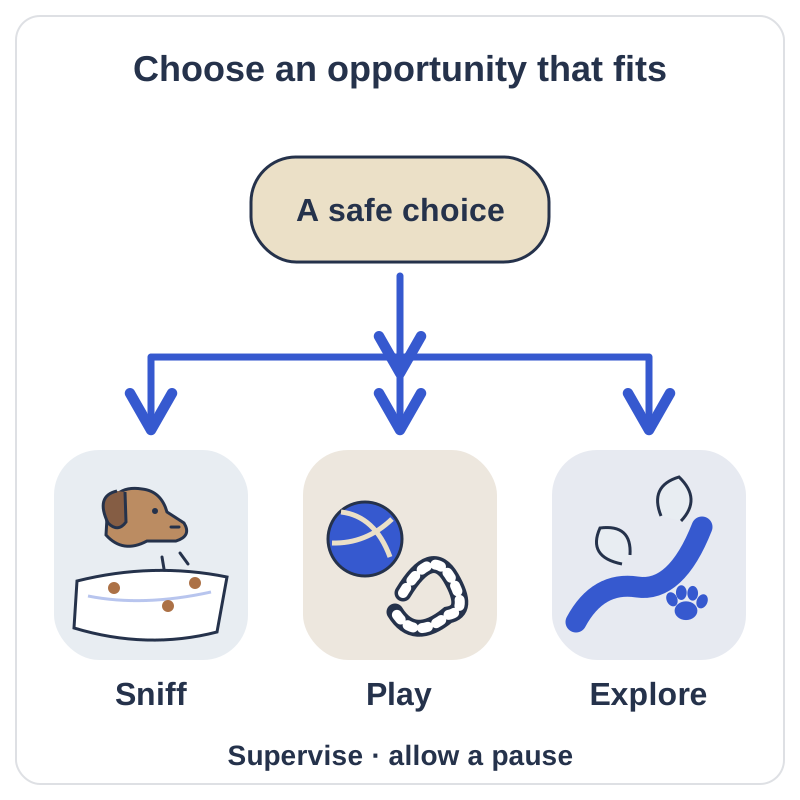
A useful enrichment menu describes opportunities, not a shopping list. Start with what is already safe, familiar and appropriate for your dog. A clear patch of floor, a toy the dog enjoys or a suitable place to sniff may offer more value than a complicated new puzzle. The plan helps you notice preferences and build a few options you can set up without turning the whole apartment into an activity station.
Keep the dog’s choices visible. An activity is not automatically successful because all the food disappeared or a toy was used for a long time. Notice the approach, participation, pauses and aftermath. Some activities fit one part of the day better than another. Dietary needs, physical comfort, supervision and the presence of other animals should shape the choice before you decide how novel or difficult to make it.
Put the plan into practice
Offer a small understandable choice between familiar suitable items or activities. Give enough space that your dog can investigate without being crowded. Avoid moving everything at once or repeatedly drawing attention to your preferred answer. If the dog leaves, record that rather than immediately making the display more exciting. The current context may favor rest, company or a different kind of opportunity.
Check the physical arrangement before the activity begins. Use secure footing, suitable materials and clear space around furniture. Remove damaged items and anything the dog may swallow, become caught in or guard from another animal. Food activities should fit the dog’s dietary guidance and ordinary allowance where appropriate. When more than one dog is present, manage access thoughtfully rather than assuming a shared search will be cooperative.
A simple choice without a sales pitch
An illustrative setup offers two familiar safe toys with space between them. The person waits quietly. The dog picks one up and carries it toward the person, so a short gentle interaction is offered. On another day, the dog ignores both. That is a reason to consider the day’s context, not to insist the same toy game must happen.
Put the plan into practice
For a search, make the first discovery easy. Suitable food can be in plain view on a safe clean surface, or a familiar toy can remain partly visible. The dog does not need a complicated cue sequence before being allowed to investigate. If searching becomes frantic, the setup may need simplifying or replacing. More layers, tighter folds or deeper hiding places do not automatically create a better experience.
For interactive play, pause your movement and watch whether the dog chooses to re-engage. Keep space for comfortable movement and stop before the activity becomes difficult to manage. Do not take a valued item from the dog to test willingness to continue or share. Freezing over possessions, guarding or concern about a bite changes the activity choice and calls for suitable professional support rather than a more insistent game.
An easier search is a valid adjustment
In an illustrative search, a toy hidden behind a large cushion is difficult for the dog to locate. The person makes it partly visible on a clear safe surface instead of repeatedly pointing or calling. If the dog then chooses another activity, the search ends. The purpose is a comfortable opportunity, not proving the dog will solve the first version.
Put the plan into practice
After the activity, notice what the dog does in the ordinary environment. They might rest, seek appropriate interaction, explore quietly or remain busy. Consider the whole day rather than attributing every change to one game. An activity offered after a crowded outing may feel different from the same activity after rest. Avoid creating a rule that a particular game must always produce sleep.
Build a short menu with practical labels: quiet food search, food-free toy choice, suitable outdoor sniffing and gentle social interaction. Write the materials, supervision and stop points beside each. Rotation can mean choosing from this familiar menu, not introducing a new task daily. A low-demand day remains an option. Review the menu after changes in age, health, mobility or household circumstances so a once-useful setup does not become an automatic habit.
A rotation based on context
An illustrative household keeps a familiar toy search for a clear quiet room and a gentle choice game for shared time. After a busy outing, they offer ordinary rest and optional quiet company instead of adding another challenge. Their menu records when each option tends to fit, without assigning an activity as a guaranteed way to tire the dog.
From an ordinary day
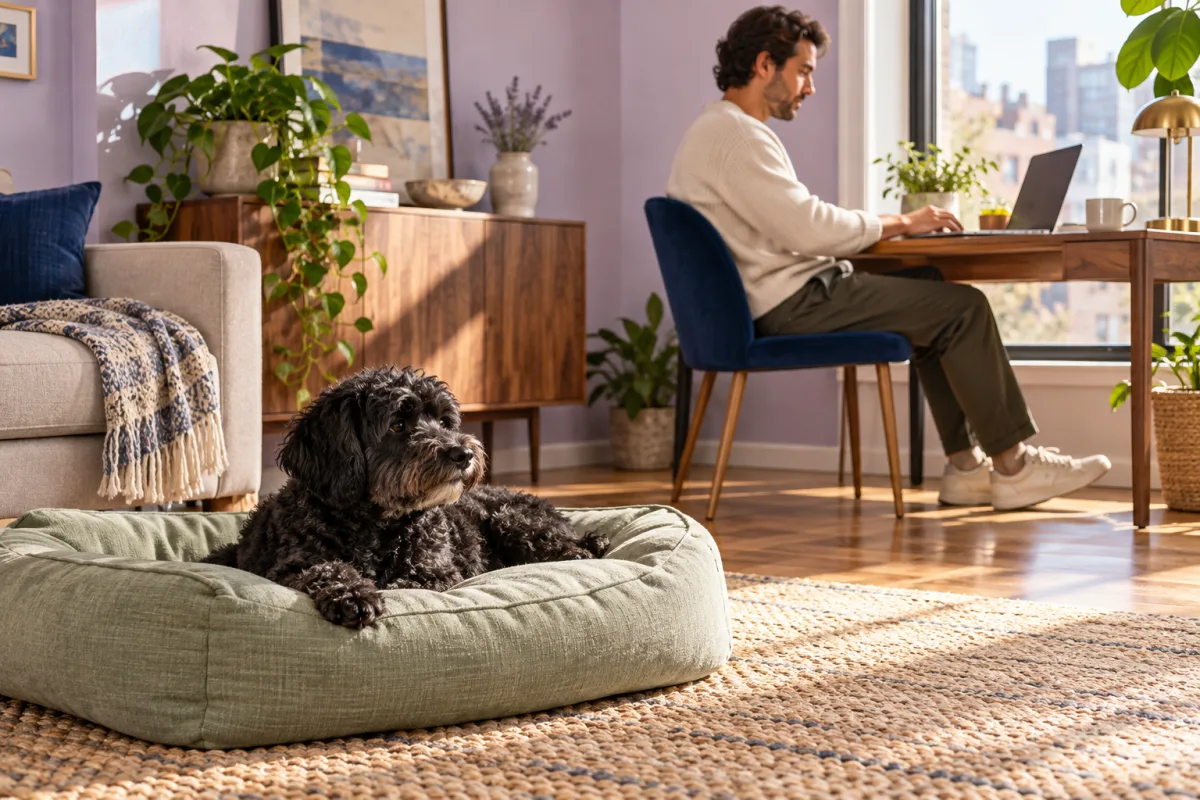
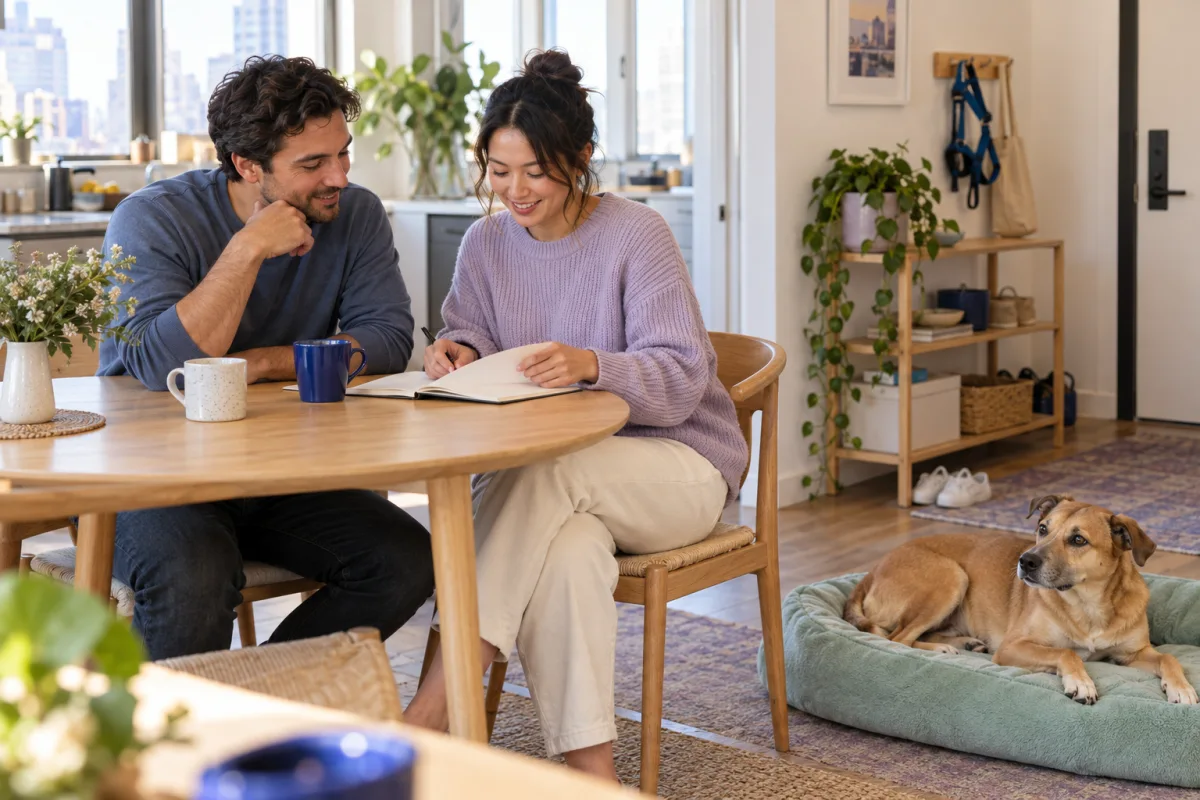
This illustrative household has one living room that also serves as a work area. The dog enjoys toy interaction, but an energetic chase game makes it difficult for the person to return to the desk. The first decision is about the environment: moving games must fit clear space, secure footing and the dog’s comfort. The household chooses not to use the cramped furniture route for chasing.
They offer a familiar toy choice and a short gentle interaction at a time when the person can stay involved. On a different occasion, a partly visible toy search uses the same clear patch of floor. Each setup is easy to understand and supervised. The dog can leave, and the person watches how the activity ends instead of restarting immediately because it was brief.
The notes distinguish participation from the transition afterward. If one game repeatedly produces an awkward return to work, it moves to another time or is replaced with an option that fits better. Persistent restlessness across activities is not treated as a demand for harder puzzles. The example shows how a small menu can support household decisions while leaving health and behavior concerns for appropriate professional advice.
Adapt the next attempt
| Situation | Adjustment | Next step |
|---|---|---|
| The dog ignores the planned activity. | Allow the choice and consider rest, familiarity, comfort and the current context. | Offer a suitable alternative later rather than escalating the display immediately. |
| The dog starts chewing or swallowing activity materials. | End access safely and remove the unsuitable material; seek veterinary advice for ingestion concerns. | Choose an activity without that material and review supervision before reuse. |
| Two dogs compete around the same item. | Use appropriate separation and avoid continuing a shared setup that creates tension. | Plan individual opportunities and seek qualified support for guarding or bite risk. |
| Every activity is followed by difficulty disengaging. | Reduce demands and review the wider routine rather than adding more intensity. | Discuss persistent restlessness or changes in behavior with an appropriate professional. |
Before the next step
Familiar opportunities can still be useful. The relevant question is whether the dog can enjoy the activity comfortably in that context. Novelty may be interesting, but it can also add uncertainty or frustration. Change a small detail only when it has a purpose, and keep an easy familiar version available.
No particular purchase is required for this plan. Familiar safe toys and appropriate simple searches can provide useful opportunities. Materials still need careful selection and supervision; homemade does not automatically mean safe. Choose what fits the dog, the space and your ability to monitor the activity rather than the appearance of a product.
Indoor activities do not automatically replace toileting, suitable movement, exploration or other individual care needs. They can be one part of a workable day when the whole arrangement is considered. If normal outings are restricted by health or another circumstance, discuss suitable activity and care options with the relevant professional.
Write the opportunity, setting and observable response. “Chose the soft toy, invited a brief game and then moved away” is more useful than “loves high-energy play.” Include what happened afterward and any supervision limits. A preference is information to revisit, not a permanent label that every caregiver must act on.
After the first run-through
Review the activity itself and its preparation. Note which familiar item your dog approached, what made the first step obvious and how you finished. If making the setup simpler led to comfortable participation, keep the simple version. Novelty and difficulty do not need to increase each time an activity appears in the routine.
Choose two or three suitable possibilities for another day and write down the supervision each requires. Leave the rest of the space clear for ordinary movement and rest. If an item became a chewing or ingestion concern, remove it from the menu rather than relying on the previous session’s appearance. The useful outcome is a small set of workable choices.
Keep one useful thing
Write a three-option menu with the materials, supervision and stopping points each requires. Include an easy quiet choice, then let the dog’s participation and the day’s context determine what is offered next.
Write a practice notePlay & enrichment
Build a small-apartment dog enrichment routine with quiet games, simple room layouts, useful choices, and activities that fit your dog’s needs.
Play & enrichment
Explore no-food dog enrichment through gentle play, toy searches, safe sniffing, social time, and simple choices tailored to your dog.
A calmer home
Build a dog work-from-home routine around care, predictable breaks and comfortable rest, with realistic support for meetings and changing work demands.