Choose an easy entry point
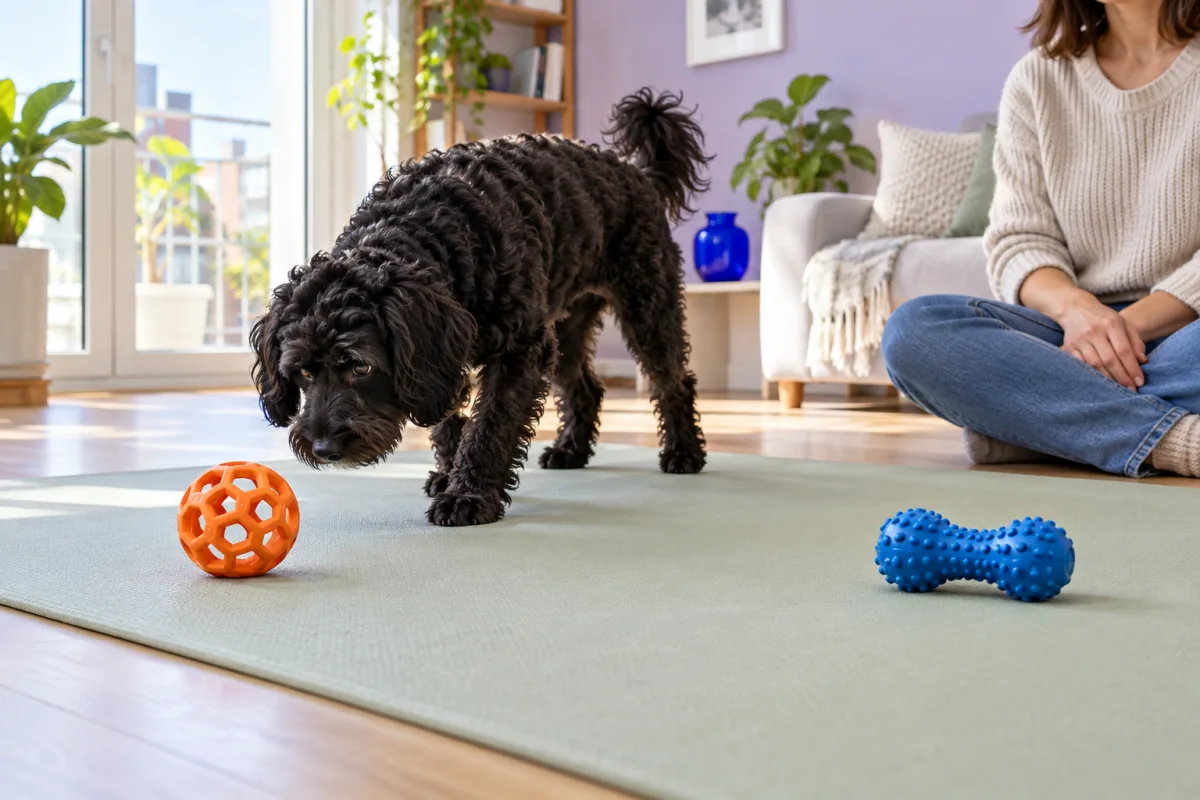
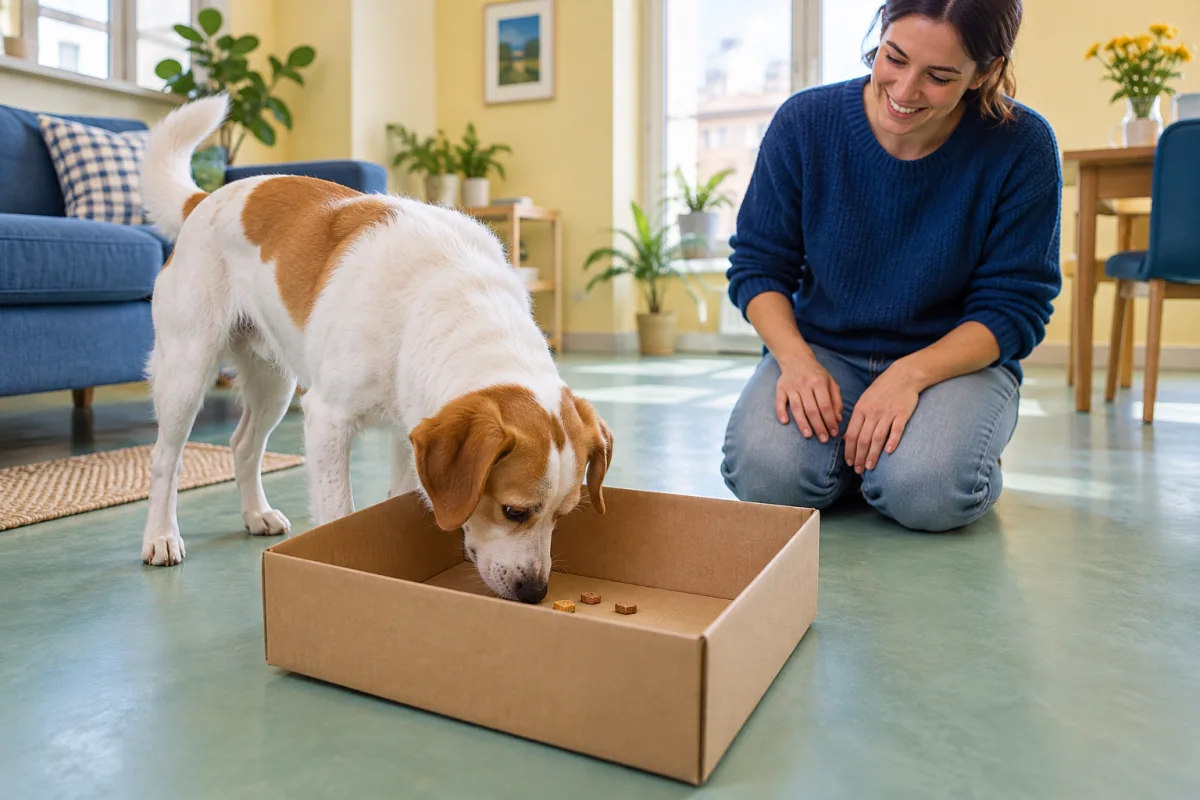
An activity should be understandable and optional. Food in view, a familiar toy or a quiet sniffing spot can be enough. If your dog repeatedly leaves, becomes frustrated or starts damaging materials, stop and choose something simpler.
Supervision is part of the setup
Check toys, fabrics and cardboard for ingestion or entanglement risks. Separate dogs around valued items where appropriate. Food-based activities must fit the dog’s diet and professional guidance.
Observe what comes afterward
A useful activity does not need to exhaust your dog. Notice whether they recover comfortably, seek more interaction or struggle to disengage. Preferences and physical needs can change from day to day.
Comfort and care come first. Stop optional practice when your dog is worried or unable to take part. Seek appropriate help for pain, panic, aggression or bite risk.
Read the training approach