
A calmer home
A work-from-home routine that works for your dog too
Build a dog work-from-home routine around care, predictable breaks and comfortable rest, with realistic support for meetings and changing work demands.
A flexible practice plan
A calendar full of meetings is not a training plan. This sequence helps you organize care around work and rehearse tiny versions of the moments that repeatedly interrupt your dog. Arrange support for needs you cannot meet during calls; a longer stay is not a substitute for care.
The aim
A calendar full of meetings is not a training plan. This sequence helps you organize care around work and rehearse tiny versions of the moments that repeatedly interrupt your dog. Arrange support for needs you cannot meet during calls; a longer stay is not a substitute for care.
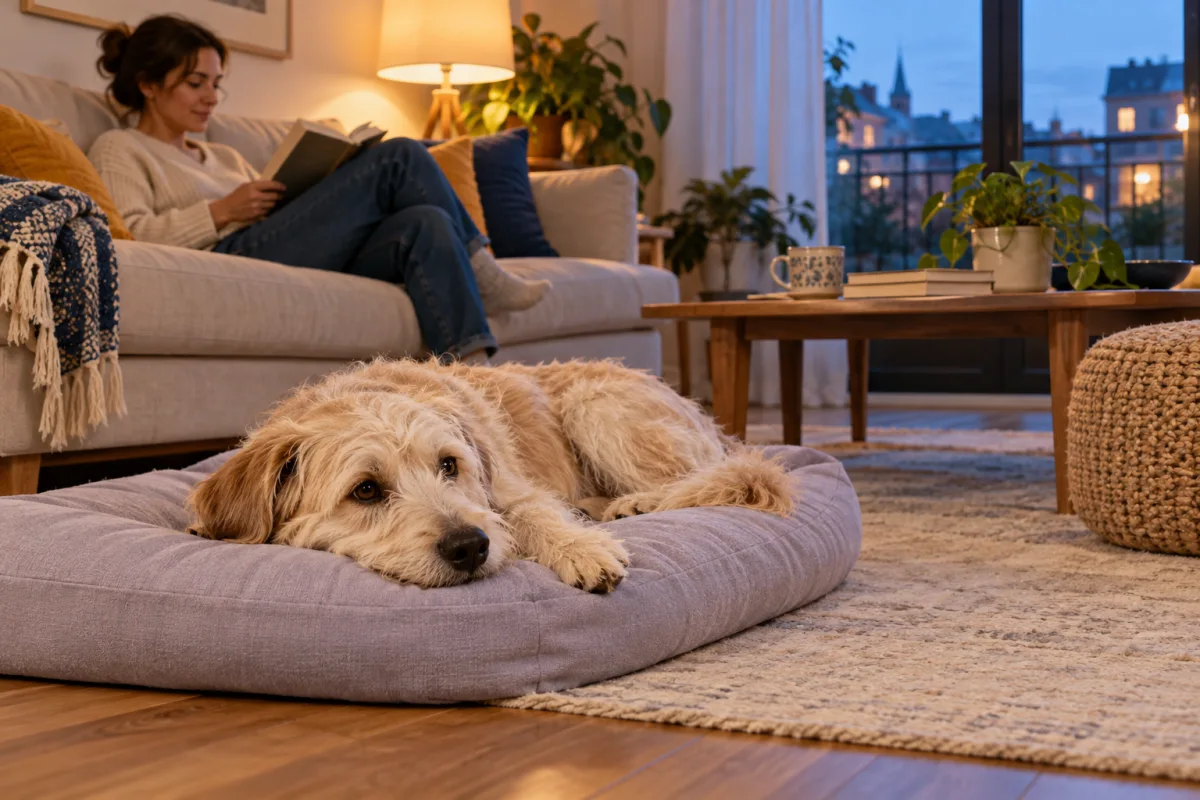
Seven parts. Your dog’s pace.
Repeat or simplify a part when needed. The calendar organizes the humans; comfort guides the learning.
Part 1 · repeat as needed
Mark the part of the workday that most often goes wrong. Is it the first call, the period after lunch or the moment you put on headphones? Note what your dog needs before that block rather than waiting for an interruption.
Look for basic constraints. A puppy might need a toilet opportunity sooner than your calendar allows. A dog distressed by separation may not be comfortable behind a closed office door. Solve those care needs before rehearsing work signals.
Part 2 · repeat as needed
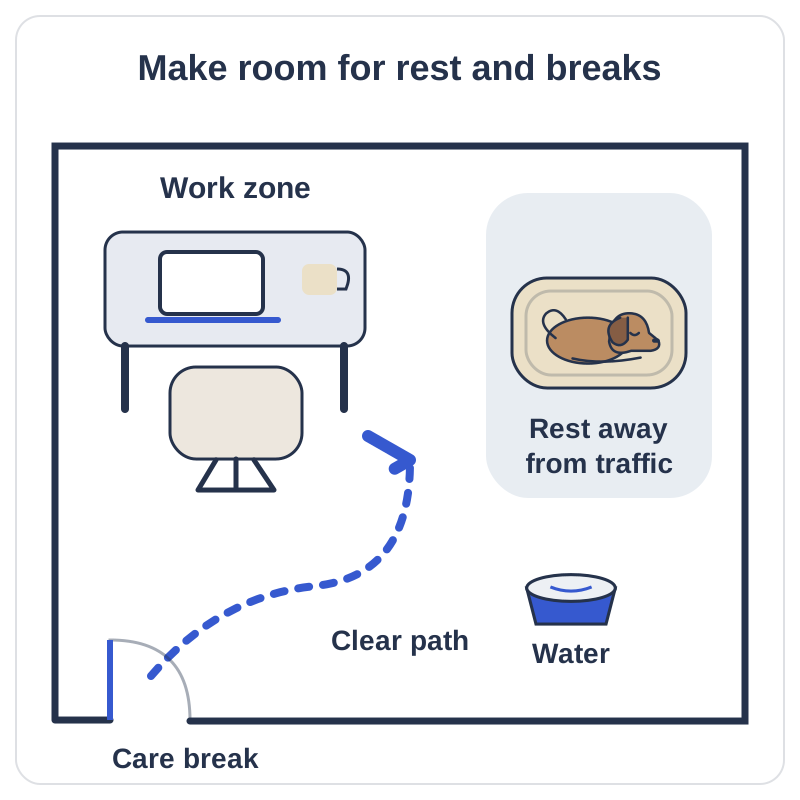
Arrange a suitable outing, water access and a comfortable rest space before the chosen block. Leave enough time for the transition back home rather than moving directly from an exciting walk to a demand for silence.
Choose an activity your dog already understands. An unfamiliar puzzle is not a reliable babysitter during a presentation. Check materials and supervise as needed; arrange another person if you cannot do that safely.
Part 3 · repeat as needed
At a quiet time, sit in your work chair briefly, then get up again. Observe whether your dog remains comfortable. Reward a relaxed pause where it happens instead of insisting on a particular posture.
Keep the movement small if the chair predicts frustration or separation. One calm repetition followed by a normal break is enough information for the day.
Part 4 · repeat as needed
Use a brief, low-key version of your normal work behavior, such as putting on headphones without starting a meeting. Allow your dog to move around and choose a resting spot.
If your voice or screen activity is the difficult element, rehearse only a few calm words at first. Do not combine every call signal in the same attempt. Short practice should stay easier than the real event.
Part 5 · repeat as needed
Protect a care break between work blocks. Give the dog an appropriate toilet or movement opportunity and a chance to interact without a screen competing for attention.
A break is not another obedience assignment. Let the dog sniff or explore in a safe setting and then return to a familiar rest pattern. The useful measure is whether needs were met, not how many commands were completed.
Part 6 · repeat as needed
Try the arrangement you will need on a difficult day: a familiar caregiver, a rescheduled call or another appropriate support. Write down the routine so someone else can use it without guessing.
Avoid introducing a brand-new sitter or closed-room setup during a high-pressure meeting. Practice the transition beforehand while you are available to help.
Part 7 · repeat as needed
Compare interruptions with the preparation that came before them. If a better-timed outing helped more than mat practice, keep the outing. If the dog is still restless, look again at comfort, sleep, pain and the demands of the schedule.
Choose one sustainable change for the next week. You are building a workable care arrangement, not teaching your dog to tolerate an unlimited workday without support.
Read the setup
A workable home-office routine accounts for what happens before, during and after a meeting. It also accounts for the attention you can realistically provide. A dog can be in the same room while still finding the work pattern difficult, and a comfortable resting dog does not need continuous entertainment. The aim is to make care predictable while leaving room for individual preferences and changing needs.
Use the calendar as a map of human availability. Mark the blocks where you cannot step away, the breaks you can actually protect and the person who can help when plans change. Then choose one small work signal to rehearse outside those blocks. This separates learning from the real demand and prevents the dog’s care from depending on whether a meeting happens to finish early.
Put the plan into practice
Write down the last ordinary care opportunities before an interruption: toileting, water, suitable movement, company and comfortable rest. You are not looking for an exact universal quota. You are checking whether the work arrangement gives this dog appropriate opportunities. A puppy who wakes during a call may need immediate support, while an older dog may need a more accessible resting place or a veterinary discussion about a new change.
Next, describe the work behavior the dog notices. Does difficulty begin when you close a door, move the chair, start speaking to a screen or finish a call? Those are different questions. A closed door that causes distress calls for a different response from a brief excited response to your voice. Do not label both as attention seeking and apply the same demand for stillness. Keep observations narrow enough to guide a practical adjustment.
A calendar note with useful context
An illustrative note says: “Dog woke during the second call and went toward the exit; the planned break had been moved. Another adult provided a toilet opportunity.” The next change is protecting coverage during that block. It would be misleading to record the event only as a failure to stay on a mat.

Put the plan into practice
Choose a quiet moment and one familiar part of the work setup. Sitting in the chair briefly may be enough. Let the dog choose a comfortable position with room to move away. If you offer rewards, place them thoughtfully where the dog is comfortable rather than using food to keep them in a place they otherwise avoid. Finish while you can still give attention to what happened.
Add complexity only when the current version is comfortable. Speaking a few words, wearing headphones and looking at a screen are separate changes. Their order should follow what matters to your dog, not a fixed lesson sequence. Keep the rehearsal distinct from an important meeting so you can pause immediately. A dog who is tense, repeatedly returning to seek help or unable to disengage is giving information about the setup, not asking for a longer test.
One variable at a time
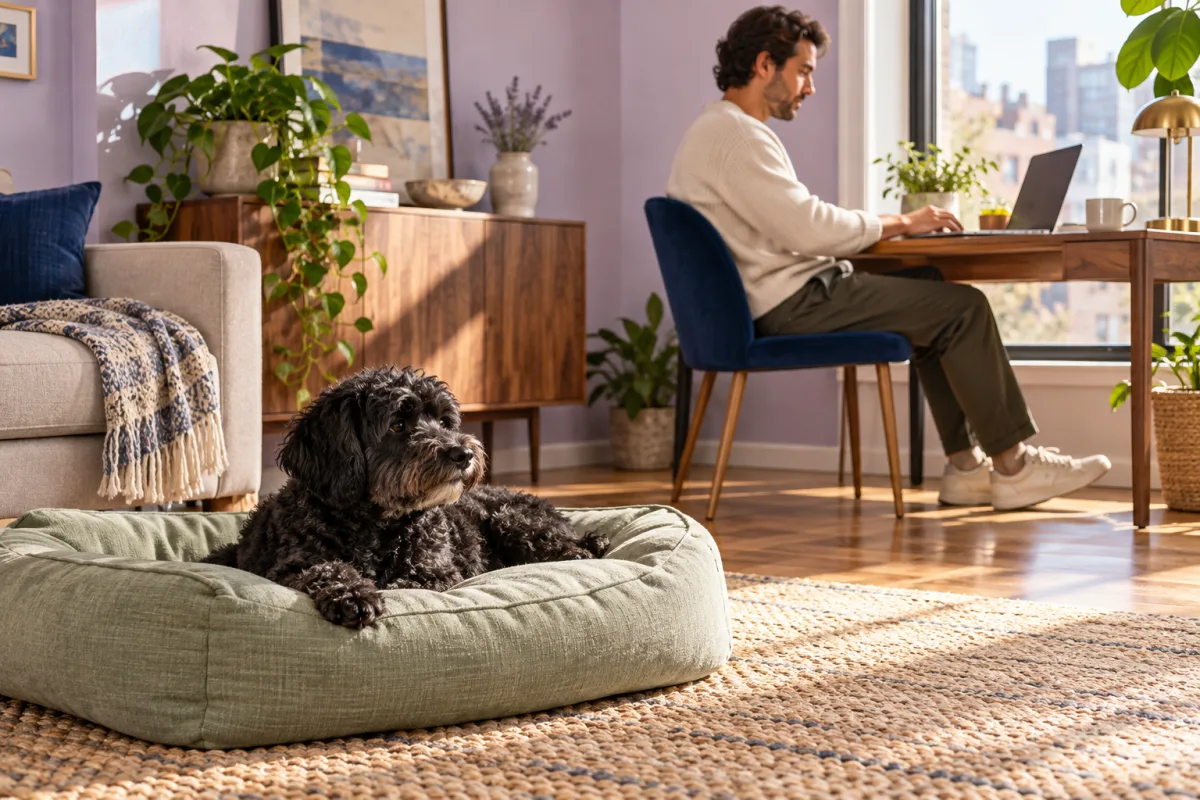
In an illustrative rehearsal, a person sits at the desk without headphones. The dog chooses a bed nearby. On another suitable occasion, the person briefly picks up the headphones without putting them on. If that movement changes the dog’s comfort, the person can reduce it and stop rather than adding a call on top.

Put the plan into practice
A protected break is more useful than an optimistic blank space between meetings. Decide what happens if the first meeting runs over, who is available and how that person will know they are needed. Prepare ordinary supplies so another adult can help without a long explanation. If a paid or outside caregiver is part of your own arrangement, introduce the person and routine appropriately before relying on them during a difficult work block.
Also plan the return from a break. An exciting outing followed immediately by an instruction to be silent may create another awkward transition. Leave room for a familiar return-home routine and appropriate recovery. After work, offer ordinary connection without turning every evening into compensation through intense play. Review whether the whole arrangement is sustainable for the people and comfortable for the dog, especially when the work schedule changes.
A backup that can actually happen
An illustrative household assigns one adult to the late-morning care block on days with consecutive presentations. The other adult sends a simple handover before the first meeting, not an urgent message after the dog becomes unsettled. If neither adult is available, they change the work or care arrangement rather than writing a longer stay into the dog’s plan.
From an ordinary day
This illustrative example concerns a dog who rests during quiet work but becomes busy when the person removes headphones and stands up. The household initially tries to extend mat practice. A closer observation shows that standing up often predicts an immediate outing, a visitor at the door or an energetic game. The transition itself deserves attention.
At a calm time, the person rehearses a much smaller ending: touch the headphones, pause, remain seated and return to ordinary quiet activity. They do not repeat the sequence until the dog stops responding. They use a comfortable version and watch the whole dog. Real care breaks remain timely, and the household avoids withholding an outing to make the rehearsal work.
They record whether the ending can become more predictable and which situations still cause difficulty. A prearranged caregiver covers meetings that cannot be interrupted. If the dog’s restlessness is new or persists across different contexts, the next step is professional advice rather than adding more desk practice. The example illustrates how observation changes a question; it does not promise a particular result.
Adapt the next attempt
| Situation | Adjustment | Next step |
|---|---|---|
| A necessary care opportunity falls inside an uninterruptible call. | Arrange coverage or change the work block before it begins. | Update the shared calendar so care does not depend on a meeting finishing early. |
| A food activity produces more excitement than rest. | End the unsuitable setup and offer an easier familiar option with appropriate supervision. | Compare participation and recovery before using that activity during another call. |
| The dog becomes worried when the office door closes. | Use an arrangement the dog can currently manage and avoid testing longer separation. | Seek appropriate help for distress and plan work coverage while that concern is addressed. |
| Work signals are comfortable, but the dog cannot settle elsewhere either. | Review comfort, rest, routine and any change from the dog’s usual behavior. | Bring persistent or sudden concerns to a veterinarian rather than increasing practice demands. |
Before the next step
There is no need to interrupt comfortable rest continuously. Rehearse useful patterns when you can observe and respond thoughtfully, and consider where rewards are placed and what they predict. During an actual meeting, use the care and support arrangement you prepared rather than trying to conduct a full training session at the same time.
The bed is only one part. Consider temperature, footing, passing people, sound, water access and whether the dog can change position or leave. A beautiful bed beside a rolling chair may be less comfortable than a familiar place farther away. Watch the dog’s choices rather than judging the setup by appearance.
Keep a consistent preparation sequence around flexible event anchors: before the difficult block, after waking, after an outing and at the handover. Review the actual calendar in advance and name the person responsible. Predictable care does not require identical clock times when needs and human availability are handled reliably.
Use the household planning parts while adapting all care to the individual puppy. A puppy’s waking, toilet and support needs may interrupt your calendar frequently. Short work rehearsals cannot replace another available caregiver when you cannot respond. Veterinary guidance, comfortable rest and timely care take priority over completing an office practice sequence.
After the first run-through
Compare one planned work block with what happened. Was another person available when promised? Did the break allow care and company, or did it become another rushed task? Keep the arrangement that made a busy stretch more workable and identify the first point where the schedule depended on an assumption.
Prepare the next similar day from that information. Move a meeting where possible, confirm help or simplify optional practice. If the dog struggled when the person became unavailable, do not describe a quiet ending alone as evidence that the arrangement felt comfortable. Record the whole sequence and seek appropriate support when the problem exceeds a routine adjustment.
Keep one useful thing
Select the work block with the least reliable care coverage. Fix that coverage first, then rehearse one small work signal when you are fully available. Record the transition that helped rather than simply counting minutes of silence.
Write a practice noteA calmer home
Build a dog work-from-home routine around care, predictable breaks and comfortable rest, with realistic support for meetings and changing work demands.
A calmer home
Build a manageable dog doorbell practice plan by separating the sound, your movement and visitor entry, with safe management for real deliveries.
Apartment life
Help a dog who barks at hallway noises with a practical sound log, quieter resting setup, delivery management and small, comfortable practice sessions.