Out in the city
City dog training: build a route your dog can handle
Build a city dog training routine around safe routes, quieter pauses, street crossings and real choices, with practical exercises for everyday outings.
A flexible practice plan
Build the useful pieces of a city walk in easy places before asking them to work on a busy sidewalk. These seven parts can take longer than seven days. Keep your dog securely leashed and make traffic decisions yourself throughout.
The aim
Build the useful pieces of a city walk in easy places before asking them to work on a busy sidewalk. These seven parts can take longer than seven days. Keep your dog securely leashed and make traffic decisions yourself throughout.
Seven parts. Your dog’s pace.
Repeat or simplify a part when needed. The calendar organizes the humans; comfort guides the learning.
Part 1 · repeat as needed
Map a short route with wider sections, quieter times and a safe way to turn back. Look for the places where you could wait without blocking people or approaching traffic.
Walk it without adding training demands. Notice where your dog can explore comfortably and where the environment changes quickly. A shorter comfortable walk gives you a better starting point than a long route full of pressure.
Part 2 · repeat as needed
In a secure quiet room, notice your dog voluntarily orienting toward you. Mark the moment with a familiar word if you use one and offer a suitable reward.
Add two easy steps together, then allow a break. The aim is a simple pattern of connection, not constant eye contact. Your dog also needs to see and smell the world.
Part 3 · repeat as needed
Choose an open indoor area or a quiet secure outdoor spot. Turn gently and invite your dog to move with you before the lead becomes tight. Reward the easy change of direction.
Later, a practiced turn can help you leave a crowded situation. It is still a handler decision: do not wait until the dog is overwhelmed and then test whether the cue works.
Part 4 · repeat as needed
Rehearse a brief pause at a harmless visual line inside a safe space. Standing is fine; comfort matters more than a specific position. Keep the duration very short.
At a real curb, your leash handling, distance from the edge and attention to traffic provide safety. A cue is a helpful routine, never permission to trust a dog with road decisions.
Part 5 · repeat as needed
Add a safe quiet place where the dog can choose where to sniff within the leash’s reach. Stay away from litter, traffic and other dogs’ space.
Observe whether the break helps the dog engage comfortably afterward. Sniffing is not a reward you must always withhold until a formal task is complete; it is also part of an ordinary walk.
Part 6 · repeat as needed
Choose a modest change: a slightly different route at the same quiet time, or an easy check-in near the building entrance. Keep other variables familiar.
If the dog is unable to disengage or begins repeatedly pulling toward something, find more space. Avoid adding a new street, a longer walk and a busy time all at once.
Part 7 · repeat as needed
Identify two useful decisions you made this week: turning back early, waiting behind a parked car at a safe distance or choosing a quieter crossing. Include them in the next route plan.
If walks involve sustained fear, aggression or risk you cannot safely manage, bring the route notes to a qualified professional. Progress includes protecting your dog from situations that are currently too hard.
Read the setup
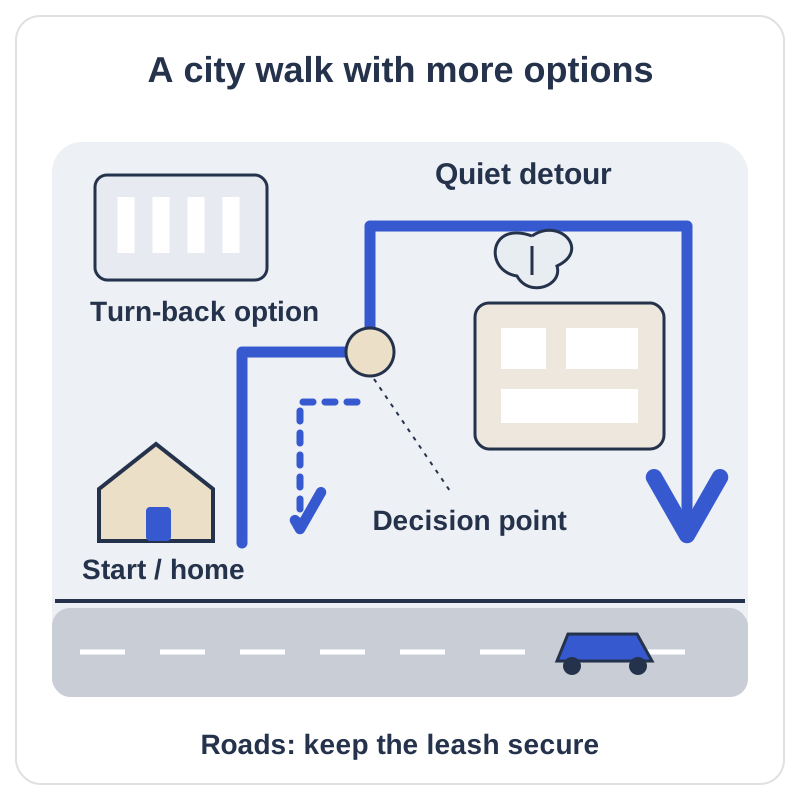
The useful foundation for a city walk is a set of decisions you can make early. Where can you turn, where can you wait without blocking anyone and where will the dog have room to explore? Those choices matter even when the dog already knows several cues indoors. Urban surroundings change quickly, so a workable route needs alternatives rather than a single line you must complete.
Use this plan to connect small skills with appropriate places. A voluntary check-in belongs first in an easy setting. A safe crossing remains the handler’s responsibility regardless of training. A short sniffing stop should be somewhere suitable for the dog, other people and the environment. Keep those purposes clear so the walk does not become an uninterrupted series of instructions.
Put the plan into practice
Look at the route in sections rather than labeling an entire neighborhood quiet or busy. The building exit may be narrow while the next block is wide. A pleasant side street may become crowded during school arrival or a delivery period. Note the points where conditions change and identify a suitable alternative before taking the dog through them. Public access rules, construction arrangements and transport requirements should be checked with the responsible local operator or authority.
Choose a route length that preserves an easy return. A long loop can leave you committed to its hardest section after the dog is already tired or unsettled. An out-and-back route or a shorter loop with several return options can be more practical. Consider the handler’s mobility, weather, surface conditions and the dog’s individual needs. The plan should describe what is workable today, not what a map says is the most impressive distance.
A route note you can use outside
An illustrative note identifies a wide side street as the normal start and a nearby quiet return as the backup. The household avoids a narrow market section when stalls are being assembled. If the side street changes too, they can shorten the outing and arrange appropriate care elsewhere. The note preserves options without claiming the route will always be quiet.
Put the plan into practice
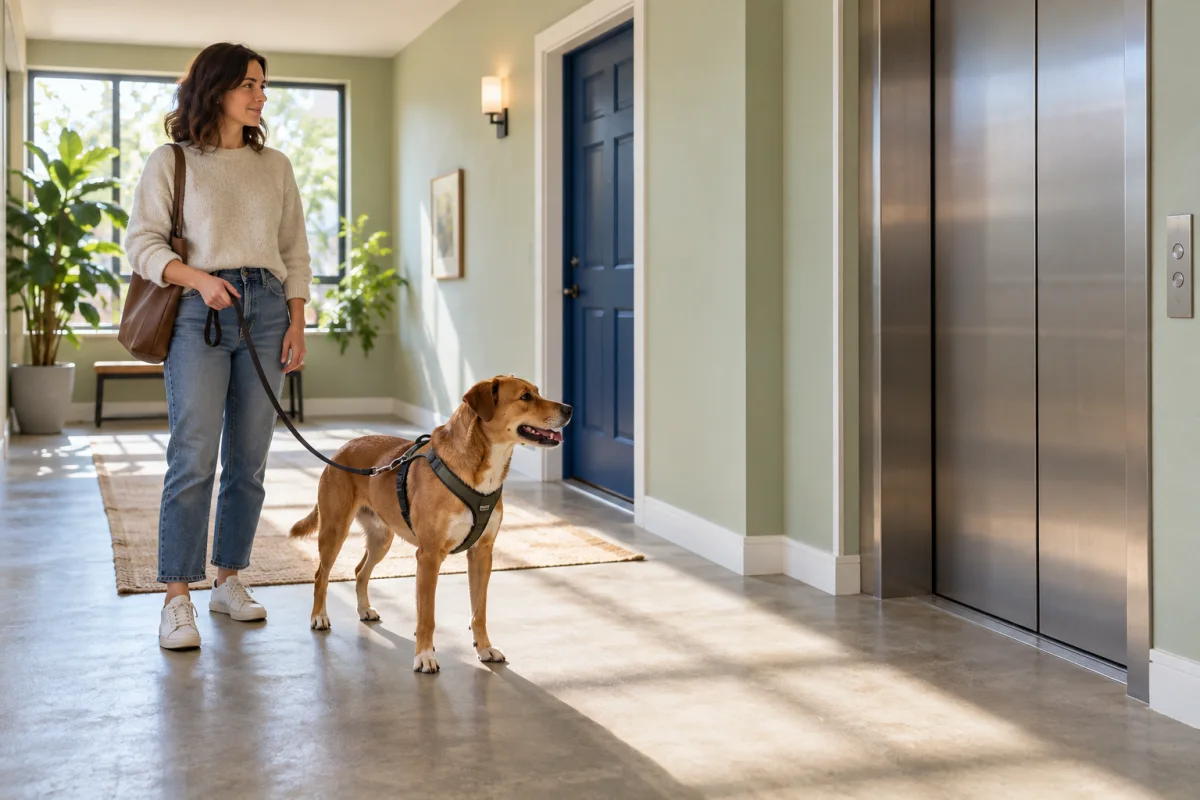
Before using a check-in outdoors, build the pattern where your dog can readily notice you. Reward a voluntary orientation, take a couple of easy steps together and release attention back to appropriate exploration. Avoid making constant eye contact the standard. A dog needs information from the environment, and a useful walking relationship includes both connection and the freedom to investigate within safe limits.
When you change location, simplify the skill. The familiar indoor turn may become only a small movement together in a quiet outdoor area. Keep a secure grip and enough awareness to prevent the leash creating hazards for others. Do not wait for a tight leash, a frightened reaction or an approaching vehicle before deciding whether to leave. A practiced cue can support your early choice, but equipment and the handler’s decisions remain essential.
A small outdoor transfer
In an illustrative session, the dog comfortably turns with the handler indoors. The next attempt is a single gentle direction change in a quiet suitable area away from traffic, followed by sniffing. The household does not add a longer walk, unfamiliar equipment and a crowd on the same occasion. If the setting is unexpectedly busy, they return to ordinary safe management.
Put the plan into practice
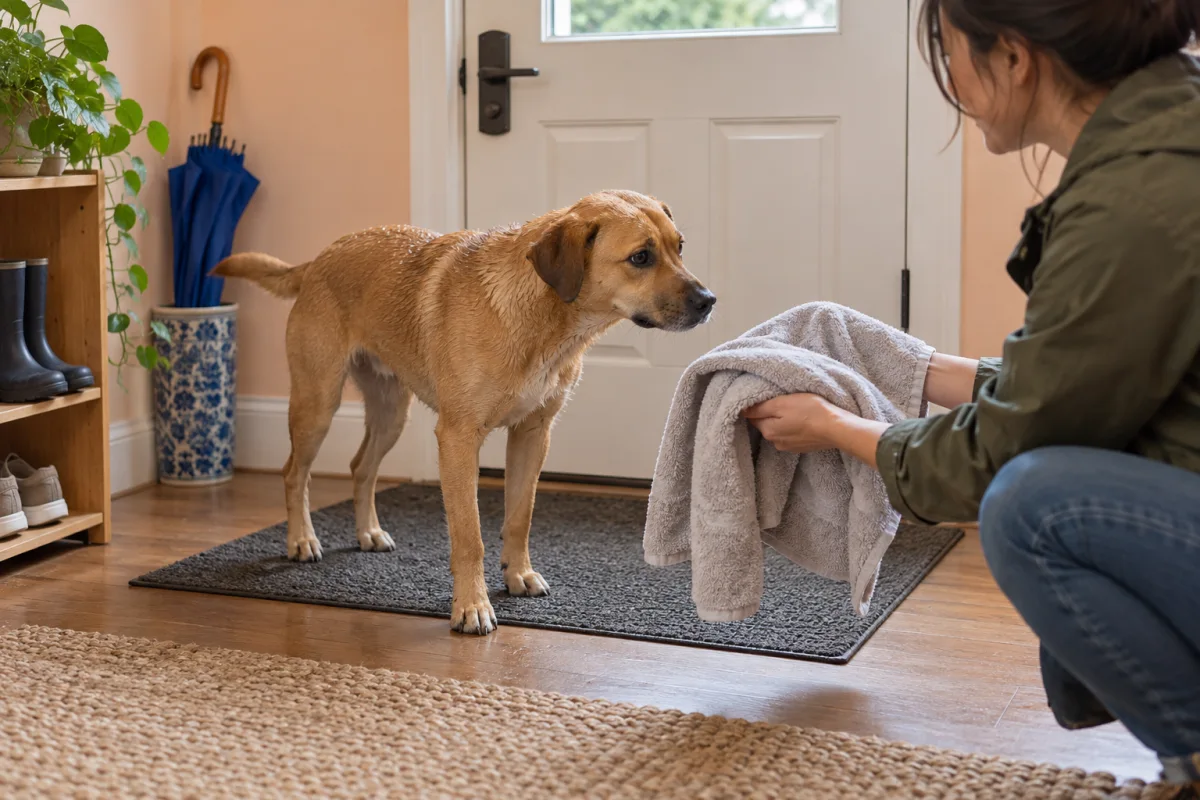
Observe the return home as well as the walk itself. A dog may complete a route while finding it difficult, then pace or struggle to rest afterward. Another may return ready for ordinary activity. Look at the whole sequence without treating any one signal as a diagnosis. Include heat, unusual exertion, surface discomfort, illness and other possible concerns when deciding whether professional advice is needed.
Choose the next route from what the dog and handler could manage comfortably. Repeating a familiar easier walk can be more useful than extending distance because a calendar says it is the next day. If one transition was difficult, work on that part separately at a suitable level. Sustained fear, lunging, aggression or risks you cannot manage safely need an individual plan with qualified support; the street should not become a place to prove a cue works.
A review that changes the next outing
An illustrative review notes that a construction diversion removed the usual space beside a busy corner. The household chooses a different route for the next outing and checks the diversion before returning. They do not conclude the dog needs more exposure to the corner. Their note identifies the changed environment and a practical response.
From an ordinary day
This illustrative example follows a household whose usual route passes a café. Early in the day, the frontage is wide enough for an ordinary walk. Later, chairs and waiting customers make it narrow. The household first maps when that change happens. They also identify a different block and a suitable return route before trying the outing again.
On the next walk, the handler sees the crowded section early and chooses the alternative while there is still space. There is no requirement to pass the café to complete the plan. A brief check-in is practiced somewhere easier, separately from the difficult frontage. The dog remains securely leashed, and the handler keeps road-crossing decisions independent of the training exercise.
At home, the note records the crowd, route choice and the dog’s recovery. If a later café observation is appropriate, it begins at a comfortable distance with an easy exit, not at a table during a long visit. The plan’s immediate value is a better decision about the outing. It does not establish that the dog is ready to wait beside unfamiliar dogs, food or passing customers.

Adapt the next attempt
| Situation | Adjustment | Next step |
|---|---|---|
| A familiar sidewalk is unexpectedly blocked. | Pause in a suitable safe place and choose an alternative before entering the bottleneck. | Update the route note with the diversion and check conditions before relying on it again. |
| The dog cannot respond to an easy familiar cue. | Reduce the demand and create more appropriate space rather than repeating the word. | Practice a simpler version elsewhere and review what made this location difficult. |
| A proposed sniffing spot contains litter or unsuitable materials. | Keep the dog away from the hazard and find a safer exploration opportunity. | Replace the stop in the route plan instead of making access to that patch a goal. |
| The handler feels unable to manage the route safely. | Use the simplest available exit and arrange appropriate support. | Discuss equipment, handling and route demands with a qualified professional before another attempt. |
Before the next step
A particular posture is not the source of road safety. Keep the dog secure, remain back from danger and make crossing decisions yourself. An easy standing pause may fit some dogs better than sitting. Rehearse the learning component away from traffic, and never rely on a cue as a substitute for careful handling.
Creating appropriate distance can prevent a situation becoming harder and gives you a chance to choose a better learning setup. You do not need to remain in a difficult encounter to finish an exercise. Make the early route decision you can safely manage, then consider training separately when the dog can take part comfortably.
No. An ordinary outing can meet care and exploration needs without formal practice. Choose a small exercise only when the setting, the dog and your attention make it appropriate. Weather, fatigue, building delays and unexpected events can all change that decision. Keep a short comfortable outing available as a legitimate option.
Agree on a few practical decisions: equipment, a suitable starting route, places to avoid at busy times and the turn-back option. Share observations about conditions rather than scoring which person walked farther. Each handler still assesses the current environment and should change the route when safety or comfort requires it.
After the first run-through
Choose one outing and mark where you still had room to decide. Was the quieter turn accessible? Could you wait without blocking another person? Did the return route remain workable? Keep those details in a short route note, including the conditions that made the choice useful.
For the next outing, change only what the observation calls for. You might leave at another time, shorten the loop or practice a turn separately in a quiet place. There is no requirement to add distance because a previous walk ended comfortably. The plan is serving you when it leaves more practical options available for the dog and handler.
Keep one useful thing
Before the next outing, identify one suitable route, one alternative and one place where you can choose an early return. Practice the useful walking piece in an easier setting, then let the real environment guide the day’s decisions.
Write a practice noteOut in the city
Build a city dog training routine around safe routes, quieter pauses, street crossings and real choices, with practical exercises for everyday outings.
Out in the city
Improve city leash handling with equipment checks, clear handovers, manageable line length and simple practice for doors, corners and busy paths.
Apartment life
Build an apartment dog training routine around shared walls, small rooms, toilet trips and rest, with practical exercises and adaptable daily choices.