Care & cooperation
A cooperative care training plan for everyday dog care
Build a cooperative care training plan with small handling goals, clear pauses, useful records, and coordination with your dog’s care team.
A flexible practice plan
This plan introduces voluntary preparation around harmless care items. It does not tell you to delay needed treatment or carry out a procedure without professional advice. If your dog is painful, frightened or likely to bite, ask your veterinarian for an individualized care and safety plan.
The aim
This plan introduces voluntary preparation around harmless care items. It does not tell you to delay needed treatment or carry out a procedure without professional advice. If your dog is painful, frightened or likely to bite, ask your veterinarian for an individualized care and safety plan.
Seven parts. Your dog’s pace.
Repeat or simplify a part when needed. The calendar organizes the humans; comfort guides the learning.
Part 1 · repeat as needed
Write down which care is necessary and which parts could be practiced on another day. Ask the professional how urgent needs will be met if training is not ready.
Do not make your dog’s willingness to practice a condition for receiving essential treatment. A veterinary team may recommend different handling, medication or timing for the actual appointment.
Part 2 · repeat as needed
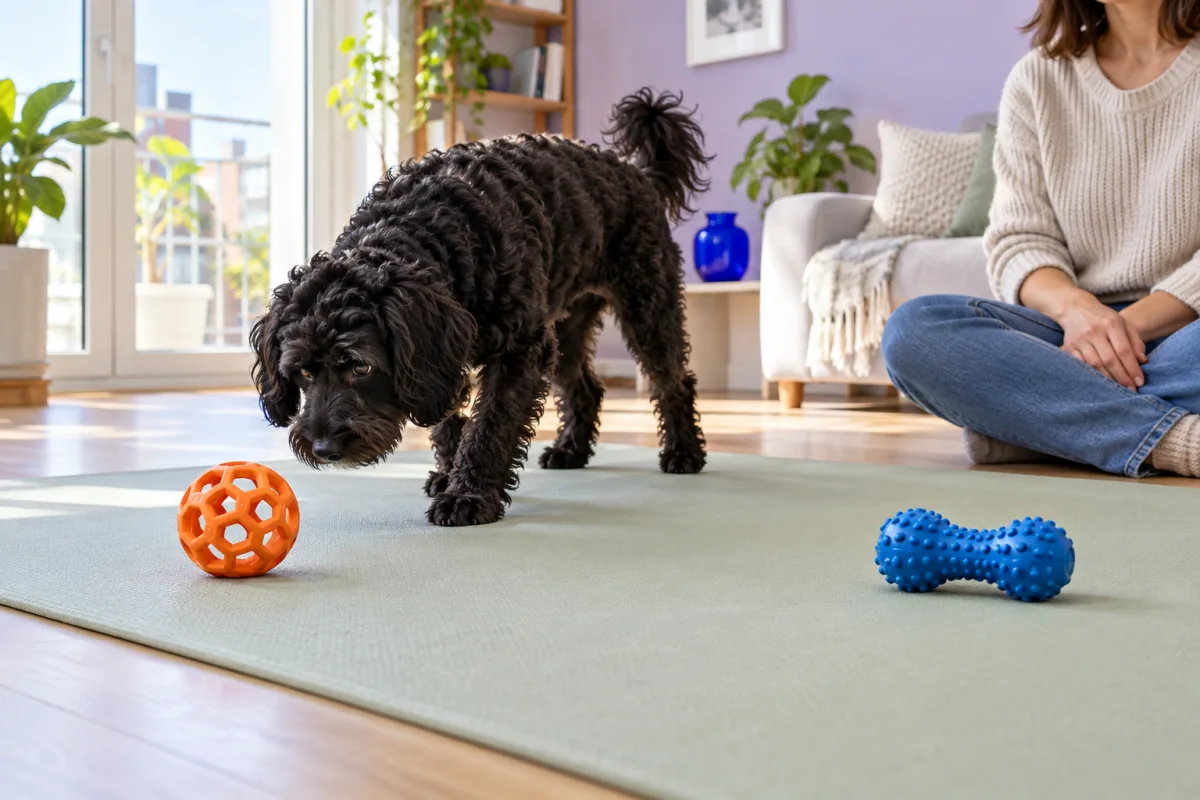
Spend a quiet moment together with no care item present. Notice your dog’s normal posture, movement and choice of distance. These observations give you context for later sessions.
Avoid treating one signal as a diagnosis. A lip lick, a yawn or stillness must be considered with the situation and the rest of the dog’s behavior. When uncertain, make the rehearsal easier.
Part 3 · repeat as needed
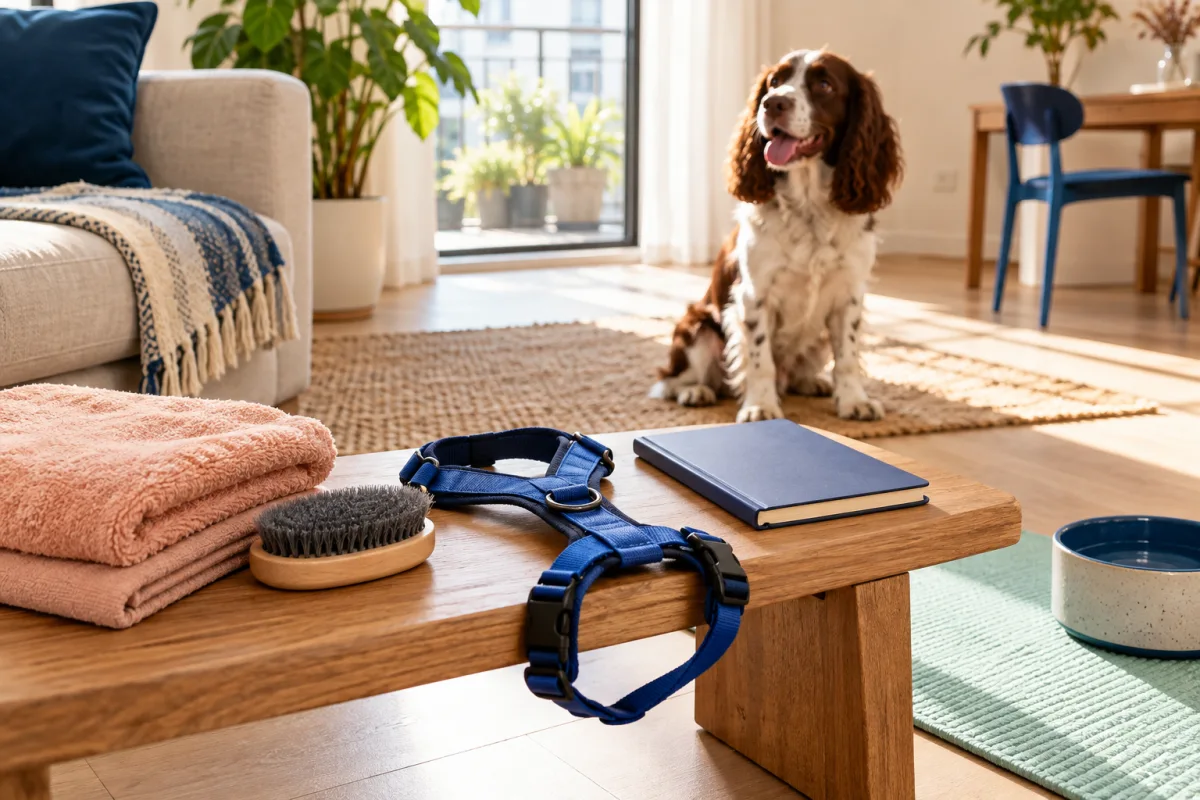
Place the harmless item far enough away that your dog remains comfortable. Reward a voluntary glance if useful, then remove the item and offer a break.
Do not move it closer while the dog is occupied eating. The dog should be able to notice the change and choose whether to stay involved. A single easy look can be enough.
Part 4 · repeat as needed
Pause the rehearsal when your dog turns away, leaves or becomes tense. Allow space rather than following with the item. Notice whether they choose to return after a break.
A stop signal is only useful when people respect it during optional practice. Discuss with professionals how they will handle situations where a procedure must be completed for welfare reasons.
Part 5 · repeat as needed
Offer the same easy version again in a familiar place. Check whether the dog approaches comfortably rather than assuming yesterday’s success means you should add contact.
Duration, closeness and movement are separate changes. You do not need to progress all of them, and you may choose to keep the session at the observation stage.
Part 6 · repeat as needed
Write what was practiced, which item was present, the dog’s chosen distance and what ended the session. Include any signs of pain or changes from normal behavior for the veterinarian.
Replace “fine with grooming” with the narrow truth, such as “comfortably looked at a dry towel from across the room.” Accurate limits help the next person plan.
Part 7 · repeat as needed
Review the notes and ask what a suitable next step would be for the actual care task. The answer may be more rehearsal, different equipment or a clinical plan.
Do not use a completed checklist as evidence that your dog can tolerate a difficult procedure. The useful outcome is better communication, clearer boundaries and a starting point based on comfort.
Read the setup
Cooperative preparation begins with clear boundaries between an optional rehearsal and the care a dog needs now. A comfortable look toward a towel is a useful observation, but it does not establish readiness for drying, restraint or an examination. Keep the description narrow. This protects the dog from an unexpected jump and helps the professional understand exactly what has been practiced.
Before starting, identify the real care task and speak with the relevant professional about necessary treatment, pain, safety and timing. Ask how care will be provided if training is not ready. The home plan can then focus on harmless, comfortable preparation while urgent needs are met through the appropriate clinical or professional arrangement. The dog should not have to complete the plan to receive needed help.
Put the plan into practice
List the actual task in plain language: an upcoming examination, routine grooming, fitting ordinary equipment or another care need. Then separate the parts people can organize from the parts a dog might practice voluntarily. Confirm appointment instructions, suitable transport and the person responsible. A professional may recommend a different approach for the real procedure; do not improvise treatment or handling because a home rehearsal looks promising.
Check the setting for optional practice. Use suitable footing, enough room to move away and an item that can be presented without contact. Keep children, other animals and avoidable interruptions out of the exercise. If the dog may be painful, frightened or likely to bite, ask for an individualized plan before proceeding. A safe-looking household item does not make every interaction around it appropriate for every dog.
A clear planning question
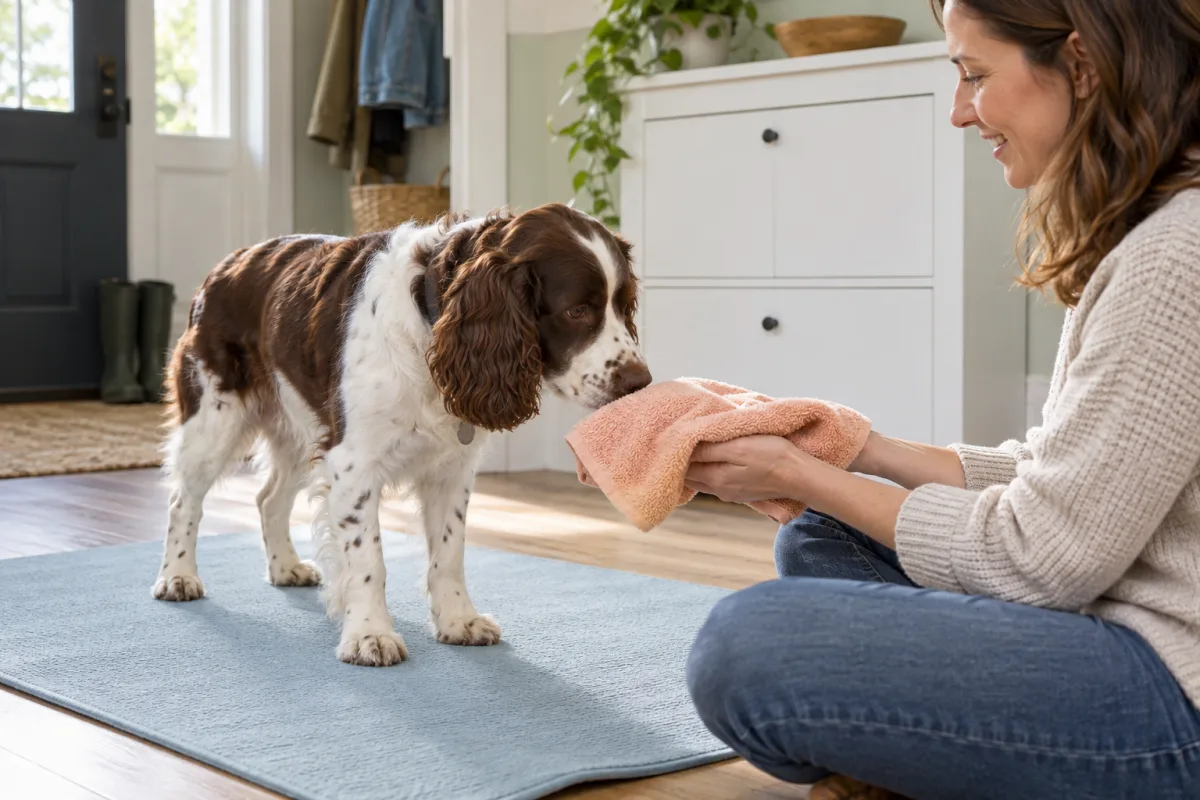
An illustrative household has a grooming appointment booked and asks the groomer what information would help preparation. They clarify the dog’s known concerns and what the appointment can reasonably include. At home, they practice only noticing a dry towel at a comfortable distance. They do not assume that completing the towel exercise authorizes a full grooming procedure.
Put the plan into practice
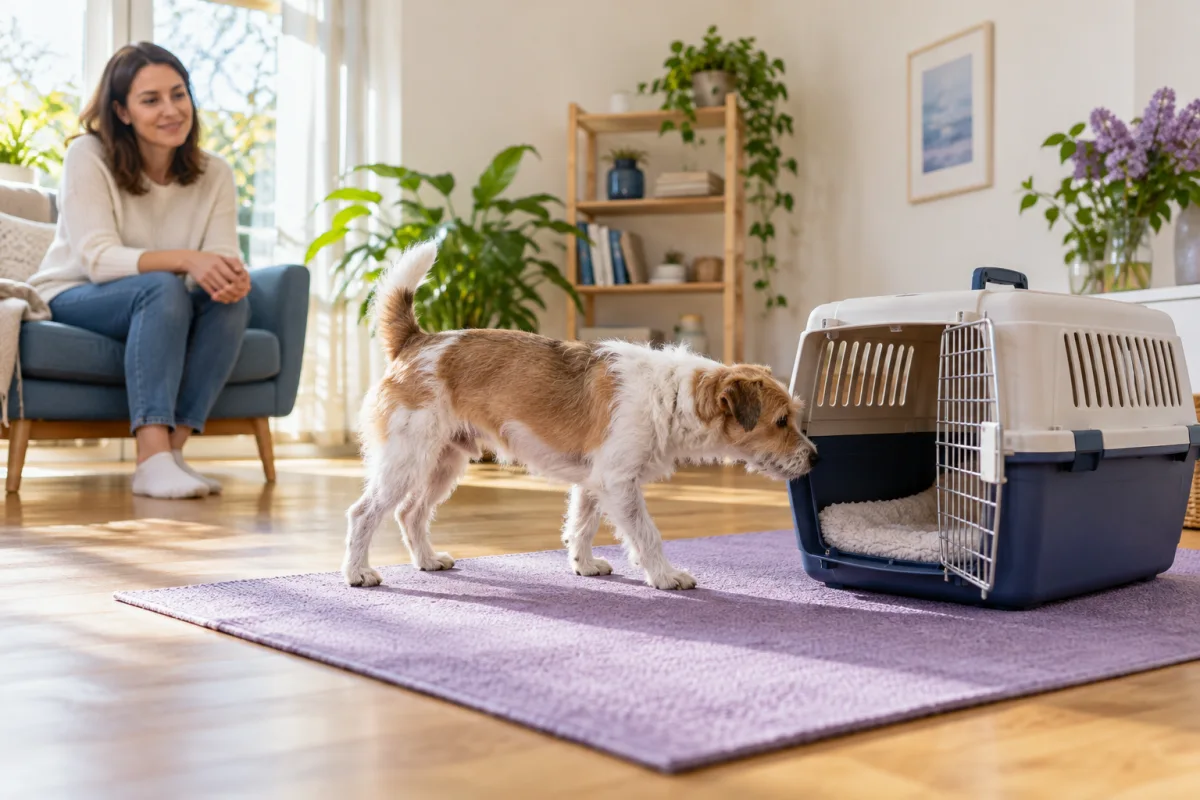
Begin with a quiet baseline without the item. Notice ordinary posture, movement, orientation and the distance the dog chooses. Later, compare the same setting when the item appears at a comfortable distance. A single lip lick, yawn or moment of stillness is not a complete answer by itself. Look at changes across the dog’s behavior and the situation, and choose an easier version whenever comfort is uncertain.
If rewards are appropriate, use them without hiding the change from the dog. Do not move the item closer while the dog is absorbed in eating, or lure the dog into contact they would otherwise avoid. A glance and a break can be a complete rehearsal. Movement, proximity, contact and duration are different variables; there is no requirement to add any of them simply because the previous moment was quiet.
A precise observation instead of a readiness claim
An illustrative note records that the dog stayed in the room, looked briefly toward a towel placed well away and then returned to ordinary exploration when it was removed. It does not say “accepts toweling.” The next optional repetition can remain the same, allowing the household to observe comfort without adding contact.
Put the plan into practice
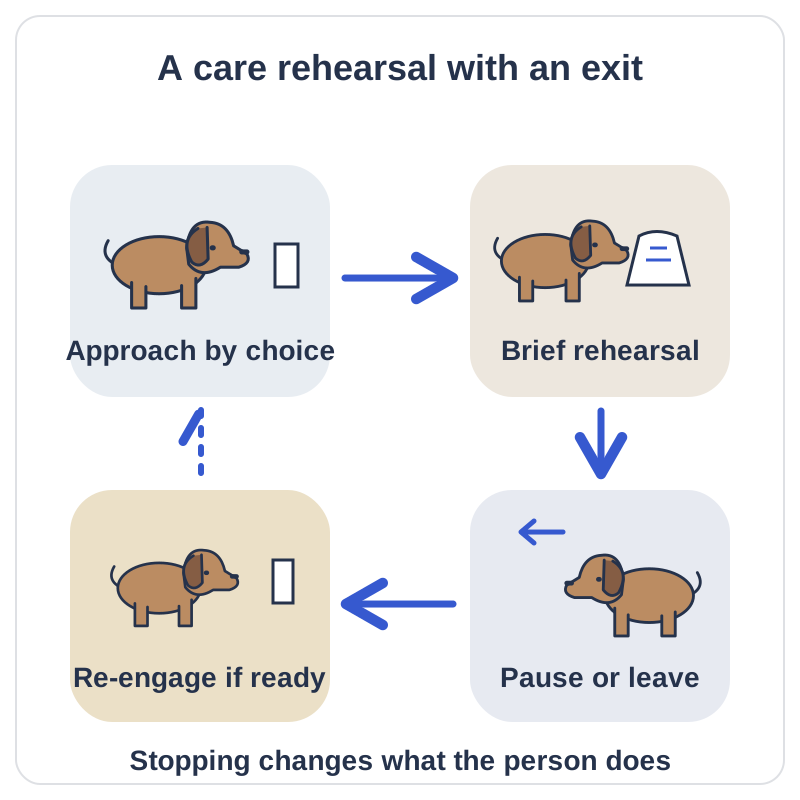
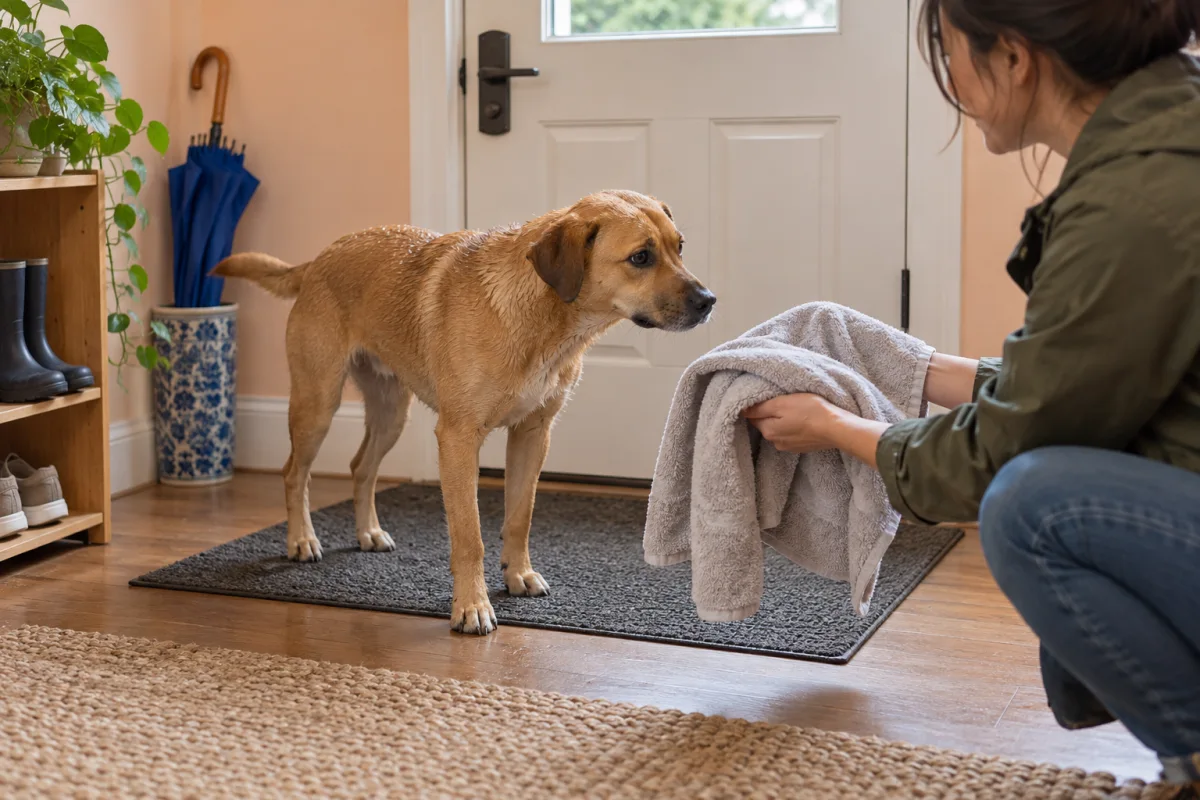
During optional practice, respond when the dog turns away, leaves, becomes tense or otherwise stops participating. Put the item away and allow space instead of following. If the dog returns, that is information to consider, not a requirement to restart. A meaningful pause should change what the person does. It should not become a brief interruption before the same unwanted contact resumes.
Write a handover that another caregiver can act on: the item, setting, chosen distance, what people did and what ended the rehearsal. Include current limits and relevant concerns through the appropriate private communication channel. Avoid storing sensitive medical records in a shared browser note. Ask the professional which details matter for the real task, and explain honestly what has not been practiced. Accurate limits are more useful than a broad claim that the dog is good with handling.
A pause with a clear consequence
In an illustrative session, the dog turns away when the person picks up the towel. The person stops the optional rehearsal and puts it down at a greater distance. They do not follow with the item or ask another adult to hold the dog. Their note records the movement that changed comfort and asks what a more suitable starting point would be.
From an ordinary day
This illustrative example concerns a dog who is worried about unfamiliar handling. The household contacts the veterinary team before the appointment and describes the concern. They ask about arrival, waiting and the plan for necessary care. The team’s instructions shape the visit; the household does not attempt to reproduce an examination at home to make the dog ready on schedule.
Optional home preparation focuses on a comfortable nonslip area and noticing a harmless familiar care item at a distance. The dog can move away. The person watches the baseline and a very small change, then stops. No ear, mouth or paw examination is added as a test, and food is not used to conceal an approach the dog would find difficult.
The household sends a factual summary through the clinic’s normal route: what was practiced, what caused concern and what remains unfamiliar. If the dog’s behavior changes or pain is suspected, they contact the veterinary team rather than extending the rehearsal. The example demonstrates preparation and communication. It does not establish that voluntary home practice can replace a clinical safety or treatment plan.

Adapt the next attempt
| Situation | Adjustment | Next step |
|---|---|---|
| Needed care cannot wait for training to develop. | Contact the relevant professional and follow the individualized care arrangement. | Keep future optional preparation separate from the urgent task and review it after advice. |
| The dog remains still but looks different from the quiet baseline. | Reduce or stop the rehearsal rather than assuming stillness means comfort. | Record the full context and ask for support if interpretation or safety is uncertain. |
| The dog leaves as the item moves. | Stop the optional movement and allow the dog to disengage without being followed. | Return to an easier appropriate version only when comfortable, with professional input when needed. |
| Another caregiver plans a more advanced procedure. | Share the exact rehearsal limits before anything begins. | Agree how necessary care will be handled and what can remain optional practice. |
Before the next step
It does not establish permission for a new kind of interaction. Consider the full context, the dog’s choices and the relevant professional guidance. Contact adds a different demand from observing an item. Keep the next step small and optional where appropriate, and stop when comfort changes or is unclear.
That can be part of an individualized training plan, but it is not a prerequisite for organizing care or respecting a dog’s attempts to pause. This starting plan focuses on observation, small optional changes and reliable human responses. Get suitable guidance before relying on any trained behavior during a procedure.
Eating alone does not prove the interaction is comfortable. Consider movement, posture, attempts to disengage and what is happening around the food. Do not use rewards to keep the dog beside a concerning item. Make the situation easier or stop, and seek appropriate help when the pattern is difficult to interpret.
The appointment includes different people, surroundings, handling and possibly pain or treatment needs. Describe the home session accurately without predicting the whole visit. Preparation may give the team useful information, but the clinical arrangement still needs to account for the individual dog and the actual procedure.
After the first run-through
At the end of a run-through, describe the exact optional interaction that stayed comfortable. Include where the care item was, what movement occurred and what you did when the dog paused. Leave out a broad label such as ready for grooming if the practice only involved looking at an item from a distance.
Use that description to plan the next easy rehearsal or to speak with the relevant professional. Ask before changing necessary treatment or appointment arrangements. The plan helps you organize preparation and recognize gaps; it does not turn an introductory exercise into permission to complete a procedure when the dog is worried, painful or unable to take part comfortably.
Keep one useful thing
Choose one harmless optional rehearsal, define what will make you stop and agree how necessary care will be provided separately. Record the narrow truth of the session so the next person can prepare without guessing.
Write a practice noteCare & cooperation
Build a cooperative care training plan with small handling goals, clear pauses, useful records, and coordination with your dog’s care team.
Care & cooperation
Choose a reward-based dog trainer with clear questions about methods, credentials, safety, teaching, costs, realistic goals, and professional referral.
Play & enrichment
Explore no-food dog enrichment through gentle play, toy searches, safe sniffing, social time, and simple choices tailored to your dog.