Apartment life
Apartment dog training: make your space work for both of you
Build an apartment dog training routine around shared walls, small rooms, toilet trips and rest, with practical exercises and adaptable daily choices.
A flexible practice plan
Use this plan to improve one ordinary week at home. The seven parts are a sequence of things to notice and prepare, not a deadline for your dog. Repeat a part for as long as it is useful. You can complete the household planning while keeping actual training to one or two easy moments.
The aim
Use this plan to improve one ordinary week at home. The seven parts are a sequence of things to notice and prepare, not a deadline for your dog. Repeat a part for as long as it is useful. You can complete the household planning while keeping actual training to one or two easy moments.
Seven parts. Your dog’s pace.
Repeat or simplify a part when needed. The calendar organizes the humans; comfort guides the learning.
Part 1 · repeat as needed
Walk through the route from your dog’s resting area to the outside toilet spot. Notice the narrow doorway, noisy hallway or place where you often hurry. Write down one point where more preparation would help. Keep this a human planning task; your dog does not need to rehearse a difficult exit.
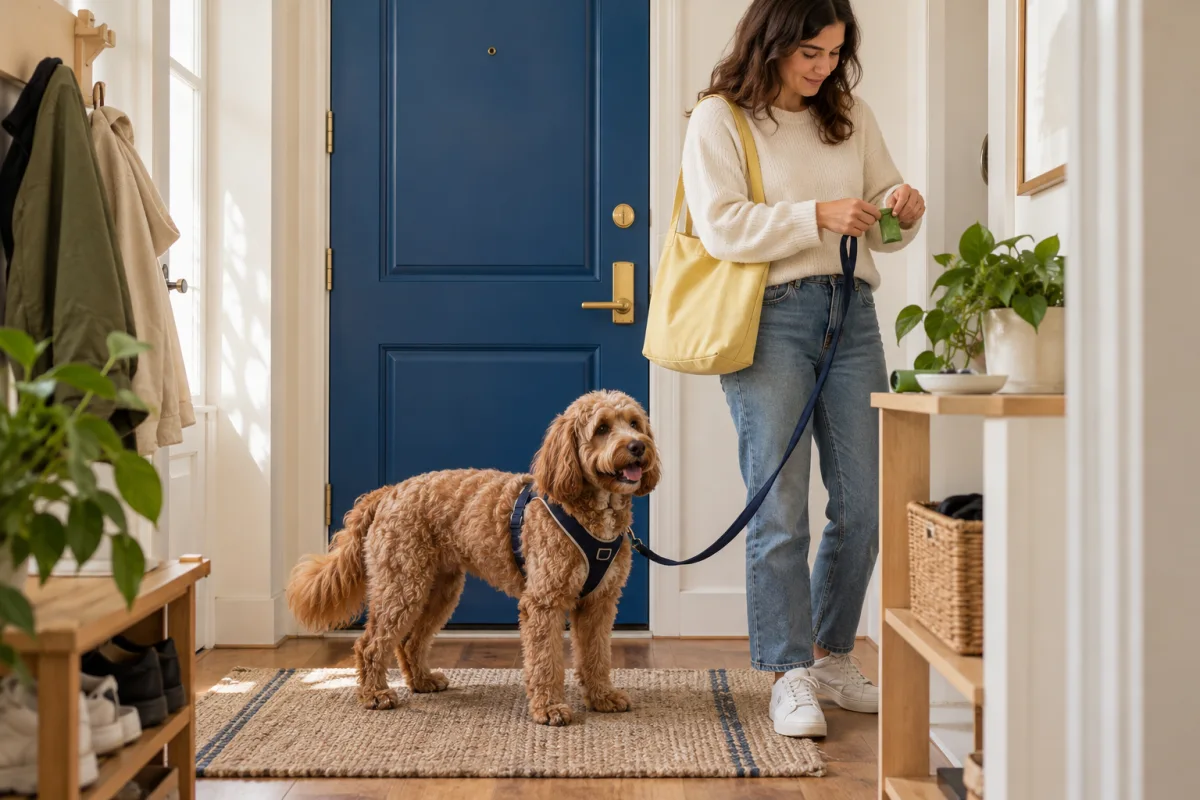
Set up a small departure station with the lead, bags and suitable rewards. Decide where the dog can wait comfortably while you get ready. If the building entrance is busy, identify a quieter time and a safe alternative route.
Part 2 · repeat as needed
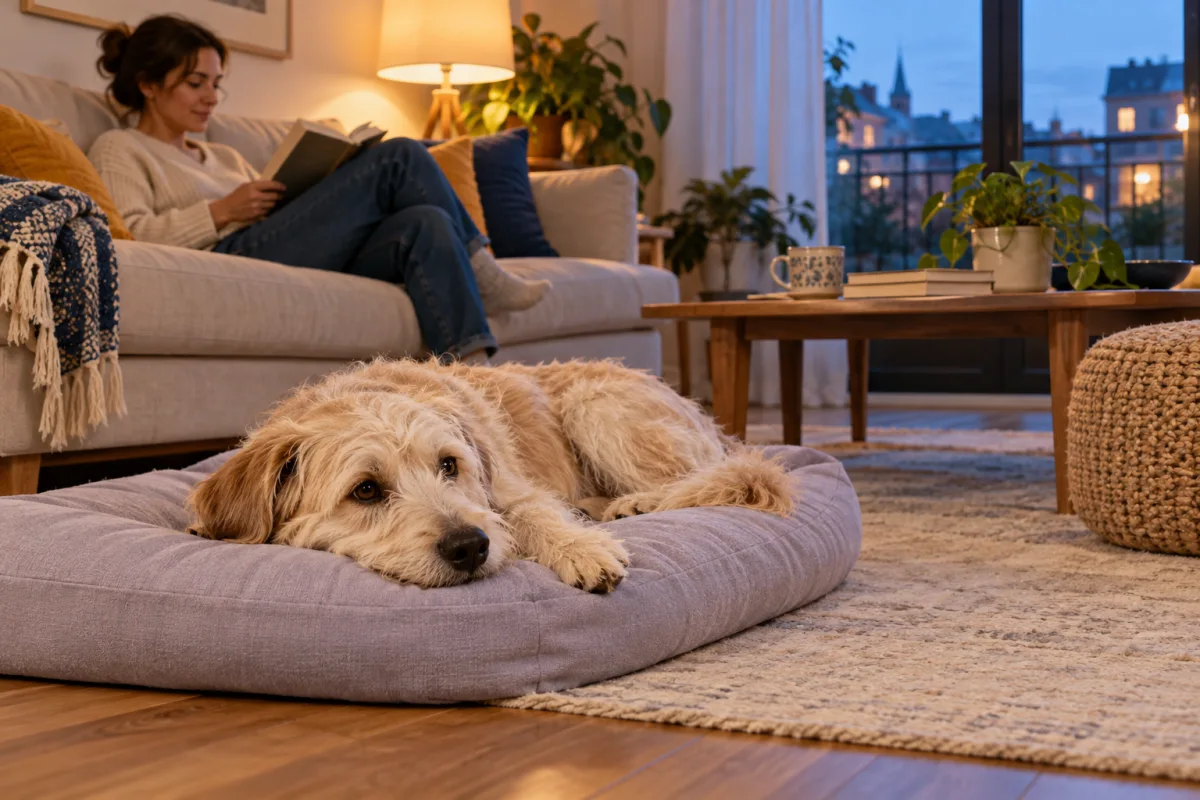
Choose a resting area away from the busiest path through the apartment. Watch whether your dog actually chooses it and can stretch out or move away. Avoid placing a bed beside a noisy front door just because that corner is empty.
Try one small environmental change, such as moving your chair or using an opaque barrier where safe. Observe the result across an ordinary part of the day. Do not repeatedly send the dog back to a bed they find uncomfortable.
Part 3 · repeat as needed
Observe the individual pattern around waking, eating, drinking and activity. Plan a timely opportunity before a known building delay. A shared log can show which person last went out and what happened.
If accidents occur, clean appropriately and adjust the opportunity. Punishment does not teach the route through the building. New urgency, discomfort or changes in elimination need a veterinary conversation.
Part 4 · repeat as needed
Record what the sound was, where the dog was and how recovery looked. You are gathering a pattern, not deliberately provoking barking. Protect rest from repeated avoidable exposure where possible.
For an easy rehearsal, use only a mild, controllable version at a level your dog can comfortably notice. If the dog becomes worried, stop and change distance or intensity. A noise complaint does not justify pushing through distress.
Part 5 · repeat as needed
Begin at an interior door, with a secure lead attached before any outside door opens. Reward an easy check-in and move together through a small, safe transition. Your hand and the leash remain responsible for safety.
Keep a real toilet outing simple. Do not ask the dog to hold on while you repeat a training exercise. Learning and urgent care are separate jobs.
Part 6 · repeat as needed
Write down who covers the next outing, which cues people use and where the dog rests during a delivery. Replace assumptions with a short shared note. Include one backup person or arrangement for a busy day.
Choose a cue card entry you can all follow today. A simple release word or consistent reward marker is more useful than a long list of commands nobody uses in the same way.
Part 7 · repeat as needed
Compare your notes with the first day. Look for a useful change in the setup: a quicker ready-to-go routine, fewer interrupted rests or a calmer return from the hall. You do not need a perfect day to find a useful pattern.
Keep one improvement and select one next question. If barking, avoidance or distress persists, take the observations to a qualified professional. The goal is better information and a more workable routine, not a claim that an apartment can be transformed in a week.
Read the setup
An apartment reset works best when it solves a repeated piece of friction rather than adding a long list of new rules. Choose one journey through the home: waking to the first toilet trip, finishing a walk, receiving a parcel or preparing for bed. Draw what actually happens, including where people stop, which doors open and which supplies are missing. This gives the training a useful job.
Separate arrangements you can change today from skills that need comfortable repetition. Moving a bed, charging a phone used for building access and keeping waste bags near the leash are household decisions. Learning to pause near an interior doorway is a training task. The first set of changes can make the second easier, while the dog continues receiving timely care throughout the process.
Put the plan into practice
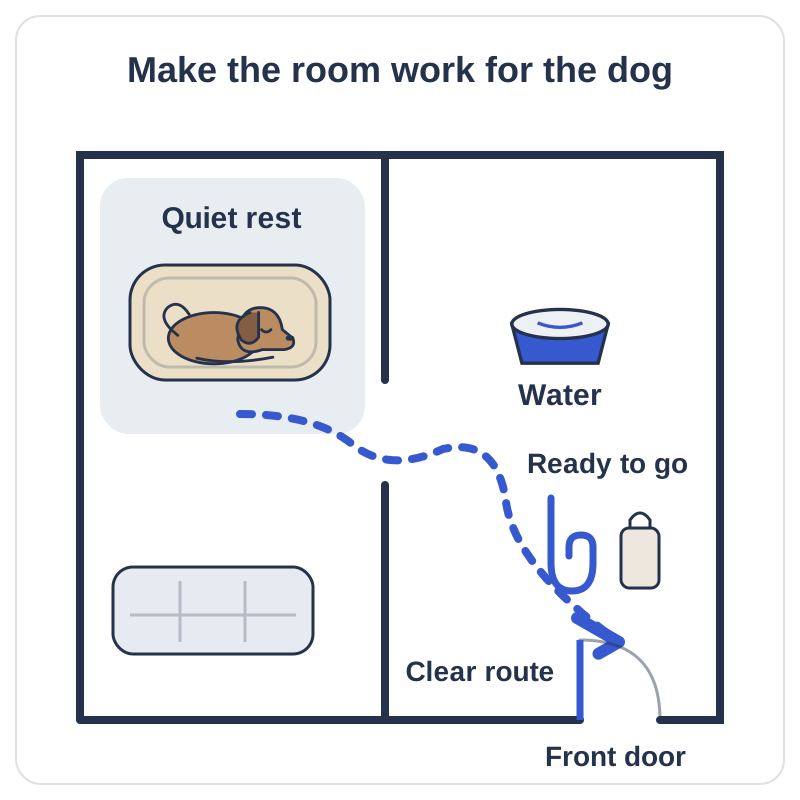
Begin where the dog spends time rather than at the front door. Follow the route to water, rest, play and the outside toilet area. Look for bottlenecks: a leash fitted in a cramped corner, slippery flooring before a turn, shoes that block the exit or a resting place everyone walks past. A useful floor plan shows movement and interruption, not simply the location of furniture. Keep shared escape routes and building access clear.
Choose one practical change and watch it during an ordinary day. For example, fitting equipment in a wider indoor area might reduce the rush at the apartment entrance. Move only what is safe and permitted, and keep the dog secure before any outside door opens. If a barrier is helpful, the dog still needs comfortable access to water, appropriate company and a resting area; a barrier cannot make an unsuitable space suitable.
A layout change to try
Illustrative setup: the leash station moves from the narrow door corner to a shelf beside the wider living area. One adult gets ready first, then attaches the dog’s normal equipment there. The door opens only when the handler is ready and the dog is secure. The observation is whether the departure becomes less hurried, not whether the dog holds a longer sit.
Put the plan into practice
Shared care often fails at the point where one person assumes another person has already acted. Record who took the last toilet trip, whether the dog toileted and who is responsible next. Keep this factual and brief. It should answer a practical question at a glance. If the dog’s needs change, the next outing changes too; the record is not permission to postpone care until a planned time.
Use the same approach for deliveries and visitors. Decide who answers the door, where the dog can be comfortably supported and what happens if both adults are occupied. A short note might say that the parcel can wait while the handler secures the dog. It should also include an alternative for a dog who cannot comfortably be separated by a barrier. Rehearse the people’s movements at a quiet time before expecting them to work during a surprise arrival.
A handover that answers the next question
An illustrative note reads: “Alex took the last outing after breakfast; toileted outside. Sam covers the next opportunity after the dog wakes. Leash and bags are ready on the shelf. If Sam’s call continues, Alex takes over.” No fixed holding interval is implied. The note identifies responsibility while leaving room for the dog’s actual needs.

Put the plan into practice
A barking count alone leaves out much of the picture. Note what happened beforehand, where the dog was, whether the sound was visible or only audible and what happened afterward. Could the dog move away, return to an ordinary activity or choose rest? Compare similar events where possible. A quiet morning parcel and a noisy evening gathering are different situations, even though both involve the entrance.
Use the notes to make the next event easier. That may mean a quieter resting location, a different departure time or arranging another adult’s support. Optional sound rehearsal belongs outside the real event, at a level the dog can comfortably notice. Do not replay a frightening hallway recording to see whether the dog has improved. If the pattern involves sustained distress, being alone, pain or sudden change, take the observations to an appropriate professional.
A useful review question
Instead of writing “only barked twice,” an illustrative review records that a dog noticed the lift, moved toward the entrance and then returned to a toy when the handler created more space. The next question is whether the same easier room arrangement helps during another comparable event. The note describes a decision to repeat, without claiming the noise concern is solved.
From an ordinary day
This is an illustrative household, not a case study. Two adults live with a dog in a building with a busy lift. The difficult moment occurs when one adult is searching for bags while the other holds the dog beside the open apartment door. The first reset is logistical: both people finish getting ready before the secure departure begins, and supplies move to one consistent shelf.
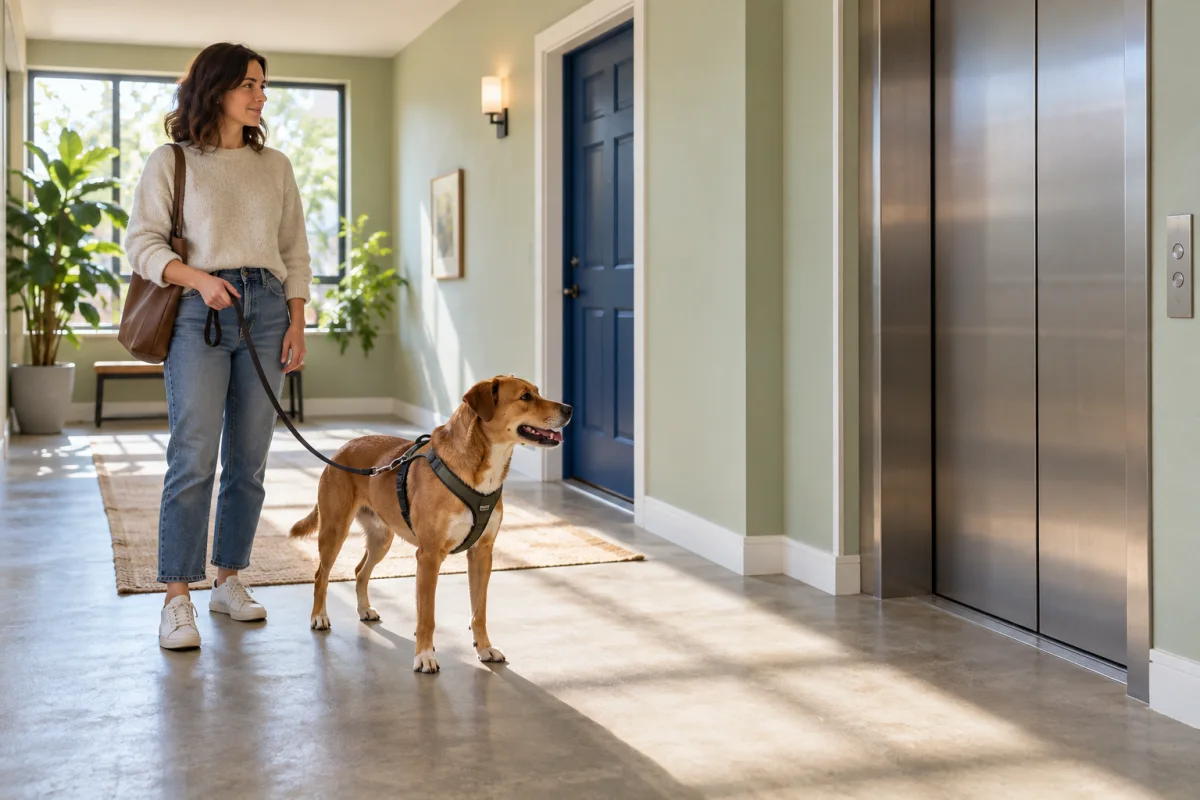
They also identify a quieter waiting option that does not block the hall. If the lift arrives crowded, they can step back to a safe position or take another suitable option under the building’s rules. They do not use a necessary toilet outing to repeat doorway exercises. A tiny interior-door rehearsal happens separately, when nobody needs to hurry outside.
At review, they keep the shelf arrangement because it removes searching. They continue arranging timely outings and record which part of the lift transition remains difficult. If the dog still shows marked fear, they seek individual help rather than adding stricter waiting rules. The plan has produced better information and a less rushed setup; it has not established that every shared-building encounter is now comfortable.
Adapt the next attempt
| Situation | Adjustment | Next step |
|---|---|---|
| The hallway becomes busy during a necessary outing. | Protect space and use the simplest suitable route; skip optional rehearsal. | Review timing and identify an appropriate backup before the next outing. |
| The dog repeatedly leaves the chosen resting corner. | Observe noise, temperature, footing and passing people before adding a cue. | Offer a more comfortable option and watch which place the dog chooses. |
| A neighbor reports barking at an unfamiliar time. | Ask for useful details and compare them with the household’s factual notes. | Investigate the actual context; arrange qualified support for distress or uncertainty. |
| Adults keep using different departure routines. | Agree on supplies, responsibility and one simple sequence everyone can follow. | Try the human handover together before a real high-pressure departure. |
Before the next step
Start with the change most closely connected to a repeated problem. Several simultaneous changes make it difficult to tell what helped, and a large rearrangement can itself be unsettling. Keep comfortable familiar options available. Necessary safety improvements and basic care do not need to wait for a training experiment.
Focus on the parts you can control: preparation inside the home, suitable distance, shorter transitions and appropriate support. Check building arrangements without obstructing other residents. A lack of quiet space can require individual planning; it does not make repeated exposure at an overwhelming level a useful training method.
The observation and handover parts may help describe the situation, but they are not a separation-distress treatment plan. Barking while alone needs its own assessment of context and welfare. Arrange support and qualified help when there is distress; do not use the apartment reset to extend an absence the dog cannot manage.
Review after enough ordinary comparable events to judge whether the arrangement is practical. A single unusually quiet day is not a reliable comparison. Keep changes that make care easier, note unresolved concerns and repeat a phase when needed. The seven-part format organizes attention rather than setting a completion deadline.
After the first run-through
Choose the transition that used to create the most searching or rushing. Compare the human arrangement before and after the plan: where the equipment lives, who checks the hallway and how the next toilet trip is handed over. Keep a change that makes preparation clearer, even if your dog still needs an easier version of the learning exercise.
For the next run-through, select one unresolved detail rather than restarting the entire plan. If supplies are ready but the exit is regularly occupied, focus on the waiting location or alternative route. If everyone assumes someone else is going out next, clarify responsibility. A useful review produces one practical decision the household can carry into tomorrow.
Keep one useful thing
Choose one repeated transition, identify the person responsible and remove one avoidable source of hurry. Keep a brief note about the setup and recovery so the next change follows the dog’s actual experience.
Write a practice noteApartment life
Build an apartment dog training routine around shared walls, small rooms, toilet trips and rest, with practical exercises and adaptable daily choices.
Apartment life
Help a dog who barks at hallway noises with a practical sound log, quieter resting setup, delivery management and small, comfortable practice sessions.
Apartment life
Create an apartment potty routine with realistic exit timing, indoor backup choices, accident notes and practical adjustments for stairs or elevators.