
Puppy days
A puppy apartment schedule that fits real life
Build a flexible puppy apartment schedule around potty trips, meals, rest and short practice, with realistic adjustments for elevators and workdays.
A flexible practice plan
This is a planning guide for people, not a developmental timetable for puppies. Your puppy may need more support, more rest or a slower introduction than the example suggests. Ask your veterinarian about health, vaccination and safe local outings.
The aim
This is a planning guide for people, not a developmental timetable for puppies. Your puppy may need more support, more rest or a slower introduction than the example suggests. Ask your veterinarian about health, vaccination and safe local outings.
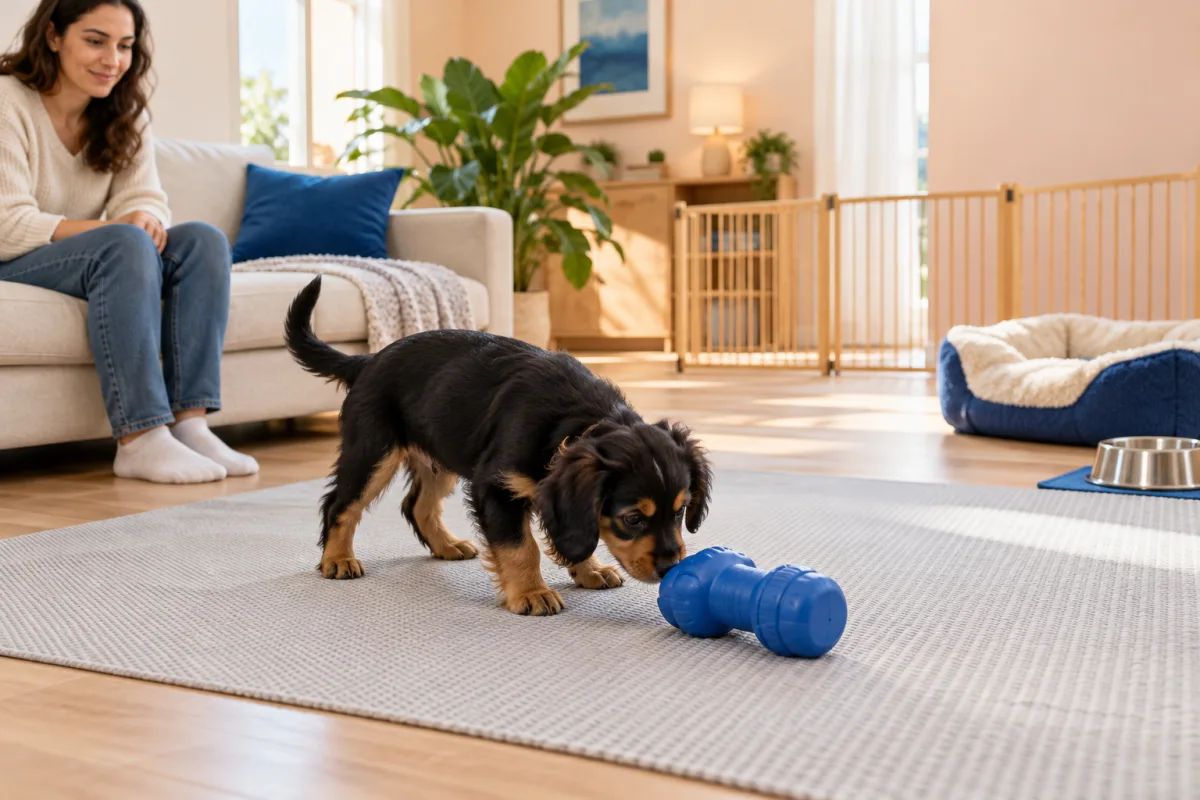
Seven parts. Your dog’s pace.
Repeat or simplify a part when needed. The calendar organizes the humans; comfort guides the learning.
Part 1 · repeat as needed
Limit the number of rooms and people introduced at once. Show the puppy where water, rest and appropriate toilet opportunities are available. Keep your attention on immediate care rather than a tour of every new sound and object.
Plan the first night before bedtime. A puppy who is distressed needs support and a check of their needs, not an endurance test. Put the next caregiver’s contact and supplies within easy reach.
Part 2 · repeat as needed
Record waking, meals, play and toilet opportunities in plain language. Use the notes to plan the next opportunity rather than calculating a universal holding time from age.
If something changes suddenly or the puppy seems unwell, seek veterinary advice. A log can help explain what happened, but it cannot diagnose a cause.
Part 3 · repeat as needed
Say the puppy’s name in an easy setting and reward a comfortable look toward you. Keep the interaction light and stop before their attention fades.
Agree with the household on the same name and reward marker. Avoid repeating the name through a long list of situations where the puppy cannot respond yet.
Part 4 · repeat as needed
Notice early signs that a play period is becoming frantic or the puppy needs a break. Offer a quiet, comfortable place to rest with appropriate reassurance.
Do not make every waking minute a socialization or training task. Visitors, novel sounds and handling can add up even when each individual event seems brief.
Part 5 · repeat as needed
Choose one mild experience at a comfortable distance, following your vet’s advice about safe exposure. The puppy can observe without being passed around or greeting every person.
End while the experience is still manageable. If the puppy hides, freezes or struggles to move away, increase distance or leave rather than trying to finish a checklist.
Part 6 · repeat as needed
Have another familiar caregiver follow the same toilet, reward and rest arrangement while you are available. Put the practical details in a short shared note.
Include what the puppy is not ready for. A sitter needs to know about vaccination-related guidance, unfamiliar equipment or a door that must stay secured as much as they need a list of cues.
Part 7 · repeat as needed
Read the observations and choose one change that made care easier. Keep the parts that work and remove unrealistic expectations from the timetable.
The first week is not a test your puppy can fail. Continue the foundations, make new experiences gradual and ask for support when care, sleep or health concerns exceed what the household can manage.
Read the setup
The first week brings many changes at once: unfamiliar people, new sleeping arrangements, different surfaces and a new route to the toilet area. Your puppy does not experience those as separate lessons on a checklist. Use this plan to reduce unnecessary complexity and keep the household responsive. A gentle start can include quiet observation, comfortable rest and a few friendly interactions without a busy program of introductions.
Agree in advance who can respond when the puppy wakes, needs reassurance or shows signs that another toilet opportunity is needed. Write down the actual arrangements rather than a hoped-for schedule. Veterinary guidance should shape health precautions and suitable outings. The learning plan sits inside that care arrangement; it does not require the puppy to wait until a lesson or work meeting is finished.

Put the plan into practice
Prepare a manageable area with suitable water access, comfortable rest and an appropriate toilet arrangement for your home. Check the route between those places from puppy height: loose cables, small objects, unsuitable plants, gaps and slippery turns can matter. Supervision and safe boundaries should prevent avoidable trouble without isolating a worried puppy. Keep necessary supplies close enough that you are not searching while the puppy needs help.
Introduce rooms and household activity gradually. You can keep a quieter familiar option available while a new area is explored. Visitors do not need to meet the puppy immediately on arrival, and a puppy does not need to be passed between people to become familiar with them. Let the puppy approach, pause and move away where safe. Watch for the difference between comfortable curiosity and an interaction that has become too much.
A first-room arrangement
An illustrative household starts with a clear living area, a familiar sleeping option and a prepared route to the appropriate toilet spot. Shoes and bags are moved out of reach, and one adult handles care while the other finishes household tasks. They postpone a group visit so the puppy can explore and rest with less competing activity.

Put the plan into practice
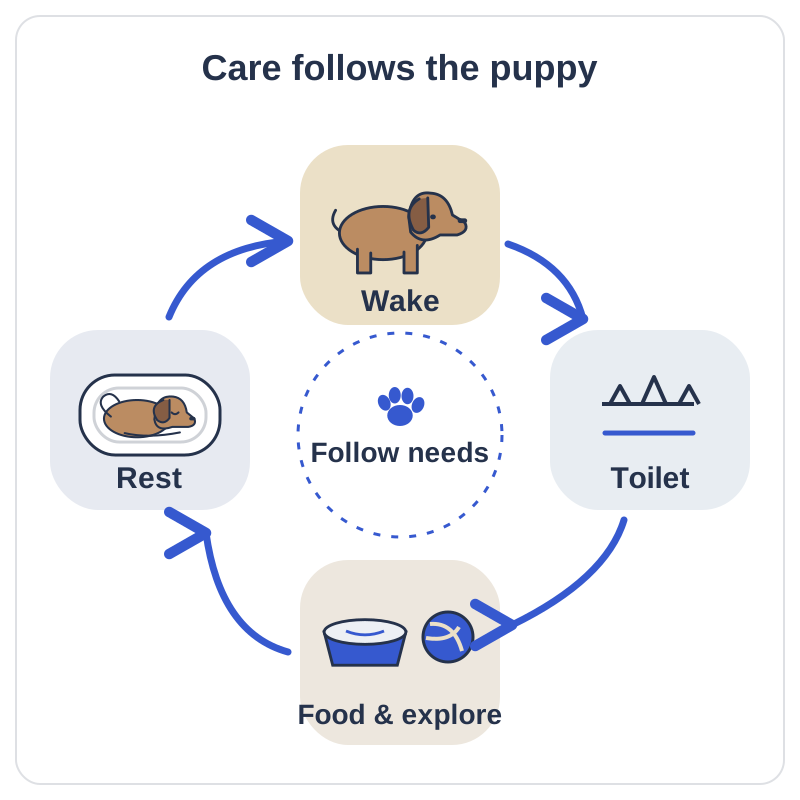
A useful puppy note connects ordinary events with care opportunities: waking, eating, drinking, playing and the trip to the toilet location. Record what happened and what the next caregiver needs to know. The purpose is to notice this puppy’s changing pattern, not to calculate a universal interval from age. Apartment routes and building delays belong in the plan because getting outside can take time even when the distance seems short.
Treat accidents as information about the arrangement. Provide appropriate cleaning, adjust opportunities and review whether people noticed the puppy’s signals soon enough. Do not punish, restrict necessary water or wait for a more convenient lesson time. If elimination, appetite, energy or comfort changes unexpectedly, contact the veterinary team. A detailed log can support that conversation, but it should not be used to explain away a possible health concern as ordinary training difficulty.
A handover based on an event
An illustrative note reads: “Puppy woke, went out with Jamie and toileted. Ate afterward and is now resting. Morgan is available when the puppy next wakes.” This gives the next adult useful context without promising how long the puppy should remain asleep or how long another opportunity can safely wait.
Put the plan into practice
Think of social learning as noticing the world comfortably rather than collecting greetings. A puppy may watch a person at a distance, hear a mild household sound or investigate a new safe surface without approaching a stranger. Follow veterinary guidance about infection risk, vaccination and appropriate local exposure. Keep the outing or introduction short enough that you can leave while the puppy is still comfortable, not only when your list is complete.
Observe what comes afterward. A puppy may need a quieter period following a visitor, handling or a new place even when the individual event seemed brief. Avoid stacking several new experiences into the same waking period. If play becomes frantic or the puppy repeatedly withdraws, simplify the situation and check care needs. Reassurance and responsive support belong in the plan; distress is not a stage to ignore until a fixed time has passed.
A smaller version of a new experience
In an illustrative introduction, a visitor sits quietly at a distance while the puppy can remain near a familiar adult. Nobody reaches toward or calls the puppy repeatedly. The puppy can observe or disengage. The household ends the visit’s puppy activity and protects rest rather than adding handling practice because the visitor is already there.
From an ordinary day
This illustrative household has two adults with different work hours. Before bedtime, they agree who will respond during each part of the night and who takes over in the morning. Normal supplies are prepared, the route to the appropriate toilet location is clear and the puppy’s resting arrangement allows suitable support. The plan does not predict how often the puppy will wake.
When the puppy becomes unsettled, the responsible adult checks care and comfort instead of waiting for a timetable to permit a response. A brief note records the outing and the return to rest. If the puppy seems unwell or something concerns the caregiver, they use the veterinary advice they have arranged rather than treating the event as a test of consistency.
The next morning, the adults review their own arrangement. If the handover was unclear, they clarify it. If reaching the toilet location took longer than expected, they improve preparation. They do not interpret an interrupted night as evidence that the puppy has failed the plan. The example demonstrates flexible responsibility during a large transition, with learning expectations kept small.

Adapt the next attempt
| Situation | Adjustment | Next step |
|---|---|---|
| A puppy wakes during a work call. | Have the available caregiver check and meet current needs rather than waiting for the call. | Review care coverage before another block when neither adult can respond. |
| Several relatives want to visit on the same day. | Reduce the number or intensity of introductions and protect a quiet familiar space. | Plan smaller appropriate experiences with time for rest between them. |
| The planned toilet route is delayed by the building. | Meet the puppy’s immediate needs through the appropriate arrangement for your home. | Improve supplies and timing; discuss suitable alternatives with relevant professionals when needed. |
| The puppy repeatedly hides during an introduction. | Create distance, reduce demands and allow a supported exit. | Choose a much easier version later and seek qualified help if fear persists. |
Before the next step
There is no required first-week total. A friendly name response, a familiar reward marker or one simple household pattern can be enough alongside care and rest. Choose interactions the puppy can enjoy and stop early. The household’s clear responsibilities usually matter more than collecting a long list of words.
Review comfort, proximity, temperature, noise and the support available. A resting arrangement should fit the puppy’s current needs as well as safe household management. Do not turn the first nights into a contest over remaining in an unsuitable place. Seek appropriate veterinary or qualified support when sleep or distress concerns persist.
Ask your veterinarian about the local balance of infection precautions and suitable learning opportunities. The answer depends on individual and local circumstances. This plan does not authorize a particular public location or contact with unfamiliar dogs. Comfortable observation can take different forms under the guidance you receive.
Provide the current care routine, veterinary health precautions, normal equipment, secure doors and where supplies are kept. Describe how the puppy asks for help and what is not yet familiar. Practice a short handover while you are available before relying on the sitter during a demanding day.
After the first run-through
Review the parts that depended on people being ready: the night handover, supplies for an outing and a quiet place for rest. Keep what helped and update what no longer fits the puppy’s pattern. A useful routine can change without treating the first week as a course the puppy has passed or failed.
Choose one simple question for the next few days. Can another adult find the same equipment? Are people noticing when the puppy wakes? Is exploration easy to supervise? Keep optional learning small while you improve that arrangement. Use your veterinarian’s advice for health questions and safe outings rather than extending a generic example into an individual care rule.
Keep one useful thing
Make the next care handover explicit: what happened, who is available and which need may come next. Add only one comfortable learning opportunity, then leave space for the puppy to rest and for the household to adjust.
Write a practice notePuppy days
Build a flexible puppy apartment schedule around potty trips, meals, rest and short practice, with realistic adjustments for elevators and workdays.
Puppy days
Prepare for your puppy’s first night in an apartment with a nearby sleep space, quiet toilet trips and a responsive plan for crying and reassurance.
Puppy days
Help your puppy notice people, dogs and city life without greeting everyone. Plan short, comfortable observations and protect their freedom to move away.