Free browser tool

Daily routine builder

A workable starting point for the day you actually have.

Make room for one good step.

The window is a ceiling, not a target. One comfortable repetition can be enough.

Your starting point

A day that fits your dog.

Choose a life stage, one focus and the time available. Your plan will include setup, practice, rest and a next step.

This is an illustrative routine, not an individual health or behavior assessment.

Use a routine to organize care

A plan is most useful when it prompts people to prepare, notice and adjust. It should not require your dog to remain in an uncomfortable situation or postpone basic needs. The suggested window is the most time to set aside, not a minimum amount of practice.

Change the plan when the day changes

If the apartment is noisy, a visitor arrives or your dog is tired, choose a quieter setup or skip the optional exercise. Rest and reliable care matter more than completing a checklist.

Keep the next step small

Choose one observable action, record what happened and repeat a comfortable version. A calendar can organize the people; it cannot guarantee the dog’s learning timeline.

Comfort and care come first. Stop optional practice when your dog is worried or unable to take part. Seek appropriate help for pain, panic, aggression or bite risk.

Read the training approach
Make the tool useful

Use a small routine to make the next decision clearer.

The routine builder organizes one practice opportunity around three choices: your dog’s life stage, today’s focus and a maximum window of three, five or eight minutes. It is deliberately narrower than a full daily care schedule. The result suggests preparation, a small exercise, a real break and a possible next step. You still decide whether the setup fits your dog and whether ordinary care or professional support should take priority.

Choose a situation you can arrange safely today. A calmer pause, an easier walk, a household transition and cooperative care preparation require different starting points, so select the actual job rather than the most ambitious goal. The life-stage note adds considerations for a puppy, adolescent, adult or senior dog. It does not assess health, predict toilet needs or establish that an exercise is suitable for every individual within that age group.

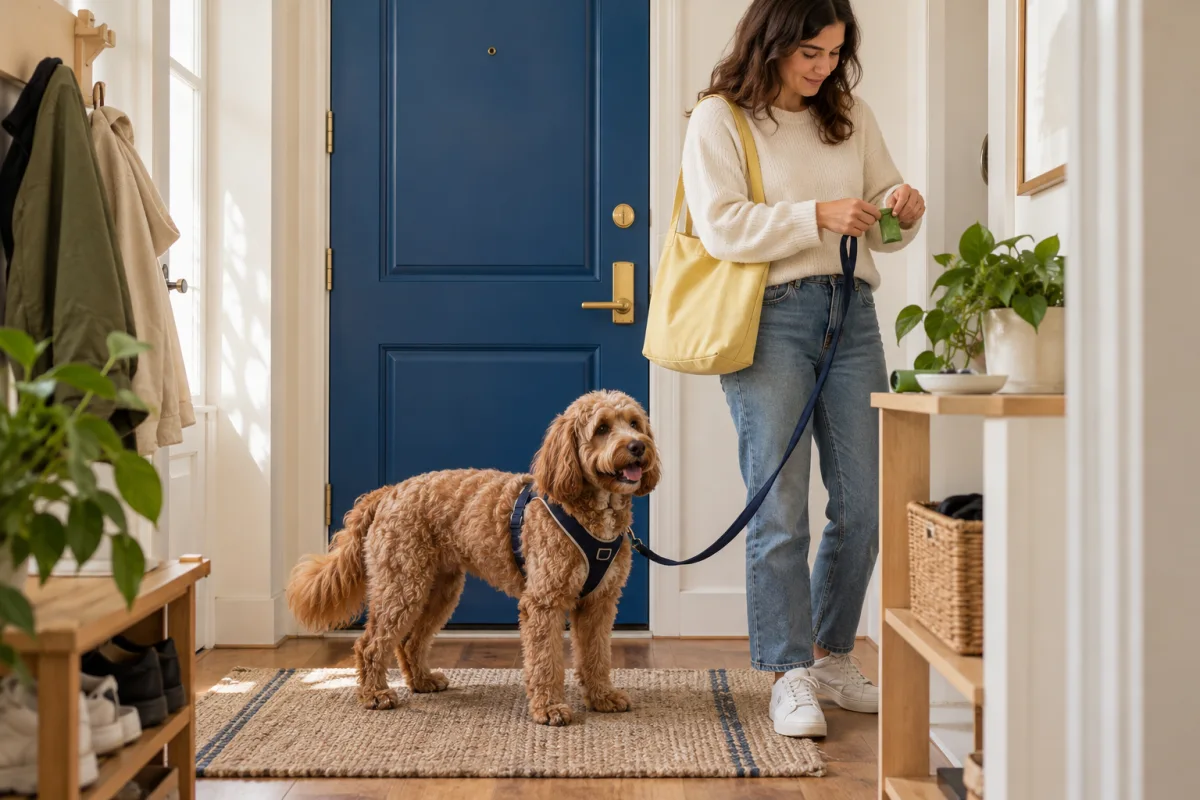
A woman preparing supplies beside a harnessed dog at a closed apartment door
Prepare the people and equipment before the doorway becomes busy.

A practical walkthrough

From a choice to something you can use.

01

Choose the focus you can prepare

Identify one event you want to make more manageable. If the difficult part is getting out of the apartment, choose the walking focus and begin with the quiet indoor preparation described. Do not use the output as permission to rehearse beside moving traffic. For care, the builder starts with noticing a harmless item at a comfortable distance; it does not generate treatment instructions. Read all four parts before beginning so the proposed ending and next step are clear.

02

Treat the time as an upper limit

Select a window that fits the adult’s availability, then stay willing to finish sooner. One comfortable repetition can be enough. A five-minute selection does not mean your dog should practice continuously for five minutes or wait until the timer ends to receive care. Prepare the environment first, keep suitable rewards ready where appropriate and choose a moment when you can stop to respond if the dog needs the toilet, rest or reassurance.

03

Observe the result instead of completing a quota

Watch the dog’s movement, posture, orientation and ability to disengage. If the suggested exercise is already too difficult, reduce the demand or skip it while you arrange a better starting point. A voluntary glance in a quiet room and a reliable response in a busy hallway are different achievements. The builder cannot see either one. Use a short observation note to describe what actually happened, including the setup that made participation easier.

04

Keep a copy and revise it thoughtfully

After building a routine, use the text download or browser print option if you want a reference. The generated routine is not automatically added to the training log or synchronized with DogPath. If you want to record the outcome, open the separate log and write the useful details yourself. Rebuild with another focus when the situation changes, but do not interpret a different output as a recommendation to add more practice to an already demanding day.

A worked example

An example for a morning with little spare time.

The generated routine becomes more useful when you connect it to a real opportunity. This example describes an adult dog, an easy connection exercise and a short window after ordinary care has been provided.

The available moment
Another adult is at home, the room is quiet and nobody needs to leave immediately. Prepare suitable rewards before inviting the dog to take part.
The small exercise
Try one familiar check-in in the quiet room. Finish earlier than the planned window if that is the comfortable stopping point; the remaining minutes do not need another task.
The next decision
Repeat this version on a similar morning if it fits. On a rushed morning, provide care and leave the optional exercise for another opportunity.

From an ordinary day

Illustrative choice: a puppy and the apartment doorway

A handler has a puppy who is comfortable in the living room but becomes distracted while the household prepares to go outside. They select Puppy, An easier walk and Up to three minutes. The result gives a doorway check-in idea, a puppy-specific care reminder and a break. The handler first checks that the puppy’s immediate needs are met and chooses an interior space where an unexpected movement cannot put them into a shared corridor.

They attach suitable equipment in the secure area, reward one voluntary look and take a couple of easy steps. The puppy then needs an ordinary toilet outing, so practice finishes. The handler does not repeat the exercise until three minutes have elapsed. For the real outing, they use the simplest safe route and remain responsible for the door, leash and building environment.

The useful note is specific: the easy indoor start was comfortable when equipment was ready, while the shared hallway still requires separate preparation. The downloaded routine provides a reminder, not a record proving completion. This example illustrates how to adapt a generated suggestion. It is not a puppy schedule, a prediction of improvement or a substitute for advice about health, vaccination or individual behavior concerns.

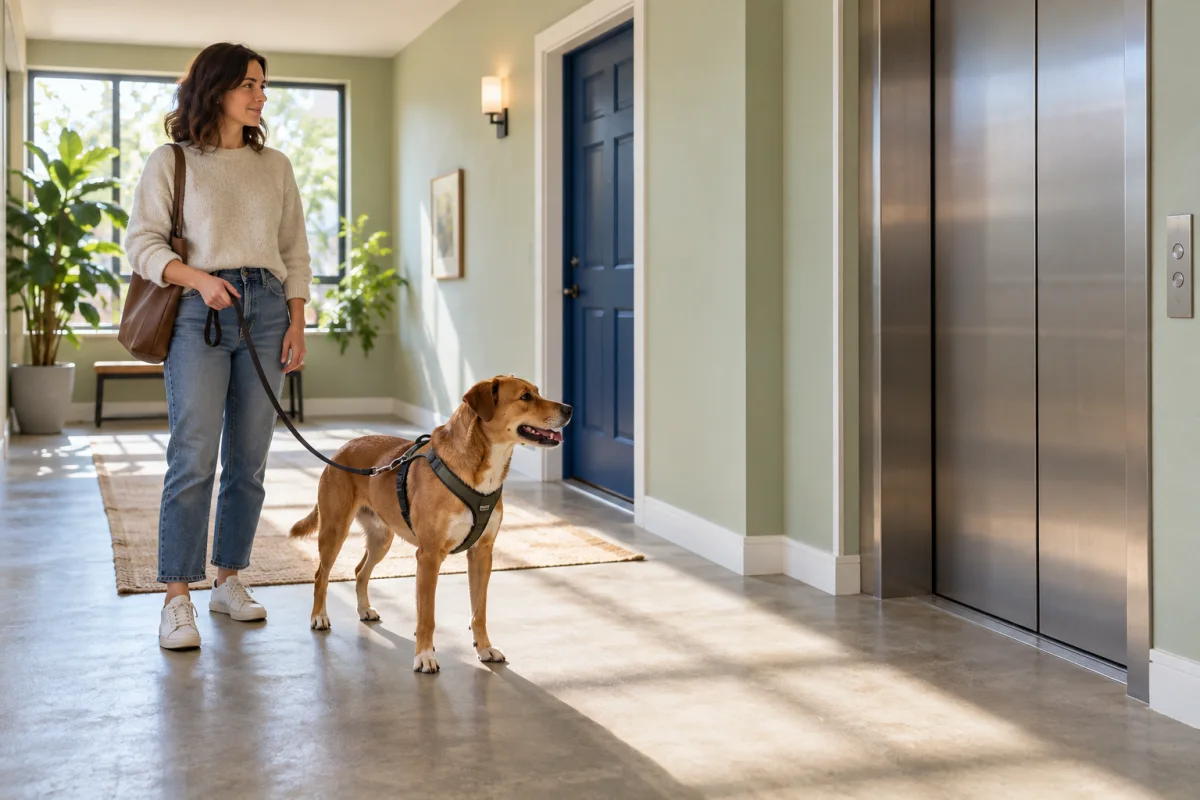
A securely harnessed dog and handler waiting away from a closed elevator
Look for space and a practical alternative before entering a shared transition.

When the picture changes

Adjust the setup, then decide.

SituationA practical adjustment
The dog needs care before you begin.Handle the toilet, water, rest or health need first. Reconsider whether optional practice belongs in this moment at all.
The first suggested action is already difficult.Make the item, movement or setting easier. Do not use the routine as a reason to repeat an uncomfortable attempt.
An unexpected visitor or noise changes the setting.Pause, provide a manageable arrangement and return to practice only when you can create an appropriate easy version.
You have only one comfortable repetition today.Keep that useful observation and finish. The selected window is a ceiling rather than a minimum amount to complete.

Before the next step

Using this tool in practice.

Does this create a full feeding, walking and toilet schedule?

No. It creates one illustrative practice routine from the available choices. Individual meals, toilet access, exercise, medical needs and care coverage require your own suitable arrangements. Use the broader guides to organize those responsibilities and consult relevant professionals when needed. The life-stage note is context, not an individualized assessment.

Can I save the routine for another day?

You can download the generated routine as a text file or use the browser print option. The builder does not provide an account, automatic calendar or synchronized history. Keep the downloaded copy where you can find it and review whether the setup still fits before reusing it. A familiar plan may need adjustment when the dog or environment changes.

Why does a short routine include a break?

The break makes the ending part of the plan. It prevents the useful small action from automatically turning into repeated attempts because time remains available. Give your dog an appropriate opportunity to rest or choose a quiet activity. Notice the outcome before deciding whether another session is useful later; do not restart simply because the first attempt was brief.

What if the output does not fit my dog?

Change or skip the optional exercise. The builder uses a small fixed set of choices and cannot account for pain, fear, medical restrictions or a complex learning history. Seek appropriate individual support for those concerns. A generated card can organize your preparation, but it should never overrule what the dog’s condition and behavior are telling you.