The short answer
Prepare a comfortable sleep area near a responsible adult, organize the toilet route before bedtime and respond when your puppy needs help. The first night is about security in a new home. Independence can develop gradually once your puppy feels safe; overnight silence is not a fair first lesson.
A puppy’s first night in an apartment combines separation from familiar company with unfamiliar rooms, household smells and sounds through shared walls. You may be worried about neighbors before the puppy has even arrived. That pressure can make a rigid sleep plan feel attractive, but a responsive arrangement is usually more practical than waiting for an upset puppy to become exhausted.
Plan the people and the environment first. Decide where an adult can sleep nearby, how you will reach a suitable toilet place and who handles each overnight need. Your goal is a manageable transition, not proving that the puppy can cope alone. A quiet first night cannot be guaranteed, and a difficult night does not tell you what your dog’s adult behavior will be.

Before you start
- Comfortable bed in a puppy-safe area
- A nearby adult sleeping arrangement
- Prepared leash, keys and suitable rewards
- Low-level lighting for safe movement
- Cleaning supplies and a brief overnight log
A practical starting point
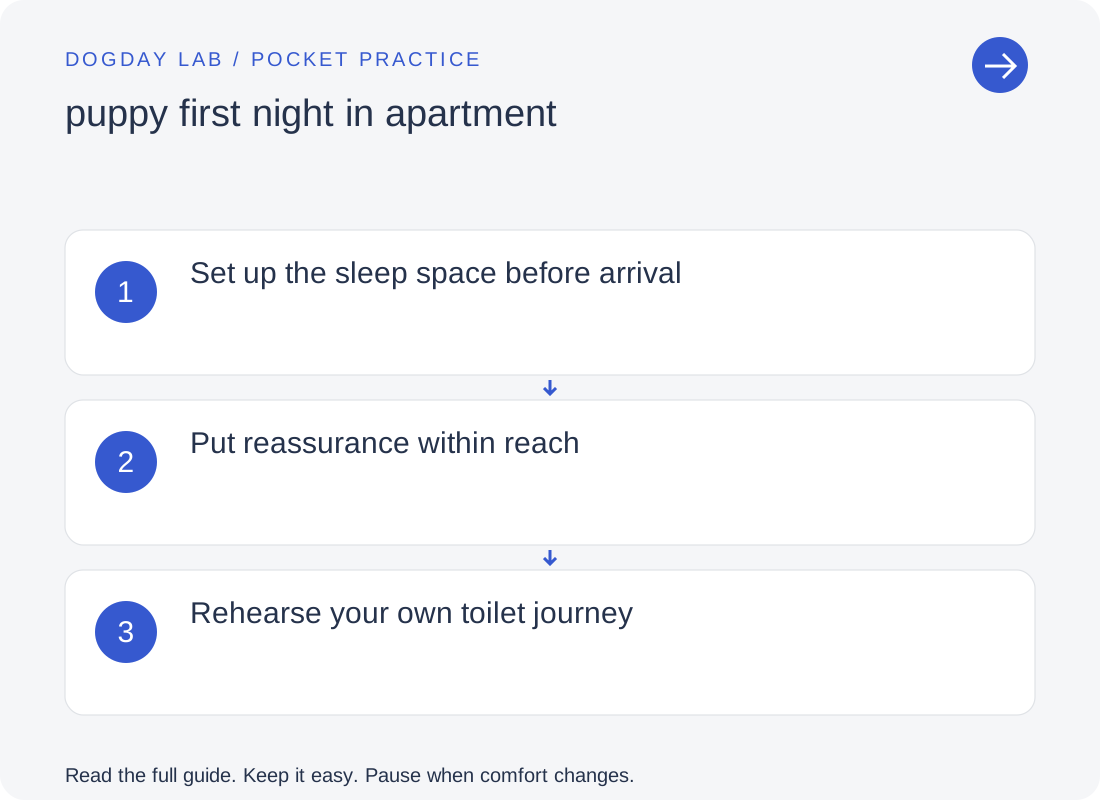
Set up the sleep space before arrival
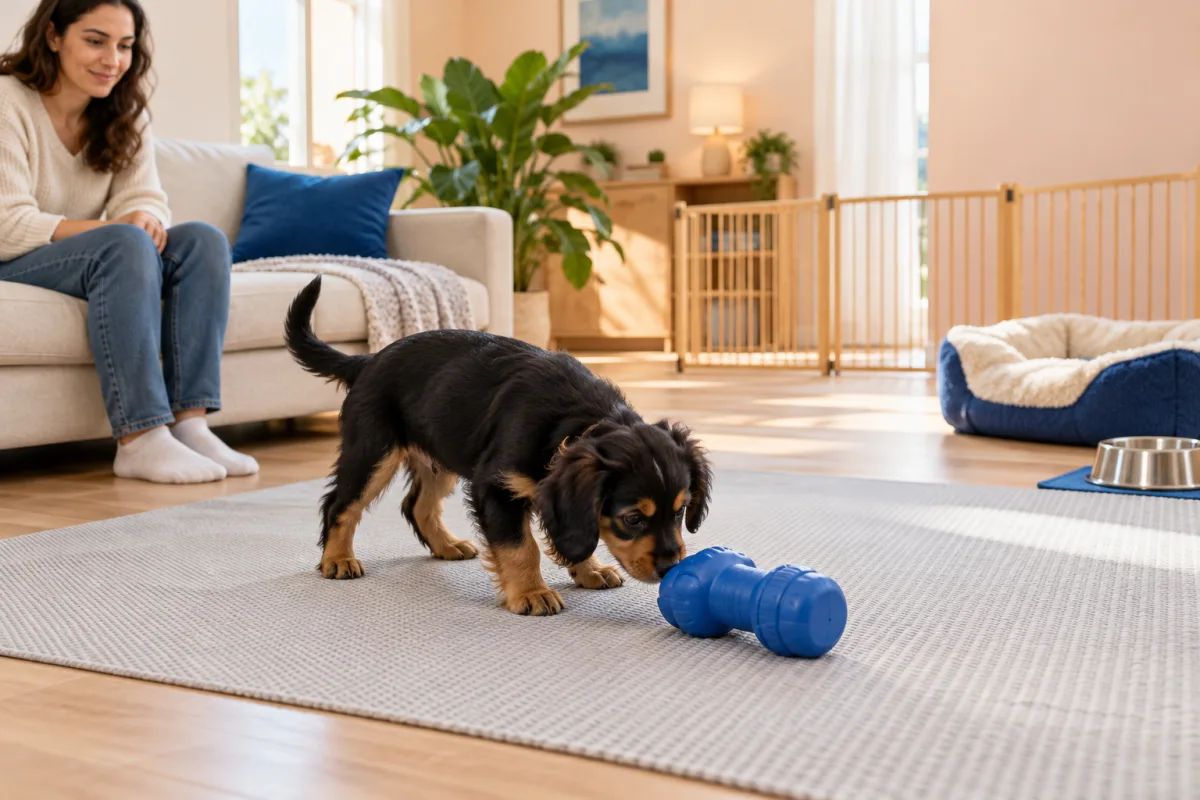
Choose a comfortable area away from drafts, trailing cables and accessible objects the puppy could swallow. A bed or familiar open crate can be part of it; a crate is not compulsory. If you use a pen or closed crate, that barrier needs its own gradual introduction. Do not make the first night the first experience of being shut away. Keep drinking water available and arrange the space so the puppy can settle without being repeatedly moved.
Put reassurance within reach
Start with the puppy’s sleeping area near a responsible adult, either by your bed or with the adult temporarily sleeping near the planned puppy area. Proximity makes it easier to notice waking and possible toilet needs. You can offer a quiet voice and calm presence without starting a game. If the intended long-term sleeping location is elsewhere, move toward that later in small steps that keep the puppy comfortable.
Rehearse your own toilet journey
Before bedtime, check that your keys, footwear, leash and lighting are ready. Know where you will go and which route is appropriate under your veterinarian’s infection-risk advice. Avoid turning a nighttime toilet trip into a busy social outing. In a building with unreliable elevator access, have a realistic backup that you have discussed with your veterinarian. Do not improvise an unsafe balcony toilet area in the middle of the night.
Allow a quiet landing before bed
After ordinary needs have been met, reduce household bustle. A gentle sniff around the safe room and relaxed company can bridge the change from activity to sleep. Do not keep the puppy awake for hours in an attempt to secure a longer night. If they fall asleep before your own bedtime, let them rest and adapt your evening rather than treating sleep as something they must save up.
Respond to waking without creating a party
When the puppy wakes or cries, check what is happening. They may need to toilet, feel uncertain or be physically uncomfortable. Take care of needs calmly, then return to the familiar sleeping arrangement. Keep handling gentle and the environment quiet. You do not need to demand a sit or a period of silence before offering a necessary toilet opportunity or reassurance.
Use the morning to revise the setup
Record the main events rather than every sound: when the puppy woke, whether toileting occurred and what helped them settle again. Discuss changes while everyone is rested enough to think. You might move the bed closer, simplify the hallway journey or change the handover between adults. Avoid making several major changes at once; a recognizable sleep area can help during an otherwise unfamiliar week.

Crying is information, not a negotiation
A new puppy may vocalize because they are separated from familiar company, need the toilet, feel trapped by a barrier or cannot get comfortable. Those possibilities call for different practical responses, but none requires proving that you can ignore them for longer. Check the puppy rather than assuming they are trying to control the household.
Responding does not mean offering exciting play every time there is a noise. You can be present, arrange a toilet opportunity and support rest while keeping the night uneventful. If the puppy repeatedly becomes distressed when you move away, make the distance smaller. Independence work belongs at a level the puppy can handle, not at a distance chosen to protect an idealized sleep plan.
Keep the sleeping arrangement physically safe
Small apartments often tempt people to place a puppy bed in whichever gap is left. Look at that gap from the puppy’s height. Remove blind cords, electrical leads, small objects and access behind furniture where they could become trapped. Think about airflow and temperature without pointing heaters or fans directly at the bed.
If the puppy is sleeping near a human bed, prevent falls and accidental entrapment. Choose an arrangement suited to the puppy’s size and mobility. Young children should not be responsible for overnight care. Another resident dog is not a substitute for adult supervision, and the puppy should not be placed in that dog’s resting area simply to provide company.

How to handle the hallway at night
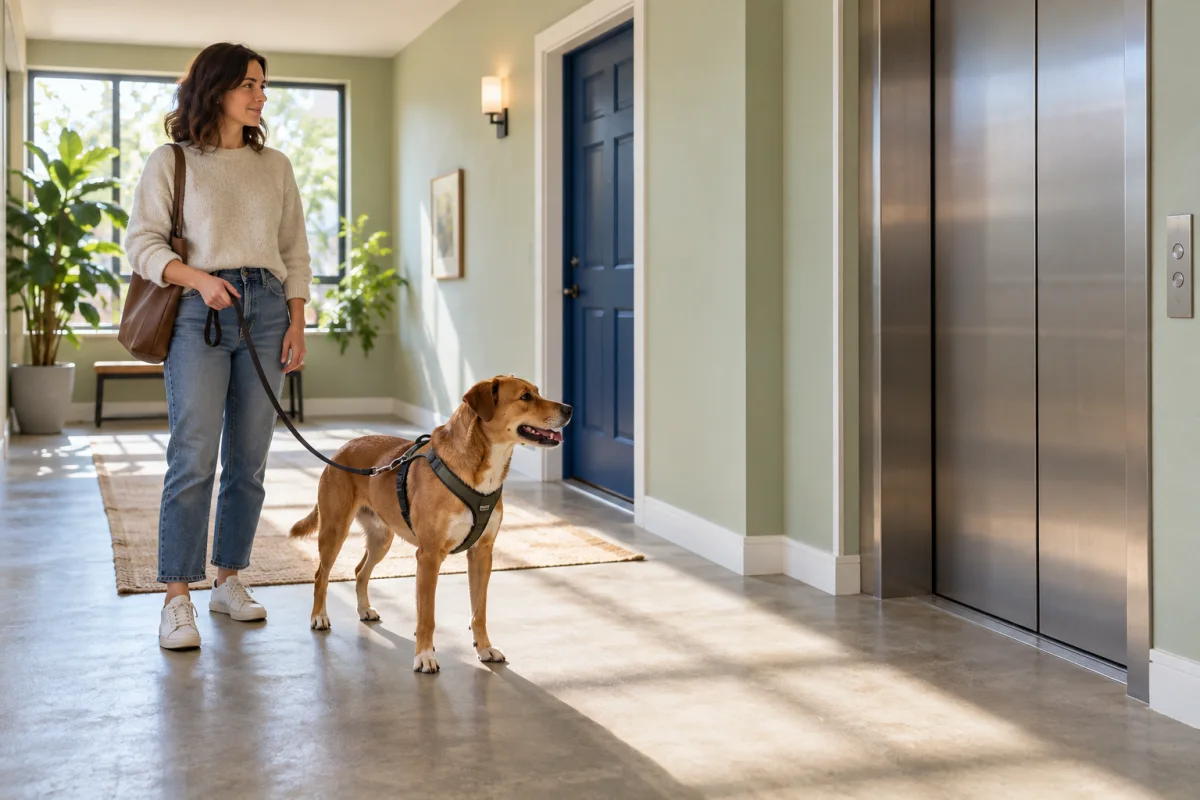
Shared corridors may contain sudden door movements, lift noises or returning residents. Keep the journey calm and secure. Give people room to pass instead of introducing the puppy to everyone. If your puppy is comfortable being carried and you can do so safely, that may simplify part of the trip, but never combine a precarious carry with bags, phones and loose keys.
Use enough light to move safely. A silent, pitch-dark outing is not useful if someone trips or misses a leash attachment. At the toilet spot, allow quiet time to sniff and eliminate. Reward appropriate toileting without turning it into a lively training session, then return home. If no toileting happens, continue supervision and offer another opportunity according to your puppy’s signals.
A practical first-night decision sequence
Suppose the puppy wakes and whines shortly after settling. First look for an obvious need or difficulty rather than watching a timer. If toileting is plausible, make the prepared trip. If the puppy has just toileted and is trying to reach you, reduce the social distance and offer quiet presence. If the bed seems uncomfortable or the room is too warm, adjust the environment. These are observations, not diagnoses, and several needs can occur together.
Once the puppy is comfortable, return to the same low-key sequence. Avoid repeatedly moving between three rooms, introducing a new chew and changing the sleeping surface every few minutes; that can add stimulation when you are trying to make the setting predictable. If your first sensible adjustment does not help, reassess calmly. Persistent distress, unusual physical signs or uncertainty about the puppy’s health are reasons to seek professional advice. The purpose of a decision sequence is to make care easier under fatigue, not to delay a response until every possible explanation has been tested.
Prepare neighbors without making promises you cannot keep
If appropriate for your building, a short courteous notice to immediate neighbors can explain that a puppy is settling in and that you are actively managing the transition. Do not promise a silent night or a fixed date when all noise will stop. A reasonable contact route can help distinguish a particular disturbance from general anxiety about complaints.
Within the apartment, reduce avoidable sound transmission by choosing a sleeping area away from a shared entrance where feasible. Close internal doors gently and prepare supplies before quiet hours. Background sound should be low and comfortable, not loud enough to mask distress or disturb neighbors. A noise complaint is a reason to improve support and management, not to use a frightening anti-bark device.
Sharing the night fairly
If two adults are available, agree who listens during each period and who takes over if the puppy needs more support. Keep the handover simple: last toilet, whether food was offered under the usual plan, and current sleep state. This avoids both adults assuming the other has responded, or repeatedly waking the puppy to check the same thing.
For a single caregiver, simplify the following day where possible. Prepare meals and essentials ahead, and ask a trusted person for daytime support if available. Fatigue makes rushed decisions more likely. You do not need to solve nighttime sleep, alone time, crate training and every household cue in the first twenty-four hours.
Moving toward the long-term sleep location
Once the puppy is settling comfortably in the current setup, you can make a small change in distance if a different sleeping location is needed. Observe the puppy rather than following a mandatory nightly move. A change that produces escalating distress was too large or too soon; return to the easier arrangement.
Some households choose to keep the dog sleeping nearby long term, and that is a practical household decision. Others need a separate room. In either case, teach the actual arrangement gradually and maintain access to care. Sleeping in a particular room is not evidence of dominance, and a puppy does not need to experience panic to learn independence.
When a restless night needs veterinary attention
Check for physical concerns when restlessness is intense, persistent or accompanied by other changes. Repeated vomiting, diarrhea, difficulty breathing, signs of pain, repeated unsuccessful attempts to toilet or unusual weakness require veterinary advice, with urgency appropriate to the symptoms. Do not describe all nighttime movement as ordinary puppy adjustment.
If the puppy’s physical needs appear met but they remain severely distressed, speak to your veterinarian and a qualified reward-based behavior professional. Bring a factual log and, where useful, a short recording. The aim is to understand what the puppy is experiencing and arrange support, not to collect evidence that they should be left to cope longer.
When it gets tricky
My puppy cries as soon as the crate closes.
Open the barrier when it is safe and return to an arrangement the puppy can tolerate. Work on comfortable crate or pen experiences during awake periods in small steps. A closed crate is not essential for every puppy, and it should not be used to force a first-night separation. Keep the alternative space safely puppy-proofed.
The puppy sleeps beside me but not across the room.
That tells you which distance currently feels manageable. Begin there and let comfortable experience accumulate. When you later try a small move, keep the rest of the setup familiar. You can return to the easier distance without treating it as a setback. A new home is already a large change.
Every toilet trip turns into play.
Keep the route and your own behavior quiet, use the same suitable area and avoid initiating games. Still allow necessary sniffing and time to toilet. When you return, offer the familiar resting arrangement. If the puppy is repeatedly wide awake, review the overall day and environment instead of withholding toilet opportunities.
Common questions
Should I leave a puppy to cry on the first night?
No. Check needs and offer appropriate support. Prolonged distress is not a useful independence exercise. A nearby adult, a safe sleeping area and responsive toilet care are reasonable starting points. If your puppy cannot settle even with support, seek qualified guidance rather than increasing the period of isolation.
Will one difficult night ruin sleep training?
No. A single night is a small sample of a puppy’s adjustment to a new home. Focus on making the next night easier and on protecting ordinary needs. Progress may be uneven. Look for comfortable settling and workable care arrangements over time rather than judging your future dog from the first evening.
Do I have to buy a special sleep product?
No particular product guarantees sleep. A safe comfortable bed, sensible room arrangement and nearby care matter more than a gadget. Check any product for chewing, entanglement and overheating risks. If you use familiar bedding from the previous home, make sure it is clean enough and safe for your individual puppy.
Sources & further reading
These sources support the training and welfare principles discussed. Examples are illustrative; source organizations do not endorse this site.
General education, not an individual assessment. Pain, sudden behavior change, panic, aggression or bite risk need appropriate professional support. Editorial images are illustrative.