The short answer
A good apartment potty routine plans for the time between noticing a need and reaching a suitable toilet spot. Prepare the exit, offer frequent appropriate opportunities, reward the right location and record patterns. Use an indoor option when necessary rather than expecting a puppy to wait through building delays.
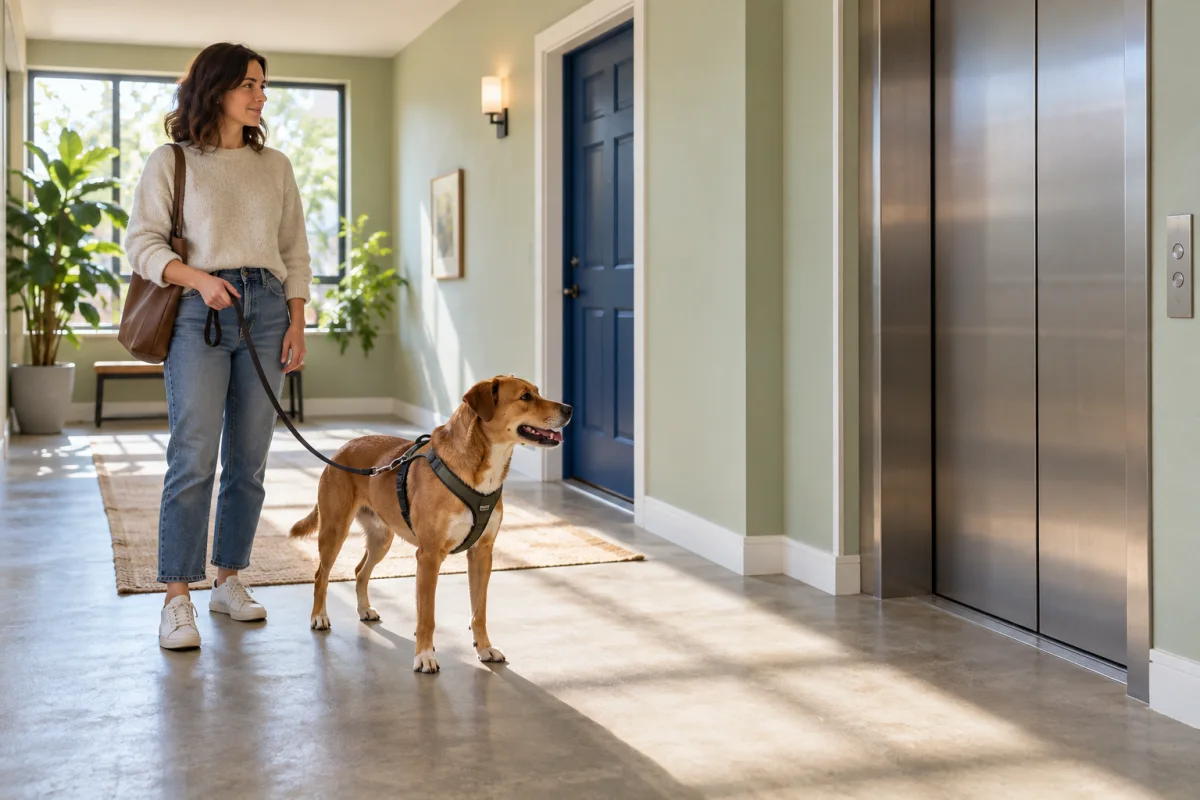
In a house with a yard, opening one door may be enough. In an apartment, the same toilet trip can involve locating shoes, fitting a harness, waiting for an elevator and crossing a lobby. Those minutes matter. Planning the route is part of toilet training, not an extra chore after the training is finished.
This guide focuses on logistics and observation. It does not prescribe how long a dog should hold their bladder. Age, health, waking, drinking, food, activity and individual development all influence needs. If urination becomes painful, unusually frequent or difficult, or a previously reliable dog suddenly has accidents, consult your veterinarian rather than treating the change as a training setback.
Before you start
- Secure walking equipment
- Accessible keys, bags and shoes
- Suitable cleaning product used as directed
- A simple toilet log
- An appropriate indoor toilet area if needed
A practical starting point
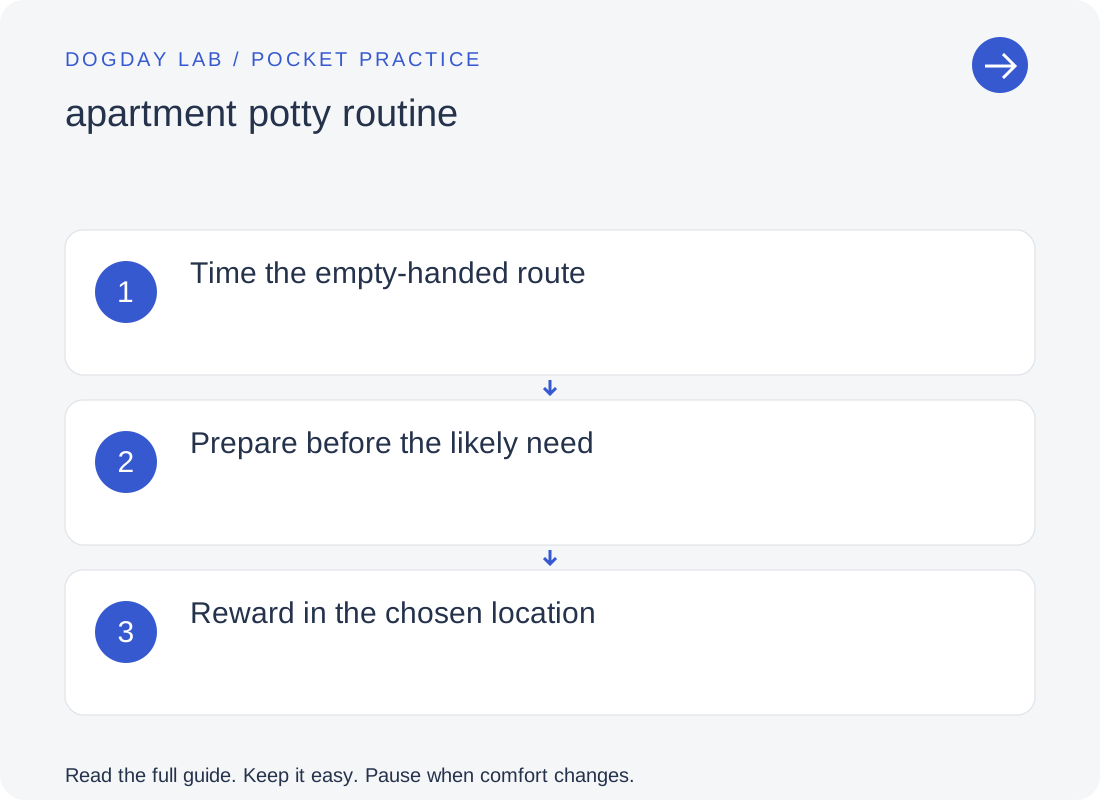
Time the empty-handed route
Walk from your door to the permitted toilet area without your dog. Include the usual elevator wait and the return. Use this to understand delay, not to calculate a holding target. Identify a safe alternative for elevator outages or a temporarily blocked entrance.
Prepare before the likely need
Keep ordinary outing supplies together and supervise after waking, eating, drinking and active play. Offer a toilet opportunity before obvious urgency. For a young puppy, arrange the easiest safe route available; do not add leash drills or greetings while they are trying to reach the toilet.
Reward in the chosen location
Remain nearby and give your dog time without distracting them. After they finish eliminating, calmly offer a suitable reward while you are still at the toilet area. Then allow an appropriate next activity. Avoid ending every successful toilet trip with an immediate rush indoors if a little safe exploration is possible.
Use the result to adjust the next trip
Record departure time, whether your dog eliminated, location and any accident afterward. If a trip was unsuccessful, supervise closely and offer another suitable opportunity rather than granting unsupervised access to the whole apartment. Change the arrangement based on patterns, not one isolated event.

Choose the destination before the puppy arrives
Ask your veterinarian about local infection risks and suitable outdoor access for your puppy. A shared dog toilet area may pose different considerations from a quiet private space. Do not assume that every puppy must avoid all outdoor experience until a particular birthday, or that every patch of public ground is equally suitable. Health advice should be specific to your location and dog. You can plan social exposure and toilet access separately, including safe carried observation when appropriate.
If an indoor toilet is needed, choose a stable, accessible location with a surface intended for the purpose. Keep it distinct from resting and feeding areas where practical, and clean it consistently. Consider whether the puppy can reach it safely when you are occupied. A balcony is not automatically a safe toilet area; openings, temperature, escape risks and building rules need assessment. Never rely on a balcony door being open as supervision. A suitable indoor arrangement can be a temporary or ongoing solution without becoming a reason to omit outdoor enrichment.
Make the exit an ordinary sequence
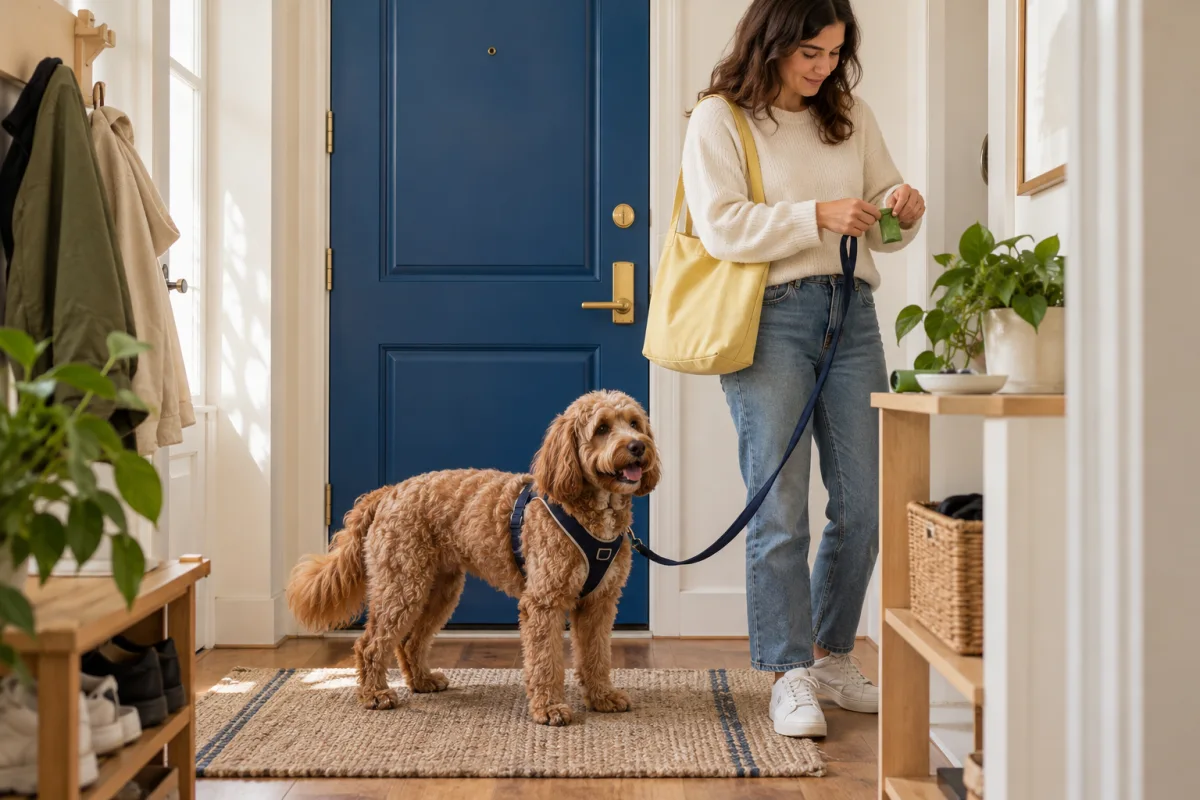
Put your own shoes on and gather supplies before bringing the puppy to the door. Check that the harness is fitted and the leash is secure. If carrying is appropriate, support the puppy comfortably and keep your balance; do not carry a dog you cannot safely manage. Use the elevator only when the dog and handler can enter and exit together without a leash crossing closing doors. If you need a second adult to manage a difficult route, arrange that help rather than improvising at the threshold.
An illustrative morning sequence is: adult gets ready, puppy wakes, direct trip to the toilet area, reward after elimination, then breakfast or other normal care. Another household may need an indoor toilet first because the elevator is slow or the puppy wakes urgently. Neither sequence should be treated as a universal schedule. The important feature is that preparation does not consume the puppy’s opportunity. Practice calm harness fitting at another time if fitting currently takes several stressful minutes.
Use a log to notice what actually predicts a trip
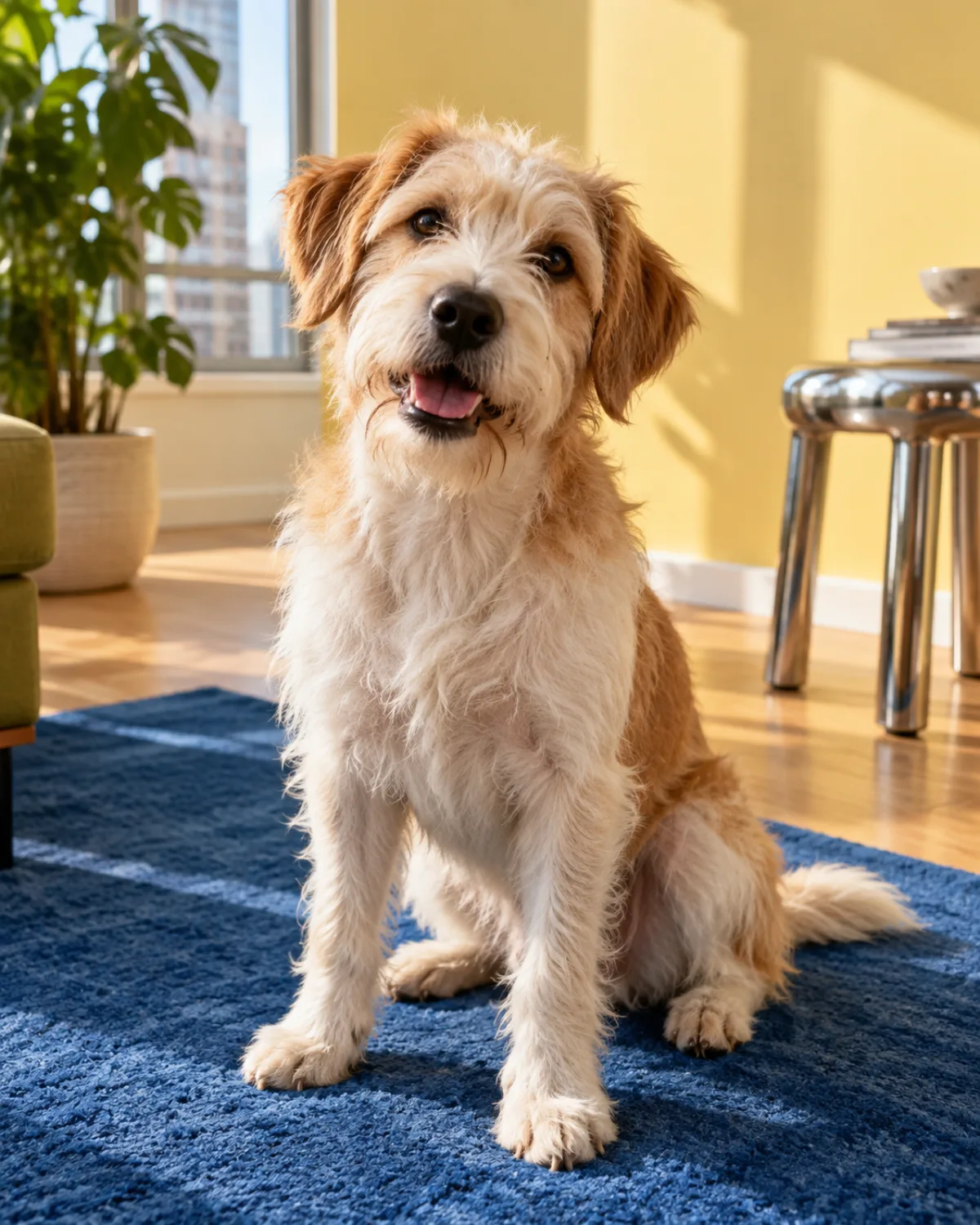
Keep entries simple: wake, meal, drink, active play, toilet opportunity, result and accident if any. Include unusual delays such as a maintenance crew in the lobby. You may notice that accidents happen during the elevator wait, or shortly after returning from a distracted outdoor trip. Those patterns suggest different changes. The first may need an earlier departure or an indoor backup; the second may need a quieter toilet location and closer supervision after an unsuccessful outing.
A log should never become a competition to increase the interval between trips. Reliable access comes first. Suppose a puppy usually eliminates soon after waking but stays asleep longer one morning. Follow the actual waking and behavior rather than taking the previous day’s clock time as an instruction. Likewise, an energetic visitor session may create an extra need. Write examples of successful trips as well as accidents so that you can see what was already working and preserve those conditions.
Give the toilet opportunity a clear beginning and end
Take your dog to the appropriate area with a calm, unhurried approach. Keep the leash secure without pulling them into a particular posture. Allow sniffing and enough space to choose a spot within the permitted area. Avoid greeting other dogs or starting a lively game before the toilet opportunity if distraction has been a problem. You can use a consistent verbal cue as elimination begins, but do not repeat it continuously as a demand.
After your dog finishes, reward promptly and clean up. If they do not eliminate, return to appropriate supervision and try again when needed. Do not assume a trip downstairs automatically counts as a successful toilet break. Some dogs find a busy street too distracting or uncomfortable; a quieter permitted location may matter more than waiting longer. If you repeatedly see attempts without results, discomfort or unusual urgency, seek veterinary advice. A training plan cannot rule out a medical reason.
Respond to accidents by changing access and supervision
Clean the area using a product suitable for the surface and follow its instructions. Keep your dog away while cleaning if needed. Punishing an accident after it happens does not explain the desired location and can make a dog wary of eliminating near you. If you notice the beginning of an accident, calmly offer the appropriate location when doing so is practical and does not frighten or physically rush the dog. Avoid grabbing a startled puppy while they are eliminating.
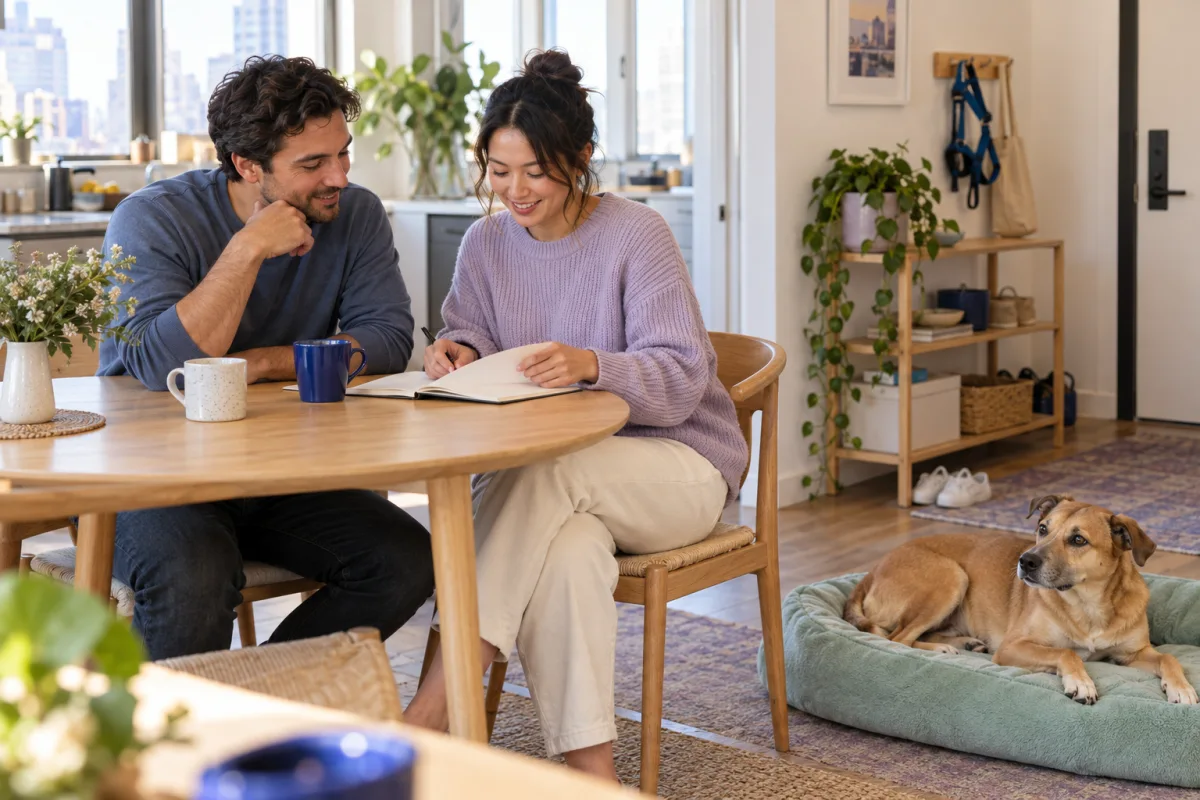
Ask which part of the arrangement failed. Was the toilet area inaccessible? Was supervision interrupted? Was the dog taken out but unable to settle enough to eliminate? Did someone assume another adult had already gone downstairs? Write a specific adjustment for the next occurrence. For example, place a visible note by the door after each successful trip, or assign one adult to supervise during dinner preparation. A smaller supervised area may help, but it must remain comfortable and should not be used to force a dog to hold beyond their needs.
Keep an indoor backup without making the plan confusing
An indoor option is most useful when everyone knows where it is and when it is available. Repeatedly moving it around the apartment can make finding it harder. Choose a location you can maintain, offer guidance and reward appropriate use. Some dogs learn a preference for particular surfaces, so a later transition may require gradual practice. That does not mean the indoor option was a mistake; it means the next location needs teaching too.
If you want to move toward outdoor toileting, add reliable outdoor opportunities before removing indoor access. Reward outdoor success and watch the record over time. Do not suddenly take away the only option your dog can reach while you are busy or the elevator is broken. Consider the eventual household routine honestly. A caregiver may be necessary during long work periods, and an indoor toilet does not replace social contact, exercise or care. Choose a sustainable arrangement rather than one that works only on your easiest day.
Plan for nights, weather and building interruptions
Night trips benefit from preparation: shoes and equipment ready, a clear path and a low-key return. Keep the focus on toileting rather than stimulating play. A young puppy may need support at night; a silent apartment should not come at the cost of ignoring distress or an urgent need. Share responsibility between adults when possible, and note the actual result so the next person has accurate information.
Heavy rain, a broken elevator or a blocked courtyard can change the route immediately. Identify acceptable alternatives in advance and check building rules for indoor areas. Do not make the puppy use an unsafe balcony edge or rush down slippery stairs. When the ordinary route returns, re-establish it gently rather than expecting instant reliability. If an adult dog’s needs change during illness or recovery, follow veterinary guidance and adapt the toilet arrangement. The routine is there to serve the dog’s needs, not to prove they can tolerate inconvenience.
Work through a high-rise example
Consider a household on the sixth floor where a puppy often has an accident while the adult searches for keys. The first adjustment is not a longer outdoor walk. Put the keys and clean-up supplies in a consistent place, prepare the adult before waking the puppy, and make the first outing functional. If the elevator is still too slow for the puppy’s needs, add an appropriate indoor toilet option and ask the veterinarian about the safest outdoor arrangements. The goal is successful access, not proving that the puppy can wait.
After several ordinary days, review the record. If accidents have moved from the hallway to shortly after breakfast, that is new information about a different part of the routine. Add an appropriate post-meal opportunity and check who supervises while dishes are cleared. Do not remove the successful morning preparation because another problem remains. Household routines often improve one transition at a time. A useful log lets you preserve the changes that help while investigating the next bottleneck without rewriting the entire day.
When it gets tricky
My puppy pees in the hallway.
Reduce the time and distance they must manage before reaching the correct area. Prepare earlier, consider safe carrying where appropriate and use a suitable indoor backup if necessary. Clean shared areas promptly and respectfully. Do not turn the hallway into a practice holding test.
We go outside, then have an accident indoors.
Check whether elimination actually happened outside and whether the outdoor location was too distracting. After an unsuccessful trip, maintain gentle supervision and offer another opportunity. Record the sequence. Persistent or sudden changes, discomfort or frequent small urinations require veterinary input.
Different family members keep changing the schedule.
Use a shared factual record: last successful toilet event, result of the most recent outing and who is supervising now. A fixed schedule cannot anticipate every need, but a clear handover prevents assumptions. Keep one adult responsible until another explicitly takes over.
Common questions
Should every apartment puppy use pads?
No. The right arrangement depends on access, health guidance, development and the household’s ability to offer opportunities. Pads or another suitable indoor surface can help when outside access is impractical, but they require consistent teaching and maintenance.
Can I use an age-in-months formula for toilet breaks?
Do not treat a formula as a safe holding limit. Individual needs vary, especially around waking, drinking, meals, activity and health. Observe your puppy, offer appropriate opportunities and ask your veterinarian if you are uncertain about a pattern.
When can I remove the indoor option?
When outdoor access is reliable for the actual household routine and your dog has demonstrated comfortable success across ordinary days. Remove access gradually and monitor closely. If accidents increase, restore an easier arrangement and reassess the timing rather than blaming the dog.
Sources & further reading
These sources support the training and welfare principles discussed. Examples are illustrative; source organizations do not endorse this site.
General education, not an individual assessment. Pain, sudden behavior change, panic, aggression or bite risk need appropriate professional support. Editorial images are illustrative.