
Puppy days
A puppy apartment schedule that fits real life
Build a flexible puppy apartment schedule around potty trips, meals, rest and short practice, with realistic adjustments for elevators and workdays.
Puppy days · 3 guides
Your puppy is learning how the home works at the same time as you are learning what they need. Before adding a long list of cues, make it easy to sleep, toilet, explore safely and ask for help.
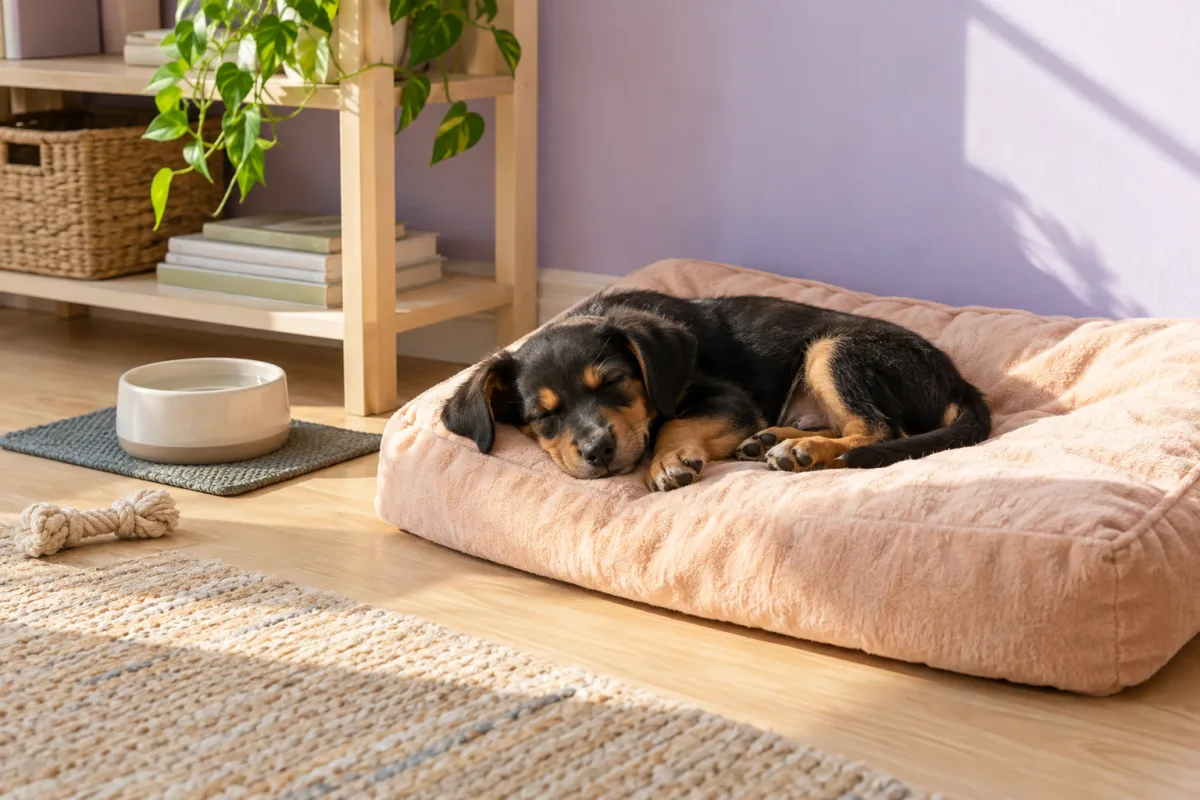
Care first, learning inside it
A puppy routine is a care arrangement before it is a training schedule. Sleeping, toileting, eating, comfortable movement and safe exploration create the conditions in which small lessons can make sense. In an apartment, the human arrangement is especially important: somebody must be available for the route outside, equipment needs to be ready and a meeting cannot decide how long a puppy is able to wait. Start by making those responsibilities visible.
Choose a few useful foundations and introduce them in ordinary moments. A reward for looking toward you, comfortable harness preparation or a calm handover can fit into daily care without adding a demanding session. Keep novelty small enough that your puppy can explore and disengage. Your veterinarian can help you balance early experiences with infection precautions and your puppy’s health. A general checklist should support those decisions, not replace local professional guidance.
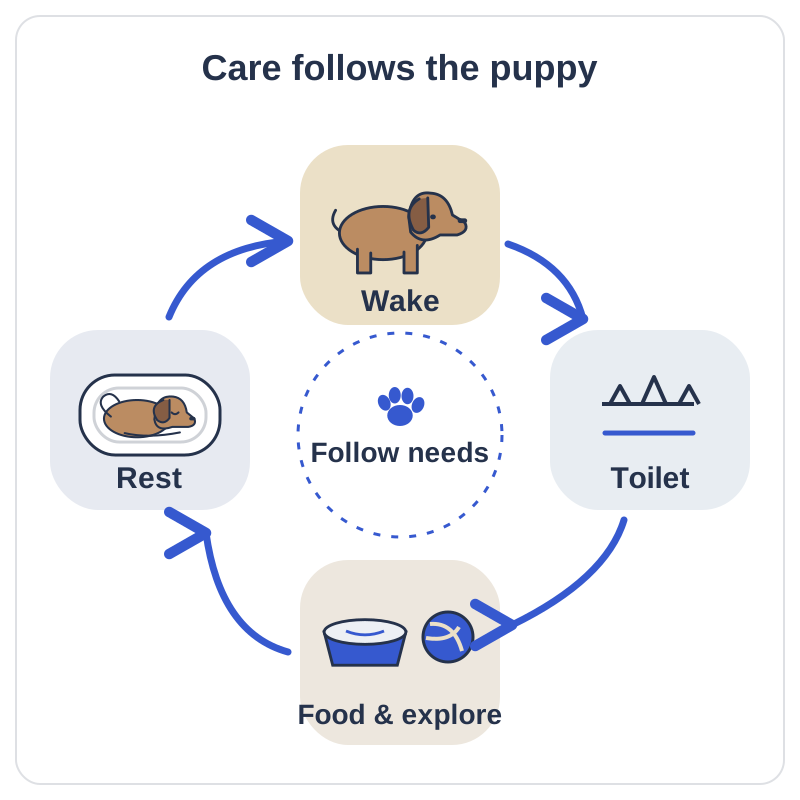
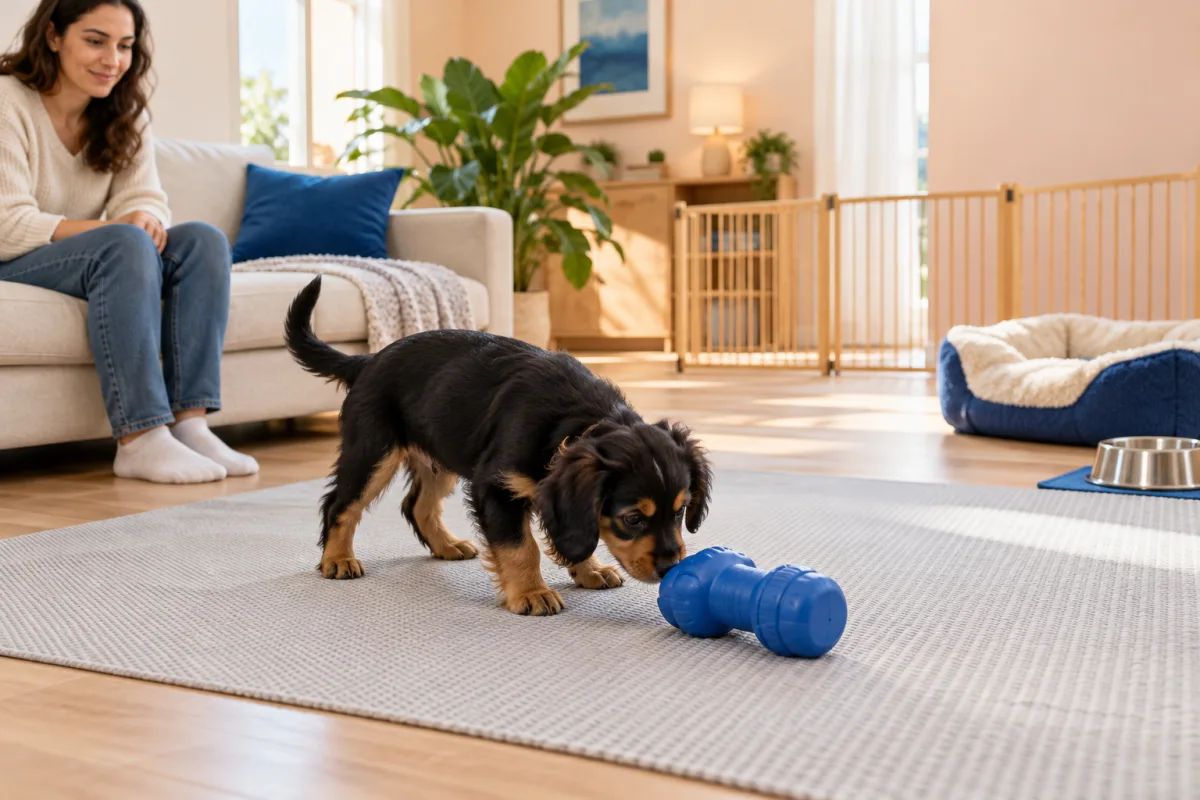
Begin with the setup
Watch what happens around waking, meals, drinking, play and exciting arrivals. These events often tell you more about the next care opportunity than a generic timetable. Keep a brief record of your puppy’s actual pattern and allow extra time for the building exit. Do not turn age into a universal bladder-holding promise. When accidents happen, adjust access and supervision, clean appropriately and consider veterinary advice for new urgency, discomfort or other concerning changes.
Build the adult schedule around the responsibilities you have identified. If work prevents a timely outing, arrange a suitable person or another appropriate care solution in advance. Two adults both being home does not mean either is available at the critical moment. Name who is responsible and communicate the handover. A schedule is most helpful when it prevents a puppy from being overlooked; it becomes less useful when people use it to postpone a need because the next printed time has not arrived.
Your field guides
Choose the guide that answers your next practical question.
Puppy days
Build a flexible puppy apartment schedule around potty trips, meals, rest and short practice, with realistic adjustments for elevators and workdays.
Puppy days
Prepare for your puppy’s first night in an apartment with a nearby sleep space, quiet toilet trips and a responsive plan for crying and reassurance.
Puppy days
Help your puppy notice people, dogs and city life without greeting everyone. Plan short, comfortable observations and protect their freedom to move away.

Put the ideas into practice
Socialization can involve noticing the world without greeting everyone in it. A brief view of a distant person, a gentle household sound or a quiet moment in an appropriate carried setup may provide useful information at a manageable level. Consider the surface, distance, duration and possibility of leaving. Keep the puppy secure and physically supported when carrying is appropriate. Do not bring a puppy into a difficult crowd simply to collect an experience for a checklist.
Notice the whole puppy during an outing: posture, orientation, movement, interest and ability to disengage. A puppy who takes a treat can still be finding the situation difficult. If they repeatedly turn away, become tense or struggle to settle afterward, make the next opportunity easier. A pleasant first exposure is not permission to increase every variable at once. Veterinary guidance about local infection risk, safe locations and vaccination should inform which experiences you choose and how you arrange them.
Put the ideas into practice
Puppies need opportunities to disengage from play and sleep without repeated interruption. Arrange a comfortable resting area away from the busiest household traffic, while considering the puppy’s need for company and support. Do not keep restarting games because the puppy responds to movement. Notice whether play ends with comfortable recovery or increasingly frantic activity. If the puppy cannot rest, review the environment, care pattern and health concerns rather than assuming another tiring game is the answer.
Agree on a small number of household signals. Introduce a reward marker thoughtfully, decide what a release means and avoid several adults calling different instructions during the same moment. A cue written on a card is not yet a learned behavior. Show a sitter the actual equipment and care route, explain what the puppy currently understands and describe what still needs management. Include how the next adult can ask for help; consistency should support the puppy, not become a reason to ignore changing needs.
A useful check for tomorrow
A puppy handover becomes clearer when it says what just happened, what is likely to need attention next and who is taking over. For example: the puppy woke, went outside and is now exploring with supervision; the next adult will watch for another toilet need and prepare a quiet resting opportunity. Describe the actual sequence rather than copying yesterday’s clock times.
Keep the note short enough to update during a busy day. If an outing or rest opportunity was different from expected, explain that change directly. The next person should not need to infer care needs from whether a practice exercise was completed. Learning can resume when the basic arrangement is working.
From an ordinary day
Imagine a puppy arrives in an apartment where both adults work from home. They initially plan a neat timetable, but the first morning reveals a practical gap: both have a call shortly after the puppy wakes. Instead of asking the puppy to wait until a scheduled break, the adults change the handover. One handles the timely toilet opportunity while the other prepares equipment and clears a safe route. Work coverage becomes part of the care plan.
Later, the puppy has a short comfortable look at a quiet part of the building from an arrangement their veterinarian considers appropriate. There is no requirement to greet a neighbor or ride the elevator repeatedly. Afterward, the adults provide a chance to rest and record what the puppy seemed able to enjoy. A new sound is introduced separately on another occasion, so they can understand the response without combining many unfamiliar experiences.
At the end of the week, the review concerns the system: Which care event needed quicker support? Where could the puppy rest? Did both adults use the same release word? The answer may be to keep the easier version longer. The example does not promise a trained puppy after seven days. It shows how a household can learn about the individual puppy and make its next decision more thoughtful.
Choose the next useful question
| What is happening | Start with | Keep reading |
|---|---|---|
| Your planned timetable keeps missing toilet needs. | Use waking, meals and activity as prompts, observe the individual pattern and revise adult coverage. | A puppy apartment schedule that fits real life |
| The puppy becomes overwhelmed by greetings. | Choose comfortable distance and short observation without any requirement to interact. | Puppy socialization without greeting everyone |
| Evening play becomes harder to stop. | Review earlier rest, the intensity of the game and whether the puppy can disengage comfortably. | Your puppy’s first night in an apartment |
| Another person will care for the puppy. | Demonstrate the equipment, route, current cue meanings and a clear next-care handover. | A puppy apartment schedule that fits real life |
Before the next step
Begin with small useful moments inside care rather than filling every spare minute. Reward an easy look toward you, introduce equipment comfortably or practice one simple household transition. The amount your puppy can enjoy varies with health, sleep, environment and novelty. A timer can set a maximum window, but it should never require you to continue when the puppy needs rest, the toilet or reassurance.
No fixed encounter quota establishes good socialization. Quality, comfort and suitability matter. Your puppy can notice people at a distance without greeting them, and familiar pleasant experiences can be worth repeating. Balance opportunities with your veterinarian’s advice about local health risks. Avoid forced approaches, crowded settings and repeated exposure when the puppy is already worried or unable to disengage.
Solve the care coverage directly. Arrange an appropriate caregiver, change a meeting where possible or plan another suitable arrangement before the conflict occurs. Being physically present at a desk does not automatically meet a puppy’s needs. Do not rely on a longer stay, food puzzle or age-based holding formula to bridge a gap the puppy cannot comfortably manage.
Shared meanings and reliable care help, but the routine also needs flexibility. Agree on equipment safety, cue definitions, reward timing and how to communicate the last and next care events. Let adults adapt the easy setup when conditions change. The aim is clear support for the puppy, not identical performances regardless of tiredness, weather, building delays or new health concerns.
 Meet DogPath
Take a guided lesson, keep a daily practice rhythm and work on the moments that matter to you.
See how the app fits