The short answer
City dog training begins with choosing manageable routes and protecting space around your dog. Teach easy turns, brief pauses and comfortable movement in quiet settings, then use them in suitable real situations. Busy streets are not a test to endure. Shorten or change an outing when the environment becomes too difficult.
A city walk is a chain of decisions: leaving the building, passing a café queue, crossing a bike lane, waiting at a signal and finding somewhere to sniff. A dog can know basic cues and still find that chain difficult. Training becomes more useful when it addresses those transitions rather than asking for a continuous perfect heel.
This guide helps you build a practical urban routine. The goal is comfortable, safely managed access to ordinary life, not a dog who tolerates every crowd. Some dogs need quieter routes, more distance or professional support. Their need for space is a planning fact, not a character flaw to train away.
Before you start
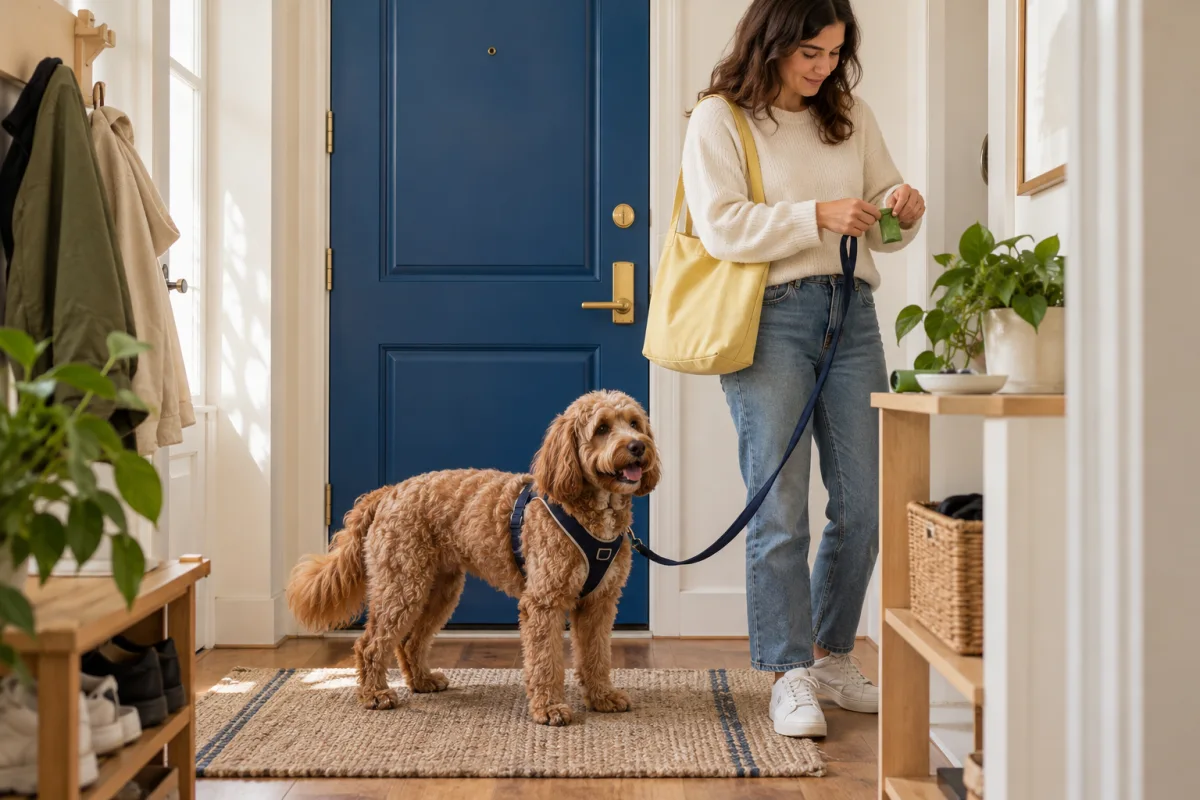
- Secure leash and well-fitted equipment
- Suitable rewards within easy reach
- Waste bags and water as appropriate
- A familiar quiet route
- A backup way home
A practical starting point
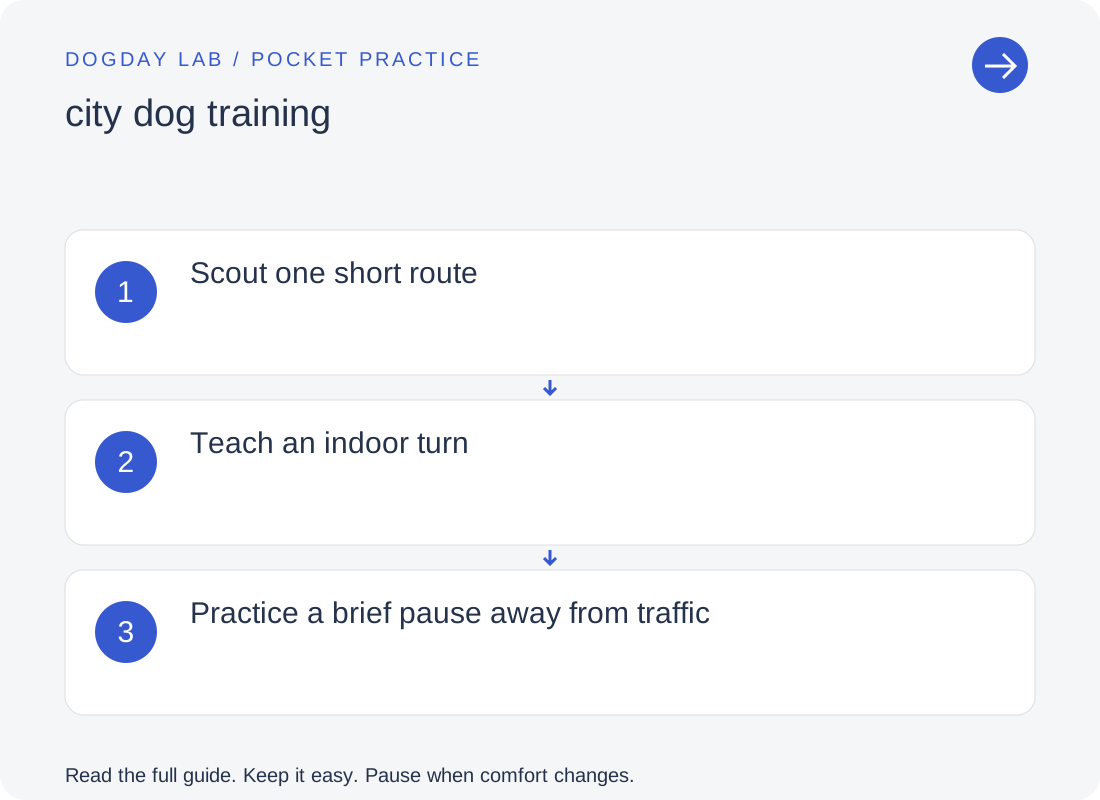
Scout one short route
Walk it without your dog if possible. Mark narrow sections, road crossings, busy entrances and places where you can step aside safely. Choose a quieter time for the first dog outing and identify an easy return route before leaving.
Teach an indoor turn
In a clear room, invite your dog to follow as you turn your body and move a few steps. Reward following comfortably. Practice both directions without pulling. This movement can later help you leave a crowded spot before it becomes difficult.
Practice a brief pause away from traffic
In a quiet safe place, stop with your dog beside you, reward a comfortable pause and move again. Standing is fine. Build the skill without requiring a long stay or placing the dog near moving vehicles.
Use the easiest real version
On the chosen route, practice one short pause or turn in a spacious area, then continue to an appropriate sniffing opportunity. Skip practice during sudden congestion. Record which part of the route was manageable and what you will change next time.

Choose a route for the dog you have today
A familiar route can become harder because of construction, weather, a school event or a busy delivery period. Look at the actual conditions before committing. Your dog’s state also matters: a disrupted night, veterinary visit or unusually demanding day may reduce what is comfortable. A shorter quiet outing can meet needs better than insisting on the usual circuit when both the dog and street are different.
Separate essential access from optional exploration. The first toilet trip may need the simplest reliable route. A later outing can include a new street if your dog is comfortable. Do not combine every goal into one walk: exercise, socialization, shopping, café time and difficult training can create a sequence with no recovery. Decide the main purpose before leaving and preserve an easy way to shorten the plan.
Read the street before asking your dog to respond
Look ahead for bottlenecks, opening vehicle doors, queues and people who may change direction. Keep your attention on the environment rather than a phone. Notice where the dog’s line could cross another person’s path. Anticipation gives you time to turn, wait or choose a wider section before the dog is already overwhelmed. Good handling often means making fewer urgent corrections because you acted earlier.
Your dog does not need to stare at you continuously to walk safely. They need enough freedom to gather information while remaining within a controlled space. Reward comfortable check-ins, but also allow appropriate sniffing and looking around. If your dog cannot disengage from a particular event, increase distance where safe rather than repeating the cue louder. A busy street is a poor place to prove that a previously learned response is reliable under every condition.
Teach movement skills that create options
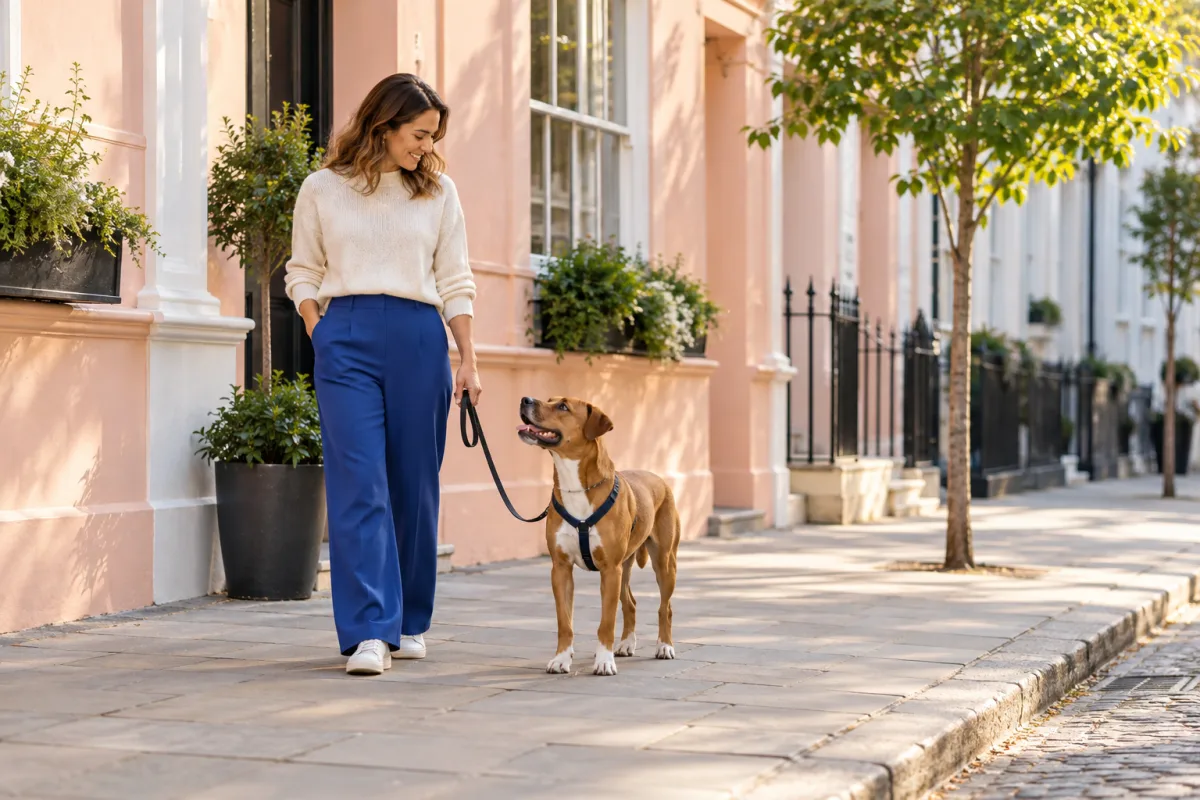
A comfortable turn toward you, a few steps alongside and a brief pause are useful because they change your position. Teach them first in a quiet area. Use a clear invitation, reward the desired movement and end while the dog is engaged. Add environmental difficulty gradually. A skill that works in a living room may need practice in a courtyard before it is useful beside a shop entrance.
Keep the purpose concrete. A turn can help you avoid an approaching crowd. Walking beside you for several steps can help you pass a narrow doorway. A pause can give you time to check a crossing. None of these skills replaces secure equipment or your responsibility to judge safety. If the dog is frightened or physically unable to move as requested, change the situation and seek help rather than treating the cue as an obligation.
Use pauses without trapping your dog beside a trigger
A pause is helpful when the location gives both of you space. It is less useful when the dog is held still beside a loud bus, a crowded doorway or another dog approaching head-on. Choose a position where you can leave easily and where the dog is not blocking pedestrians. Keep the leash managed without constant tight pressure. Standing comfortably may be more appropriate than sitting on a wet, hot or awkward surface.
Begin with very short pauses and move on before the dog becomes restless. At a road crossing, the human checks traffic and signals; the dog’s role is simply to remain securely with the handler. Do not extend a pause to practice endurance when a quieter option is available. If the dog cannot settle enough to wait safely at a particular intersection, choose another crossing or obtain individual support for that route.
Let urban exploration include safe sniffing
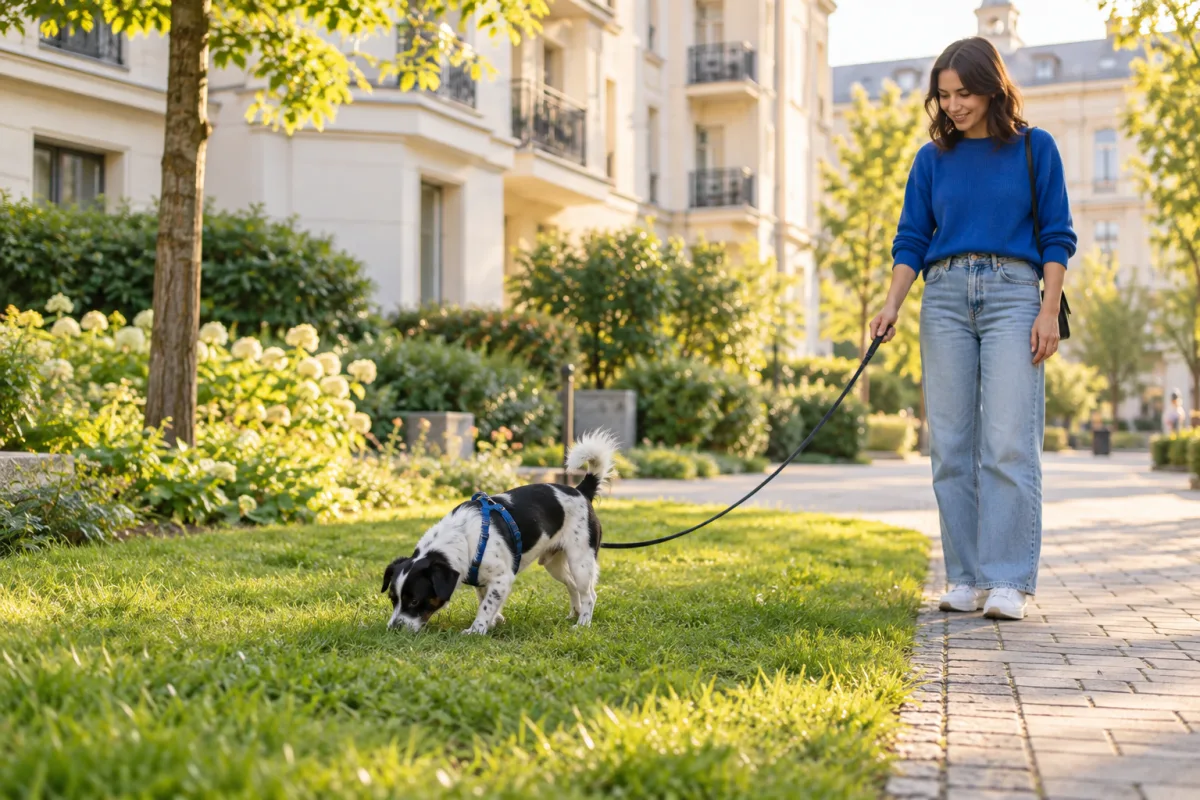
Sniffing can be an important part of the outing, but the location matters. Choose areas away from vehicle movement, bicycle traffic and objects the dog might ingest. Keep the leash from extending across paths. Follow local rules and respect planted beds, private property and wildlife. You do not need to turn every sniff into a timed reward after obedience; it can be an ordinary part of an appropriate walk.
If a smell draws the dog toward a hazard, guide movement early using a practiced invitation and reward a safe alternative. Avoid waiting until the line is fully stretched and then pulling the dog back abruptly. For a dog who repeatedly grabs litter or unsafe items, use management and qualified advice rather than treating the city as a training laboratory. The opportunity to explore should remain compatible with physical safety and the needs of other people.
Keep greetings optional
Cities offer many potential greetings, but exposure does not require contact. A dog can learn about people, dogs, bikes and umbrellas from a comfortable distance. Ask before approaching another dog and accept a refusal. Avoid face-to-face meetings in narrow spaces or while either handler is balancing bags and traffic decisions. A simple pass may be the most appropriate social skill for that moment.
If someone wants to pet your dog, assess your dog’s comfort and the available space before agreeing. You can decline politely. Children need responsible adult involvement and careful management; a wagging tail alone does not certify a safe interaction. Do not use your dog to reassure a fearful stranger or use a stranger to test your dog. Well-managed city life includes many ordinary moments when nobody has to meet.
Plan recovery between demanding places
A route with a quiet section between busy intersections gives your dog a chance to return to ordinary exploration. If every section is crowded, consider a different time or destination. Watch what happens after a difficult event: can your dog sniff, move normally and respond to an easy invitation, or do they remain vigilant and pull continuously? The answer helps you decide whether to continue or go home.
A dog who becomes increasingly reactive as the walk progresses may need fewer difficult events, not a longer route to tire them out. Shorten the next outing and record where the change began. Avoid adding another challenging stop because you are already out. At home, provide water and a comfortable quiet opportunity before expecting more activity. Recovery is part of the routine, especially when the city has presented more than you planned.
Use a worked route example
Imagine a route from an apartment to a small green space. The shortest path crosses a crowded café frontage and a busy bike lane. A slightly longer alternative uses a wider residential street and a controlled crossing. The dog is comfortable on the residential street but struggles beside café queues. Choose the easier route for ordinary outings. Practice brief movement near a quiet shop entrance at another time if that skill is useful.
On the outing, the handler rewards a comfortable check-in before the crossing, waits securely while checking conditions, then continues to the green space for appropriate sniffing. If construction unexpectedly blocks the return path, the handler uses the known alternative rather than squeezing through workers. This is successful city training because preparation and learned movements support a safe decision. It does not require completing the shortest route or exposing the dog to every possible challenge.
Know when the problem needs individual support
Repeated lunging toward traffic, panic, escape attempts, aggression or inability to recover are reasons to seek qualified help. Contact your veterinarian when behavior changes suddenly or pain, sensory change or illness may be involved. Use practical management while a plan is developed. Avoid equipment or methods that rely on pain or startling the dog to suppress the visible response.
A useful professional plan should account for your actual neighborhood, available routes, handling ability and schedule. Ask what to do during unavoidable encounters and which situations to avoid for now. Bring short factual notes rather than only a general statement that walks are difficult. You should understand the first achievable step and how to recognize when the setup is too hard. An app or written guide can support ordinary practice but cannot assess a dangerous street encounter remotely.
Make one useful note after the walk
Write down the place where your dog had the easiest time, not only the hardest encounter. That location can become the starting point for the next small exercise. Include the time of day and any unusual conditions so you do not mistake a quiet Sunday route for an equally easy weekday route. If a change helped, repeat it before adding another challenge. This keeps the plan grounded in observed comfort and makes progress easier to understand than a vague judgment about whether the whole walk was good.
When it gets tricky
My dog knows everything indoors but nothing on the street.
The street adds movement, smells, noise and space constraints. Return to an easier outdoor setting and ask for a smaller response. Reward one comfortable step or check-in rather than a long sequence. Build the missing intermediate contexts instead of repeating cues under pressure.
There are no completely quiet routes near us.
Look for quieter times, wider sections and short functional trips with appropriate enrichment elsewhere. A route does not need to be silent to be easier. If essential access remains distressing or unsafe, seek individual support and practical care alternatives.
My dog keeps stopping to look around.
Pause safely and assess the context. Looking can be normal information gathering, but freezing or persistent reluctance may indicate discomfort. Do not drag the dog forward. Offer an easier direction and investigate sudden changes or physical concerns.
Common questions
Does a city dog need to heel for the whole walk?
No. Secure, considerate movement can include sniffing and looking around where safe. A short alongside skill is useful for tight sections, but a continuous formal position is not the goal of an ordinary enriching walk.
Should we practice at the busiest time to improve faster?
No. Start where your dog can remain comfortable and learn. Increase difficulty gradually and keep an exit option. Being surrounded by unavoidable triggers is not a shortcut to confidence.
How do I choose the first city skill?
Identify the moment that most limits safe daily access. A turn away, a brief pause or a few comfortable steps alongside may help. Teach it in an easier place, and use management for the difficult situation while learning develops.
Sources & further reading
These sources support the training and welfare principles discussed. Examples are illustrative; source organizations do not endorse this site.
General education, not an individual assessment. Pain, sudden behavior change, panic, aggression or bite risk need appropriate professional support. Editorial images are illustrative.