
Out in the city
City dog training: build a route your dog can handle
Build a city dog training routine around safe routes, quieter pauses, street crossings and real choices, with practical exercises for everyday outings.
Out in the city · 2 guides
City walks are a string of decisions: wait here or turn away, cross now or choose another route, practice a skill or simply find more space. Good preparation gives you options before the sidewalk becomes crowded.
Read the street before asking for a skill
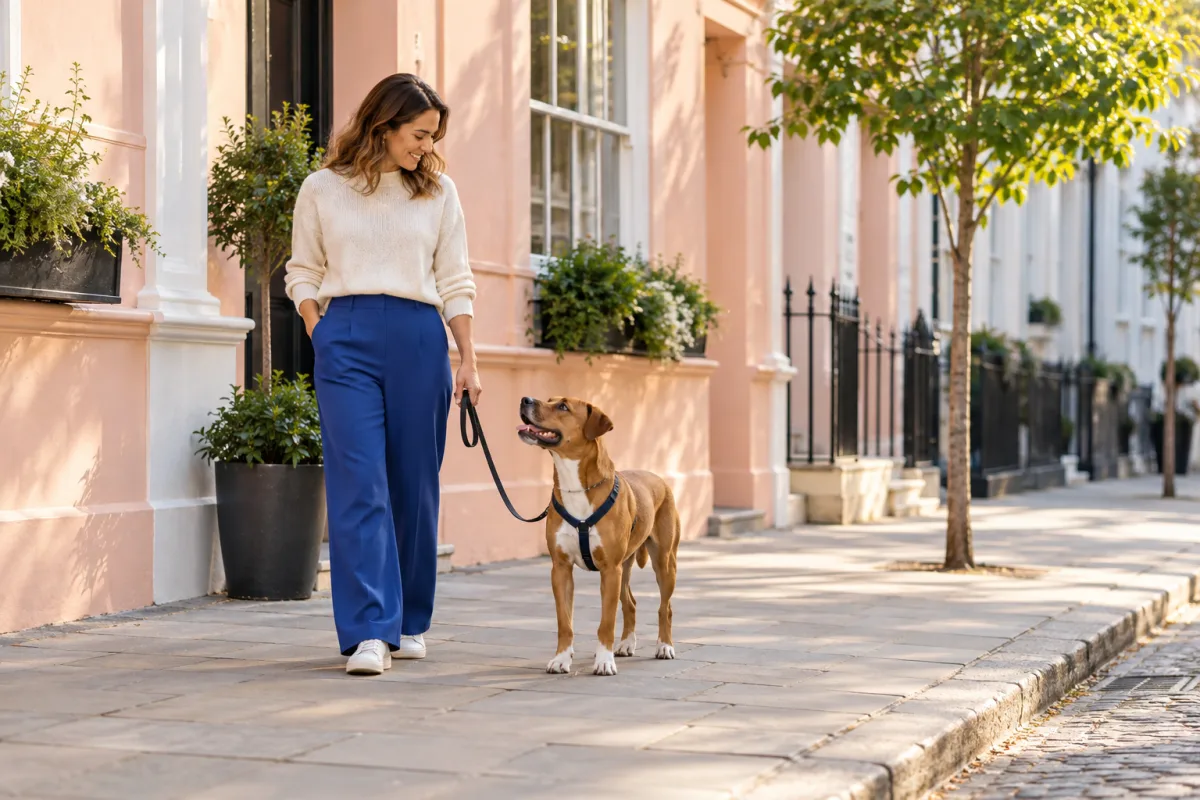
City dog training is partly about what your dog learns and partly about the decisions you make before a difficult encounter. A parked van can conceal a bicycle, a narrow sidewalk can remove escape space and a familiar park entrance can become busy after school. Read those changes early. Your dog does not need to demonstrate perfect attention while you decide where to go; a practical route already includes places to pause, turn or leave.
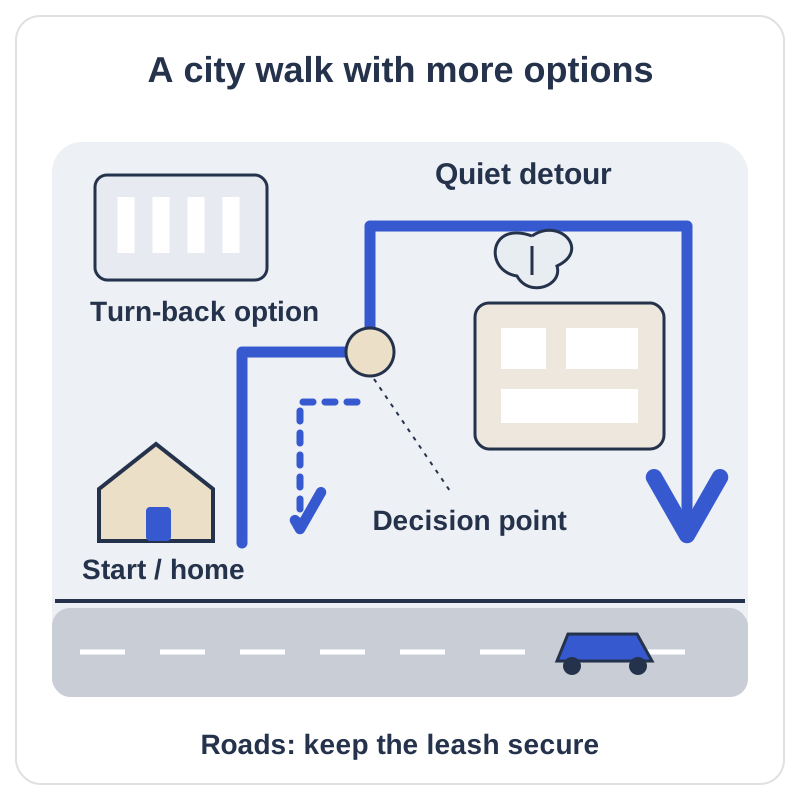
Think of a walk as several connected environments rather than one distance to complete. The building exit, the first crossing, a quieter sniffing area and the trip home can place different demands on the dog. Start with the least difficult version of each piece. If one segment is consistently too much, change that segment or choose another route. Completing a planned loop is less useful than returning with a clear understanding of what your dog could comfortably manage.
Begin with the setup
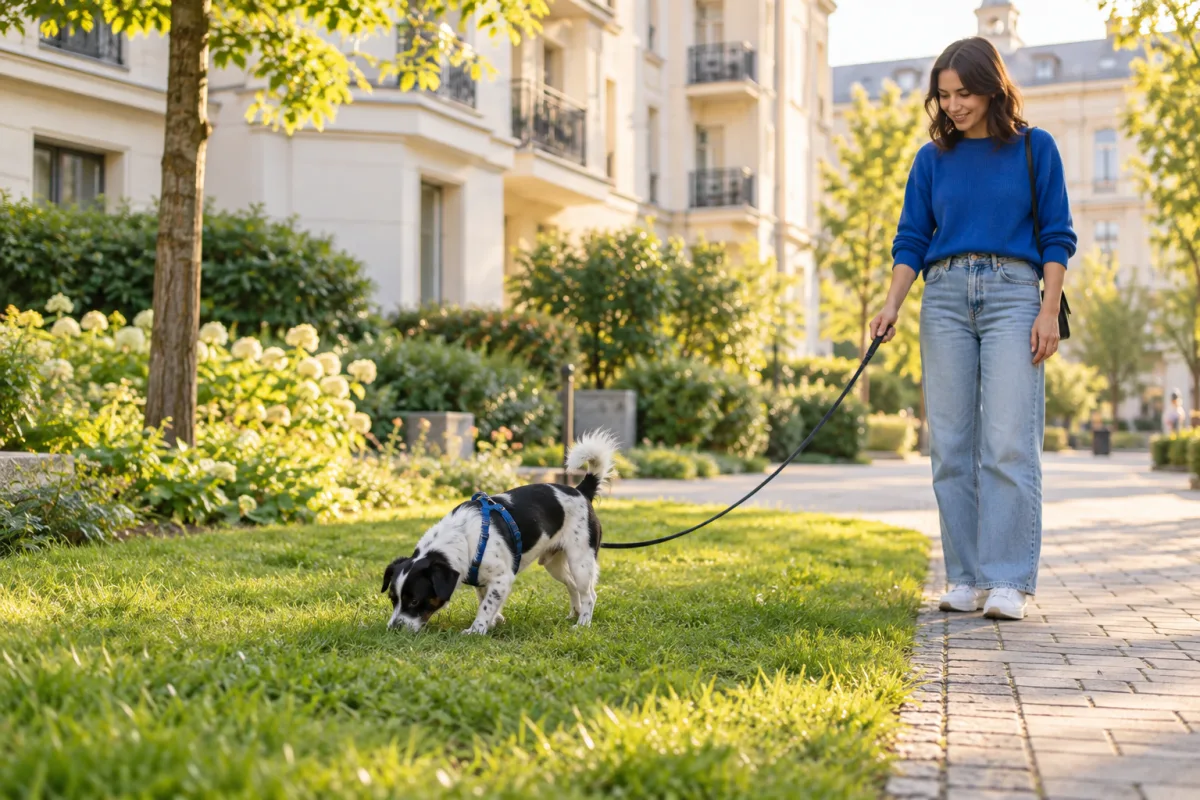
Scout a short route without the dog where practical. Look for sidewalk width, crossing visibility, construction, predictable crowds and safe places to step aside. A green patch is useful only if the approach is manageable and its surface is suitable. Note a shorter return option as well as the attractive destination. Weather, pavement conditions, local rules and your dog’s individual activity needs can all change the decision; yesterday’s workable route is not automatically today’s best choice.
Choose a simple purpose for the outing: a toilet trip, a familiar sniffing walk or a brief rehearsal in a quiet place. Avoid combining a first bus journey, a crowded café and an essential appointment into one experiment. If a dog is already worried at the building exit, adding distance may only increase the difficulty. Meet care needs with appropriate support and seek individual help for persistent fear, panic, aggression or bite risk.
Your field guides
Choose the guide that answers your next practical question.
Out in the city
Build a city dog training routine around safe routes, quieter pauses, street crossings and real choices, with practical exercises for everyday outings.
Out in the city
Improve city leash handling with equipment checks, clear handovers, manageable line length and simple practice for doors, corners and busy paths.
Put the ideas into practice
A comfortable turn can be more useful than holding a dog still beside an approaching distraction. Teach the movement first in a quiet secure area: orient together, take a few easy steps and reward the connection. Keep equipment comfortable and the leash secure. Later, use the familiar movement early enough that your dog still has room and attention available. Repeating a cue beside a close trigger is a different, harder situation than the one you rehearsed.
Waiting also needs a suitable location. Stand well away from moving traffic, keep pedestrian routes clear and leave room to move on. Do not use a bench, curb or bus shelter as a place to hold the dog in exposure they cannot escape. If your dog becomes fixed on something, repeatedly pulls toward it or struggles to disengage, create distance and simplify the outing. Interpret body language in context; one posture or one accepted treat does not establish comfort.
Put the ideas into practice
An urban walk can include safe sniffing and observation without requiring greetings. You can decline a greeting, cross at a safe place or turn into a quieter route. Keep control of the leash without wrapping it around your hands or allowing it to create a hazard for others. Separate a dog’s interest from a decision that an encounter is appropriate. People, other dogs and cyclists may have their own needs, and nobody owes your dog an interaction.
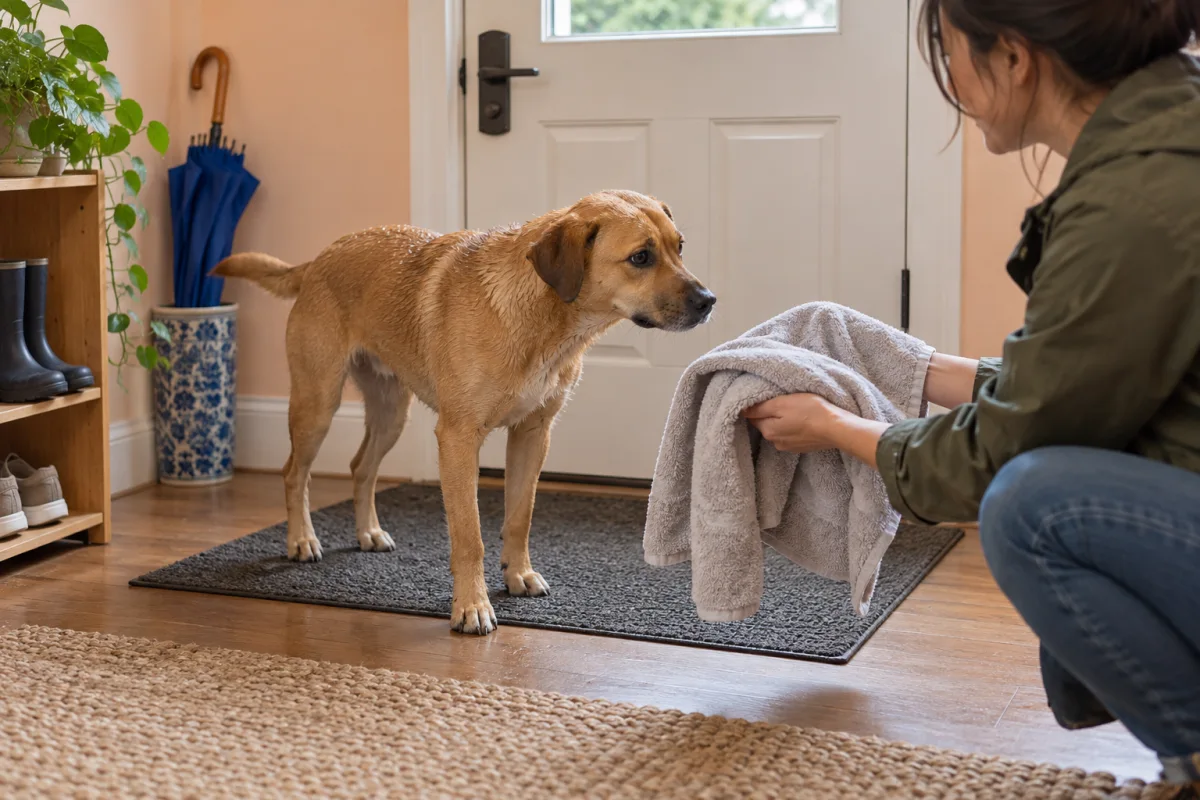
Consider the whole sequence of the day. Travel, visitors and a stimulating walk may each be manageable alone but demanding together. After a busy outing, provide ordinary care and an opportunity for comfortable rest. Record where your dog could explore, where movement became tense and how the return looked. That information is more actionable than labeling the entire walk good or bad. Persistent or sudden changes deserve professional advice, particularly when physical discomfort could contribute.
A useful check for tomorrow
Before your next familiar walk, choose a place where you can assess the conditions without already being committed to a narrow section. It might be a broad entrance, a quiet side street or a permitted turn before a queue. Check the real conditions when you arrive; yesterday’s quiet stretch may be occupied today.
Record the decision in ordinary language: turn before the shop if the pavement is blocked, or use the shorter loop when the courtyard is busy. Share that note with anyone handling the dog. The aim is to make an alternative easy to recognize, while keeping road decisions and secure handling with the person.
From an ordinary day
Imagine the shortest route to a quiet garden passes a school gate and a narrow bicycle lane. On a weekday afternoon, a handler notices bicycles arriving before leaving the apartment. Rather than asking the dog to walk tightly beside them through the busiest segment, they choose a slightly different street with a wider sidewalk and a safe crossing. The destination stays optional; the immediate goal is a manageable outing, not reaching the garden at any cost.
At a quiet point, the pair use a familiar turn learned indoors. The handler rewards the easy movement, then allows sniffing in a suitable area. When delivery vehicles begin blocking the return path, they use the alternative route identified earlier. They do not wait beside the obstruction to prove the dog can ignore it. The leash and the adult’s attention provide safety; the trained turn simply makes moving together clearer.
The useful note afterward describes the actual conditions: the wider street allowed space, the garden entrance was crowded and a particular corner offered a comfortable way home. On another day, that same corner may be noisy or closed. The handler checks again instead of treating the note as a permanent safety guarantee. This example illustrates flexible planning; it does not predict how any individual dog will respond or prescribe an exercise distance.
Choose the next useful question
| What is happening | Start with | Keep reading |
|---|---|---|
| The usual sidewalk has become crowded or narrow. | Find a wider route or an early turn before you run out of room. | Leash handling in the city: organize the line before the crowd |
| Street crossings make the outing feel rushed. | Choose clear visibility, prepare well back from the curb and keep the crossing decision with the adult. | City dog training: build a route your dog can handle |
| You want to try a bus or train journey. | Check current operator rules and practice equipment and waiting separately from boarding. | City dog training: build a route your dog can handle |
| Walks have become a race to cover distance. | Choose a manageable sniffing location and measure comfort and options instead of mileage. | City dog training: build a route your dog can handle |
Before the next step
A sit can be useful in some comfortable settings, but it is not a universal passing strategy. The location, distance, dog’s feelings and ability to move away matter. Holding still in a narrow gap can remove options. Prepare a comfortable turn and choose space early. If encounters cause sustained fear, lunging or aggression, arrange an individualized plan rather than testing a sit beside other dogs.
Look for suitable opportunities to sniff, investigate a familiar area or choose between safe directions. Exploration does not require a long route or constant games. Keep access to litter, traffic and unfamiliar animals under the handler’s control. Watch whether your dog can disengage and recover. If a location produces fixed staring or escalating arousal, change the view or find a quieter place.
No. Length alone does not describe whether the outing met the dog’s needs. A shorter route with comfortable movement, appropriate toilet opportunities and safe exploration can be useful. Individual exercise requirements and medical restrictions vary, so discuss those with your veterinarian where needed. Do not shorten essential care to complete a training plan, or extend a difficult outing simply to hit a distance target.
Introduce a small version in an easy secure setting: turning together, briefly orienting toward you or pausing away from hazards. Change location and distractions gradually while protecting comfort. Outdoor safety still requires suitable equipment, attention and route decisions. A behavior demonstrated in the living room does not certify readiness beside roads, bicycles, children or unfamiliar dogs.
 Meet DogPath
Take a guided lesson, keep a daily practice rhythm and work on the moments that matter to you.
See how the app fits