The short answer
Apartment dog training starts with the route through your day: where your dog rests, how you reach the toilet area, and what happens at the front door. Arrange those moments first, then practice small skills in quiet conditions before using them in shared spaces.
An apartment can be a comfortable home for a dog, but a simple outing may involve several doors, a narrow hallway, an elevator and an unpredictable lobby. Those extra steps change the preparation. Teaching a beautiful sit in the kitchen will not, by itself, solve the journey downstairs when your puppy urgently needs to pee.
Think in terms of workable routines rather than a long list of commands. This guide helps you map the apartment, teach three useful transitions and choose one priority for the week. The examples assume ordinary learning challenges. Persistent panic, unsafe encounters, pain or a sudden change in behavior need individualized professional help, not a more demanding version of the same exercise.
Before you start
- Comfortable bed or mat
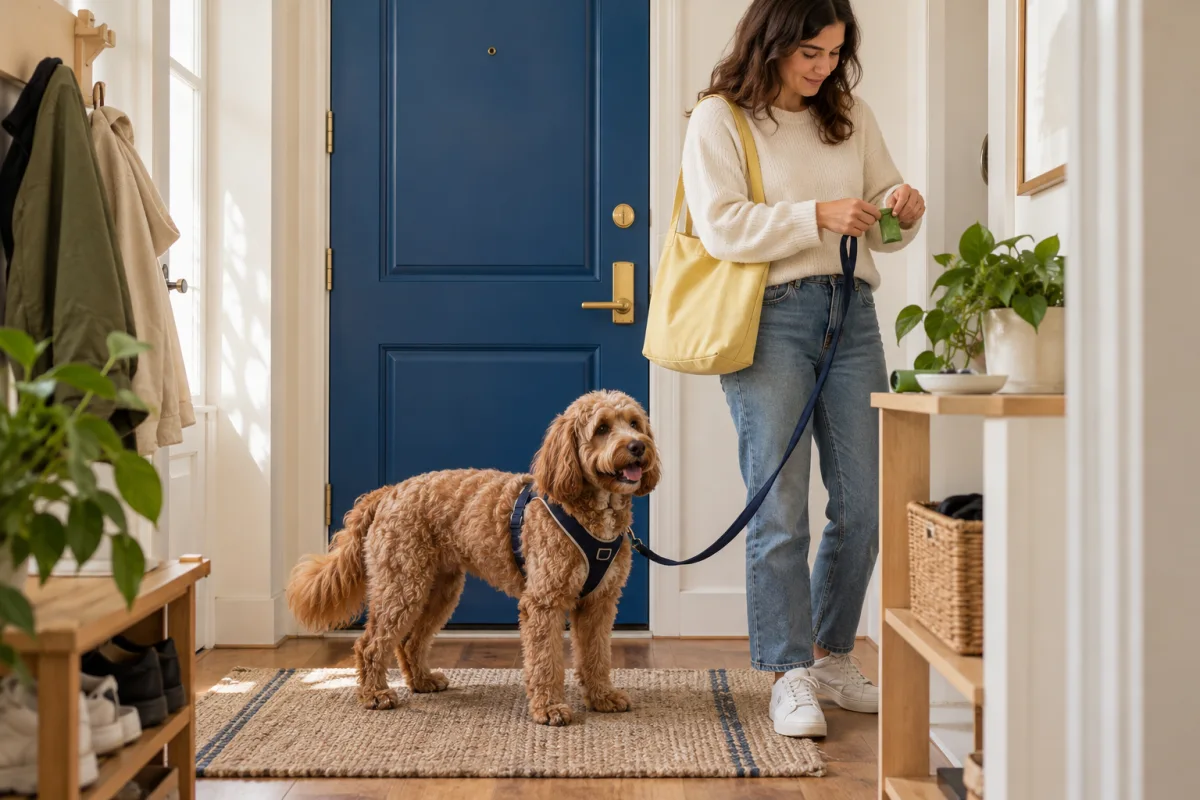
- Secure leash and well-fitted harness
- Small suitable rewards
- A safe barrier if your layout permits
- A simple notebook
A practical starting point
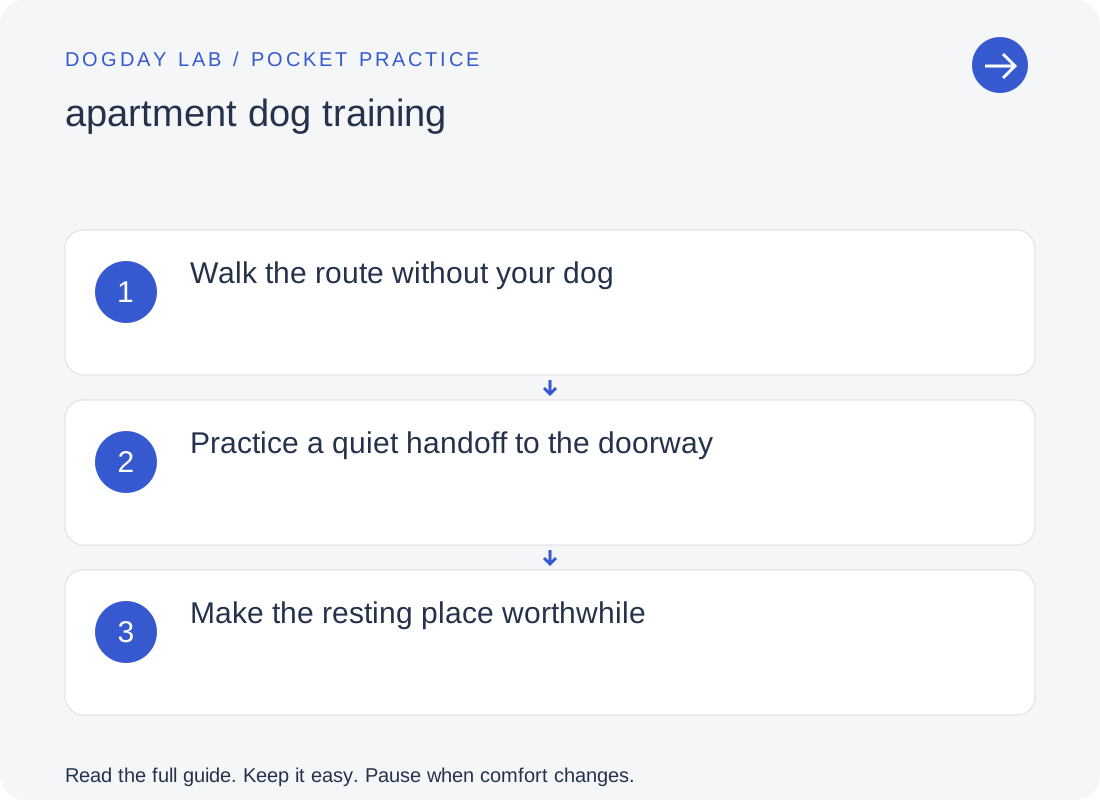
Walk the route without your dog
Start at the resting place and follow the full path to the outdoor toilet area. Notice where you need both hands, where a door hides the next space, and where you could step aside. Put keys, bags and rewards together before bringing your dog to the entrance. A prepared human makes this sequence much easier.
Practice a quiet handoff to the doorway
With the exterior door closed, invite your dog toward you, reward beside your leg and return to the living area. Do only a few comfortable repetitions. Next time, attach the leash before practicing. There is no need to open the door or manufacture hallway noise during this first exercise.
Make the resting place worthwhile
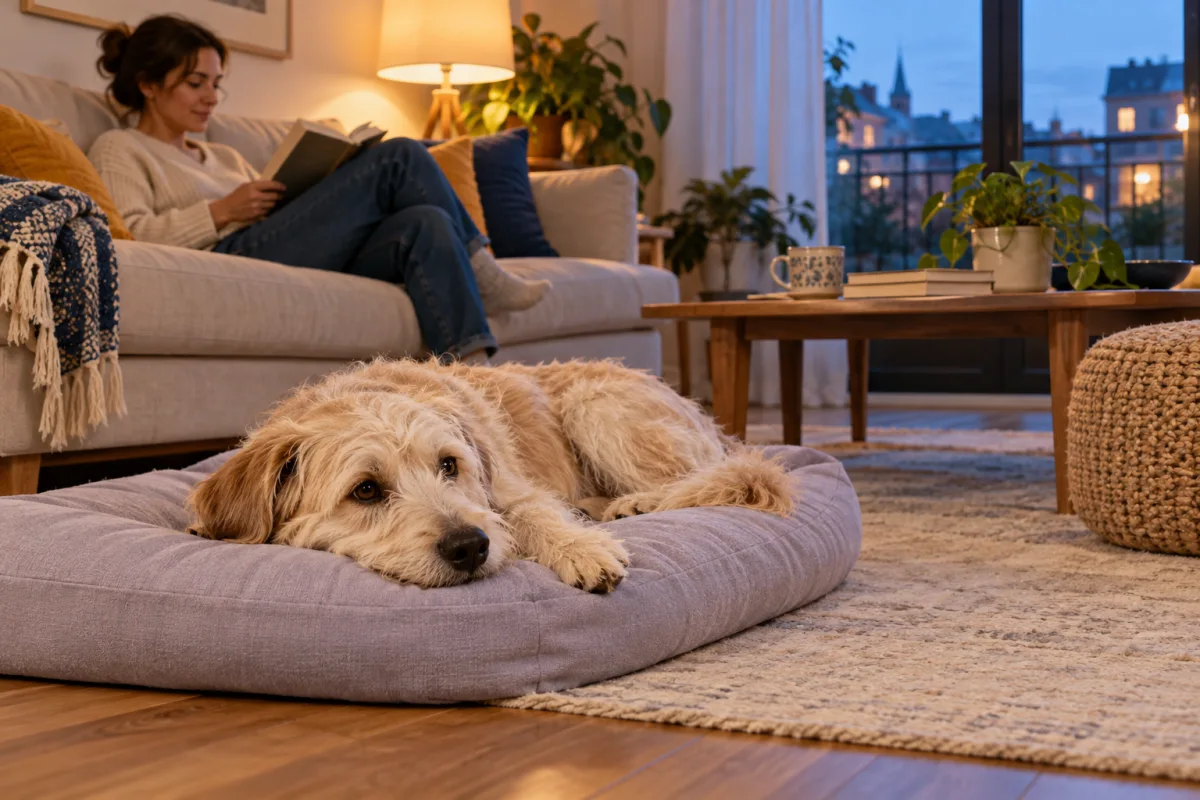
Place a comfortable mat away from the busiest route. Notice when your dog chooses it and quietly offer a reward. Allow them to leave. Start while household activity is low, then gradually include one small movement such as someone standing up. The aim is a place that feels easy to use, not a mandatory parking spot.
Test one routine in real life
Choose a low-pressure outing when the toilet need is not urgent and the hallway is quiet. Use the same preparation, pause to inspect the corridor, and leave if the route is clear. Afterward, note which transition was comfortable and which needed more help. Change that one part next time.

Give each part of the apartment a practical job
You do not need a large room for every activity. You need enough separation to prevent activities from colliding. A bed beside the front door may expose a resting dog to every footstep. A feeding bowl in the only walkway may mean people constantly pass close to a dog who is eating. Look at the traffic through the room before buying new furniture. Moving an existing bed behind a sofa, while keeping access open and airflow comfortable, may be more useful than adding a second bed in the same noisy location.
Draw a rough floor plan and mark rest, food, play and exit routes. Keep a route to water available. Place training where there is traction and room to turn without bumping furniture. If the same floor space must serve several purposes, change it at different times: put away a food puzzle before starting energetic play, or move a chair before practicing a turn. A zone is an arrangement that makes a particular activity possible; it does not have to be a permanent enclosure. Watch whether your dog actually chooses to use it.
Separate urgent outings from teaching opportunities
A dog who urgently needs the toilet is not ready for a doorway lesson. Prepare quickly, use secure equipment and take the shortest appropriate route outside. For a puppy, a carried trip may sometimes be practical if carrying is safe, comfortable and appropriate to their size and health. Do not use an urgent trip to rehearse prolonged waits, elevator manners or perfect walking. You can practice those skills during a different outing when the dog has already toileted and the building is quiet.
For example, an early morning trip might be entirely functional: harness ready, keys accessible, straight to the chosen spot, reward after elimination and return. A later two-minute session might simply rehearse approaching the closed apartment door and turning back. Splitting the tasks reduces pressure on both of you. Record actual toilet patterns rather than relying on a fixed age-based holding rule. If accidents change abruptly, or your dog strains, seems painful or repeatedly attempts to urinate, seek veterinary advice instead of making the schedule more restrictive.
Teach transitions before asking for stillness
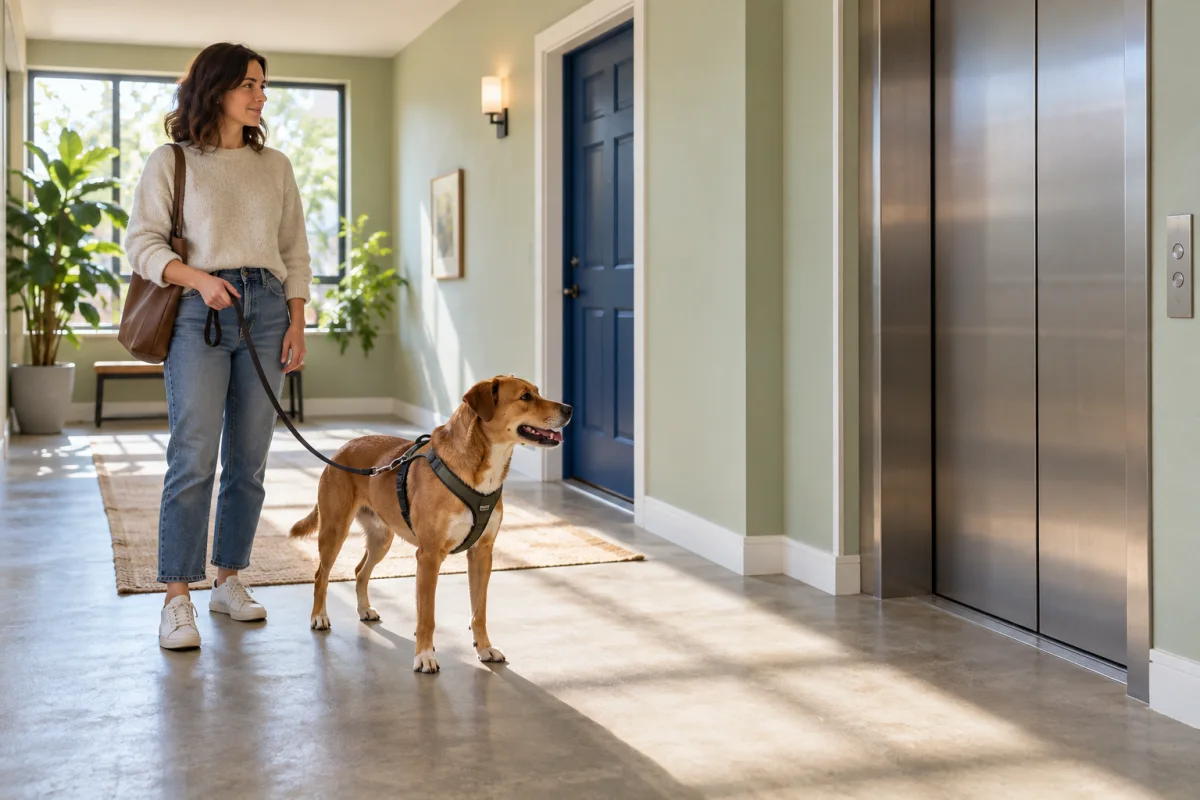
In a shared building, moving away can be more useful than staying still. Practice an easy turn toward you in the living room: say a consistent invitation, turn your body and reward your dog for following a step or two. Keep the leash loose and use the cue before they are intensely focused on something else. This gives you a practiced way to return inside when the hallway becomes crowded. It is not a substitute for secure equipment or a safe distance from another dog.
The second useful transition is going from activity to an available resting area. Finish a short game, put the toy away and offer access to water and a comfortable place to rest. You may quietly reward a relaxed choice, but do not keep asking for positions until the dog becomes frustrated. A third transition is between people: one adult holds the leash while the other deals with keys or bags. Rehearse that handover in the apartment. Decide who has responsibility before a door opens, rather than assuming someone else is holding on.
Build a day with opportunities, not a rigid performance schedule
Predictability helps when it tells your dog that needs will be met. It does not require every activity to happen at precisely the same minute. A useful sequence might be toilet opportunity, breakfast, a short interaction and a quiet period, adjusted to the individual dog. Add exercise, exploration, social contact and care that fit their health and preferences. A small apartment does not remove those needs, and a very long weekend walk does not replace support during a difficult weekday.
Write the day as flexible blocks. During a busy morning, one adult may handle the first outing while the other prepares breakfast. Before a work call, offer a toilet opportunity and check whether your dog can comfortably rest nearby. If they cannot, arrange help rather than repeatedly stretching the call exercise. In the evening, choose an activity that matches the dog in front of you: a little sniffing, quiet play or simply rest. The schedule should create breathing room, including time when nothing is required of the dog.
Protect shared spaces through preparation
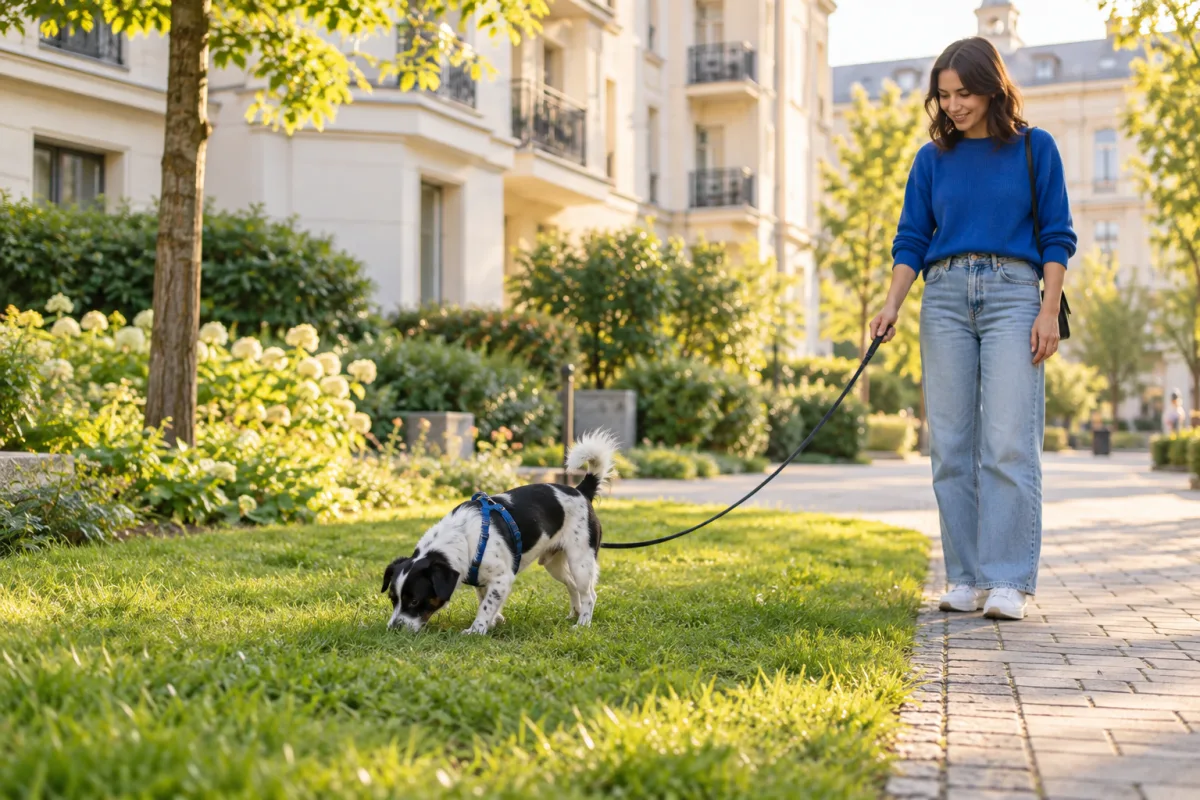
The hallway belongs to everyone, including people and dogs who need distance. Before leaving, listen and look where possible. Let a crowded elevator pass. Stand far enough from opening doors that your dog cannot rush toward someone emerging. Keep the leash short enough to prevent entering another person’s space, while avoiding constant tight pressure. Do not let a leash trail across an elevator threshold. If the doorway or lobby cannot accommodate a comfortable encounter, wait inside your apartment or choose another safe time.
Neighbors do not need to participate in training. Ask before arranging any practice involving another person, and accept a refusal. A friendly dog still does not need to greet every resident. Reward checking back with you and moving past when space allows. If a person wants to pet your dog, consider your dog’s comfort, the available space and whether that moment disrupts someone else’s route. A simple decision to skip the greeting is often the most courteous choice. Repeated lunging or fear in confined areas warrants tailored help with management and behavior.
Measure the bottleneck rather than the entire dog
Choose an observation you can actually describe. “He was calmer” is vague. “He walked from the living room to the closed door without grabbing the leash” tells you what changed. For a noisy apartment, useful observations may include which sound prompted barking, where the dog was resting and how long it took to resume ordinary activity. You do not need to provoke a reaction to gather information. Record naturally occurring events and use the notes to make the next day easier.
Imagine a dog who rests comfortably until the owner picks up a tote bag. The problem may start before the front door opens. Instead of practicing in the lobby, put the bag near the entrance earlier and organize its contents without the dog waiting on a leash. Then practice a brief leash attachment followed by an easy indoor activity. The next successful outing tells you more than ten difficult repetitions. Keep changes small enough that you can tell which adjustment helped; if several conditions changed at once, note that uncertainty.
Run a three-day observation before adding another exercise
On the first day, simply note the moments that create the most friction: getting dressed for a walk, passing the elevator, settling after breakfast or hearing a delivery. On the second day, adjust one environmental detail before that event. For example, prepare the leash before waking the dog, move the bed farther from the entry or arrange a quiet toilet trip before a meeting. On the third day, repeat the same easier arrangement and compare the result. This is an observation exercise, not a promise that a behavior will change in three days.
Include ordinary successful moments in the notes. A dog who sleeps through footsteps at noon but barks at the same footsteps in the evening may be giving you information about location, activity or accumulated demands. Write down what you can see without assigning a motive such as stubbornness or protectiveness. If the easier arrangement helps, maintain it while teaching any missing skill separately. If nothing becomes easier, take the specific examples to an appropriately qualified trainer or veterinary professional rather than cycling through louder cues and increasingly demanding drills.
When it gets tricky
The apartment is too small for a separate rest room.
Use distance, furniture layout and timing. A bed beside a quieter wall, with a clear route away from people, may be enough. Reduce activity nearby when your dog sleeps. A barrier is useful only if the dog is comfortable with it and can still access appropriate care; trapping a distressed dog in a corner defeats the purpose.
My dog performs inside but forgets everything in the lobby.
Treat the lobby as a much harder setting. Shorten the task, use a quieter time and reward one easy response before leaving. You may need only to walk through safely for now. Repeatedly saying a cue in a difficult place does not teach the missing intermediate steps.
We had a good week and then a noisy weekend changed everything.
Check the conditions before judging progress. Guests, repairs or disrupted sleep can change what is manageable. Return to easier routines and protect rest. If your dog remains unusually unsettled after the disruption, or shows a sudden persistent behavior change, discuss it with your veterinarian.
Common questions
Can a dog learn well in a studio apartment?
Yes, when the setup fits the dog and their needs are met. Use the space at different times, reduce conflicting activities and provide appropriate outings. Apartment size alone cannot tell you whether an individual dog is comfortable. Observe rest, movement, engagement and access to basic needs.
Which skill should I teach first?
Choose the skill that removes the largest daily bottleneck. That might be approaching the closed door, turning back into the apartment or choosing a resting spot. An urgent toilet problem needs practical access and supervision first. Start with an exercise you can arrange safely and repeat comfortably.
How much training should we do each day?
Use brief opportunities when your dog is comfortable and interested, and stop before frustration. This plan does not require a daily quota. A single clear repetition during an easy moment can be useful; several minutes of struggling through building traffic usually are not.
Will more indoor exercise stop the barking?
Not necessarily. Barking may relate to particular sounds, fear, frustration, discomfort or other needs. Suitable activity is one part of a healthy day. Identify the actual pattern and reduce exposure where practical; do not try to exhaust a dog into tolerating a distressing environment.
Sources & further reading
These sources support the training and welfare principles discussed. Examples are illustrative; source organizations do not endorse this site.
General education, not an individual assessment. Pain, sudden behavior change, panic, aggression or bite risk need appropriate professional support. Editorial images are illustrative.