The short answer
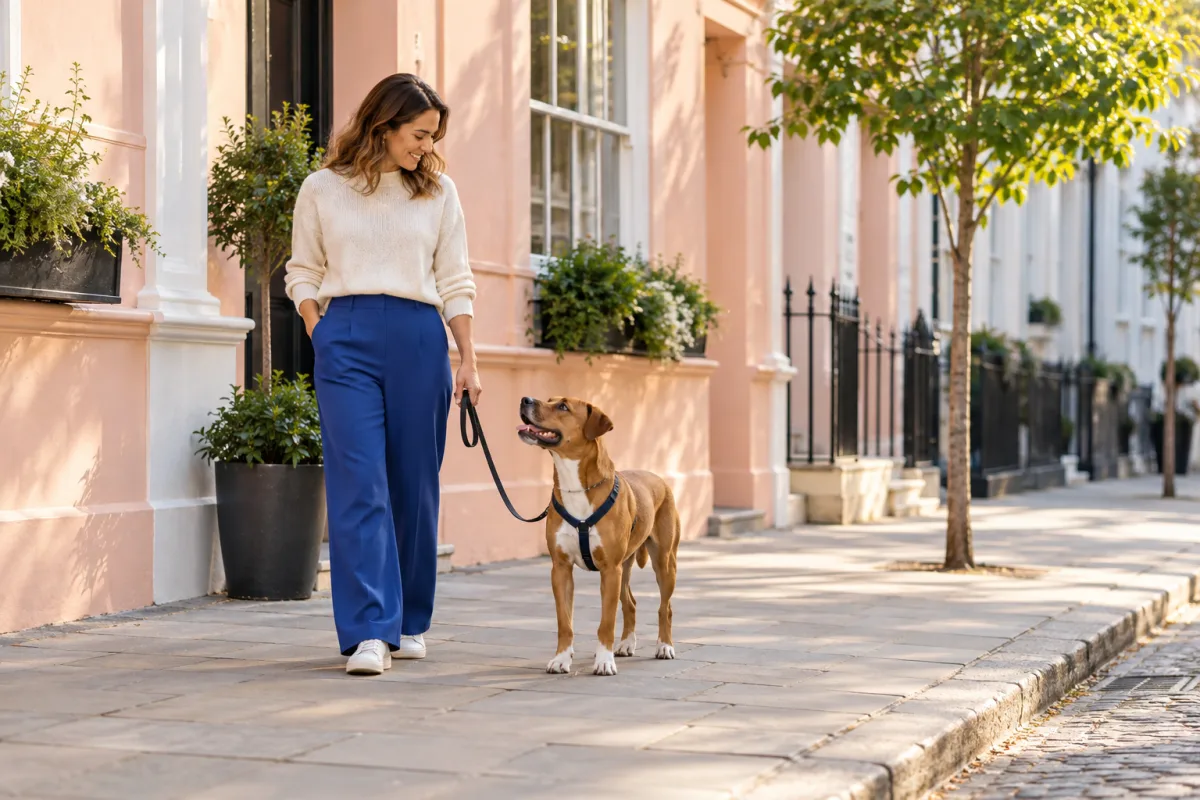
City leash handling works best when you organize the line before entering a busy space. Use suitable well-fitted equipment, keep excess line clear of people and wheels, and practice turns and handovers in quiet places. Secure handling supports training; it should not rely on repeated jerks or constant tight pressure.
A leash connects the dog to the handler, but it also moves through the environment. It can catch a chair, stretch across a path or become trapped in a closing door. Good handling therefore includes the whole route and the human’s other tasks, not just whether the dog is pulling.
This guide offers practical preparation and low-pressure exercises. It cannot assess equipment fit, handler balance or a dog’s strength remotely. If you struggle to maintain safe control, have pain or mobility limitations, or manage a dog who lunges or may bite, seek individual hands-on guidance from an appropriately qualified professional.
Before you start
- A leash suited to the setting
- Well-fitted harness or collar appropriate to the dog
- Accessible rewards and waste bags
- A clear quiet practice space
- A simple household handling agreement
A practical starting point
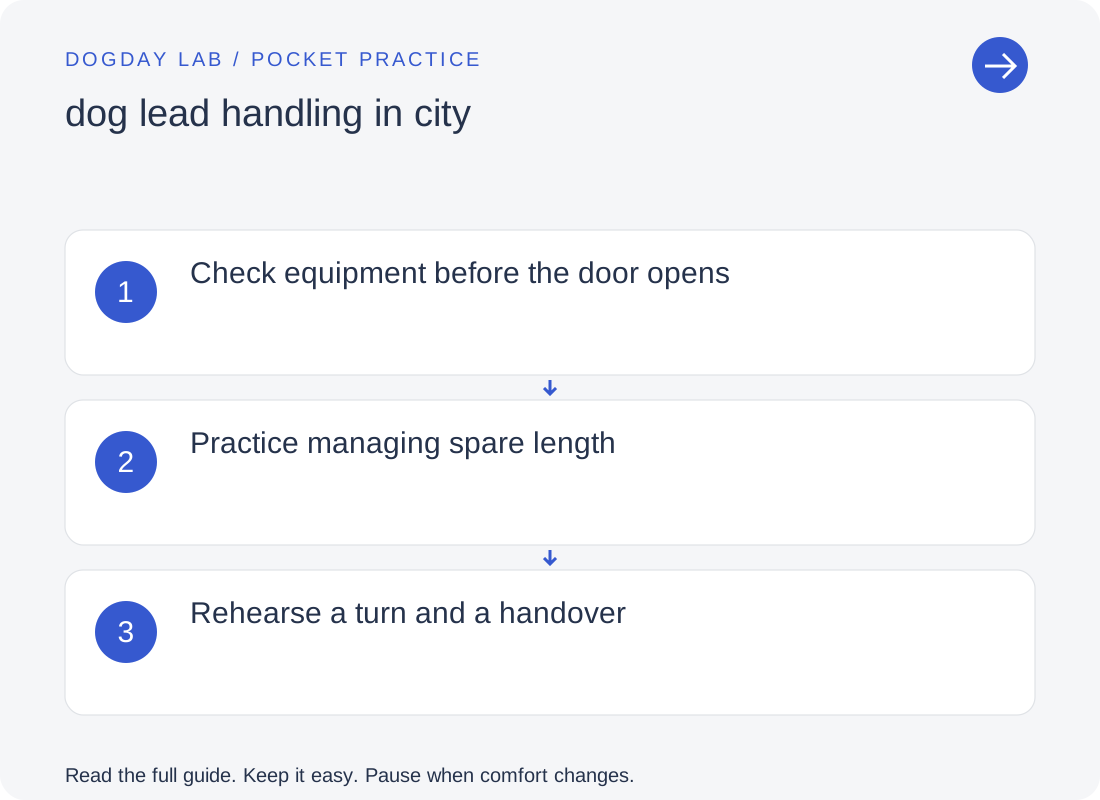
Check equipment before the door opens
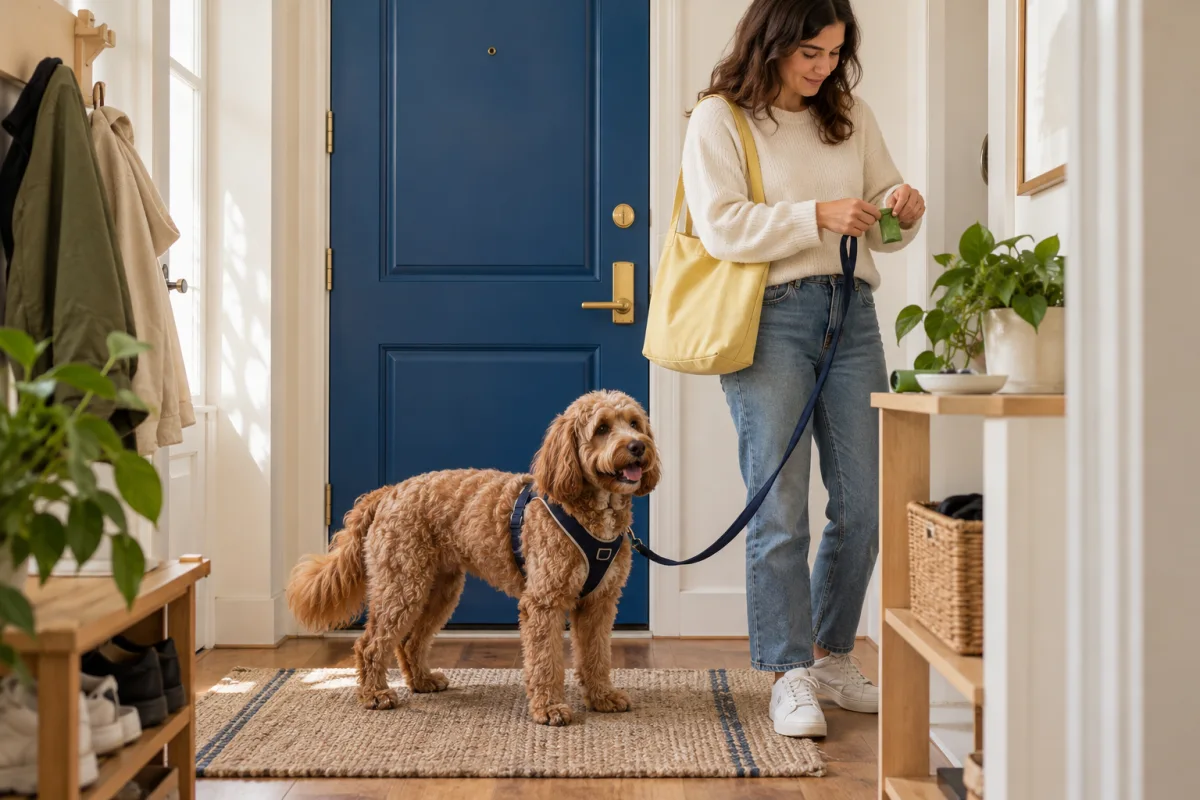
Inspect clips, stitching, fit and attachments during a calm moment. Confirm that the dog cannot easily slip the equipment and that it allows comfortable movement. Ask a qualified professional about uncertain fit or security rather than discovering the problem beside traffic.
Practice managing spare length
In a safe quiet area, organize excess line without letting it drag or wrapping it tightly around fingers, hand or wrist. Keep enough length for the dog to move comfortably within the available space. Practice the hand movements without distractions before using them in a crowd.
Rehearse a turn and a handover
Invite the dog to move with you through an easy turn while keeping the line clear. If another adult takes over, agree verbally who has control and confirm a secure hold before the first person releases. Practice indoors or in another safe setting.
Apply the routine before a narrow section
Notice a doorway, queue or crossing early, organize the line and use a brief familiar movement beside you. Once safely clear, restore suitable room for ordinary walking or exploration. Do not keep the leash tight for the whole outing because one section is busy.

Choose equipment for the real task
A narrow city route needs predictable control and equipment the handler can operate reliably. A fixed-length leash is often straightforward for this purpose, while longer lines belong in settings where the entire line can remain clear of traffic and other users. No product label makes equipment suitable for every dog. Consider fit, movement, strength, health and the handler’s ability to use it.
Check the manufacturer’s instructions and obtain practical advice when uncertain. Equipment should not cause pain or interfere with normal movement. Avoid using a tool primarily to punish pulling or suppress reactions through discomfort. If additional security is needed because a dog has slipped equipment, get a tailored fitting and handling plan. More clips and straps can add complexity unless the person using them understands the setup.
Organize human tasks before attaching the dog
Put on your shoes, gather bags and prepare keys before bringing the dog to the entrance. Store rewards where you can reach them without searching through several pockets. A phone, drink and shopping bag can make secure handling harder, especially when a dog changes direction. Reduce what you carry or ask another adult to manage the extra items.
At the end of the walk, prepare the entry key while in a safe place rather than balancing everything in a narrow lobby. If you need both hands for a task, arrange a secure appropriate solution before attempting it. Do not leave the dog tethered unattended to street furniture while you shop or enter a venue. Practical preparation reduces the number of moments in which the leash becomes an afterthought.
Keep spare line out of shared routes
Excess line can trip pedestrians, catch a bicycle wheel or wrap around furniture. Manage it before entering a busy area, keeping your hands comfortable and able to respond. Avoid wrapping the leash around fingers, hand or wrist in a way that could trap or injure you if the dog pulls. Do not let loose loops hang near moving equipment or closing doors.
The exact grip and line-management method should suit the equipment and handler. If you are unsure, ask a qualified trainer to demonstrate and observe your technique in a safe place. Reading a description is not a substitute for practical assessment when strength or balance is a concern. Practice with mild movement first, not beside a road or at the moment a dog is already lunging.
Use length that matches the available space
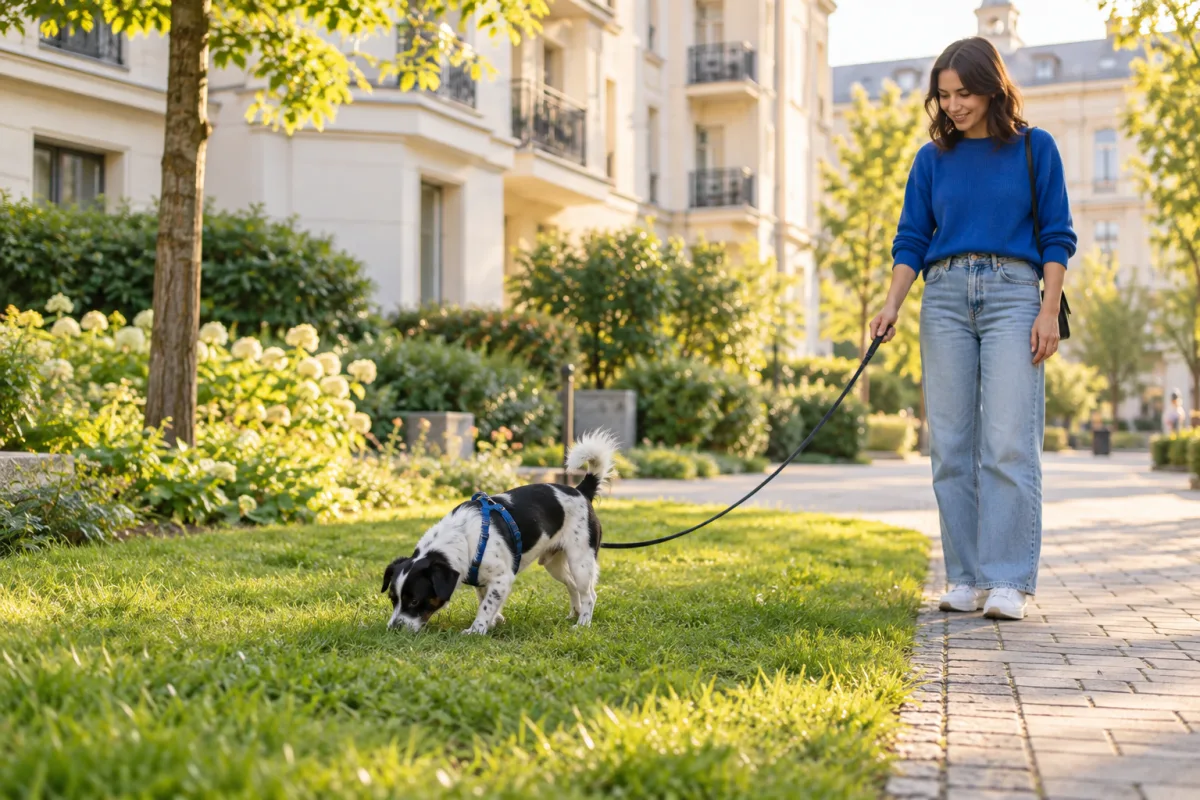
On a wide suitable path, the dog may have room to explore. Near a doorway, road or crowd, keep them within a smaller controlled space. Adjust early and smoothly rather than waiting for the line to reach its end and then jerking it back. The goal is to prevent access to a hazard while allowing comfortable movement, not to hold the dog under constant pressure.
Watch the whole line when the dog moves around an object. A pole, bench or sign can create a wrap that pulls both of you unexpectedly. Pause in a safe place and guide a simple return route rather than tugging from the opposite side. Teach following and turns in quiet settings so those movements are available when the environment becomes more complex. If the dog repeatedly reaches the end of the line, review route difficulty and training rather than only shortening it further.
Practice turns before blind corners
A comfortable turn toward you creates an option to leave a narrowing path or unexpected encounter. Teach it in a clear quiet space using a familiar invitation and reward for following a few steps. Keep the leash from becoming the steering mechanism. Practice both directions and stop before the dog becomes frustrated or overexcited.
At a blind corner, reduce speed and assess what is ahead while keeping the dog securely within your space. Do not allow them to round the corner several steps before you. If another dog or crowd appears, use the practiced movement where safe and create distance. Avoid trying to force a pass solely because you have already reached the corner. Early observation and a clear retreat are part of handling.
Treat doors and elevators as coordination points
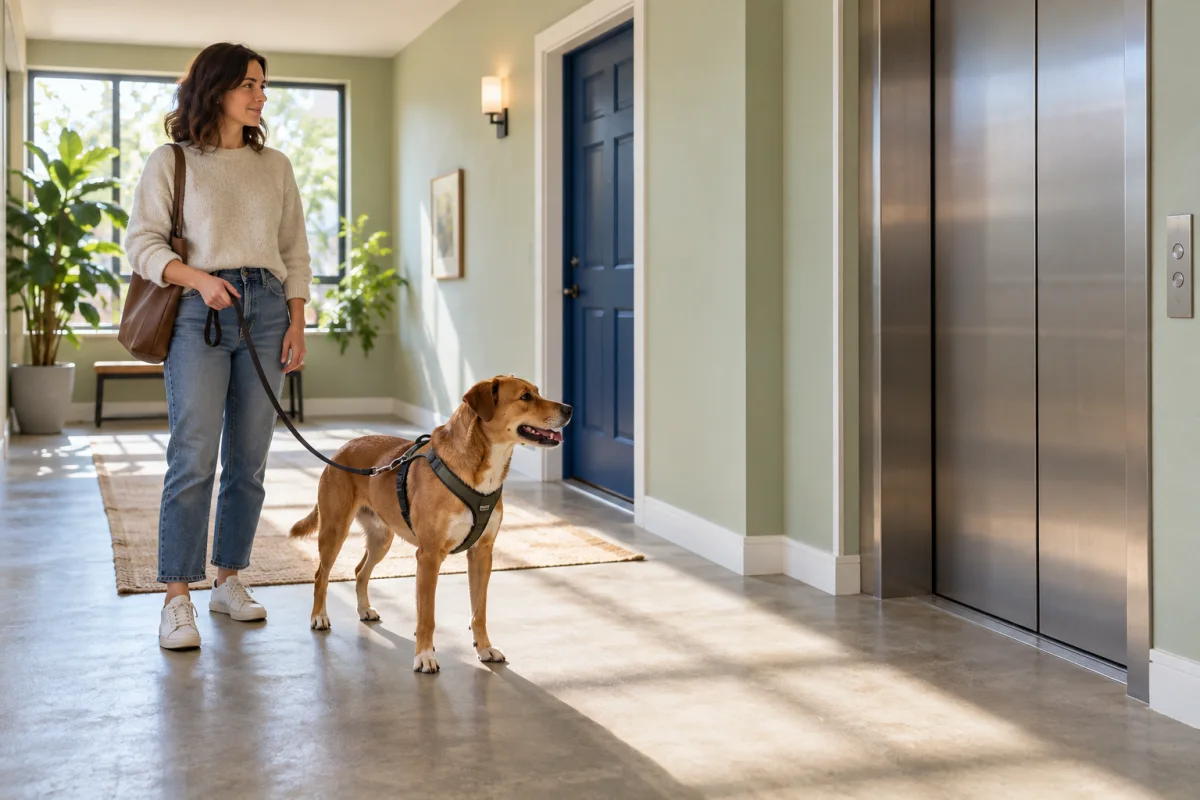
Before opening a door, confirm that the dog is attached and the route is clear enough to use. Keep the dog and handler together through the doorway. Do not let the line extend across a closing elevator door or allow the dog to enter while you remain outside. Wait for another ride when the space is crowded or the dog cannot move comfortably.
For a difficult door, prepare the order of actions in advance. One adult can manage the dog while another operates the door, or a solo handler can rehearse the sequence in a safe quiet setting. Do not rely on a stay cue as the only protection from an open exit. If the dog is frightened by the transition, work on that separately with appropriate support. Efficient handling should not become a reason to rush a worried dog into a confined space.
Make handovers explicit
When another adult takes the leash, use a clear verbal confirmation and ensure they have a secure hold before releasing yours. Do this in a safe place, not halfway through a crossing or while the dog is approaching another animal. Tell the next handler about immediate conditions: a difficult dog nearby, a route closure or equipment that needs adjustment.
A shared household should agree on familiar movement cues and current management needs. Do not assume that a sitter knows the dog’s preferred side, ability to manage crowds or response to bicycles. Give factual examples rather than a vague assurance that the dog is friendly. A good handover transfers both the line and the information needed to use it safely.
Respond to pulling by examining the situation
Pulling can occur when the dog is trying to reach something, escape something or move at a different pace. Notice the context before choosing an exercise. A dog pulling away from a frightening event needs distance and support, not a lesson in staying closer to it. A dog excited about a smell may benefit from clearer transitions and planned exploration opportunities.
Teach comfortable walking in easier settings with rewards for the movement you want. Keep early stretches short. Avoid repeated leash jerks or dragging the dog into position. If pulling is strong enough to threaten balance or control, seek practical help and adjust routes meanwhile. Equipment can support management, but it does not replace understanding the dog’s response or building the skill at a manageable level.
Use an everyday shop-front example
Imagine a handler approaching a narrow section outside a store. Before reaching it, they put the phone away, organize spare line and invite a few steps alongside. They keep the dog within their space while passing the doorway, then move to a wider permitted area and allow appropriate exploration. No correction is needed because the change happened before the dog reached the bottleneck.
On another day, a delivery trolley blocks the section. The handler turns early onto the alternate route rather than shortening the leash further and squeezing through. Later, they practice the turn and line management in a quiet setting. The useful skill is not a stronger grip alone; it is the combination of preparation, controlled space, learned movement and a decision to avoid an unsuitable pass.
Adapt when weather or carried items change the task
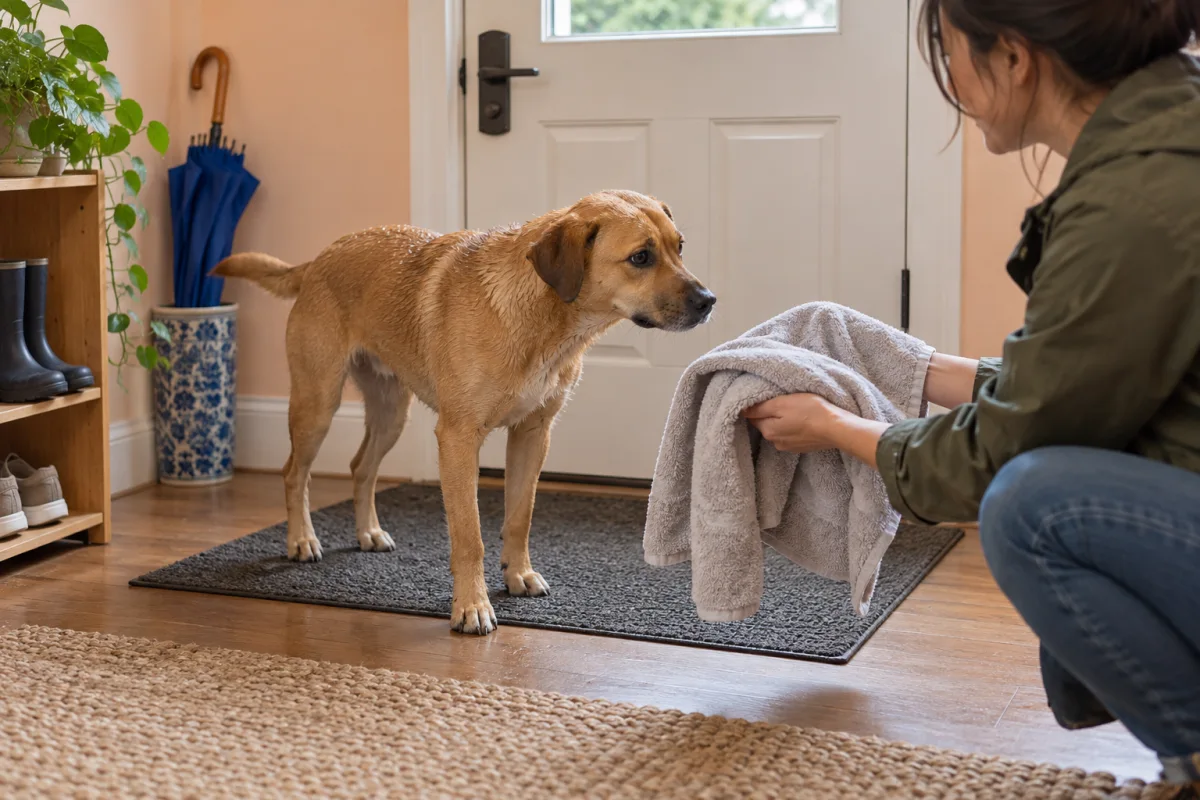
Rain, gloves, an umbrella or groceries can alter your grip and balance. Test the arrangement in a safe area before entering traffic, and reduce what you carry when it interferes with control. A second adult can take bags while the handler focuses on the dog. If you must manage an unfamiliar load, choose a simpler route or separate the errands from the dog walk.
Check the line after it becomes wet or dirty, and follow appropriate care instructions for the equipment. Do not continue using damaged clips, frayed material or an attachment that no longer works reliably. Keep a suitable replacement available when practical, but do not switch to unfamiliar equipment at the busiest point of an outing. Preparation should make secure handling easier under ordinary changing conditions, rather than depending on the handler reacting perfectly every time.
When it gets tricky
I have to keep the leash tight to feel safe.
That may indicate the environment, equipment or handling plan needs review. Choose easier routes and obtain individual instruction, especially if the dog can pull you off balance. Teach walking skills separately rather than using constant pressure as the only strategy.
The leash tangles when my dog changes sides.
Practice slow side changes and turns in a clear safe area, and check whether your equipment length is appropriate. Avoid hurried hand exchanges in traffic. A trainer can observe the pattern and show a method suited to your dog and handling needs.
My dog grabs the leash during busy moments.
Reduce the difficulty and look at the context: excitement, frustration, discomfort or a need to leave. Do not turn it into a tugging contest near traffic. Seek individual advice if the behavior is persistent, intense or associated with redirected biting.
Common questions
Is a hands-free leash always safer?
No. Suitability depends on the dog, handler, equipment and environment. Sudden pulling can affect balance, and some tasks need quick manual management. Obtain practical guidance if you are uncertain rather than assuming one attachment style solves control.
Should my dog always walk on the same side?
A familiar side can help, but the safest position depends on the actual route and obstacles. Practice changes in easy settings. Do not follow a rigid rule that places the dog closer to traffic or prevents a safe turn.
Can better handling replace training?
Handling and training serve different parts of the task. Secure equipment and preparation prevent problems while reward-based practice builds useful responses. Neither removes the need to choose a route the dog and handler can safely manage.
Sources & further reading
These sources support the training and welfare principles discussed. Examples are illustrative; source organizations do not endorse this site.
General education, not an individual assessment. Pain, sudden behavior change, panic, aggression or bite risk need appropriate professional support. Editorial images are illustrative.