The short answer
If your dog barks at hallway noises, identify the actual sounds and reduce their impact before practicing. Move rest away from the doorway, prepare for predictable traffic and reward comfortable responses to very mild sounds. Persistent distress, or barking mainly during absences, needs a different assessment.
A closing fire door, an elevator chime and a neighbor’s dog tags may all sound like “hallway noise” to you. To your dog, they can be different events. One may prompt a brief glance; another may lead to a long spell of barking and pacing. A plan that treats them as one problem can make practice unnecessarily difficult.
This guide is for arranging a more comfortable apartment and understanding the pattern. It does not promise silence or ask you to expose your dog to louder sounds until they stop reacting. Begin with the events that happen naturally, then decide whether environmental changes, a carefully controlled exercise or professional support is the useful next step.
Before you start
- Notebook or local training log
- Comfortable bed away from the entry
- Small suitable rewards
- An optional familiar barrier
- A willing adult helper for optional practice
A practical starting point
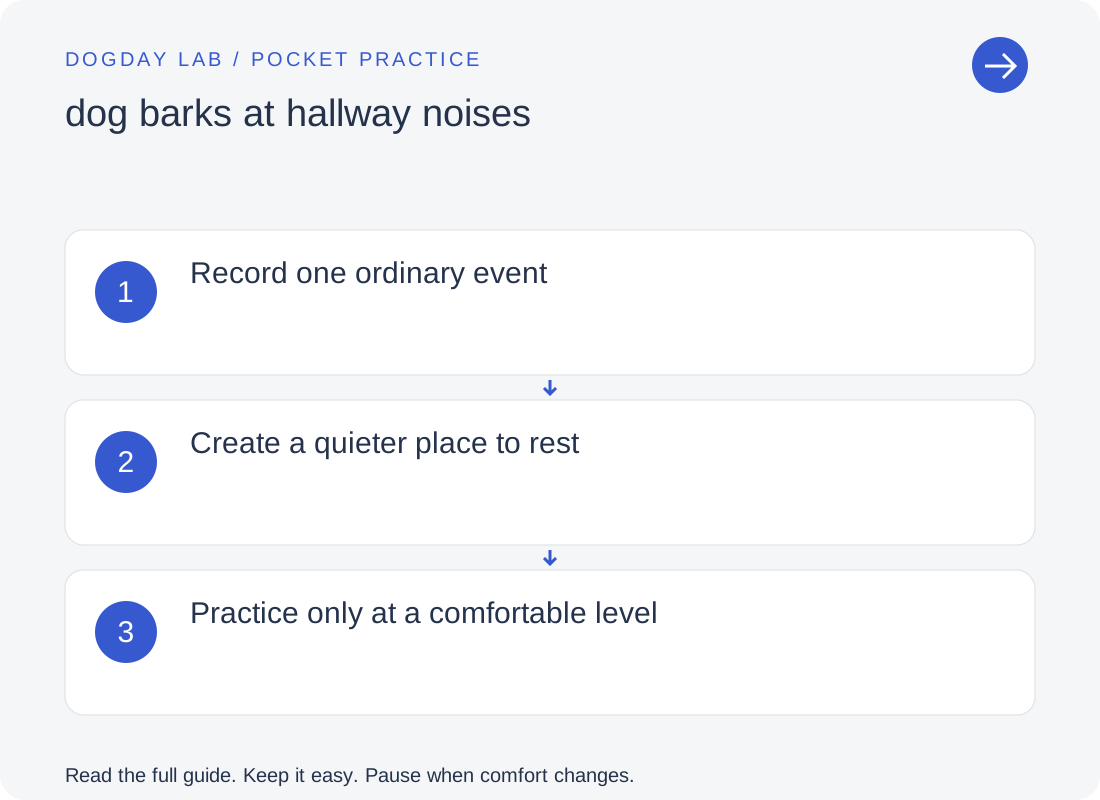
Record one ordinary event
Write the sound, approximate time, your dog’s location and what happened next. Include what recovery looked like: returning to a chew, lying down or continuing to watch the door. Do not replay the sound to confirm it. A few naturally occurring examples are enough to start seeing useful differences.
Create a quieter place to rest
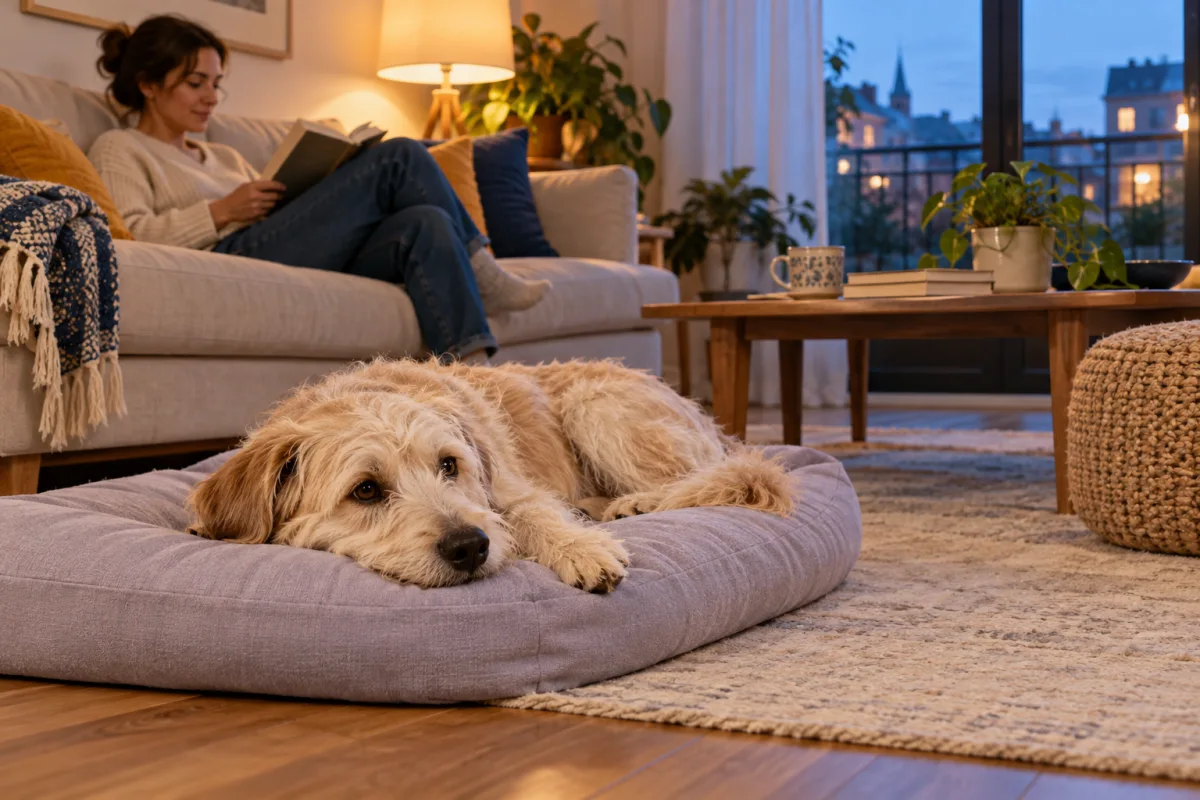
Move a familiar bed to the most sheltered practical area. Leave water and an easy route away from household traffic. If a barrier prevents rushing the front door, introduce it comfortably during quiet periods first. Check that it does not leave your dog trapped close to the sound.
Practice only at a comfortable level
If your dog is relaxed and a helper can make a very faint, predictable sound, pair that brief sound with a suitable reward. Pause between attempts. Your dog should remain able to move freely and resume normal activity. If they become tense or bark, stop and make a future setup easier.
Use a predictable response to real traffic
When unexpected hallway activity occurs, calmly help your dog move away if they can do so comfortably. Reduce the view of the entry and allow recovery. Do not turn a noisy delivery rush into a training test. Note the event later, including whether the environmental arrangement helped.

Build a sound map rather than a bark tally
A count of barks leaves out the information you need to change the situation. Record whether the trigger was a voice, keys, footsteps, a rolling cart, another dog or a door. Was your dog already awake and watching? Were they eating, playing or resting? Could they see a shadow under the door? These observations are more useful than deciding that all barking is attention seeking. Avoid diagnosing an emotional state from one sound or one body movement.
An example entry might read: “Elevator chime at 6:10 p.m.; resting beside entrance; stood, barked repeatedly, stayed near door; returned to bed after hallway became quiet.” Another might say: “Same chime at noon; resting behind couch; lifted head, then slept.” The difference suggests a practical experiment with resting location and evening activity. It does not prove that location is the only cause. Keep the log short enough that you can maintain it without constantly watching your dog.
Change the room before changing the dog
The front door may be the loudest part of a small home. A resting area directly beside it gives your dog little chance to ignore each event. Try moving the bed into an existing quieter corner, keeping the dog’s preferred surfaces and familiar bedding. If you use curtains or furniture to reduce visual distractions, preserve ventilation, safe escape routes and access to the rest of the home. Never block a fire exit or alter a fire door to reduce sound.
Gentle familiar background sound may make some small environmental noises less abrupt, but louder is not better. Introduce it at a comfortable volume and observe whether your dog settles. Do not place a speaker beside their bed or use continuous noise to cover clear distress. A fan or quiet household sound is optional, not a treatment. If your dog seeks another room, respect that choice. The test is how the dog uses the space, not whether the setup looks like a tidy training station.
Distinguish alerting while you are home from distress when alone
If the barking occurs mostly during absences, the hallway may be only part of the picture. Where appropriate, a camera used within your own home can help you observe pacing, attempts to escape, repeated vocalizing or difficulty settling. Respect household privacy and local rules; do not record neighbors in shared areas. Review ordinary footage rather than deliberately leaving longer to see what happens. A dog struggling alone needs an assessment of that situation, not merely more practice with door sounds.
Compare what your dog does before and after a sound when you are present. A brief alert followed by normal activity is different from ongoing scanning, panting or inability to rest. Neither pattern should be punished. If there is persistent distress, injury from escape attempts or a sudden change, contact your veterinarian and an appropriately qualified behavior professional. Arrange practical company or care where possible while a plan is developed. A noise complaint may create urgency, but it does not make a dog able to tolerate a longer absence.
Make controlled practice genuinely easier than daily life
A useful practice sound is faint enough that your dog remains comfortable. That may mean a helper softly moving a key inside your own home, far from the dog, rather than knocking outside the apartment. Agree on one sound and a clear stop signal with the helper. Avoid surprise repetitions. Offer a reward after the sound, then wait for normal relaxed activity before deciding whether to repeat. Food should not be used to lure the dog closer to a sound they are trying to avoid.
If recordings produce no response, do not keep raising the volume until they do. A recording may omit the vibrations, location, smell or context that makes a real event meaningful. It can still be a neutral sound, but it may not be useful practice for this dog. Likewise, tapping the inside of the door may not resemble an arriving neighbor. A professional can help arrange a controlled version of a difficult trigger. The aim is comfortable learning, not producing barking so that you have something to correct.
Plan predictable busy periods
Building traffic often has patterns: a cleaner in the morning, deliveries in the afternoon or residents arriving home at dinner time. Use those patterns to reduce pressure. Offer an earlier toilet opportunity, prepare a quiet activity away from the door and keep the household response calm. If a delivery requires opening your own door, secure the dog comfortably before it arrives. A barrier that has never been introduced is unlikely to become reassuring just because a courier is waiting.
For example, if the intercom repeatedly interrupts an evening rest period, choose a delivery arrangement that is permitted by the building and does not require the dog to wait at the entrance. Keep instructions courteous and realistic; a courier cannot be expected to conduct training. If unavoidable maintenance will be unusually loud, ask management for timing and arrange a quieter location or trusted caregiver when possible. Work with the building’s safety requirements. Training should not depend on neighbors avoiding normal use of their own homes.

Respond to a barking episode without adding another alarm
First check whether there is an immediate practical need, such as someone entering or the dog getting access to an unsafe doorway. Secure the situation calmly. If your dog can follow a familiar invitation away, move together toward the quieter space and reward that movement. If they cannot respond, avoid standing over them repeating the cue. Increase distance or reduce the stimulus where you can, and let the event pass. You are helping them recover, not demanding a performance during the most difficult moment.
Do not shout over the barking, spray the dog or use an electronic correction. These can add unpleasant consequences to an already difficult sound. Also avoid standing beside the door with a handful of food while waiting for the next bark; that can leave everyone focused on the trigger. Prepare rewards in a safe place and use them thoughtfully during comfortable practice or an easy move away. If the dog starts running to the door and then back for food, simplify the routine and ask a qualified professional to review the sequence.
Judge recovery and comfort as well as frequency
A realistic early improvement may be that your dog returns to a resting activity sooner after a sound. Another may be choosing a bed farther from the entrance or looking toward you without rushing the door. Record these changes alongside barking. Do not suppress signs of discomfort to make the log look better. A silent dog who freezes or continually watches the entrance may still be struggling. Look for ordinary movement, engagement and the ability to rest.
Review a week of notes for conditions, not a deadline. If only elevator sounds remain difficult, keep the successful changes for other traffic and seek help with that narrower situation. If everything becomes harder, reconsider rest, health, changes in household routine and the overall intensity of building noise. New sound sensitivity or discomfort deserves veterinary attention. A plan may require different living arrangements during renovations or more support than a simple exercise can provide; recognizing that is a useful decision, not a failure.
Share a short factual update with the household
Agree on one response among adults who live with the dog. Write it in ordinary language: check the doorway, invite the dog toward the living area if they can respond, and allow quiet recovery. Include where rewards are stored and which sounds are currently too difficult for practice. This reduces the chance that one person shouts while another tries to soothe, or that several people call the dog at once.
Keep the notes descriptive when discussing the issue with a trainer, veterinarian or building manager. “Barking begins after evening deliveries and continues after the hallway is quiet” provides more useful information than “the dog is naughty.” Share only what is needed, protect neighbors’ privacy and avoid making promises about a cure date. A sensible update can describe the practical steps already taken and the support being arranged.
When it gets tricky
My dog barks before I can get a reward.
Begin farther from the entry and practice with a much easier sound, if controlled practice is appropriate. Real hallway events may be management moments for now. Keep suitable rewards ready, but do not assume faster treat delivery alone can make an overwhelming sound comfortable.
A neighbor keeps knocking to help us practice.
Ask them to stop spontaneous practice. Unpredictable knocking removes your control over intensity and timing. Any helper needs explicit agreement, one mild action and a stop signal. Your dog should not have to experience repeated alarming sounds as a favor to the training plan.
My dog takes food but still looks tense.
Eating is only one observation. Watch movement, posture, orientation and what happens after the food is gone. A dog can eat while uncomfortable. End the exercise, allow space and choose a substantially easier version later instead of using appetite as permission to increase intensity.
Common questions
Should I teach a quiet cue?
A cue may have a role in a broader plan, but it does not change how a dog feels about hidden hallway activity. Begin with environment, predictable events and comfortable practice. A qualified professional can help decide whether a cue adds value for your particular dog.
Is some apartment barking normal?
Dogs vocalize, and occasional brief barking is not the same as persistent distress. The useful questions are what triggers it, how your dog recovers and whether needs or safety are affected. Neighbor concerns matter, but training should not depend on an unrealistic promise of total silence.
How quickly should this improve?
There is no reliable fixed timeline. Frequency and intensity of building sounds, learning history, health and opportunities to rest all matter. Compare similar situations over time and keep practical management in place. Seek help sooner when distress or housing pressure makes experimentation difficult.
Sources & further reading
These sources support the training and welfare principles discussed. Examples are illustrative; source organizations do not endorse this site.
General education, not an individual assessment. Pain, sudden behavior change, panic, aggression or bite risk need appropriate professional support. Editorial images are illustrative.