The short answer
When moving apartments with a dog, plan the dog’s care separately from the furniture move. Keep familiar routines where practical, arrange safe supervision during open-door traffic and prepare one comfortable area in the new home. Introduce building routes gradually and expect toilet, sleep and settling routines to need adjustment.
A move changes more than the address. Your dog may lose familiar smells, hear new neighbors, encounter a different elevator and discover that the toilet spot is now several minutes farther away. Boxes and visitors can disrupt the old home before moving day even arrives. A useful plan accounts for the whole transition.
The aim is not to make every day identical or to achieve instant confidence. Preserve a few reliable anchors, reduce avoidable pressure and watch how your dog responds. If your dog has an existing fear, separation-related difficulty or medical condition, involve the professionals who already support them before the move when possible.

Before you start
- Familiar bedding and ordinary care supplies
- Secure walking equipment and identification
- A separate dog essentials bag
- A trusted caregiver or suitable quiet space
- New building rules and emergency contacts
A practical starting point
Map the new daily routes
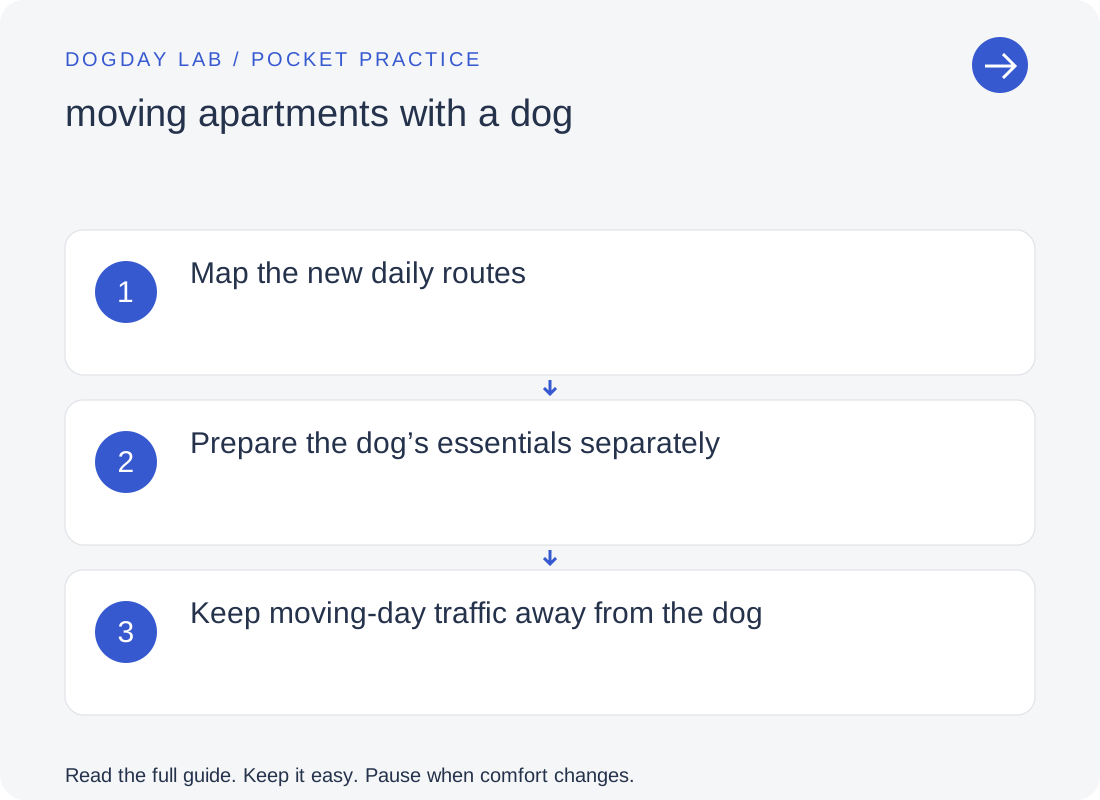
Visit the building without your dog if possible. Locate permitted entrances, toilet areas, quiet outdoor routes and a backup when the elevator is unavailable. Read pet and access rules. Check the apartment for escape routes, unsafe windows, balconies, loose materials and slippery areas before bringing the dog inside.
Prepare the dog’s essentials separately
Pack food, bowls, medication as prescribed, bedding, cleaning supplies, waste bags and secure walking equipment in an accessible bag. Include current contact and veterinary information. Do not put this bag on the moving truck beneath furniture. Assign one adult to remain responsible for it and the dog.
Keep moving-day traffic away from the dog
Use a trusted caregiver or a genuinely comfortable secured room with appropriate company and checks. Tell movers which areas must remain closed. If the dog cannot relax in that arrangement, choose another care option. Frequent open doors are a management problem, not an opportunity to test a stay cue.
Start small in the new apartment
Prepare water, familiar bedding and a clear safe area before inviting your dog in. Allow exploration at their pace and offer a suitable toilet opportunity. Keep the first outing simple. Delay visitors and unnecessary new experiences while you learn which parts of the new routine are comfortable.

Prepare before the boxes take over
Packing can remove a dog’s resting places and narrow the usual routes through a home. Keep one familiar bed available and protect access to water and the toilet route. Store tape, cords, sharp objects and packing materials where the dog cannot reach them. If you use a room for stacked boxes, prevent unsupervised access rather than expecting the dog to leave everything alone. Preserve enough floor space for safe movement.
Introduce ordinary packing activity in manageable amounts when possible. A dog who is curious about one empty box may be comfortable watching from a distance; a dog who retreats should be allowed a quieter place. Do not turn every unfamiliar object into an exercise. Continue familiar walks, meals and rest opportunities as much as practical. If the routine must change, make the care responsibility clear so that a toilet trip is not lost between errands and packing sessions.
Choose moving-day care that actually fits your dog
A familiar caregiver or place can reduce exposure to the busiest part of the move, but only if your dog is already comfortable there. A first-ever daycare visit on moving day may add another major change. Consider a trusted person who can spend time with the dog in a quiet setting, or stagger the move so one adult handles the dog separately. Plan transport, meals, toilet needs and medication rather than treating care as an undefined gap between loading and unloading.
If the dog stays in the old apartment, the secured area must be suitable for the duration and activity. A sign on the door can support communication, but it does not replace someone checking that the plan is followed. Movers may need access to every room; establish that before work begins. Do not leave a distressed dog behind a barrier simply because it prevents escape. If you cannot provide a comfortable arrangement, revisit the schedule or obtain help before moving day.
Make identification and contacts part of preparation
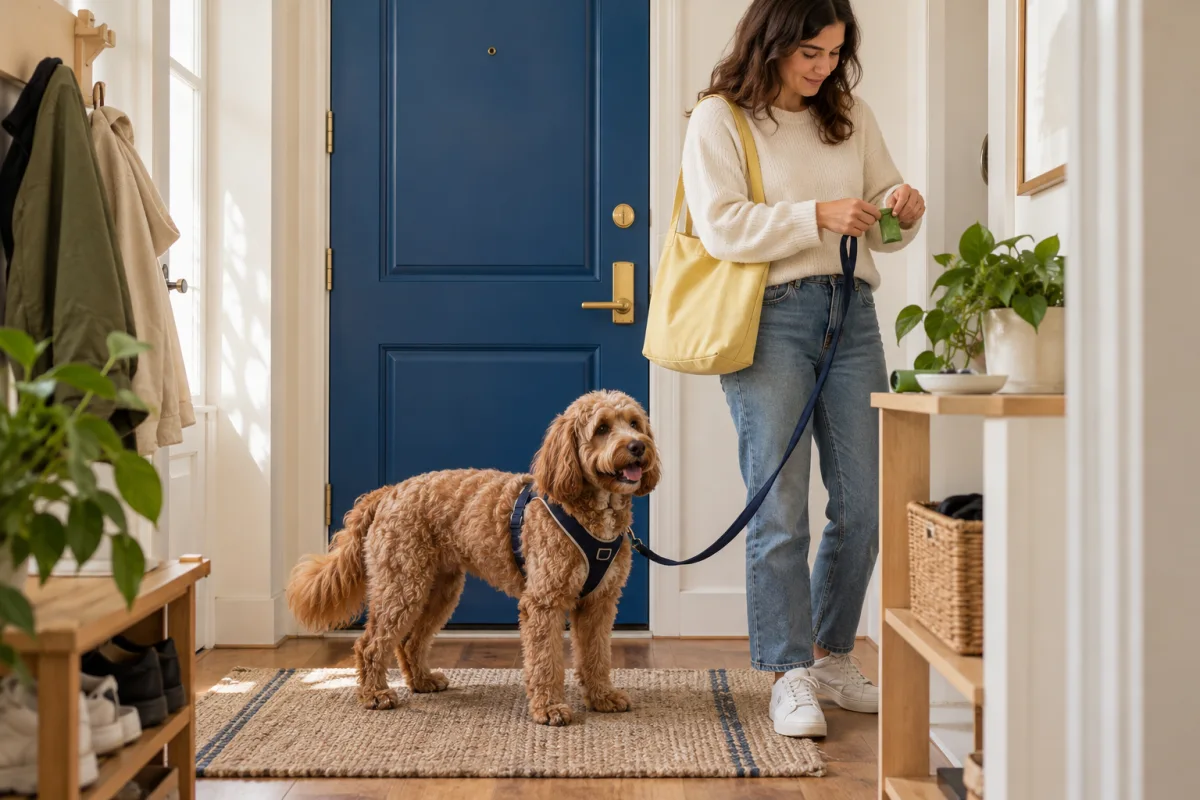
Check that your dog’s identification and microchip contact information are current through the appropriate official services. Update address details where required and keep a recent clear photograph accessible. These are practical preparations, not a reason to handle or photograph a stressed dog during the move. Keep veterinary records and prescribed medication with the essentials bag, and identify a local veterinary practice if the move changes access to your usual one.
Write down who may collect or care for the dog if your plans are delayed. A backup contact should know the dog’s handling needs, medical instructions and where supplies are kept. Do not assume that a person who likes dogs can safely manage every situation. If your dog needs particular equipment or has a history of escape attempts, explain that clearly. Share necessary information securely and avoid leaving personal records visible in shared building areas.
Set up one usable part of the new home first
Before the dog arrives, clear a safe area with familiar bedding, water and suitable traction. Check that windows and balcony doors are secure, cleaning products are stored and small moving materials are removed. Choose a resting location away from the loudest entrance traffic if the layout allows. Familiar smells can help the space feel less novel, so ordinary bedding may be more useful initially than a completely new bed and freshly scented accessories.
Let the dog explore gradually without being carried from room to room for a tour unless carrying is necessary and comfortable. Keep supervision appropriate and close off areas that are not ready. A dog who chooses to stay near familiar bedding does not need encouragement to inspect every corner immediately. If the dog follows you, move calmly and avoid trapping them behind a newly closed door. The first goal is basic comfort and access to needs, not a demonstration of independence.
Rebuild toilet access as a new practical sequence
Even a reliably house-trained dog may need extra opportunities in an unfamiliar home. The exit may be harder to find, the outdoor surface different or the usual signal unnoticed while you unpack. Offer suitable trips proactively and reward success in the permitted location. Keep a simple record for the first days so all adults know what actually happened. Do not punish an accident or assume it is a protest about the move.
If the new route includes an elevator, stairs or a busy lobby, separate urgent toilet access from gradual introduction to those features. Arrange the easiest safe option and seek advice when the route itself is difficult. An appropriate indoor toilet may be necessary for some dogs, but should be planned and maintained rather than improvised in a shared corridor. Sudden urgency, discomfort or repeated changes in elimination require veterinary attention; moving stress should not become a catch-all explanation for a medical concern.
Introduce the building without making every outing an event
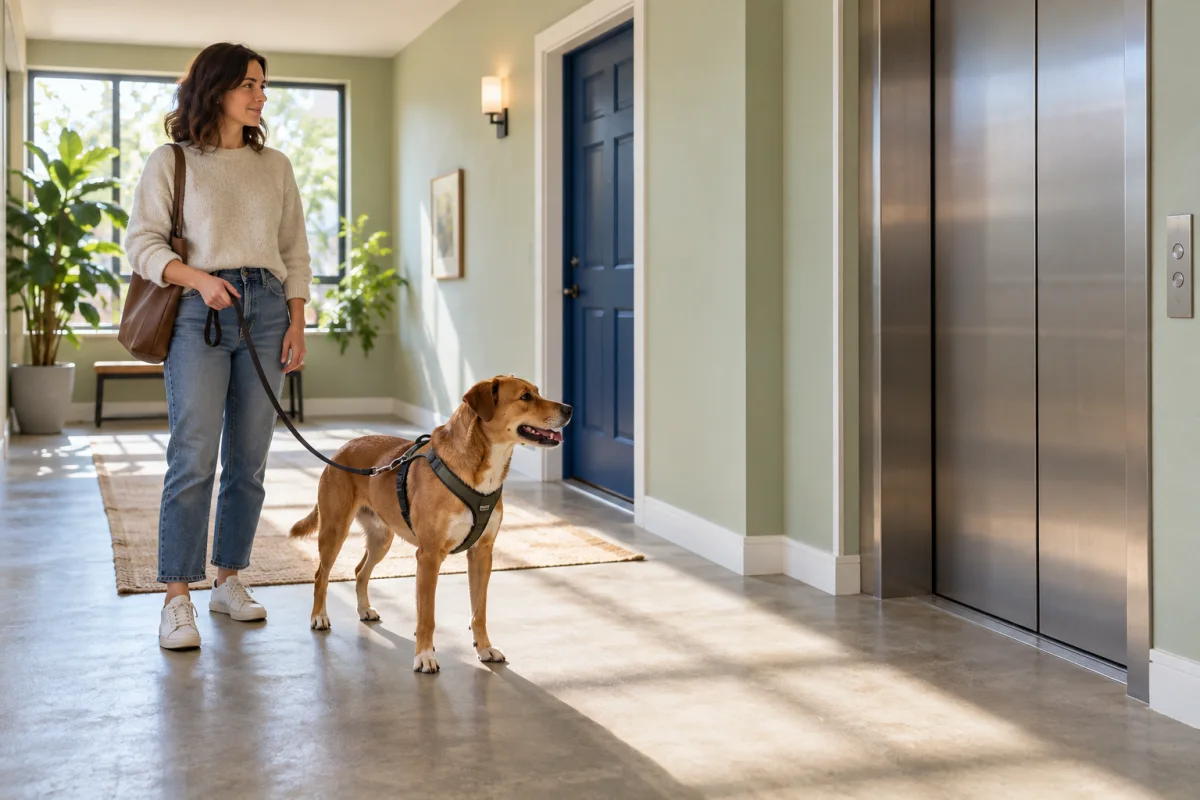
The first building trips can be short and functional. Choose quiet times when possible, keep equipment secure and let crowded elevators pass. Find a nearby permitted toilet area before attempting a long neighborhood tour. A dog who is comfortable walking outside may still be unsure about the lobby’s reflections or the stairwell acoustics. Observe those transitions separately and return to easier conditions when needed.
Later, explore one manageable route at a time. Note where there is space to step aside, where traffic becomes busy and where the dog can sniff comfortably. Avoid introducing every neighbor and dog in the first week. Social contact should remain optional and suitable for the individual. If someone asks to greet, a simple explanation that you are settling into the building is enough. Your dog needs a usable daily route more than a complete social calendar.
Support rest and company while routines change
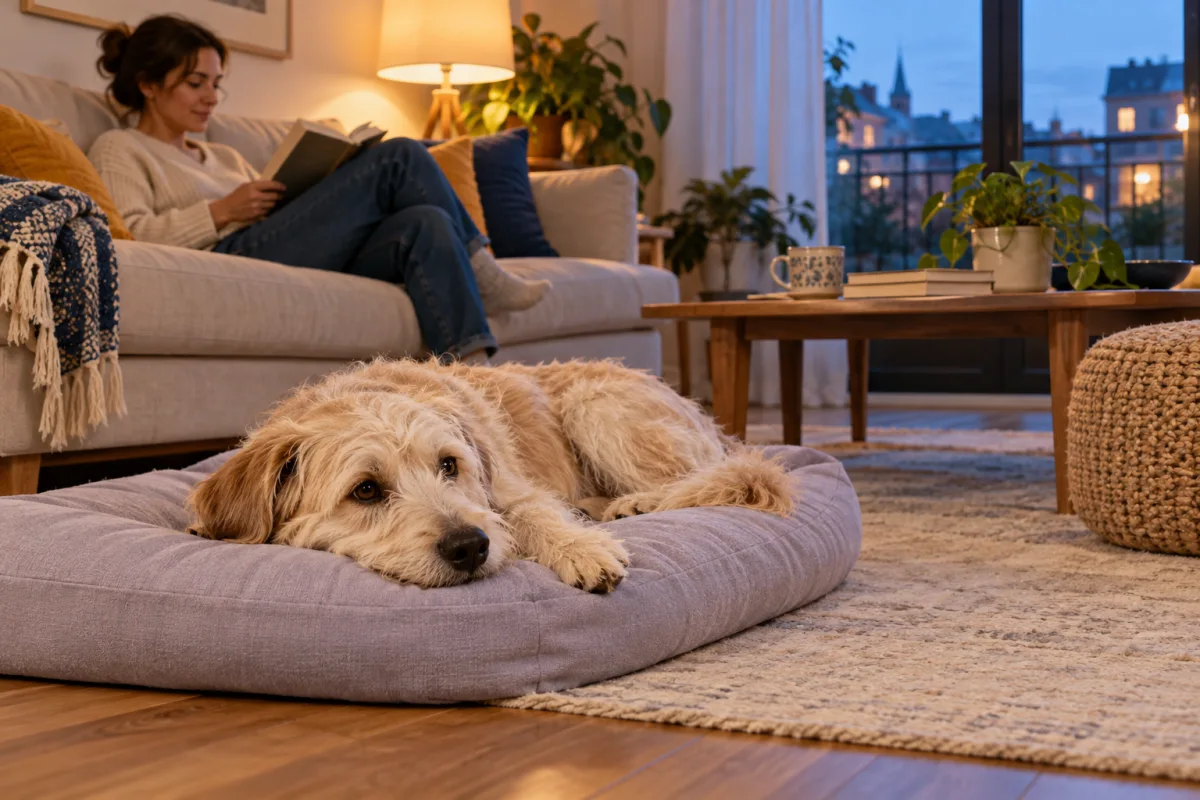
Unpacking can fill every quiet period with movement, noise and interrupted sleep. Schedule times when the household does less. Keep a comfortable resting place available and avoid repeatedly moving it as furniture arrives. If the dog rests near you, allow that while you assess the new environment. Familiarity and confidence can develop without forcing immediate separation in a new room.
Do not assume that previous alone-time comfort transfers instantly to the new apartment. Arrange absences conservatively and observe the dog’s response without deliberately extending distress. If you must leave for work, organize appropriate care rather than testing a long absence because the old routine allowed it. Persistent vocalizing, pacing, escape attempts or inability to settle when alone deserve professional support. The move may reveal a need for a new plan, even when the dog previously managed comfortably.
Review the first week by function, not by a deadline
At the end of several ordinary days, ask whether your dog can eat normally, access the toilet, rest, move comfortably and engage in familiar activities. Record which situations remain difficult. For example, the dog may settle well during the day but react to evening hallway traffic. Keep the successful daytime arrangement and work on the evening environment separately. Avoid describing the entire move as a failure because one part remains unsettled.
An illustrative first-week priority might be toilet access and rest before any new training. Another dog may be ready for a short familiar game in a quiet room on the first day. Readiness should guide the pace. Seek veterinary advice for changes in appetite, elimination, mobility or behavior that concern you, and do not wait for an arbitrary adjustment period when there is significant distress. Useful progress is a growing set of comfortable daily activities, not a dog who looks instantly at home in a photograph.
Leave room for an imperfect moving day
If the truck is late or the new keys are delayed, use the backup care arrangement rather than keeping the dog waiting in a vehicle or crowded loading area. Contact the caregiver early and give them an updated collection plan. Carry enough ordinary supplies for the delay and follow prescribed medication instructions. A flexible human schedule protects the dog from having to tolerate every unexpected problem. Once everyone arrives, prioritize water, a toilet opportunity and a usable resting place before continuing nonessential unpacking.
When it gets tricky
My dog keeps returning to the front door.
Check whether they need the toilet, are monitoring unfamiliar sounds or are seeking access to a familiar routine. Offer appropriate care and a comfortable place away from the entrance. Do not repeatedly pull them to a bed. If vigilance persists, record the pattern and seek advice.
We cannot avoid a long moving day.
Arrange dedicated dog care rather than fitting care around every task. Keep essentials accessible and identify a backup if loading or keys are delayed. A trusted person responsible only for the dog can prevent meals, medication, toilet trips and rest from disappearing into the moving schedule.
My dog was house-trained and now has accidents.
Offer more appropriate opportunities, supervise and record actual results. The route and signals may have changed. Clean calmly and avoid punishment. Consult your veterinarian if the change is sudden, frequent, painful or otherwise unusual instead of assuming all accidents are caused by the move.
Common questions
Should I buy a new bed for the new home?
You can, but keeping a familiar comfortable bed available may make the transition simpler. Introduce new items gradually and let the dog choose. Replace unsafe or unsuitable equipment, but avoid changing every part of the resting arrangement at once without a practical reason.
How long does settling after a move take?
There is no dependable universal timeline. The dog’s history, health, environment and support all matter. Watch ordinary functions such as rest, eating and comfortable outings. Seek help when distress is significant rather than waiting for a fixed number of days to pass.
Should we visit the new apartment before moving?
A quiet, safe visit may help some dogs if access is permitted and the environment is ready. It is optional. Do not bring the dog into a noisy construction site or unsafe empty space just to complete a preview. Good preparation can happen without the dog present.
Sources & further reading
These sources support the training and welfare principles discussed. Examples are illustrative; source organizations do not endorse this site.
General education, not an individual assessment. Pain, sudden behavior change, panic, aggression or bite risk need appropriate professional support. Editorial images are illustrative.