Apartment life
Apartment dog training: make your space work for both of you
Build an apartment dog training routine around shared walls, small rooms, toilet trips and rest, with practical exercises and adaptable daily choices.
Apartment life · 4 guides
An apartment is more than a smaller house. Every toilet trip can involve a leash, a hallway, a lift and someone else’s dog. The useful question is not whether your dog can perform a perfect sit; it is how to make those transitions predictable, comfortable and safe.
Make the building part of the plan
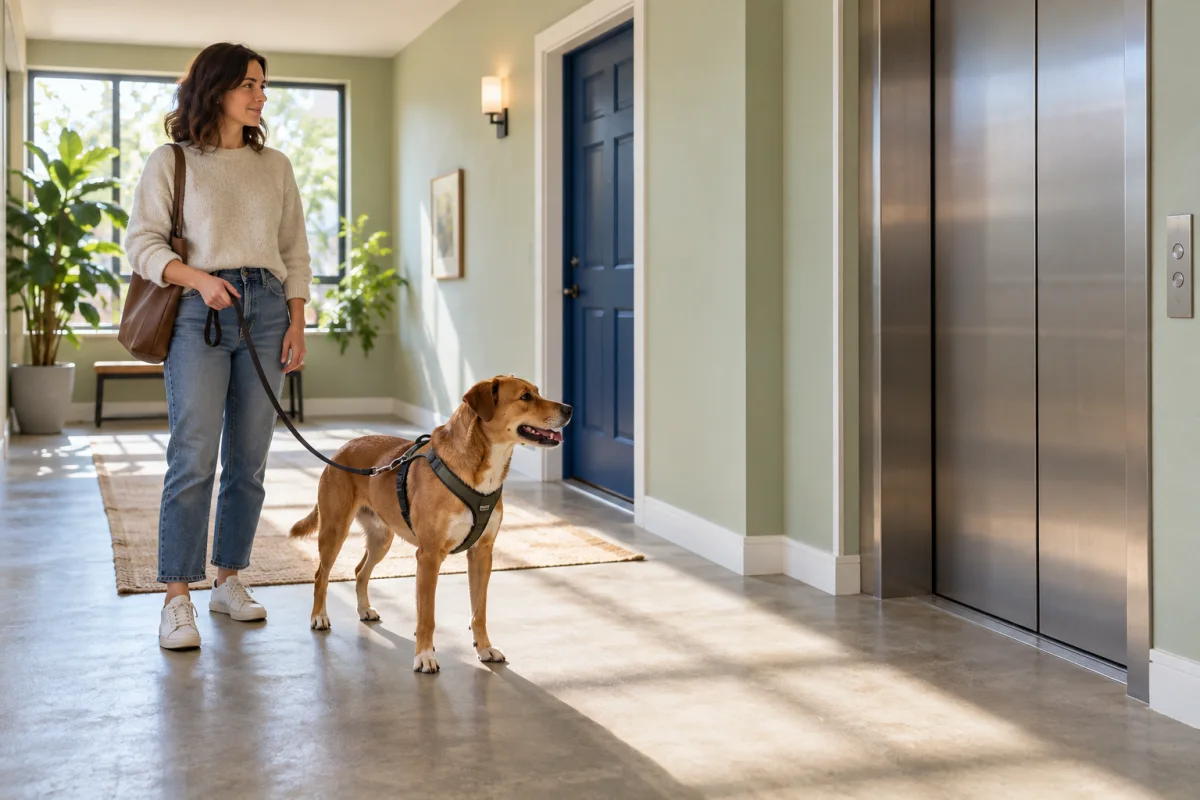
An apartment routine starts before the front door opens. Your dog may need equipment attached in a narrow entrance, a quiet place while you collect your keys, a route past unfamiliar doors and enough time to reach the toilet area. Treat those pieces as one connected journey. A dog who struggles at the last doorway may already have spent several minutes dealing with delays, close encounters or confusing instructions inside the building.
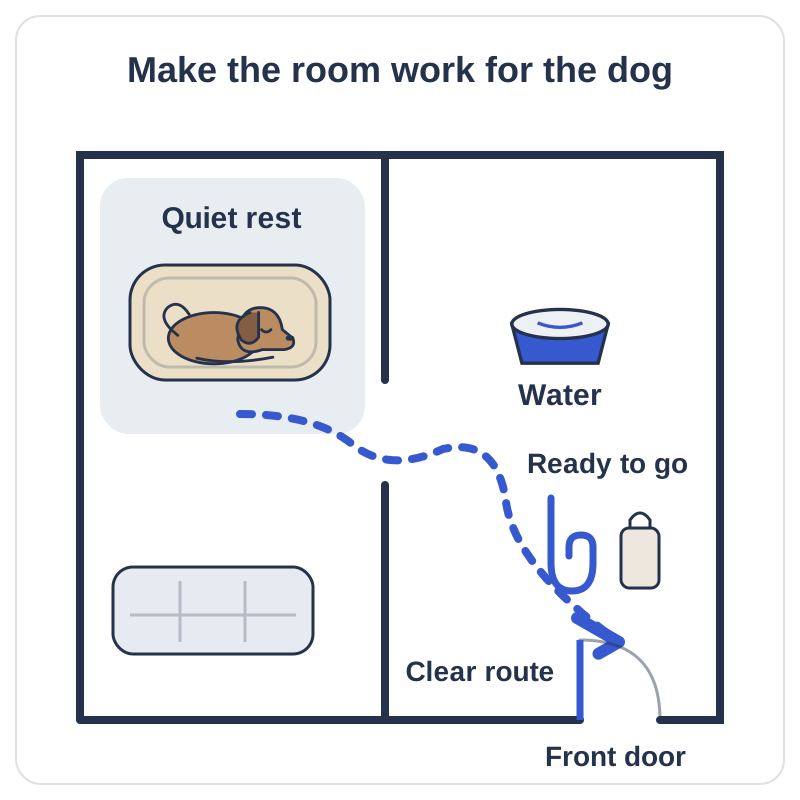
Begin with the moment that repeats most often, rather than buying equipment for every possible problem. Draw a rough route from the sleeping place to the outside area. Mark where people hurry, where another dog could appear and where your dog can comfortably step aside. This simple map helps you choose between changing the environment, rearranging a human task and teaching a small skill. Often the first useful change belongs to the people, not the dog.
Begin with the setup
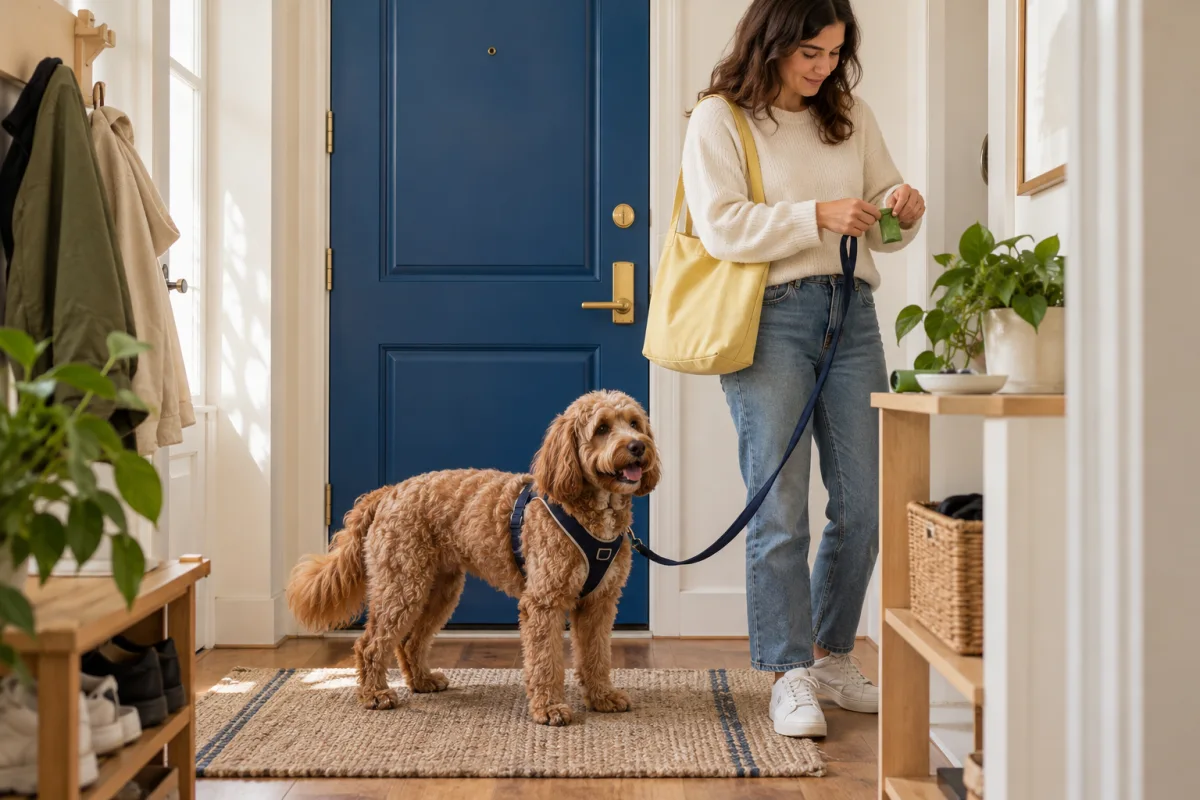
A useful entrance keeps necessary items within reach without filling the escape route. Put the leash, waste bags and appropriate rewards where the responsible adult can collect them before asking the dog to move. Check equipment in a secure indoor space. If the doorway is too narrow for comfortable preparation, use another part of the apartment instead. A dog waiting beside a swinging door while someone searches for shoes is experiencing a preventable bottleneck, not receiving a clear lesson.
Separate an urgent outing from optional doorway practice. When your dog needs the toilet, prioritize the easiest safe exit. Rehearse a brief check-in or a small turn at another time, using an interior doorway where a mistake cannot put the dog into a shared hall. Keep the leash secure before an exterior door opens, and check the corridor yourself. A trained pause does not replace physical safety measures or attention to other residents.
Your field guides
Choose the guide that answers your next practical question.
Apartment life
Build an apartment dog training routine around shared walls, small rooms, toilet trips and rest, with practical exercises and adaptable daily choices.
Apartment life
Create an apartment potty routine with realistic exit timing, indoor backup choices, accident notes and practical adjustments for stairs or elevators.
Apartment life
Help a dog who barks at hallway noises with a practical sound log, quieter resting setup, delivery management and small, comfortable practice sessions.
Apartment life
Plan a calmer apartment move with your dog, from packing and moving-day care to toilet routes, familiar resting spaces and a flexible first-week routine.
Put the ideas into practice
The quietest-looking corner is not always the most restful location. A bed beside the entrance can expose a dog to footsteps, voices and every delivery. A window-facing sofa may provide constant movement to monitor. Watch where your dog chooses to stretch out and what interrupts them. Then try one practical adjustment: move a bed farther from the door, change a sightline or rearrange foot traffic. Keep access to water, comfortable movement and an alternative resting option.
When barking occurs, record the event rather than replaying the sound to test your dog. Note the source, the dog’s location, whether anyone was home and what happened afterward. These details distinguish an occasional response to a loud package drop from a repeated pattern needing different support. Speak with neighbors or management about practical logistics where appropriate. If the dog shows panic when alone, or the behavior changes suddenly, arrange suitable professional help instead of relying on a quieter room alone.
Put the ideas into practice
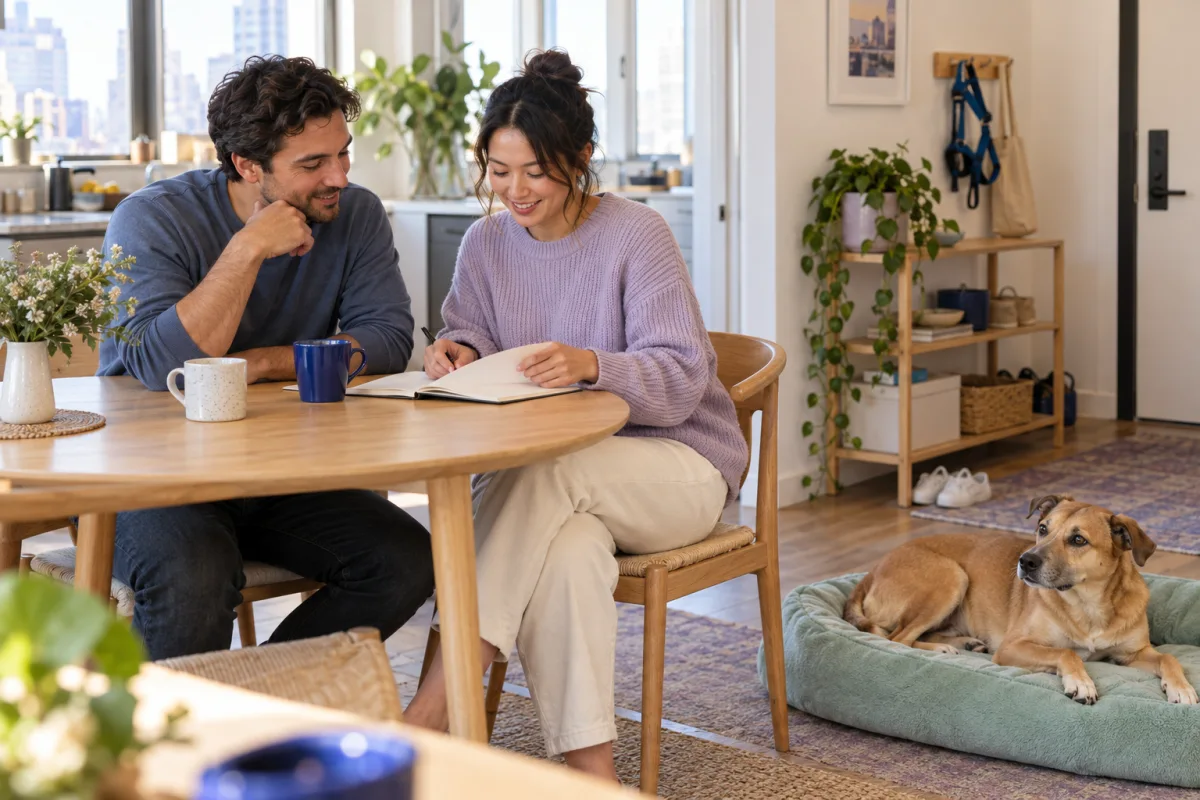
A household routine fails easily when everyone assumes someone else has handled the next outing. Write down the last toilet opportunity, what happened and who is responsible next. Include known building delays and a backup for work calls that run long. The note should be short enough to use on an ordinary weekday. A detailed schedule that lives in one person’s head offers less support than a clear handover another adult can follow without guessing.
For multiple dogs, plan movement and valued items separately when needed. An entrance that works comfortably for one dog may be crowded with two harnesses, two people and a delivery. Protect each dog’s space rather than requiring them to squeeze past one another or share food activities. When a sitter takes over, demonstrate the actual route and equipment. Explain which skills are comfortable indoors and which situations still require avoidance, extra distance or another practical arrangement.
A useful check for tomorrow
Look at the human preparation for your most frequent trip. Can the next person find the equipment, reach the exit and locate supplies without moving the dog’s bed or searching through another room? Check shared access rules and identify where you can wait without blocking a neighbor. Make one change to the arrangement before expecting a different response from your dog.
After the next ordinary outing, compare the transition rather than counting cues. A prepared lead or clearer handover may remove a delay even when no new skill has been taught. Keep the helpful change and leave the optional learning for a separate opportunity.
From an ordinary day
Imagine a household whose dog begins barking while the adults prepare for the morning walk. The leash hangs behind a door, shoes are in another room and the elevator is busiest during the same ten-minute period. Everyone calls the dog back from the entrance while finishing separate tasks. The first change is organizational: one adult gets completely ready, checks the route and gathers supplies while the dog remains in a comfortable part of the home.
The household then practices one easy interior transition during a quieter part of the day. They reward a voluntary glance, take a couple of comfortable steps together and finish. The next real outing uses the prepared equipment and a quieter departure window where feasible. If the elevator opens onto another dog, they create space or wait safely rather than demanding a prolonged sit in close quarters. A toilet need remains a care priority throughout.
After a few ordinary outings, the useful comparison is practical: Was equipment ready? Did the dog have room to move? Where did rushing begin? The family might discover that preparation improved the entrance while hallway noise remains a separate concern. That is still useful information. They keep the workable departure routine, read the sound-management guide and seek individual support if distress persists. This example shows a decision process, not a promised result or a required timetable.
Choose the next useful question
| What is happening | Start with | Keep reading |
|---|---|---|
| Your dog is comfortable indoors but exits become rushed. | Map the full route, prepare before calling the dog and rehearse one safe interior transition. | Apartment dog training: make your space work for both of you |
| Hallway sounds repeatedly interrupt rest. | Record the sound and recovery, protect a quieter resting location and reduce avoidable exposure. | When your dog barks at hallway noises: map the sounds first |
| Toilet trips are delayed by building logistics. | Observe individual patterns, allow for access time and assign the next outing to a person. | An apartment potty routine that includes the trip downstairs |
| A move is about to change the whole routine. | Prepare the first resting area and care arrangements before rehearsing unfamiliar shared spaces. | Moving apartments with a dog: a transition plan for real life |
Before the next step
The useful skills may be familiar, but the setup matters enormously. A check-in, a comfortable turn and a clear release can help when introduced in easy conditions. The apartment-specific work is often planning: attaching equipment safely, accounting for elevators, avoiding close encounters and protecting rest. Start with the actual route and the dog’s current comfort instead of compiling a longer command list.
Ask for specific times and descriptions, keep a factual event record and review the dog’s environment and care. Share practical steps without promising an instant fix. Management changes may reduce avoidable exposure while you seek appropriate training or behavior support. Do not use punishment or leave a distressed dog to endure the noise. A complaint identifies a shared problem; it does not diagnose its cause.
Look for a quieter position, a changed sightline or a different path for people moving through the room. A safe visual barrier may help when your dog is already comfortable with it. Preserve ventilation, water access and room to leave. If the available layout cannot meet the dog’s needs during a particular event, arrange care elsewhere or change the event rather than relying on prolonged confinement.
No. Necessary care trips can stay simple. Choose occasional easy moments when you have time, your dog is comfortable and the environment is manageable. If a neighbor appears, the lift is crowded or the dog urgently needs the toilet, use your management plan. The purpose of practice is to improve later choices, not to turn every doorway into a test that must be passed before moving.
 Meet DogPath
Take a guided lesson, keep a daily practice rhythm and work on the moments that matter to you.
See how the app fits