The short answer
Separate the doorbell sound from the rush to the entrance and from an actual visitor arriving. Rehearse a quiet manageable version, provide space and teach an easy alternative routine. Use secure management for real deliveries. If visitors create fear, aggression or bite risk, get individualized professional help before practicing entry.
A doorbell rarely happens alone. It is followed by footsteps, people standing up, an opening door and a stranger appearing. Your dog may react to any part of that chain. A useful doorbell practice plan breaks the event into pieces instead of repeatedly ringing the bell and hoping the dog eventually stops responding.
This guide is for comfortable low-intensity rehearsal and practical household management. It is not a safety assessment for a dog who threatens, lunges at or has bitten visitors. In those cases, prevent access to visitors and seek help from your veterinarian and a qualified behavior professional. No delivery person should become an unwitting training helper.

Before you start
- A sound source with controllable volume
- Suitable rewards
- A comfortable resting area away from the entrance
- Secure barriers already familiar to the dog
- A cooperative adult helper for later planned practice
A practical starting point
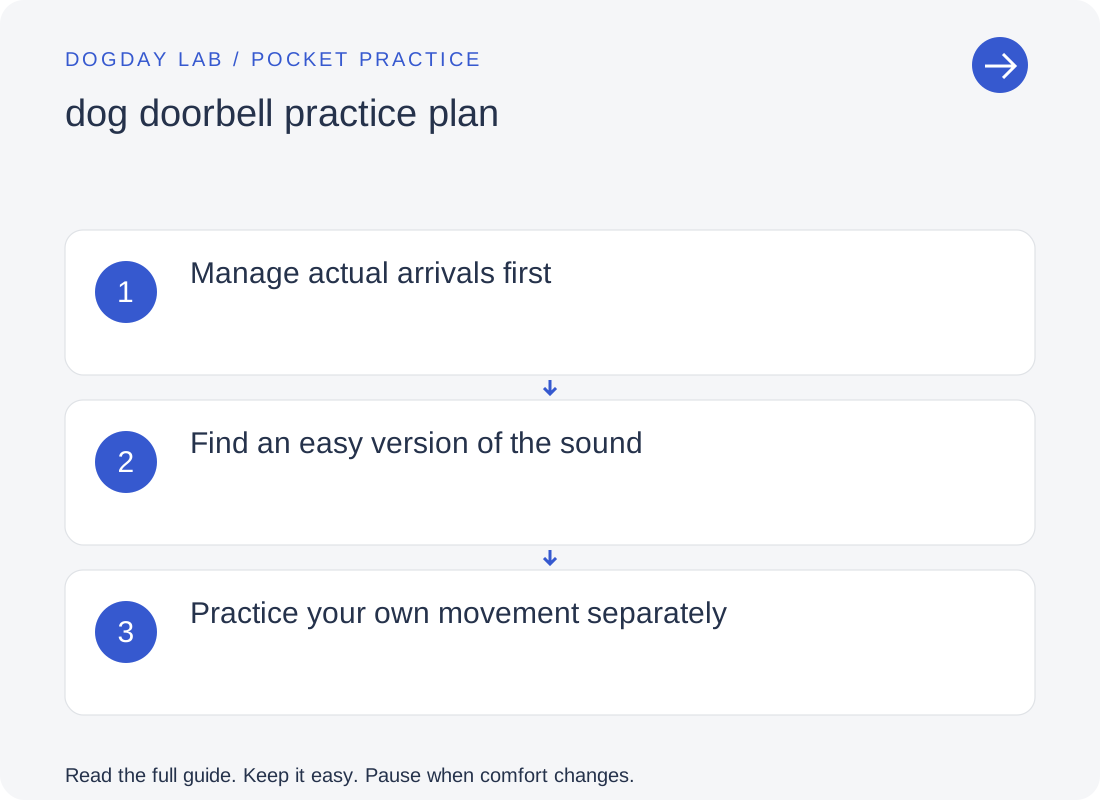
Manage actual arrivals first
Where possible, ask expected visitors or delivery contacts to use a quieter agreed method of notification while you practice. Keep the dog securely away from an open exterior door using an arrangement they can tolerate. Prepare the management setup before the arrival. Do not depend on a newly taught cue to prevent an escape or unsafe greeting.
Find an easy version of the sound
Use a quiet brief recording or a soft related sound that your dog notices without becoming distressed. Start farther from the sound source if helpful. Pair the manageable event with a suitable reward and then allow a pause. If your dog rushes, barks intensely or cannot recover, reduce intensity or stop; the starting point was too difficult.
Practice your own movement separately
Stand up, take a step toward the entrance and return without ringing the bell. Begin with the smallest movement that remains ordinary for your dog. This helps you identify whether the human rush is part of the trigger. Keep the exterior door secure and avoid adding a visitor during this stage.
Teach an easy alternative destination
In a quiet unrelated session, make a comfortable area away from the door rewarding to visit. It can be a bed, mat or safe room appropriate for your dog. Teach the movement gently and allow normal position changes. If a barrier will be closed for arrivals, introduce that separately rather than surprising the dog when a visitor appears.
Combine two comfortable pieces
When the sound and alternative routine are individually manageable, use a low-intensity sound and guide the familiar movement toward the resting area. Reward there. Keep the sequence brief and do not increase volume, duration and visitor activity at the same time. Repeat easy versions rather than treating every session as a test of the loudest possible bell.
Add a planned helper only when appropriate
Use a trusted adult who follows the plan, with the dog securely managed and comfortable. Rehearse one small arrival component at a time. The helper may remain outside or simply approach and leave. If the dog shows fear or aggression, stop and get individualized guidance. Meeting the visitor is optional and is not the measure of success.

Map the arrival chain before changing it
Write the sequence from the first sound to the visitor being inside: bell, human movement, keys, latch, opening door, voices and proximity. Notice where your dog becomes alert and where they have difficulty recovering. You may find that the bell recording is easy but your quick movement to the door is not.
This distinction changes the plan. Practicing the sound alone will not necessarily help with a stranger entering a narrow hallway. Likewise, a comfortable visitor greeting does not mean the dog is ready for repeated loud knocks. Treat each component as a separate question and combine them only when the easier pieces are manageable.
Choose a starting sound your dog can handle
The useful starting point may be much quieter than the real bell or may involve a different soft sound before you approach the exact one. Watch the dog’s whole response, including posture, movement and recovery. A dog taking food while leaning away may still need an easier setup.
Keep sessions short enough that you can remain observant. Repeated ringing without a clear plan can make the event more salient rather than less. If you cannot find a comfortable starting point, stop experimenting and ask a qualified professional for help. There is no benefit in rehearsing a strong reaction to establish that the bell is difficult.

Reward a manageable experience, not silence at any cost
The aim is to change the experience and provide a workable routine, not simply suppress sound. A brief bark followed by easy recovery is different from a dog who remains tense and vigilant for a long time. Record both the response and how quickly ordinary behavior returns.
Do not punish barking, use frightening devices or wait through prolonged distress to obtain silence. Make the situation easier and address the underlying context. If the dog is worried about people entering, a sound exercise alone is not enough; visitor management and professional support may be needed.
The resting area needs to be genuinely comfortable
Choose a location that gives distance from the entrance and does not trap the dog beside the visitor’s path. Introduce it during ordinary quiet periods and reward voluntary use. If the area only appears when exciting things happen beyond a closed door, it may predict frustration rather than rest.
A safe room or barrier can be useful management, but the dog should have appropriate space, water and comfort. Teach barrier familiarity separately. Do not tie the dog to furniture near the entrance or rely on a stay where a mistake could produce an unsafe encounter. Physical safety should not depend on perfect training.
Real deliveries are management events
A delivery driver has a job and should not be expected to wait while you rehearse several repetitions. Prepare the dog’s secure comfortable setup before opening the door, receive the item and return to ordinary care. If necessary, use a delivery instruction or collection option that reduces the pressure on the household.
Afterward, you can note which part was difficult and plan a separate exercise. Do not immediately replay the bell many times because the real arrival went badly. The dog may need recovery, and your own frustration may make practice less thoughtful. Use a later quiet opportunity with a controllable setup.

Keep visitors outside the training decision
Expected visitors can help only when they understand and agree to a clear plan. Explain whether they should wait, avoid eye contact, remain at a distance or leave after one brief approach. They should not improvise by calling the dog, reaching through a barrier or offering food to draw the dog closer.
If a visitor will not follow the plan, use management and omit the training. A social occasion is not a reason to expose the dog or guest to risk. For dogs with fear or aggression around visitors, get a professional plan before arranging contact. A friendly intention does not make a greeting safe.
A worked example for a small apartment
Imagine a dog who runs toward the entrance when the bell rings but is comfortable with a quiet recording in the living room. The household first arranges real deliveries so the dog is securely separated in a familiar comfortable area. They practice the low-volume sound briefly, then separately rehearse an adult standing and walking toward the hall.
Once those pieces are easy, they combine a quiet sound with the familiar movement toward the resting area. A helper later makes one planned approach while remaining outside. If the dog becomes worried, the next session returns to the easier component. The example does not assume that entering the apartment or greeting the helper is the next required step.
Avoid accidental difficulty jumps
A recording through a phone may differ from the actual bell in volume, direction and vibration. Treat the real sound as a new variation rather than assuming the dog will respond identically. Likewise, a familiar helper at midday is different from an unfamiliar person arriving after dark with a large package.
Change one feature at a time where possible and preserve management during real life. Progress is not a reason to remove the barrier after one good rehearsal. Keep a record of the exact conditions that worked so another caregiver does not accidentally test a much harder version.
Measure recovery and human readiness
Useful progress can include the dog noticing the sound and returning to ordinary activity, moving comfortably to the familiar area or recovering more easily after a planned event. Also measure whether the humans can follow the sequence without fumbling for equipment or opening the door too soon.
A routine that requires perfect timing from a tired person may be unreliable in daily life. Simplify it: keep rewards ready, use a secure familiar barrier and agree who handles the door. Training and household logistics should support each other. Neither replaces the other when an unexpected arrival occurs.
When the reaction signals a bigger concern
If the dog is fearful of people, guards the home, lunges or threatens visitors, do not treat the issue as a simple bell problem. Prevent access and seek professional assessment. Pain or other health changes can also affect tolerance, especially when the behavior is new or has intensified.
Bring a factual description of the sequence and any safe existing recordings to the professional; do not provoke another incident for video. Explain the building layout, visitor frequency and current management. A plan needs to fit the actual household and protect everyone involved, not only change the sound response.
Keep practice brief enough to remain thoughtful
Choose a small number of easy rehearsals and end while the dog is comfortable. The session does not need to continue until you have reached the real bell volume. Repeated easy success can provide useful information about the starting point and make it easier to notice when a change is too large.
Leave recovery between sessions and avoid adding practice immediately after a busy visitor day. If the dog starts scanning the door or anticipating another sound, stop and review the setup. A good plan should make ordinary life easier, not turn the entrance into the center of attention all evening.
When it gets tricky
The dog is fine with a recording but reacts to the real bell.
The real sound may differ in direction, vibration or association with arrivals. Treat it as a new variation and use professional help if you cannot make it manageable. Keep real deliveries safely managed. Do not jump to repeated full-volume ringing because the recording seemed mastered.
The dog runs to the mat but remains tense.
The movement may be learned without the dog feeling comfortable. Increase distance, reduce intensity and review whether the mat predicts confinement or a difficult visitor. Do not count position alone as relaxation. If fear is present, seek individualized guidance rather than extending the stay.
Unexpected visitors keep interrupting practice.
Improve management and communication where practical, such as asking expected guests to message first. Choose a quieter practice period and secure the dog before opening the door. If interruptions are unavoidable, work on simpler components elsewhere and keep the real entrance routine focused on safe care.
Common questions
Should I ring the bell until my dog gets bored?
No. Repeated exposure at an uncomfortable intensity can rehearse distress. Use a controllable manageable starting point and watch the response. If you cannot keep the experience comfortable, get qualified help rather than increasing repetition.
Does my dog have to greet every visitor?
No. Comfortable safe separation can be an appropriate arrangement. A greeting should happen only when the dog, visitor and setting are suitable. The purpose of the routine is a manageable arrival, not compulsory social contact.
Can I promise my neighbors the barking will stop?
Avoid guarantees. Explain the practical management steps you are taking if that conversation is appropriate, and seek help when needed. Training outcomes and timing vary. A factual plan is more useful than a promise of silence by a particular date.
Sources & further reading
These sources support the training and welfare principles discussed. Examples are illustrative; source organizations do not endorse this site.
General education, not an individual assessment. Pain, sudden behavior change, panic, aggression or bite risk need appropriate professional support. Editorial images are illustrative.