
A calmer home
A work-from-home routine that works for your dog too
Build a dog work-from-home routine around care, predictable breaks and comfortable rest, with realistic support for meetings and changing work demands.
A calmer home · 2 guides
Calm is not simply the absence of movement. A dog can be still and worried, or move around comfortably before choosing to rest. Start by making the situation easier, then notice the small signs that your dog feels at ease.
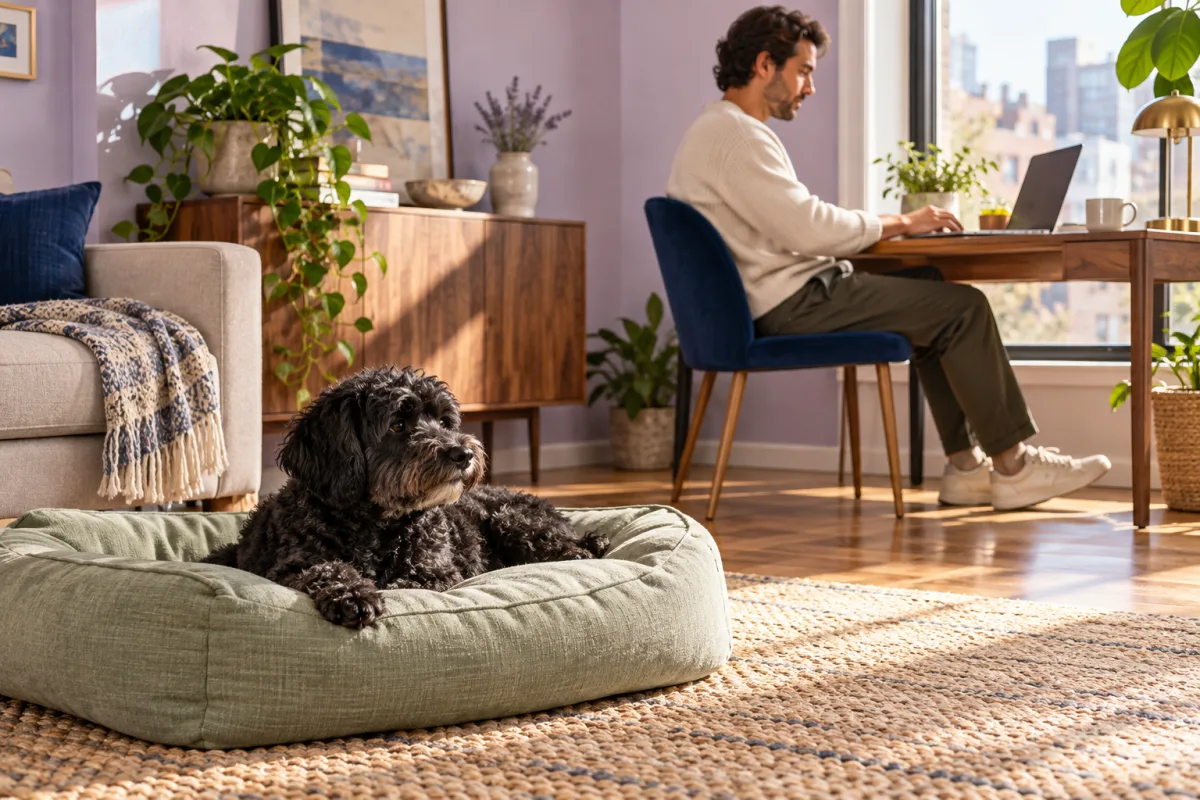
Look beyond the quiet posture
A calmer home begins with the conditions around the dog, not a demand to stop moving. A dog can lie still while monitoring the hallway, waiting for repeated rewards or feeling unable to leave. Look for the broader picture: comfortable posture, breathing, orientation, choice and recovery after an event. Your aim is a workable environment in which rest can happen, together with clear small skills that help ordinary household moments become more predictable.
Work calls, deliveries, cooking, visitors and returns from outings each create a transition. Choose one that repeatedly disrupts your day and look at what happens before it. Did the dog have a timely toilet opportunity? Is the bed in the path of constant movement? Is a closed door separating them from support they need? Changing that setup can be more useful than adding another cue or making the existing exercise last longer.
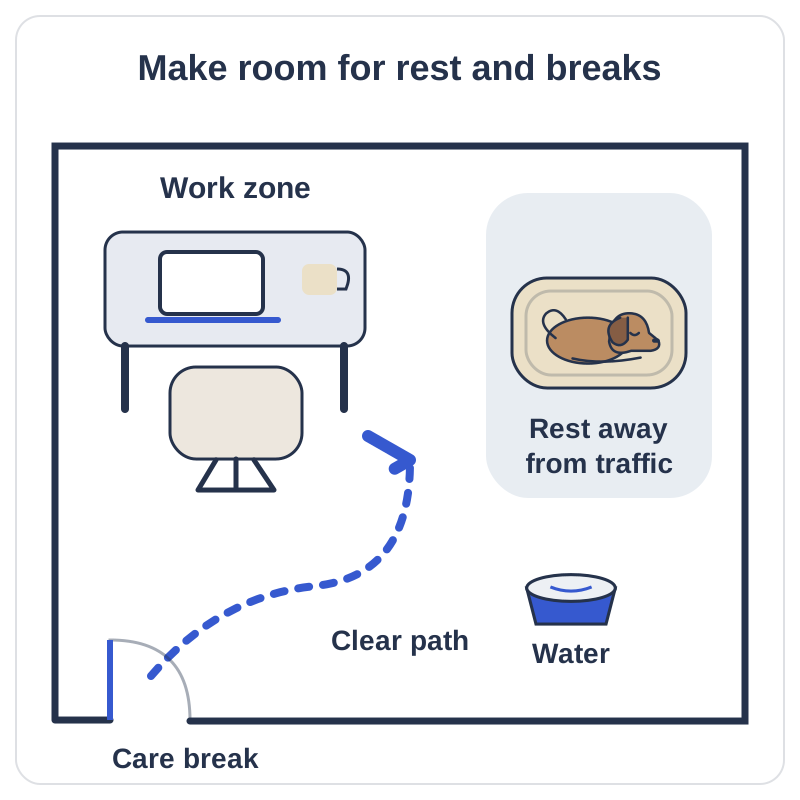
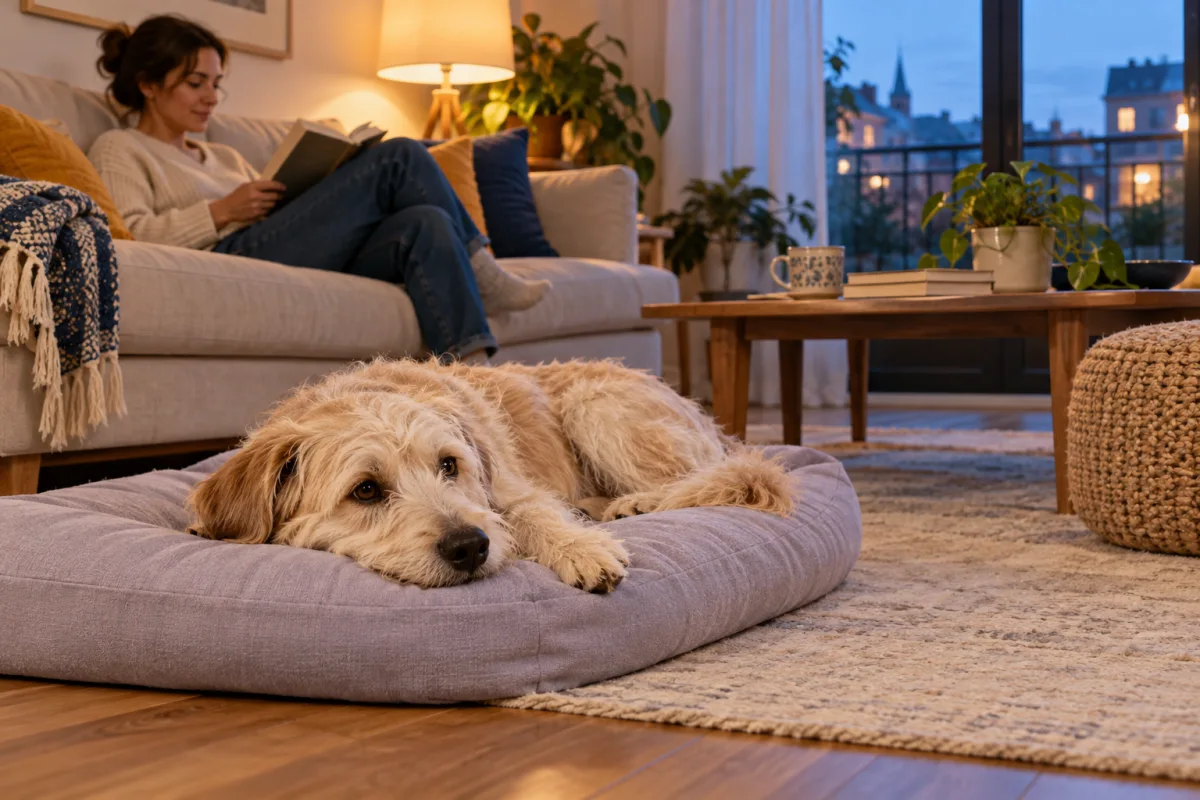
Begin with the setup
A stay is a behavior with a beginning, a maintained position and an ending you have taught. Relaxation concerns the dog’s experience, and a stationary body alone cannot tell you enough about it. A dog waiting intensely for the next reward may be performing well without resting. Observe whether they can shift position, look away, settle their body or choose another comfortable place. Avoid treating a perfectly fixed posture as the only acceptable picture of calm.
Use rewards thoughtfully to support easy moments without creating a constant request for the dog to monitor you. Keep optional practice short and allow a meaningful break. If the dog becomes tense, repeatedly leaves or cannot disengage from the exercise, adjust the arrangement. There is no benefit in repeatedly returning them to a bed that is uncomfortable or poorly placed. Sudden restlessness, disturbed sleep or difficulty finding a comfortable position can have medical causes and deserves veterinary attention.
Your field guides
Choose the guide that answers your next practical question.
A calmer home
Build a dog work-from-home routine around care, predictable breaks and comfortable rest, with realistic support for meetings and changing work demands.
A calmer home
Build a manageable dog doorbell practice plan by separating the sound, your movement and visitor entry, with safe management for real deliveries.
Put the ideas into practice
Choose a small part of the event that you can control. Before a real work call, practice briefly sitting in the chair without beginning a demanding meeting. Before a delivery, arrange the route and the dog’s comfortable location rather than waiting for the doorbell to start organizing. Keep the rehearsal separate from occasions when you cannot pause to help. An essential event should use the safest practical management arrangement, even if the optional exercise is not ready yet.
Change one relevant feature at a time: your movement, the sound, the duration or the distance. Adding headphones, speech, a closed door and a long wait together makes it hard to understand which part became difficult. Observe a comfortable version, end it clearly and offer ordinary care afterward. If even a small version produces significant distress, do not repeat it until the dog appears to give up. Find an easier setup and qualified support where needed.
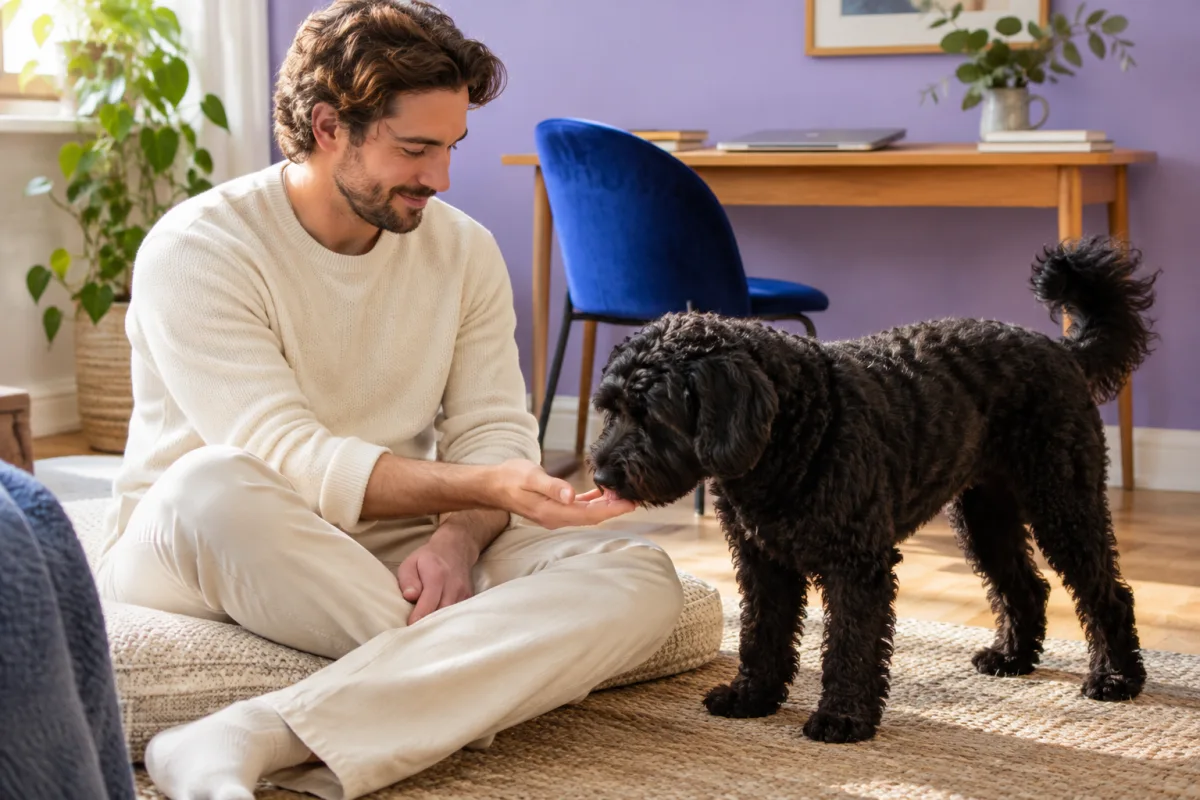
Put the ideas into practice
A busy outing can be followed by a busy home. Look at the sequence before concluding your dog needs more stimulation. They may return to visitors, a noisy vacuum or repeated interruption from people passing the bed. Arrange a quieter transition where possible and make familiar care available. An opportunity to rest should not mean isolation the dog cannot comfortably manage. Likewise, a food activity is useful only when its materials, dietary fit and supervision are suitable.
Coordinate the household so that one person’s quiet period is not another person’s play invitation. A short shared note can identify the last outing, current resting arrangement and next care responsibility. Review the routine when work patterns change or a new person moves in. If a familiar sequence stops working, consider health, environment and recent events before increasing training demands. A useful plan is allowed to become smaller while you work out what has changed.
A useful check for tomorrow
Choose one transition to observe without turning it into a lesson: a person finishing work, someone arriving home or the television going on. Notice where the dog was beforehand and what changes in the room. A new resting place may help with one transition while another needs a clearer human routine or fewer interruptions.
Compare similar moments on another day instead of assuming every restless evening has the same cause. Keep the observation factual: moved from the bed when the chair rolled, or returned to rest after the room became quiet. This gives you a specific preparation to adjust and a clearer description if you need professional support.
From an ordinary day
Imagine a dog is repeatedly unsettled when the handler begins the first morning call. The initial plan is to train a longer stay beside the desk. A closer look reveals that the dog has just returned from a lively walk, the bed faces the front door and the handler begins speaking as soon as the leash is removed. The first changes are a gentler return, a comfortable resting position away from traffic and adequate time for care before logging in.
At a separate quiet moment, the handler sits briefly in the work chair and observes the dog without starting a call. On a later occasion they add a small amount of familiar speech. They keep the option to stop and provide support. During important meetings, another adult covers needs the handler cannot meet. The dog is not required to remain still for the whole meeting to earn access to a toilet break or company.
The review records the useful pieces: which resting location was chosen, whether the return home allowed recovery and which call signal still changed the dog’s behavior. If closed-door separation is the difficult element, it receives its own appropriate plan rather than being hidden inside desk practice. This scenario demonstrates observation and planning. It does not establish that a particular dog will relax during calls or that longer silence is the right outcome.
Choose the next useful question
| What is happening | Start with | Keep reading |
|---|---|---|
| Your dog remains still but watches you continuously. | Compare the signs of a trained position with opportunities for real rest and disengagement. | A work-from-home routine that works for your dog too |
| Calls repeatedly collide with care needs. | Map the actual work blocks and arrange preparation and backup before optional desk practice. | A work-from-home routine that works for your dog too |
| The household becomes hectic after outings. | Review the full sequence and provide a manageable return and protected recovery opportunity. | A work-from-home routine that works for your dog too |
| People keep changing signals and expectations. | Agree on a few clear meanings and write down the next care responsibility. | A work-from-home routine that works for your dog too |
Before the next step
Rewards can support an easy behavior, but look at the resulting pattern. If the dog begins staring intensely for another piece, the exercise may be encouraging attention rather than rest. Use a suitable setup, observe broader comfort and allow breaks without maintaining a performance. A comfortable dog does not need to remain in one precise posture to demonstrate that the environment is working.
No. Review the kind of activity, opportunities for sleep, household interruptions and physical comfort. More intensity can add to an already demanding day. Individual activity requirements vary, and new or persistent restlessness needs veterinary consideration. A quieter arrangement or a changed sequence may help, but it should not replace appropriate care or an assessment when the underlying concern is unclear.
First ask why they moved and whether the resting location is suitable. They may need water, the toilet, a different position or distance from noise. If you are teaching a specific mat behavior, keep its meaning and release clear. Do not confuse that exercise with requiring the dog to remain in an uncomfortable place for the convenience of the household.
Choose observable details instead of a general calmness score. Note where your dog rests, what interrupts them, how the transition starts and what recovery looks like. Compare similar circumstances cautiously, because sleep, health and environmental changes affect the picture. Keep a change that makes care more workable and seek appropriate help when distress, sudden changes or safety concerns persist.
 Meet DogPath
Take a guided lesson, keep a daily practice rhythm and work on the moments that matter to you.
See how the app fits