
Care & cooperation
A cooperative care training plan for everyday dog care
Build a cooperative care training plan with small handling goals, clear pauses, useful records, and coordination with your dog’s care team.
Care & cooperation · 2 guides
Care is easier to plan when a dog’s comfort is part of the process. Cooperative practice starts with small, optional interactions and a clear way to pause. It is preparation for care, not a replacement for necessary veterinary treatment.
Prepare the task and the people
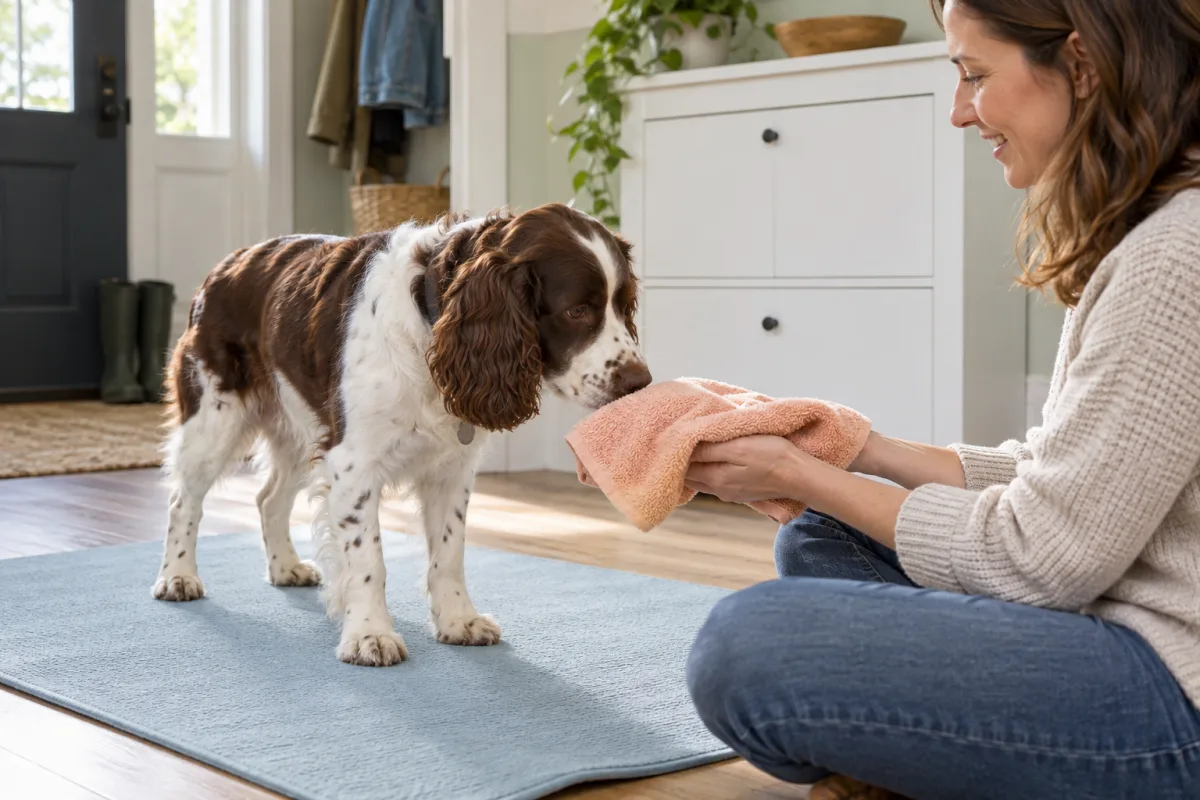
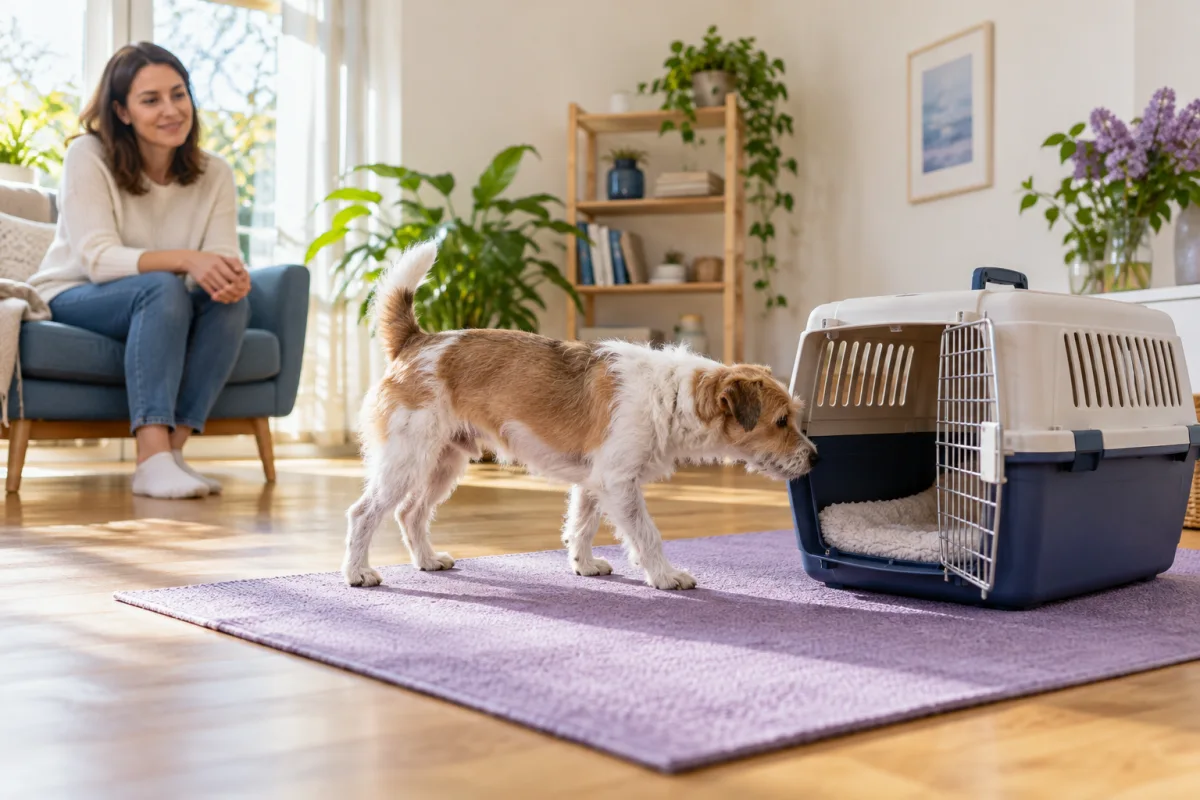
Cooperative care starts with a precise question: which small part of routine handling can your dog comfortably choose to take part in today? Looking at a towel, approaching an open carrier or resting near a care item can be a useful beginning. Those rehearsals are different from completing an examination, giving prescribed medicine or treating an injury. Keep the distinction clear so necessary care does not become dependent on finishing an optional training sequence.
Preparation also involves people. A groomer, veterinarian or sitter benefits from knowing what the dog has actually rehearsed, what remains difficult and how a pause has been signaled. A concise observation is more useful than saying the dog is dramatic or usually fine. Explain the equipment, comfortable position, handling preferences and relevant professional instructions. Do not claim that a familiar participation cue makes every new person, location or procedure equally comfortable.
Begin with the setup
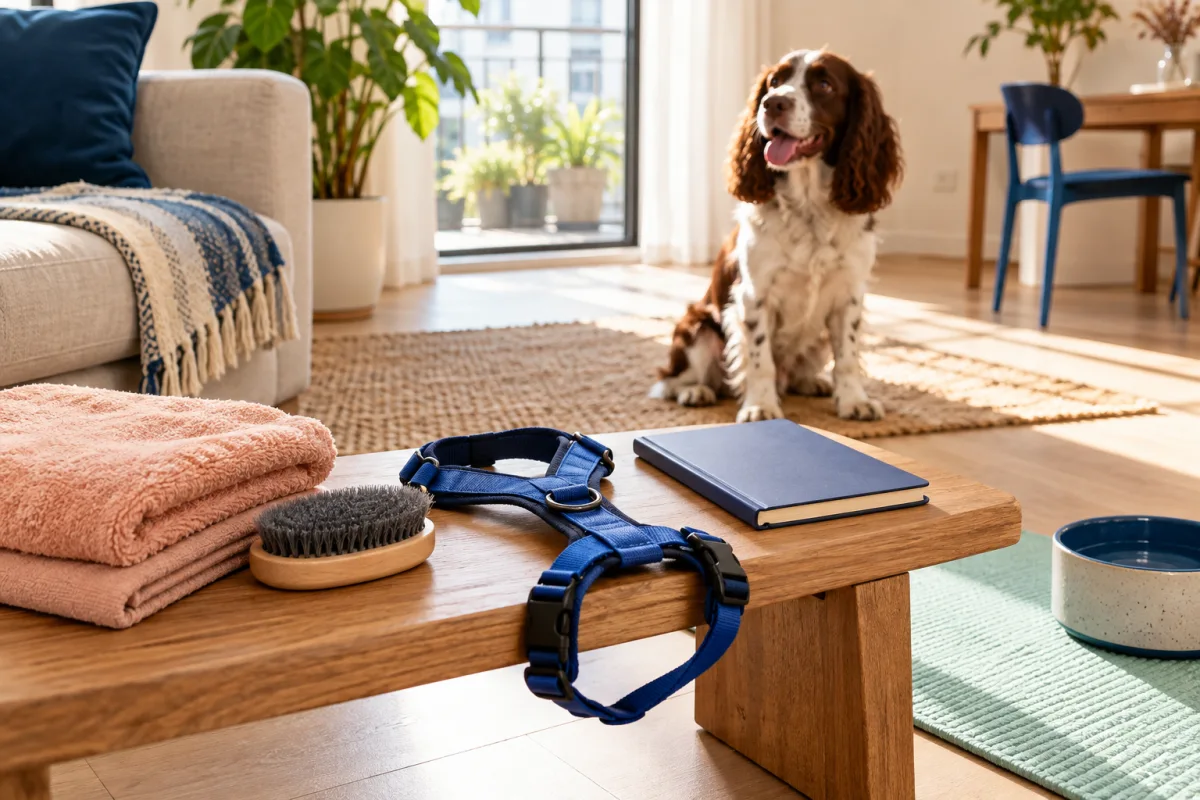
Name one non-urgent rehearsal goal rather than the whole procedure. A dog might comfortably look toward a brush placed at a distance before choosing to approach it on another occasion. That does not mean brushing the coat is ready. Identify what can wait for gradual practice and what needs a practical care plan now. If treatment or grooming is necessary, speak with the relevant professional about safe options rather than trying to teach the final behavior under an approaching deadline.
Physical discomfort changes the question. New withdrawal from touch, difficulty standing or a sudden change in handling tolerance needs veterinary consideration. Do not assume a training problem merely because the dog previously accepted the task. Likewise, medication instructions belong with the prescribing team. Ask before altering how a medicine is given, and seek advice when a dose is missed or uncertain. An educational practice plan should support communication and organization, not become an improvised treatment protocol.
Your field guides
Choose the guide that answers your next practical question.
Care & cooperation
Build a cooperative care training plan with small handling goals, clear pauses, useful records, and coordination with your dog’s care team.
Care & cooperation
Choose a reward-based dog trainer with clear questions about methods, credentials, safety, teaching, costs, realistic goals, and professional referral.
Put the ideas into practice
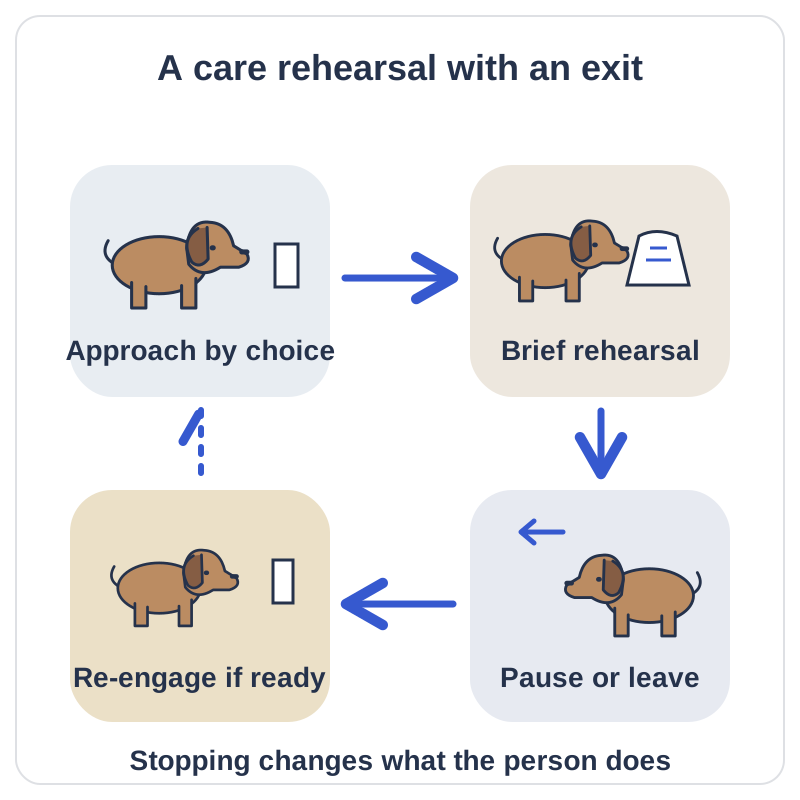
A participation pattern is useful only when the dog’s response affects what happens next. During optional practice, a dog moving away or withdrawing the agreed signal should make the care action pause. Avoid following with the item, holding the dog in place or using food to draw them into contact they are trying to avoid. Begin with a setup that leaves physical room to move and does not require the dog to pass the care item to reach safety.
Change one dimension at a time. The item’s movement, its distance, the length of contact, your body position and the person holding it can each alter the experience. A tiny comfortable step is enough information for a session. Look at the full dog rather than treating one participation posture as proof of willingness. Tension, repeated withdrawal or difficulty reengaging means review the setup. If there is guarding, aggression, panic or bite risk, use an individualized professional plan.
Put the ideas into practice
Write the actual setup: the room, surface, item position, person involved and small action attempted. Describe what you observed before and after it. “Stood on the nonslip mat while the towel stayed on the chair” communicates far more than “towel training complete.” Include the easiest comfortable version and the next step you intend to repeat. A record should help another person avoid accidentally starting at a much harder point because the summary sounded more advanced.
Before an appointment, share essential information through the professional’s appropriate contact process. Ask what the team needs, what equipment to bring and how waiting or arrival can be arranged. Keep private medical records and access details in suitable secure channels, not on a general shared browser cue card. Afterward, follow specific recovery instructions and review what could improve the next visit. A calmer-looking dog after a procedure is not by itself evidence that they are medically comfortable or ready for optional practice.
A useful check for tomorrow
A care note should distinguish the item, the movement and the setting. A dog approaching a brush on the floor has practiced something different from being brushed. Describe what the person did, how close the item was and whether the dog could leave. This helps the next person avoid assuming that one comfortable introduction covers a whole procedure.
Before an appointment, ask the relevant professional which observations would help them plan. Keep treatment instructions in the appropriate care record and clarify anything you do not understand directly with that professional. A household practice note supports that conversation; it does not authorize another person to improvise a procedure or ignore a change in comfort.
From an ordinary day
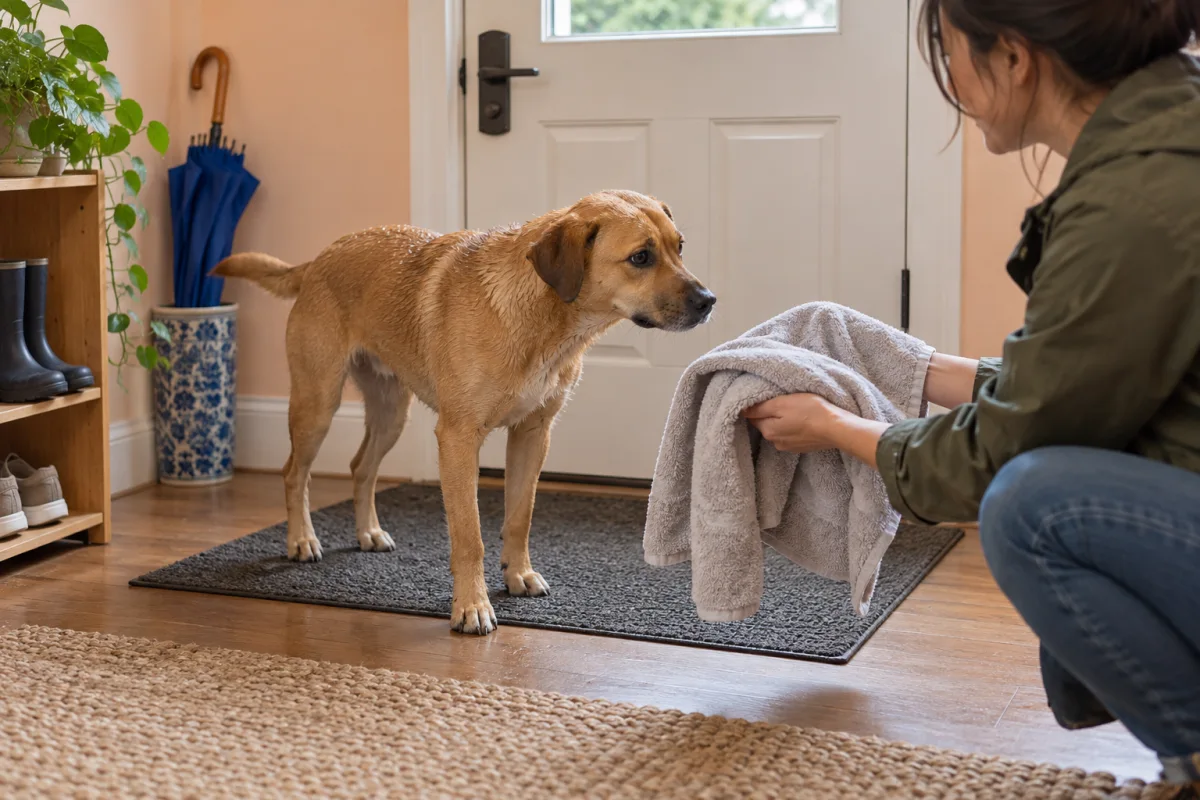
Imagine a dog moves away when a towel appears after a wet walk. The handler first checks whether discomfort, skin concerns or another health issue needs veterinary attention. Necessary drying is discussed as a practical care matter; the separate training goal is much smaller. In a quiet room on nonslip flooring, a clean dry towel rests far enough away that the dog can notice it without being approached or blocked.
The handler rewards a comfortable voluntary glance and puts the item away. On a later suitable occasion, they repeat that easy arrangement. They do not immediately drape the towel across the dog because looking was comfortable. When the dog chooses to leave, the rehearsal pauses. The household note describes distance, item position and the response, so the next adult does not assume that contact has already been taught.
Before a grooming visit, the handler explains that the dog is comfortable noticing the towel in one familiar setting but is not ready for unrestricted handling. The groomer can then plan around the actual information. Training may continue separately after any relevant care instructions are understood. This example shows how a small rehearsal and an honest handover fit together; it does not suggest that all dogs should follow the same sequence or delay necessary treatment.
Choose the next useful question
| What is happening | Start with | Keep reading |
|---|---|---|
| A care task is due before the training is ready. | Discuss the necessary procedure and safe practical options with the relevant professional. | A cooperative care training plan for everyday dog care |
| Your dog repeatedly withdraws from the practice. | Honor the pause, reduce the demand and review the whole dog’s comfort and health. | A cooperative care training plan for everyday dog care |
| The next caregiver needs a clear starting point. | Record equipment, position, the exact action and the easiest comfortable version. | A cooperative care training plan for everyday dog care |
| You want to prepare for a veterinary appointment. | Ask about arrival arrangements and rehearse small non-medical components separately. | A cooperative care training plan for everyday dog care |
Before the next step
No. Optional training should respond meaningfully to participation and pauses, while necessary medical treatment and urgent safety decisions require an appropriate professional plan. Discuss how to provide essential care when the dog is not yet comfortable with it. Do not describe an unavoidable procedure as a voluntary exercise, or delay treatment because a rehearsal milestone has not been reached.
Food can support learning, but accepting it does not prove the dog is comfortable. Watch posture, movement, tension, choice and recovery. Do not lure the dog into restraint or use a continuous stream of food to conceal escalating distress. If the dog repeatedly tries to leave or struggles to reengage, pause the optional rehearsal and make the setup easier.
Describe observable details and limits: which item, which position, which person and what small action was comfortable. Explain the pause response you have practiced, any known concerns and relevant professional guidance. Avoid claiming that a broad skill is finished when it has only worked in one easy room. Ask the groomer how they would like this information shared before arrival.
There is no universal repetition target for every dog or procedure. Choose a suitable quiet opportunity, keep the rehearsal easy and stop while participation remains comfortable. Medical restrictions, fatigue and necessary care take priority. A single useful observation may be enough. Let your record guide the next decision, and seek individual support when discomfort or safety concerns prevent a workable starting point.
 Meet DogPath
Take a guided lesson, keep a daily practice rhythm and work on the moments that matter to you.
See how the app fits