
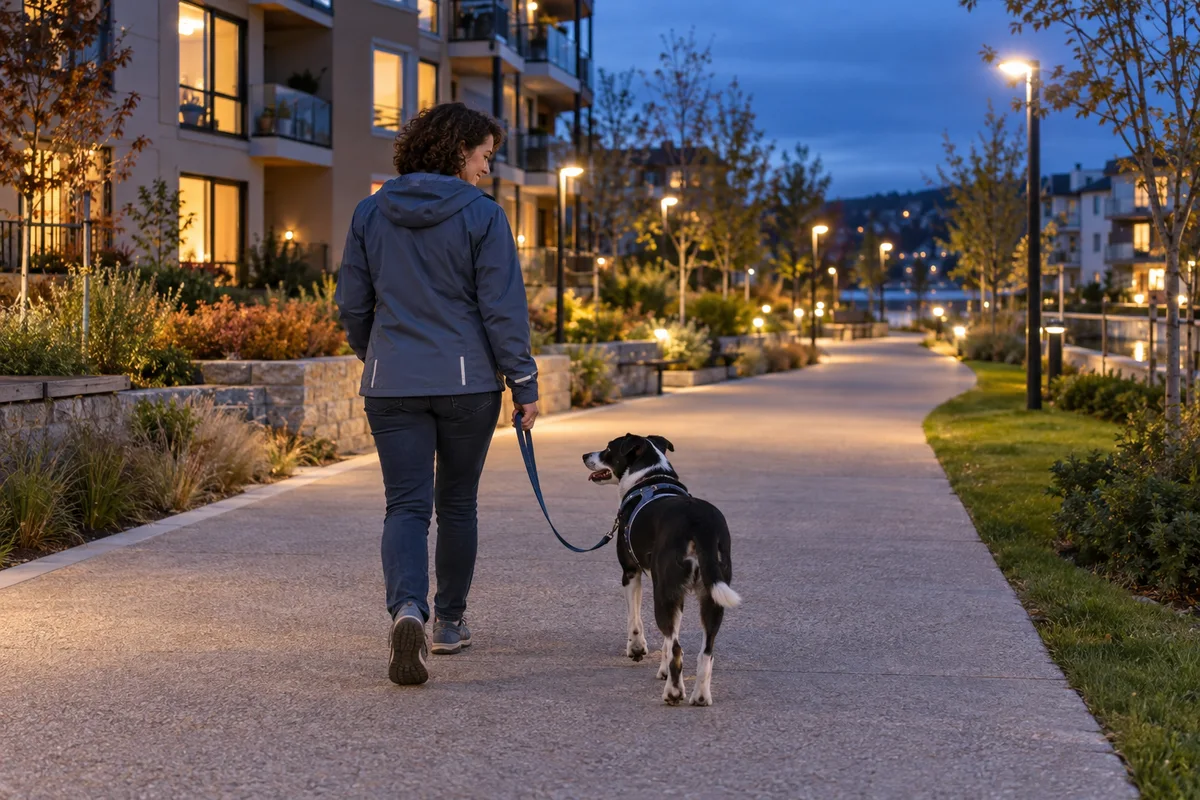
Walking your dog in the dark changes the information available to both ends of the leash. A familiar shortcut may hide a broken surface, a narrow passage may conceal another walker, and the usual sniffing patch may be difficult to inspect. The useful response is a clearer arrangement: choose where you can see, organize what your hands must hold, and leave a practical way to return. A longer outing is not automatically a better one.
This is an evening-loop planning exercise for an ordinary shared neighborhood. It is not a treatment plan for fear or a promise of safety. DogPath can provide optional guided lesson review and walk tracking, while the actual route and care decisions remain yours. Use any app before departure or after your dog is settled. The example below follows an invented household deciding between a bright courtyard loop and a darker shortcut; adapt the decisions to your own surroundings.
Walking your dog in the dark starts with a readable route
Walk through the proposed route in daylight when you can, then reconsider it under the conditions you actually face. Look for continuous lighting, enough usable width, a surface you can inspect and somewhere to turn without stepping into traffic. A lamp on the next corner does not tell you whether the stretch between lamps is clear. Include the trip through the building and the return entrance in the plan, rather than treating only the middle of the outing as the walk.
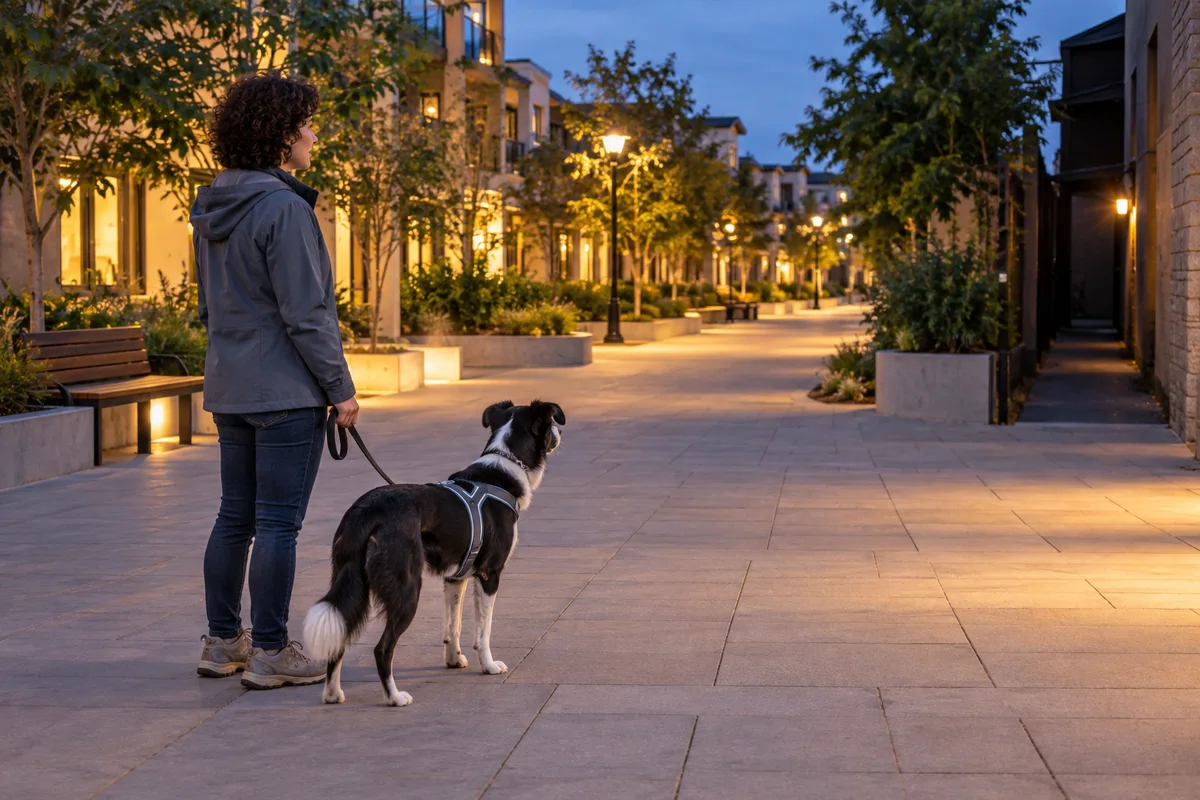
In our example, the household's short alley saves a few minutes but has a blind bend and bins along one wall. The alternative follows a broad lit courtyard and returns by the same accessible entrance. Choosing the courtyard keeps the next decisions visible. Identify an earlier turning point as well as the full loop. If lighting fails, building work appears or the route becomes crowded, you already know which part to leave out. Follow local access rules and arrange company or another care option if the available route is unsuitable.
Check visibility and connections before opening the door
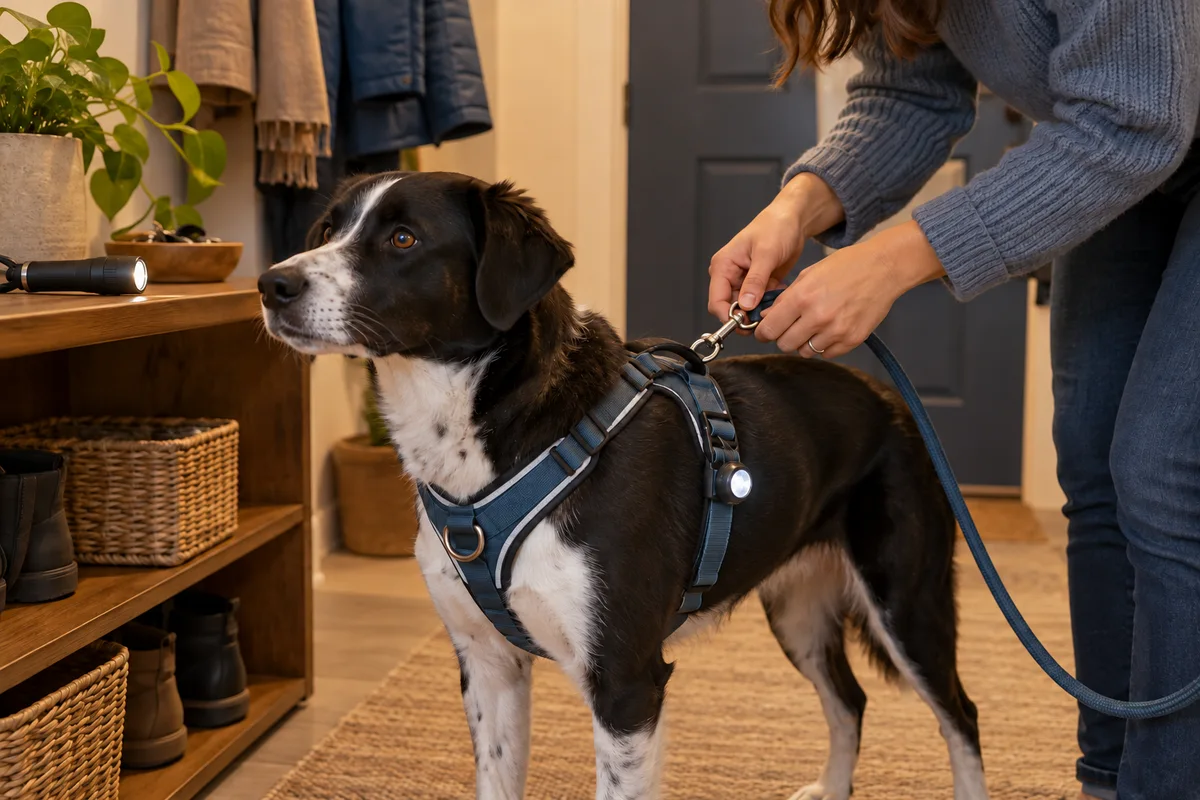
Lay out the ordinary walking equipment in good indoor light. Check that the harness or collar fits appropriately, the leash attachment closes correctly and the line is not damaged. Reflective material and a suitable light accessory can help other people notice you and your dog; they do not make a crossing safe or replace supervision. Check the handler's visibility too. Test batteries and the torch before the dog is waiting at the exit, and make sure accessories cannot snag or be chewed.
Dogs Trust includes visibility and the dog's comfort with equipment in its cold-weather walking advice. Keep that distinction practical: an unfamiliar accessory should not first appear during a necessary late outing. Let your dog investigate suitable new equipment in an easier setting, without forcing contact or delaying care until they accept it. If the current arrangement cannot be used comfortably, simplify the outing and choose an appropriate alternative while you seek help with fitting or gradual introduction. Bring suitable waste bags and any care supplies your own dog needs.
Dogs Trust: visibility and comfortable equipment for winter walks
Make the departure a care task rather than a test
Decide who is handling the dog, who has the keys and which exit you are using before the outside door opens. An evening departure can bring a different combination of deliveries, neighbors and building lights from the daytime trip. Look at the shared space when it is safe to do so, attach secure equipment before entering an unsecured area and avoid blocking the doorway while searching for a dropped item. A prepared pocket or bag can remove several unnecessary hand changes.
If the dog needs a toilet opportunity, do not add repeated sits or waiting exercises as the price of getting outside. Keep necessary care straightforward. Optional practice can happen separately at a secure interior doorway when everyone has time and your dog is comfortable. In a shared household, a short handover might say which entrance is open, whether the courtyard lights work and who will cover the next trip. It should describe the arrangement, not rate how well the dog behaved. The same practical note helps an adult who did not take yesterday's walk.
Give the leash, the torch and your attention separate jobs
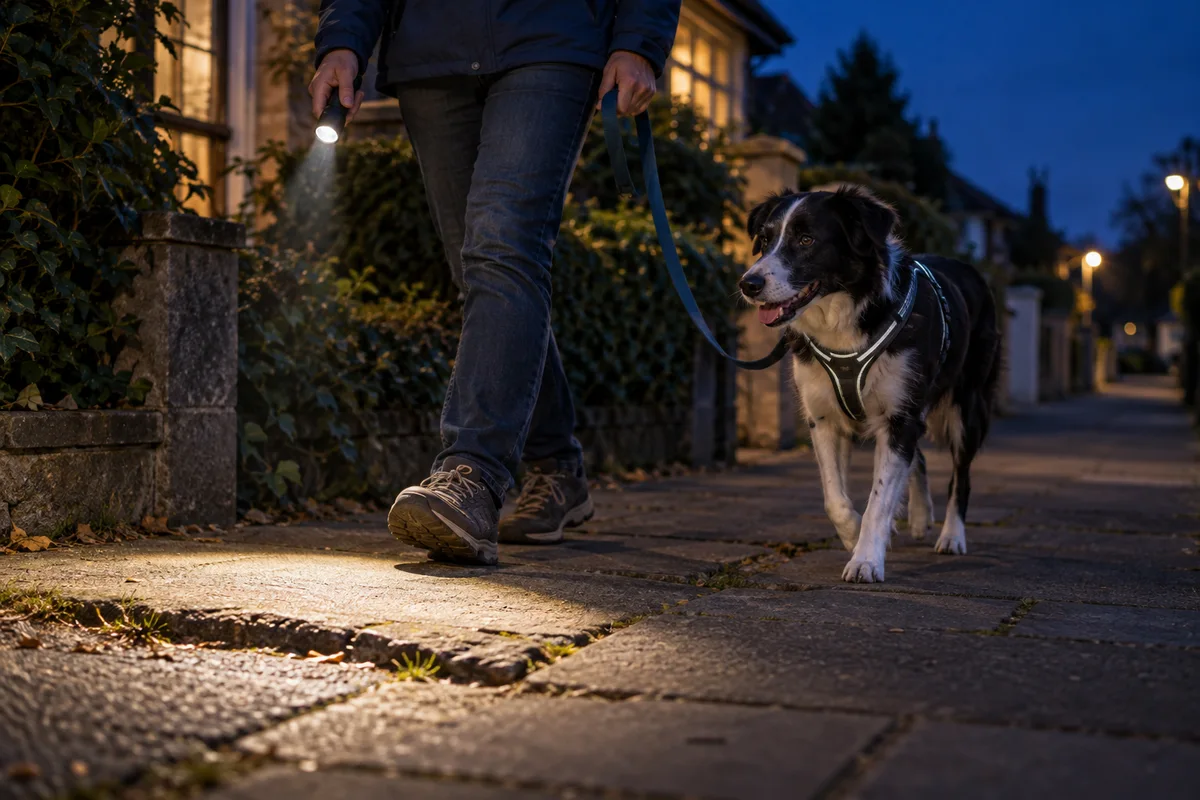
Before moving, try your hand arrangement where the ground is clear. Keep a suitable secure hold on the leash without winding it around fingers, and manage spare line so it does not trail across other people's path. Aim a torch toward the surface you need to inspect rather than into your dog's eyes or another person's face. If you cannot operate an item while keeping appropriate control, stop in a suitable place before adjusting it. Hands-free equipment still needs an arrangement suited to the handler and dog.
Keep the phone put away during active handling. A bright screen can compete with the information in front of you, and carrying several objects makes an ordinary pause harder to organize. Plan how you will pick up waste without losing the secure connection to your dog. The solution might involve a more convenient pocket, a different light position or another responsible adult. Rehearse the handling arrangement in an easier setting, rather than using a narrow dark stretch to discover which hand needs to do three things at once.
Organize leash handling in the city
Leave room before an encounter becomes a bottleneck
A visible light does not mean its owner has noticed your dog or wants to greet. Look ahead for other walkers, turning vehicles, narrow gates and places where several routes meet. Make space early when the surroundings allow it. A quiet pause or an earlier turn can be more useful than asking the dog to pass through a gap that is already closing. Keep road crossings under the handler's control and follow local traffic rules; a familiar cue cannot certify that a crossing is clear.
Watch the individual dog rather than assuming darkness is either relaxing or frightening for every animal. If your dog slows, scans or repeatedly tries to leave, consider what changed in the setting. You can stop the optional exercise, find more room or return by the easier route. Do not keep approaching a person or object to prove that nothing bad will happen. In the courtyard example, a gathering by the far entrance is a reason to use the earlier turning point, not a challenge to complete the planned loop.
Put optional DogPath support around the walk
If you use DogPath, review a relevant guided lesson indoors before choosing an optional practice goal. Decide which small action belongs in an easy rehearsal and which parts of the outing are simply care and management. A lesson on the phone is preparation, not live assessment of the pavement, your dog or an approaching stranger. You can make the same decision with a paper note. Neither an app nor a training exercise needs to be part of every necessary evening trip.
Walk tracking can provide a record to look at afterward. Start any tracking while stationary in a suitable setting, put the phone away and attend to the outing. Review it once your dog is secure and comfortable at home. Distance or duration does not explain why a route worked, and a previous record does not show whether tonight's path is lit or accessible. Add your own observation separately: the courtyard entrance was clear, the far gate was busy, or the earlier return was useful. Do not assume website notes synchronize with DogPath.
Finish the outing before reviewing the record
Return through the planned entrance and complete the practical care first. Remove equipment where it is appropriate and secure to do so, provide access to water and allow your dog an ordinary opportunity to rest. Deal gently with any necessary drying or cleaning using a method your dog can tolerate. An equipment problem, injury or new sign of discomfort needs attention in its own right; writing a neat log is not a substitute for responding to it.
Then keep one observation that will change the next outing. Instead of 'bad evening walk,' write 'the courtyard was usable until the gathering at the far gate; turned back before the narrow approach.' Separate what you saw from what you infer about your dog. Check a light that stopped working and return supplies to their usual place. If another adult takes over tomorrow, explain the changed route directly. A useful record holds the beginning, the change and the return option, without becoming a demand to increase the next walk's length.
Choose a smaller version when the situation changes
An evening plan should have a version that fits reduced visibility, a changed workday or a dog who needs different support. A shorter inspectable care outing, with appropriate activity and company elsewhere in the day, may be more workable than a long route you cannot manage. The balance depends on your dog's health, age, comfort and actual needs. There is no universal number of minutes to complete and no missed-distance debt to repay later.
If pain, sudden behavioral change, panic, aggression or a bite concern appears, arrange appropriate veterinary or qualified behavior support and keep people and animals safely separated from situations you cannot manage. Do not use this loop exercise to test tolerance. For the next ordinary outing, choose one human preparation to improve: recharge the light, confirm an open entrance, simplify a handover or move optional learning to daylight. That is a useful result even when the tracking record contains fewer steps than yesterday.
Questions
Does a light-up accessory make a dark route suitable?
No. Visibility equipment is only one part of the arrangement. You still need to inspect the surface, handle the leash, assess crossings and notice your dog's comfort. Choose another route or care option when the available conditions are unsuitable; do not treat a light as permission to ignore them.
Should I keep the app open while walking?
Prepare any optional lesson or tracking while stationary, then put the phone away during active handling. Review the record after the dog is secure and settled. The useful comparison is your observation of the setting, not constant attention to a screen.
Must an evening walk match the daytime distance?
No. Distance is one description of an outing, not a welfare score or a target every trip must meet. Organize appropriate care and activity around your own dog's needs and the conditions. Ask your veterinarian for individual guidance when health or mobility affects the plan.
What if my dog stops at the usual entrance?
Avoid dragging or repeatedly cueing forward. Look for a practical way to provide necessary care with less pressure, and consider whether the lighting, surface or activity has changed. New or persistent reluctance, especially with discomfort, calls for appropriate professional assessment rather than a harder rehearsal.