
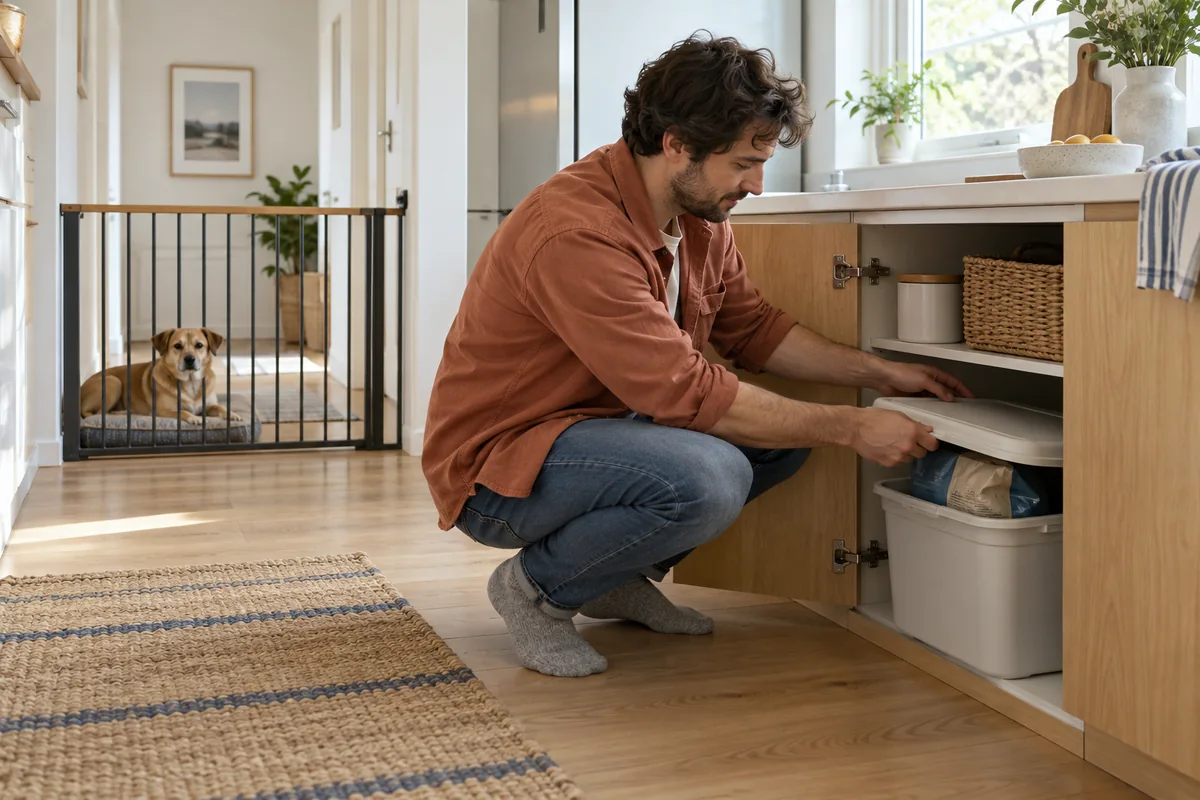
A half-open sack behind a kitchen door, a scoop nobody can find and a new bag poured over yesterday’s crumbs: dog food storage often becomes awkward because the space was never planned for the job. You do not need a matching set of expensive containers. You need somewhere suitable for the food, a way to close it, and enough information for the next adult to serve the right product without guessing.
Start with the food your dog already uses and its actual storage instructions. This guide covers organizing commercially packaged dry food, treats and opened wet food in a small home. It does not choose a diet, calculate portions or replace veterinary advice. Packaging, moisture, access and the serving routine all matter; a tidy-looking cupboard alone cannot prove that food is suitable to feed. The aim is a manageable system you can keep using on an ordinary busy evening.
Dog food storage starts with the original bag
Before choosing a container, read the unopened package and check that it is intact. Find the product name, manufacturer, batch or lot information, date marking and storage directions. Notice any separate instructions that apply after opening. Keep these details connected to the food throughout its use. A purchase receipt helps identify a shop, but it may not identify the particular batch in your cupboard.
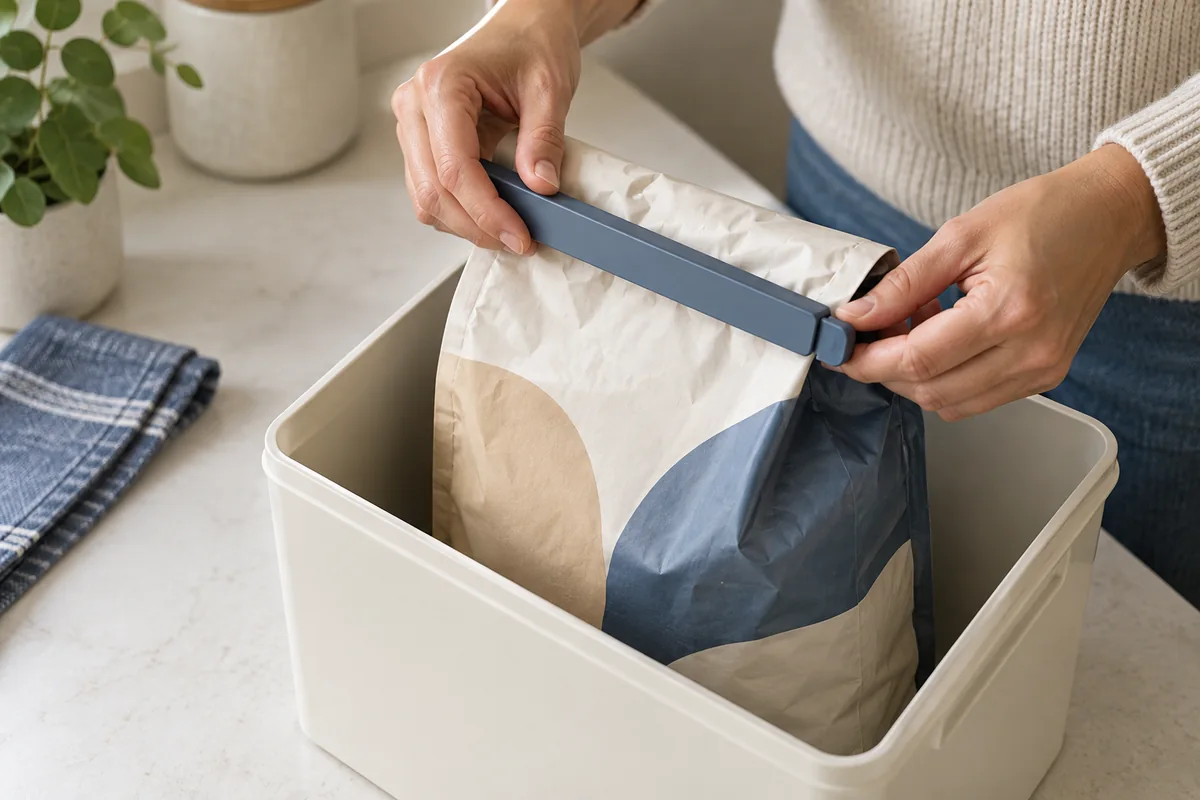
The WSAVA nutrition FAQ recommends keeping food in its original packaging and explains why traceability matters. For a practical household setup, fold or reseal the opening as the packaging allows, then put the whole bag inside a clean, suitable lidded container if additional protection is useful. Choose a container that fits the bag without tearing it or preventing the lid from closing.
A photograph of the label is a useful backup when the print sits under a fold. Photograph the information clearly before opening and keep it somewhere the adults responsible for feeding can find. It supplements the bag rather than becoming a reason to discard it. Recheck the photograph when a different package arrives: identical-looking food can have a different batch number.
WSAVA nutrition FAQ: original packaging and storage (PDF)
Choose the location before buying the bin
Walk through the kitchen at the time you normally prepare a meal. Is the proposed shelf beside a warm appliance, under a leaking pipe or in direct afternoon sun? Does steam reach it when you cook? Choose a cool, dry location consistent with the product label. A smaller dedicated cupboard can work better than an attractive floor bin that sits where everyone spills water.
Measure the usable space with the door open and closed. Include the room needed to lift the lid, handle the bag and close the cupboard afterward. Avoid squeezing supplies into a position that requires balancing a heavy container above your head. If reaching or lifting is difficult, adapt the shelf height and package size rather than making every meal a strain.
Keep cleaners, medicines and household chemicals elsewhere. A lid and a cupboard door provide separate parts of the access plan, but neither is automatically dog-proof. Check what your particular dog can reach or open. Keep the route past the cupboard clear so an adult can close it without stepping over a bowl, basket or waiting dog.
Separate the current supply from the next one
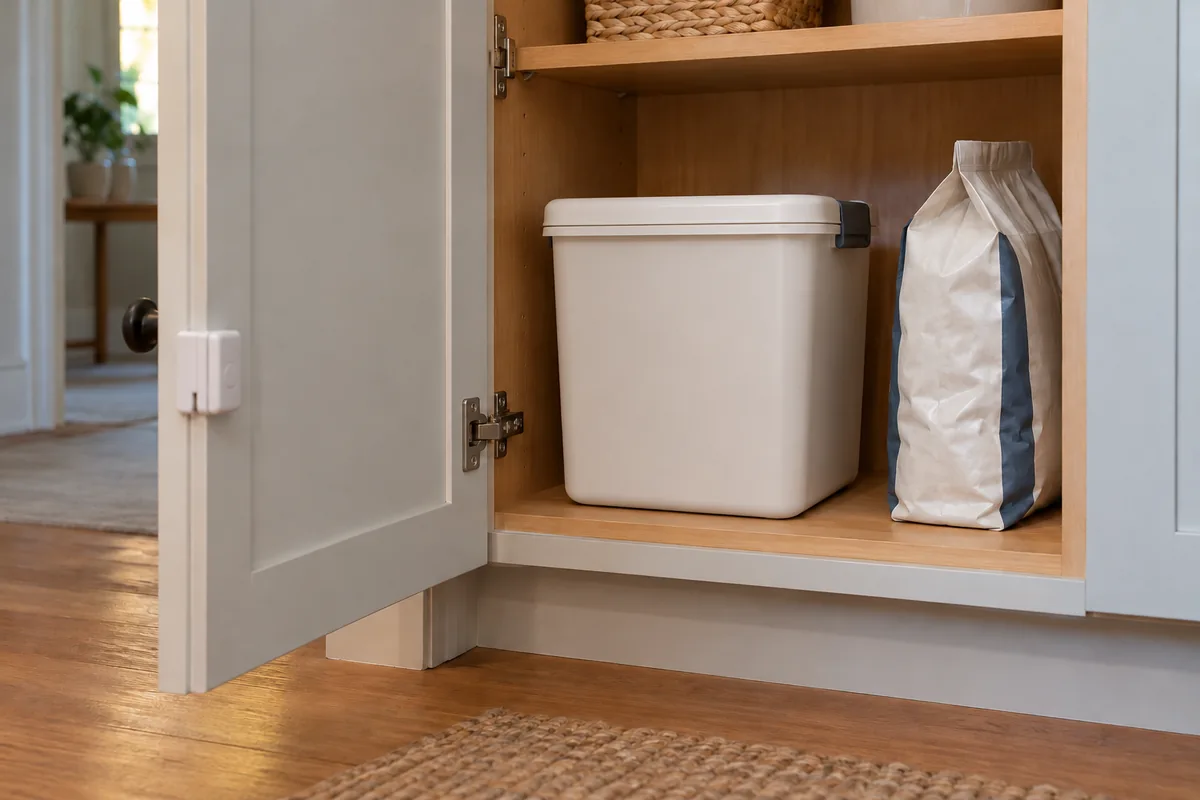
Give the open bag one clear place. Keep a replacement bag sealed and separate until it is needed, and check its date and packaging when it arrives. Avoid topping up a partly used supply with a new bag: it makes it harder to know which food is left, when it was opened and which package information applies. It also postpones the chance to clean the container properly.
Do a simple space test before choosing a larger purchase. Can the actual bag fit in the selected location, close properly and be handled comfortably? Can your household use and store it as the manufacturer directs? The answer depends on the product and your circumstances; there is no single opened-bag duration that applies to every food. Ask the manufacturer if the label leaves a relevant question unanswered.
Treats need their own identification too. Keep packets closed and distinguish products used for different pets or different dietary needs. Do not rely on two similar plain jars or the color of a scoop to tell them apart. Keep any veterinary feeding instructions attached to the relevant care plan, without changing them to make storage more convenient.
Give opened wet food a separate plan
A sealed pouch on a cupboard shelf and the same pouch after opening are different storage situations. Read the after-opening instructions before you open it, including any refrigeration requirement and how long the manufacturer says it may be kept. Have an appropriate cover or food-safe container ready. Do not leave the unused portion on the counter while the rest of the household gets busy.
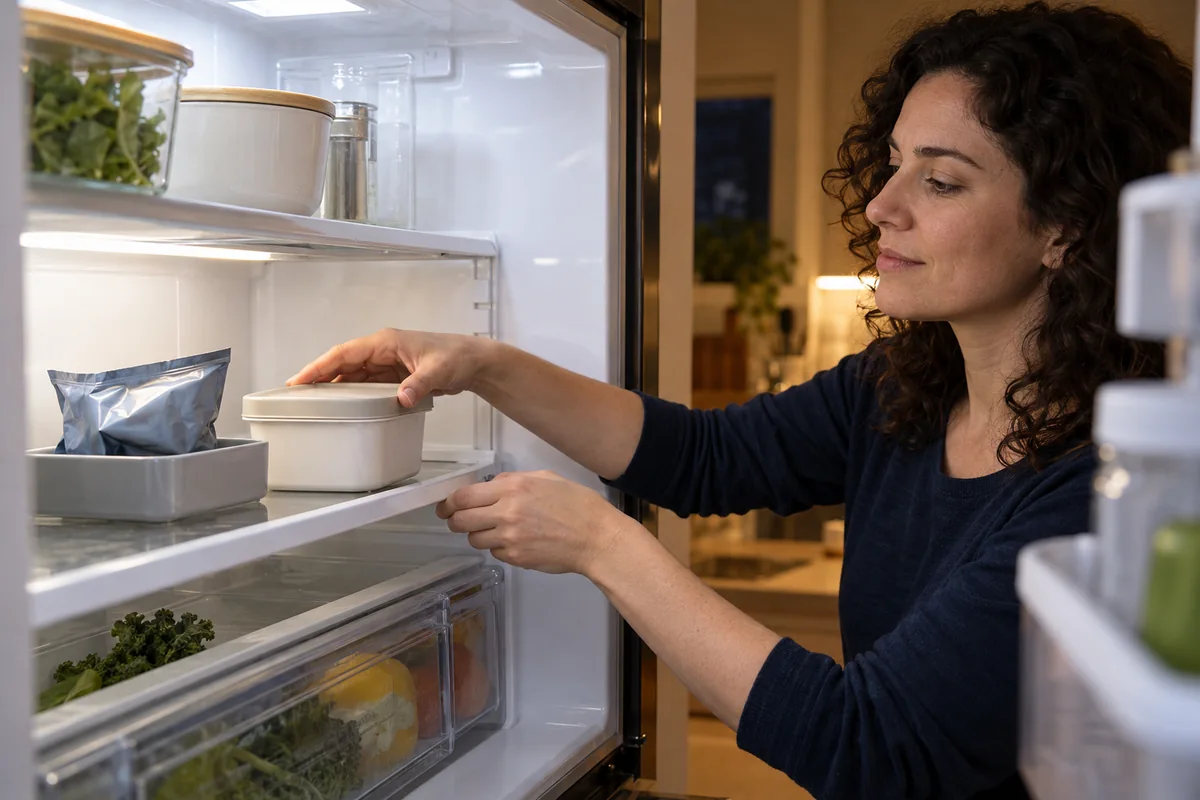
Mark when you opened the product and keep its identity available. If moving it into a covered container, retain the original packaging and any necessary directions alongside your record. Put it in the appropriate refrigerator space promptly, following the label and the refrigerator’s operating guidance. A lid is useful for containing the food; it does not make refrigeration optional or restart the product’s storage time.
AAFCO’s handling guidance distinguishes dry storage from refrigerating or discarding unused wet food. Do not apply a dry-food rule to a refrigerated product or assume every pouch follows the same timetable. If you cannot establish how long an opened product has been left out, do not guess from its appearance or ask the dog to test it. Contact the manufacturer or veterinary practice for advice.
AAFCO guidance on handling and storing pet food
Make serving and washing one complete task
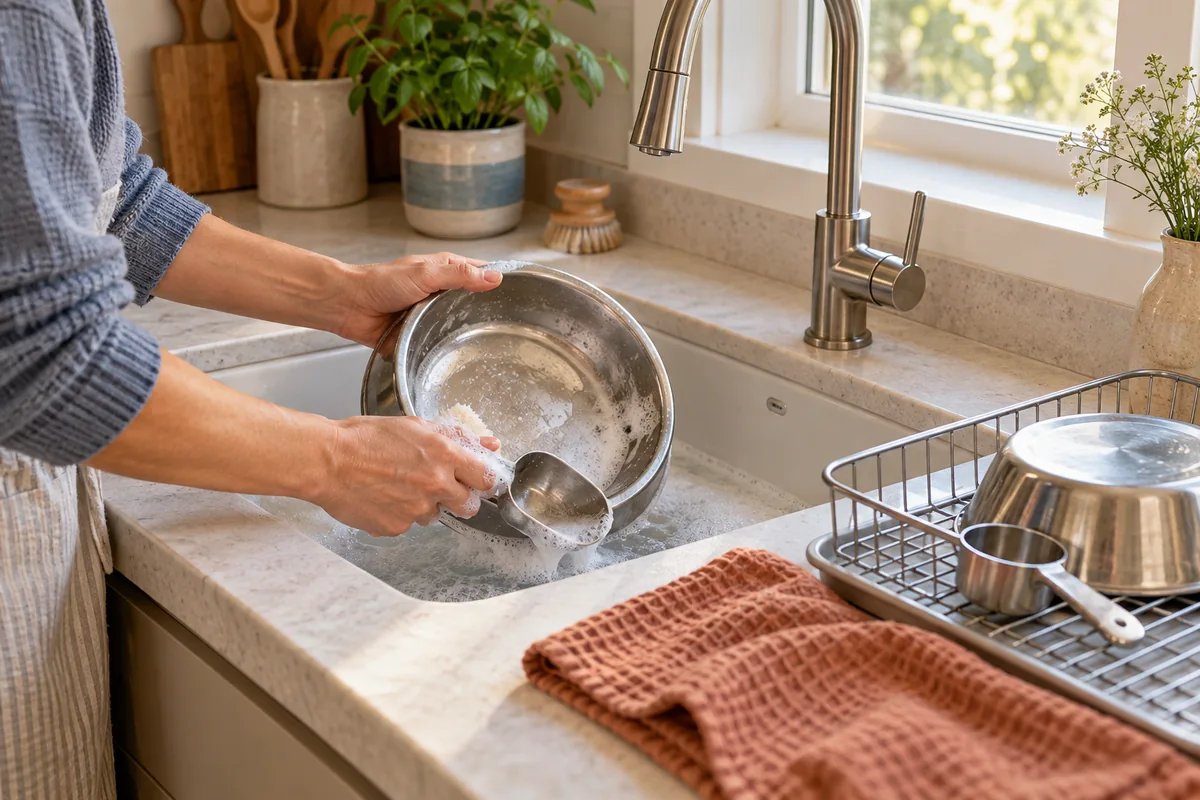
Arrange the clean bowl, dedicated scoop and serving space before opening the bag. Use a separate utensil for scooping rather than putting a used food bowl into the supply. Keep hands clean when handling food and wash the bowl and utensils after use with suitable washing-up products, following the item’s care instructions. Rinse and dry them appropriately before putting them away.
Choose where the clean scoop will live after washing. Leaving it loose on a cluttered worktop makes it hard for another person to know whether it is ready to use. A clean, dry designated spot is easier to understand. Keep the storage container clean too, especially when one bag finishes, and let it dry fully before the next bag goes inside. Do not cover residual dampness with fresh packaging.
Finish the task by closing the bag, lid and cupboard, clearing spills and securing discarded packaging. Think about the sequence rather than expecting yourself to remember every detail while answering a phone. If several people use the kitchen, explain which utensils are for pet food and where used items go. This is ordinary shared housekeeping, not a test of who loves the dog most.
Keep the dog comfortable while adults handle supplies
Prepare storage away from the dog’s immediate eating space. Open sacks, rustling packets and people moving around a bowl can create an unnecessarily busy scene. If your dog is comfortable resting in another area, arrange that familiar option before opening the cupboard. Maintain access to water and appropriate company. Do not shut an anxious dog away and expect them to tolerate distress so you can finish organizing.
Close access to supplies through the physical setup rather than repeatedly telling the dog to leave tempting food alone. The apartment training guide can help you think about everyday routes and manageable spaces. A storage redesign should not depend on teaching a new cue in the middle of every meal. Keep the dog’s actual feeding routine and needs separate from your cupboard project.
If the dog freezes, growls or guards food or packaging, give space. Do not grab the item, reach into the bowl, punish the warning or repeatedly approach as a supposed training exercise. Ask a veterinarian and a suitably qualified reward-based behavior professional for an individual plan, especially where there is bite risk. Sudden changes, pain or illness also deserve veterinary attention.
A shared-home handover that works when you are tired
Use a short note that answers practical questions: where is the open food, where are the clean utensils, has the meal been served, and what needs attention before the next meal? Keep the established feeding instructions accessible separately. The note records the routine; it does not authorize another person to invent a portion or change a prescribed diet.
For example, imagine a fictional two-adult household with a narrow galley kitchen. One person usually serves breakfast, while the other handles the evening meal. Their useful change is not another jar. They move a spare bag out of the serving space, keep the current bag identified inside its container, and agree that the person serving also closes the cupboard and deals with the used bowl. No improvement in the dog’s health or behavior is claimed from this example.
The routine builder can help you review where meal preparation fits around existing daily commitments. Keep any household storage reminder simple enough to explain aloud. If a visitor is helping, show the actual setup once. Ask them to point out the correct bag and describe where they will put used utensils; that exposes uncertainty before you leave.
When something about the food seems wrong
Do not feed a product with damaged packaging, an unusual smell, visible contamination or a concern about storage while you try to justify using it up. Keep the dog away from the food and discarded materials. Preserve the relevant package details so you can explain the problem to the manufacturer, retailer or veterinary practice. Follow applicable product notices rather than treating a different batch’s announcement as a match.
If the dog becomes unwell after eating, contact your veterinarian promptly and describe the food and timing. Serious symptoms need urgent veterinary assessment. A storage article cannot establish the cause, and reorganizing a cupboard is not treatment. Likewise, do not deliberately feed a questionable product to see whether the dog reacts again.
Make the next practical step small: select the suitable location, keep the current packaging and agree who resets the serving area. Review the arrangement when the food, package size, household or kitchen changes. Useful organization leaves the next adult able to identify the supply and follow its real instructions without searching through a collection of unmarked containers.
Questions
Does an airtight container mean I can throw the bag away?
Keep the original packaging. A suitable outer container can protect and organize the bag, but it does not replace the product identity, batch information or storage directions. A plain jar without those details makes a later question harder to investigate.
How long does opened dry dog food last?
Check the specific product’s label and ask its manufacturer if the after-opening instructions are unclear. Package design, food type and storage conditions differ. Do not apply an internet-wide number of weeks to every bag or assume its unopened date gives the whole answer.
Can I pour the last handful into the new bag?
Keep supplies separate. Finishing the old bag separately preserves its identity and gives you an opportunity to clean and dry the outer container. Do not mix questionable or poorly identified leftovers into a fresh supply.
What if I have no suitable cupboard?
Look for another cool, dry, secure location that meets the label’s directions and is comfortable for adults to access. Measure before buying equipment. If the only available spot is hot, damp or accessible to the dog, change the arrangement rather than relying on a decorative lid.