
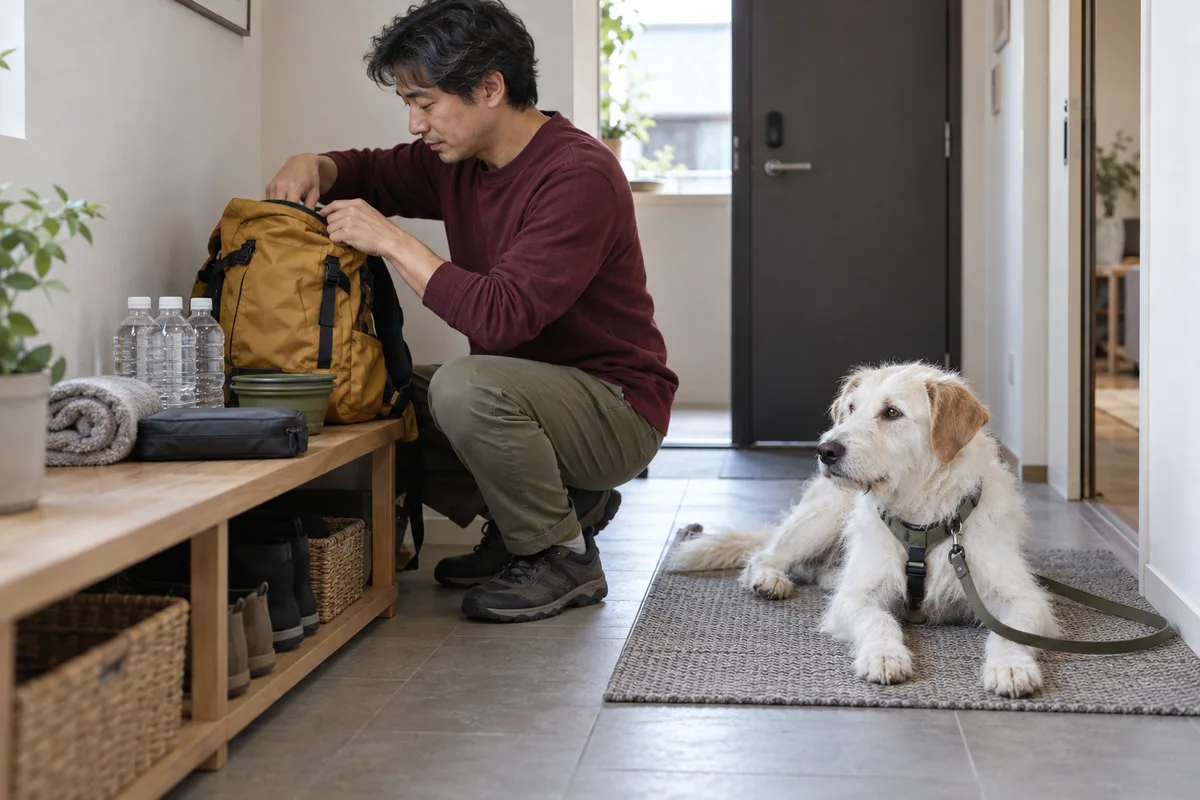
A dog emergency kit is easier to use when it belongs to an actual household plan. A bag of supplies on a high shelf may look complete, yet leave unanswered questions: who knows where it is, who can carry it while handling the dog, and where are you planning to go? Start with those questions before adding another object. The useful outcome is an arrangement another responsible adult can understand without searching several cupboards or unlocking your phone.
This guide is for preparation during an ordinary, uneventful day. It does not tell you how to navigate a fire, flood or other developing danger. Follow current local emergency instructions and your building's plan; never delay getting away from danger to finish packing or retrieve a bag. Your veterinarian should advise on your dog's individual care and prescribed supplies. The planning below can be done with paper and existing household equipment, without installing an app.
Give your dog emergency kit a clear job
Write a short description of what the bag supports: leaving home with the dog and keeping essential care information together. Then write the decisions that the bag cannot make. These include when authorities tell you to leave, which destination is available, and what assistance a household member needs. Keeping those decisions visible prevents equipment shopping from replacing a real conversation about people, transport and your dog.
Identify a possible temporary destination and an alternative, checking directly whether your particular dog can be accommodated. Ask about access, other animals and any records needed. Do not assume an ordinary pet-friendly booking or a general shelter notice covers an emergency arrangement. The American Red Cross's preparedness guidance includes both a portable kit and advance accommodation planning; use it as a starting reference alongside your own local arrangements.
For example, a friend may welcome your dog but live somewhere you cannot reach without help. Record that gap while there is time to ask for support. A named destination with an unresolved transport question is a useful planning task, rather than a finished plan.
Group supplies by the care task they support
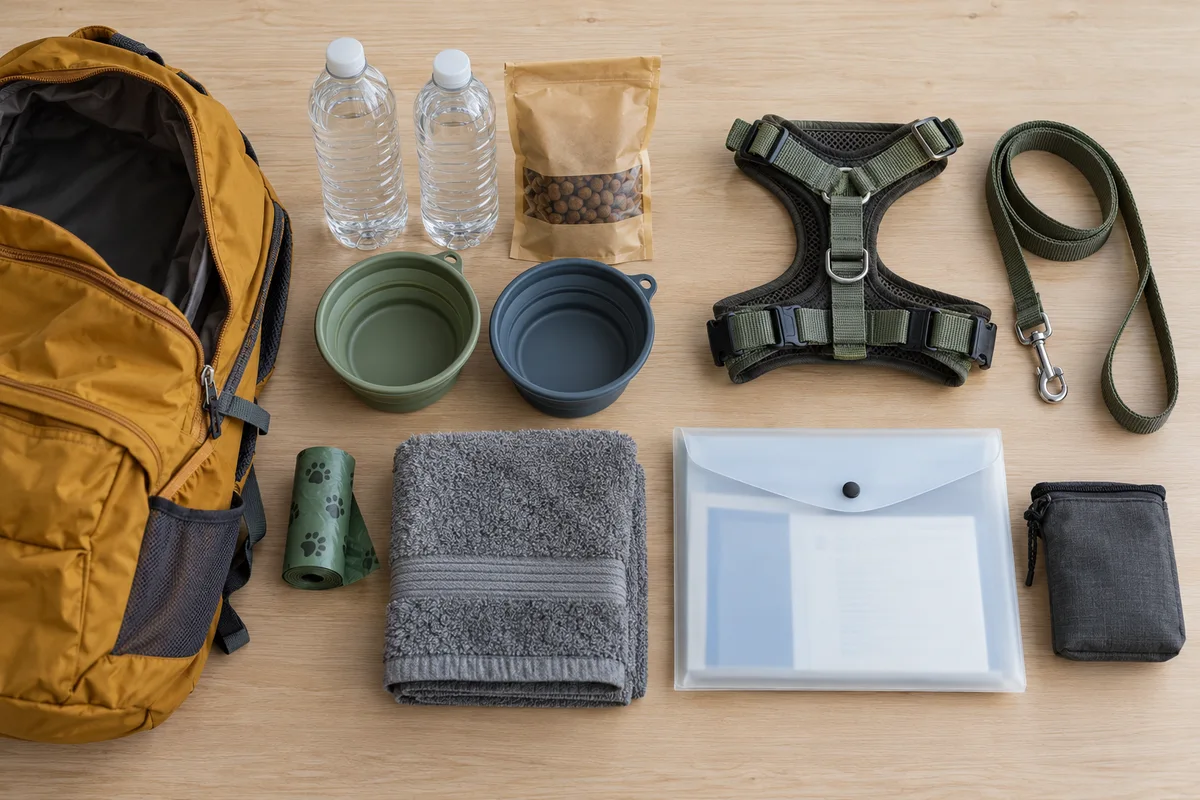
Lay out your proposed contents before choosing compartments. Think in practical groups: drinking and feeding; familiar handling and transport equipment; hygiene and comfort; records and individualized care. This makes omissions easier to discuss. A bowl has a job only if suitable water is available, and a food packet is useful only if the person helping knows which dog it belongs to and how it is normally served.
Keep food identifiable, with its original product information and storage instructions. Include equipment needed to open or serve it. Discuss suitable reserves with your veterinarian and consult local preparedness guidance; there is no single volume, quantity or storage rule that this article can prescribe for every dog and situation. Keep prescribed items with their current professional instructions, and ask your vet about any special storage or transport needs.
NSW SES lists examples of pet supplies, identification and care information in its household-pet planning guidance. Here the extra job is organizing your own selection so it can be found. Put clean feeding items together, keep waste supplies separate, and make the bag understandable when opened on an unfamiliar table. Do not add medicines or first-aid products simply because another person's kit contains them.
NSW SES: planning for household pets
Make one protected record pack readable
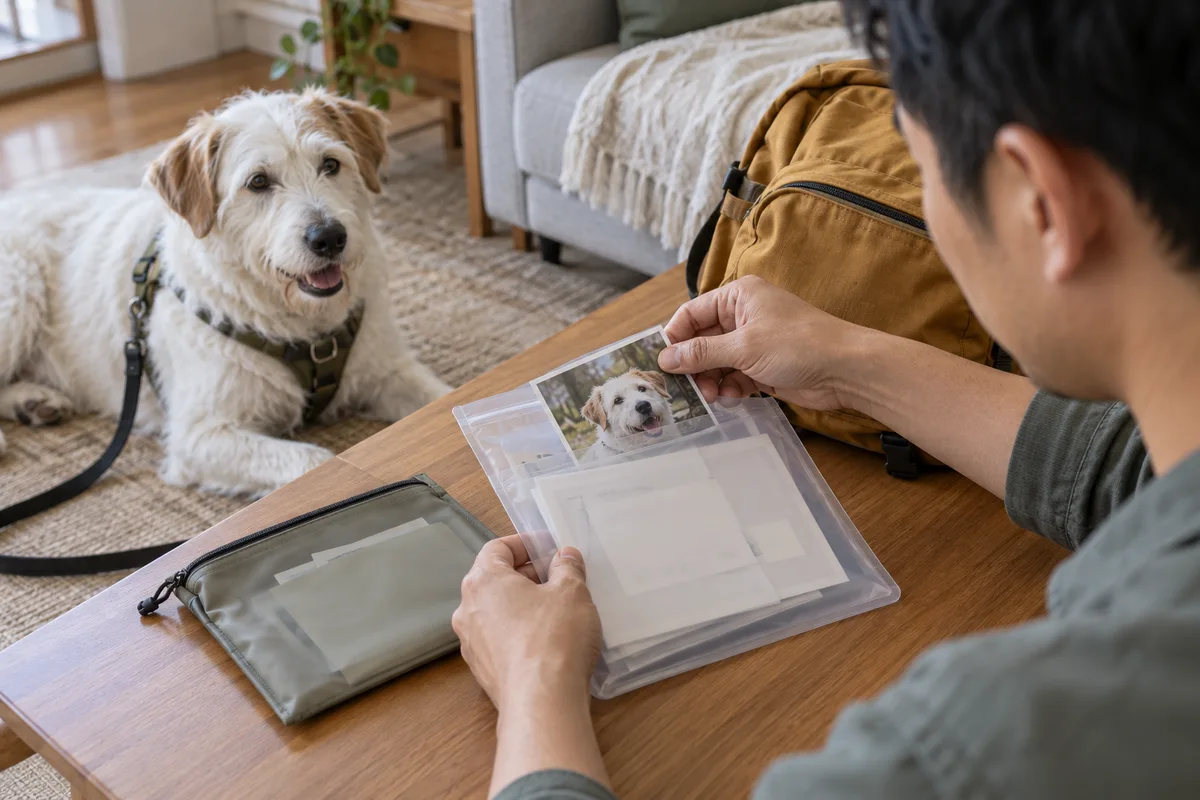
Bring together current identification details, useful veterinary records, prescribed-care instructions, a recent dog photograph and contact information. Include a reachable backup contact who has agreed to help. Keep paper copies protected from moisture, with a private outer sleeve if needed. Phone copies can be useful alongside them, but the person helping should not need your password to find the veterinarian's number.
Edit for readability. Put the most useful contact and care details at the front instead of handing someone an unsorted stack of old paperwork. Separate current instructions from superseded ones. If a vet changes the treatment plan, update this pack through that practice rather than writing your own replacement instructions. Check that names and contact numbers agree across the documents you intend to use.
Add a factual handling note where relevant: which equipment the dog already uses comfortably, what makes handling difficult, and whom to call for help. Avoid a reassuring label such as always friendly. Describe what the helper needs to do, including leaving space and preventing unplanned approaches, without expecting a written note to certify anybody's safety.
Check what the adults can actually carry
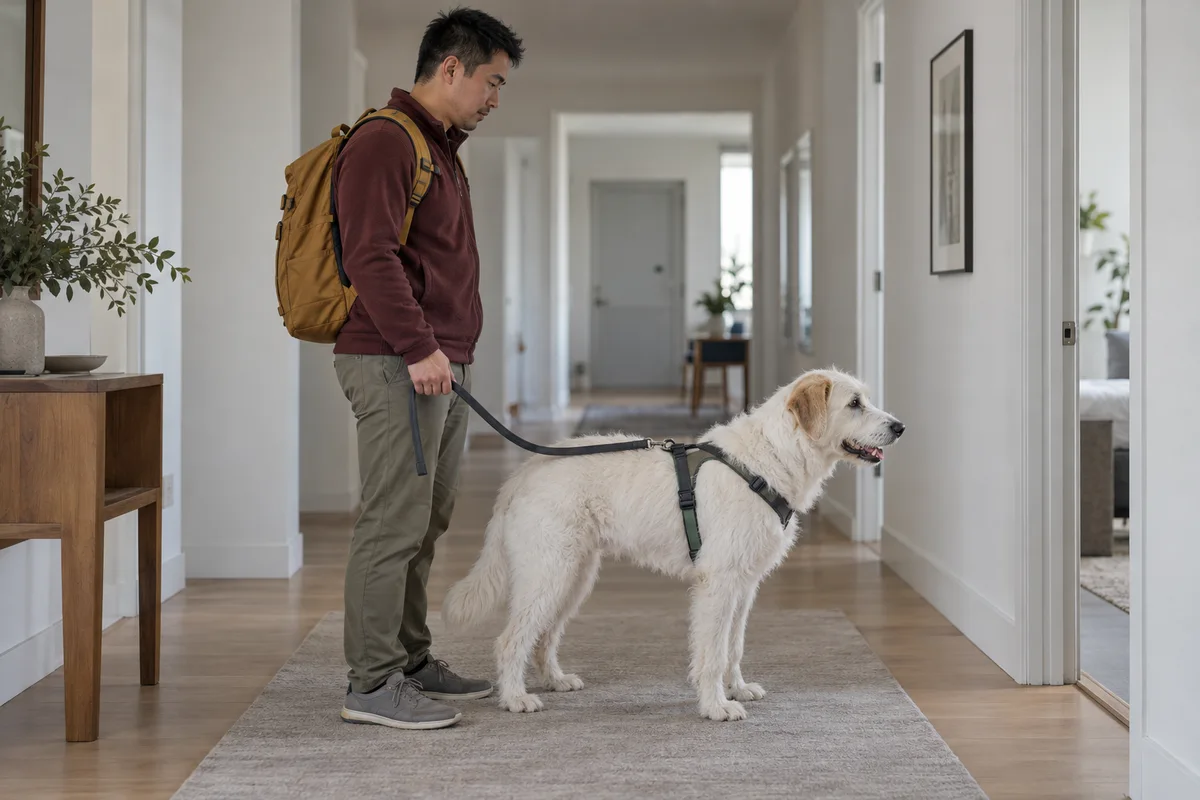
A neatly packed bag can still be impractical. On a quiet day, check whether the responsible adult can lift it comfortably, put it on and keep ordinary handling equipment available. First do this without the dog. Notice whether a strap catches, a compartment opens unexpectedly or the bag occupies the hand you normally use for the lead. Adjust the arrangement rather than practising being overloaded.
Consider the whole household, including mobility needs and the equipment required by other people. Do not assume one adult can carry everybody's belongings, a carrier and a large dog. Arrange appropriate assistance and transport advice in advance. Do not improvise ways to lift an injured or frightened dog from an online packing article; ask the relevant professionals about your dog's needs.
This is a usability check, not an evacuation race. If you later involve the dog, keep the setting ordinary and comfortable, with familiar equipment and no alarm noises or manufactured urgency. Stop if the arrangement interferes with safe handling. In a real emergency, follow the current instructions from the responsible services.
Choose an accessible place without blocking the home
Choose a place the responsible adults can reach and name precisely. The cupboard beside the entry bench is more useful than somewhere near the door. Check it with normal household clutter present: coats, shopping and laundry can turn an accessible shelf into a search. Keep passageways and exits clear, and make sure storing the bag does not create a trip hazard or obstruct the building's requirements.
The location also has to suit the contents. Follow product storage instructions, protect supplies from damage and keep food or prescribed items out of your dog's reach. A convenient hook is not a reason to ignore heat, moisture or other storage limits. Where an item cannot live in the bag, agree a specific arrangement with the relevant professional and record that dependency clearly.
In a shared home, show the location to the people who may actually provide care. Someone who visits only occasionally should not be expected to remember an informal tour from years ago. Include the bag location when you update their care information, and tell them whenever it changes.
Agree on roles before a handover is needed
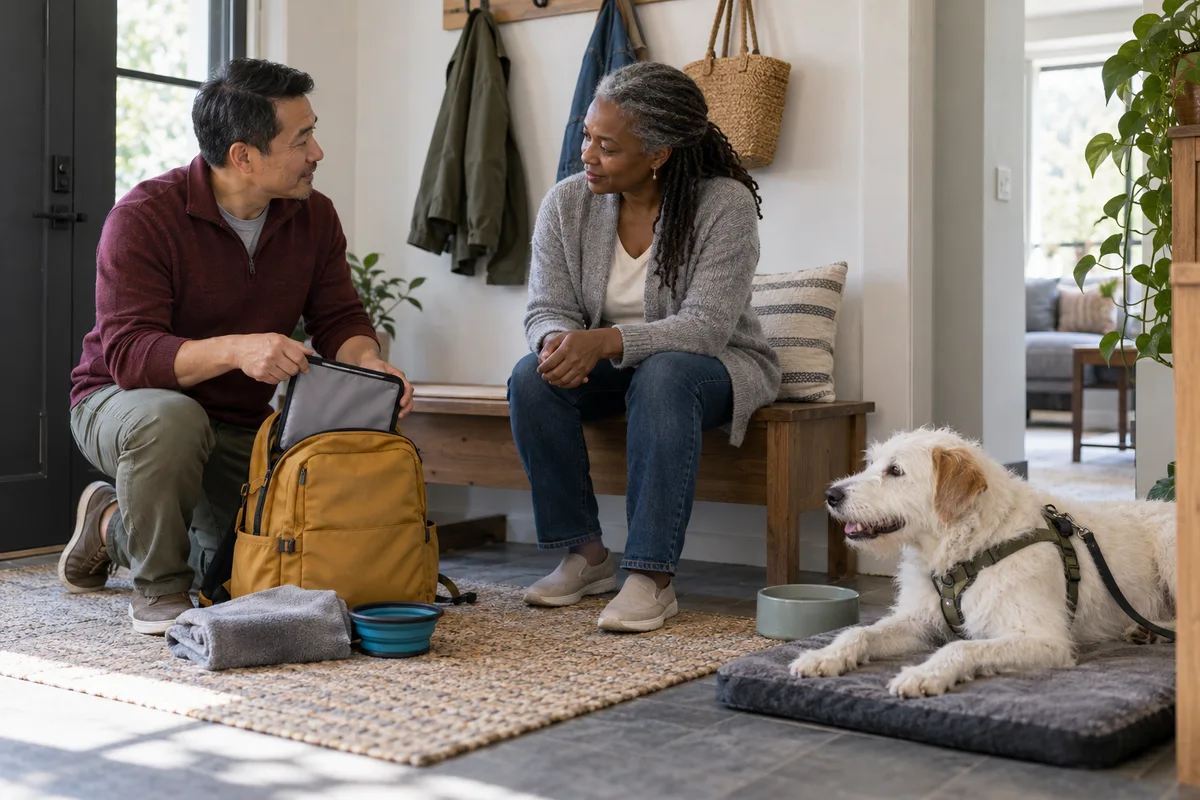
Talk through who normally handles the dog, who brings the bag, and what happens when only one of those people is home. Ask the backup adult whether the arrangement is realistic for them. They may have their own animals, access needs or commitments. Agreement matters more than putting their name on a form without asking. Record a second contact if the first option is unavailable.
Use plain descriptions rather than household shorthand. The green lead is unhelpful if several leads are green. Show the actual equipment, the record pack and the place where current care instructions are kept. Our household cue card can help adults use the same familiar words in everyday care; it does not replace an emergency plan, veterinary instructions or a proper conversation about responsibility.
Imagine a small practical interruption: the usual helper cannot collect the bag, or your phone is unavailable. Which other adult knows the information? Who can be contacted without that phone? This desk-based conversation can reveal a missing number or access question without staging a stressful rehearsal with the dog.
Make an everyday household cue card
Let familiar equipment remain familiar
A new carrier, harness or backpack can be introduced separately from emergency planning. Give the dog space to investigate suitable equipment voluntarily in an ordinary setting. Work with comfortable, small steps and rewards the dog enjoys; do not close a carrier, put unfamiliar gear on or rush handling to prove the kit is ready. The aim is a usable preparation process, not a demonstration of compliance.
Our cooperative-care guide explains how to organize choice-respecting handling practice. Apply that approach to appropriate routine preparation, rather than treating this article as a crate-training or fear-treatment program. If the dog moves away, becomes tense or cannot engage comfortably, make the situation easier and seek qualified help where needed. There is no required number of repetitions or guaranteed deadline.
Pain, sudden behavior changes, panic, aggression or bite risk need appropriate personal support from a veterinarian and a suitably qualified reward-based professional. Tell the people helping with your emergency plan about these needs. A difficult handling problem deserves an individualized arrangement, not a note telling the next adult to insist or a practice session made more intense.
Keep a replacement list beside the contents list
A contents list describes what should be present. A replacement list records what is temporarily missing, borrowed, changed or waiting for professional advice. Keep these distinct. If someone takes the spare bowl for a day trip, write down that it needs returning; do not let the closed backpack become evidence that every item is still inside.
Choose review reminders that fit the products and care needs involved. Follow expiry and storage instructions, check closures and update documents when details change. An address change, a new phone number or a revised prescription can matter before the next calendar reminder. Replace old instructions rather than accumulating contradictory versions. Do not assume an item remains suitable because it has never been used.
Finish the first review with one named next action: ask the backup adult, confirm a destination, replace a missing item or discuss storage with the vet. Record who will do it. A short unresolved list is more honest and more useful than marking the entire plan complete because the bag looks full.
Questions
Can I use an ordinary backpack?
Possibly, if it suits the contents, storage requirements and the adult who needs to carry it. Check closures, access and comfort before involving the dog. A familiar bag that works for your household is more useful than choosing by appearance; no bag replaces the wider emergency plan.
How much food and water should I pack?
Discuss your dog's individual needs with your veterinarian and check current local preparedness guidance. Consider the planned arrangement and suitable storage. This article does not prescribe a universal quantity, daily ration or reserve duration. Record the agreed plan so another adult does not have to guess.
Should all care records stay on my phone?
Keep accessible protected paper information alongside any digital copies you choose to retain. A helper may not have your password, battery or connection. Include only useful current information, protect personal details and agree who can access them; review the pack when contacts or care instructions change.
What if an emergency starts before the kit is complete?
Follow current instructions from local emergency services and your building's plan. Never delay leaving danger to finish this checklist or retrieve equipment. Explain your dog's location and needs to responders where relevant, and seek appropriate help rather than attempting dangerous retrieval or improvised rescue.