
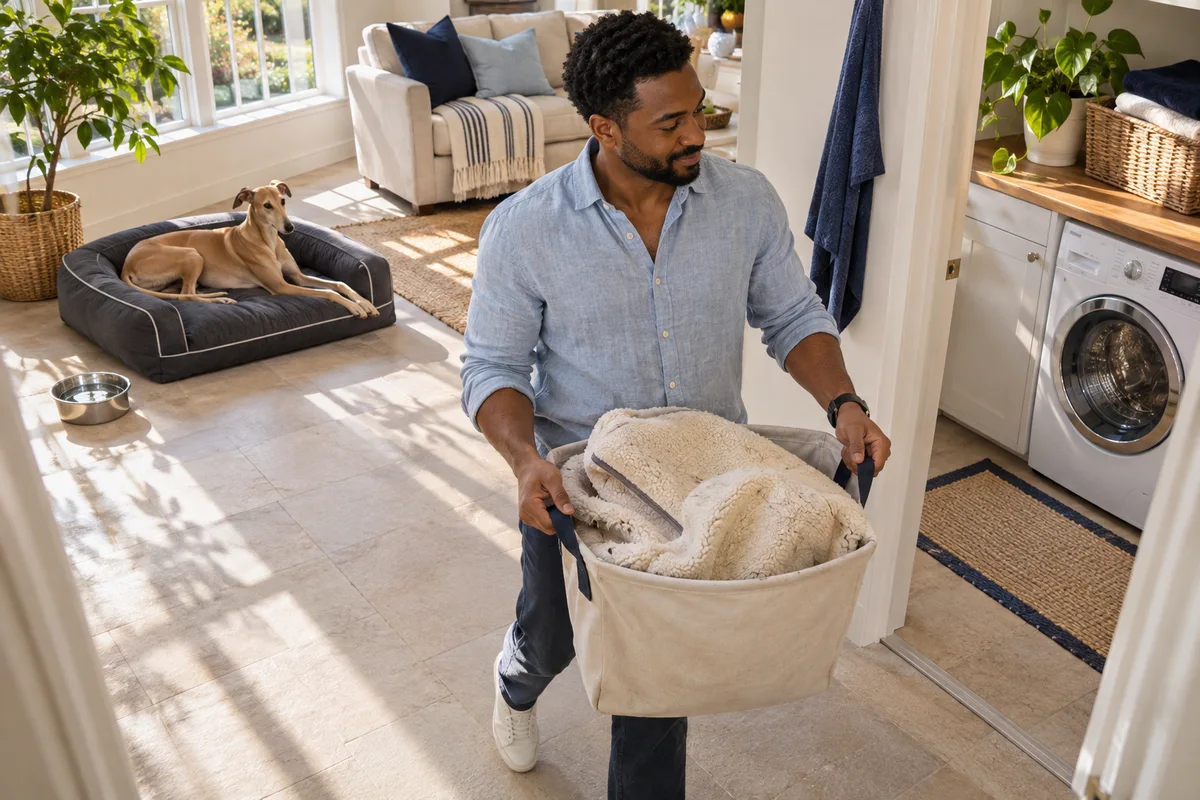
Before you wash dog bedding, decide where your dog can rest while it is unavailable. In a small home, one cover in the machine can also mean one favorite sleeping place has disappeared. The useful starting point is a complete laundry plan: a comfortable alternative, instructions for the actual materials, room to dry everything and a clear decision about when the bed can return.
This guide covers ordinary household cleaning of washable bedding, rather than bathing a dog, treating parasites or disinfecting after illness. You can organize the job with the equipment you already have and a short paper note; an app is not required. If bedding is repeatedly wet or soiled, your dog seems painful, or resting habits change suddenly, ask your veterinarian about the cause. If moving around the bed creates panic, aggression or a bite risk, stop handling it near the dog and arrange qualified personal help. Cleaning should not become an argument over a resting place.
Make a rest plan before you wash dog bedding
Identify an alternative that is already comfortable for this particular dog. That might be another proper bed in a quiet room, or a suitable supportive resting surface the dog regularly chooses. A thin towel on a hard floor is not automatically equivalent to a cushioned bed. Consider space to stretch out, ease of getting up, stable footing, temperature and access to water. An older dog or a dog with individual care needs may need specific advice about support.
Arrange this option before starting the machine. Let your dog choose to use it during an ordinary calm moment; do not remove an occupied bed to force the decision. If the dog cannot settle comfortably elsewhere, postpone the wash while you organize a workable alternative. The aim is to maintain rest throughout the job, rather than make a new resting arrangement under pressure.
The RSPCA emphasizes a quiet, comfortable place to rest and bedding that can be kept clean. Apply those principles together. A laundry timetable that leaves the dog without an appropriate resting place is incomplete, even if the washing itself is carefully organized.
Check which parts are actually washable
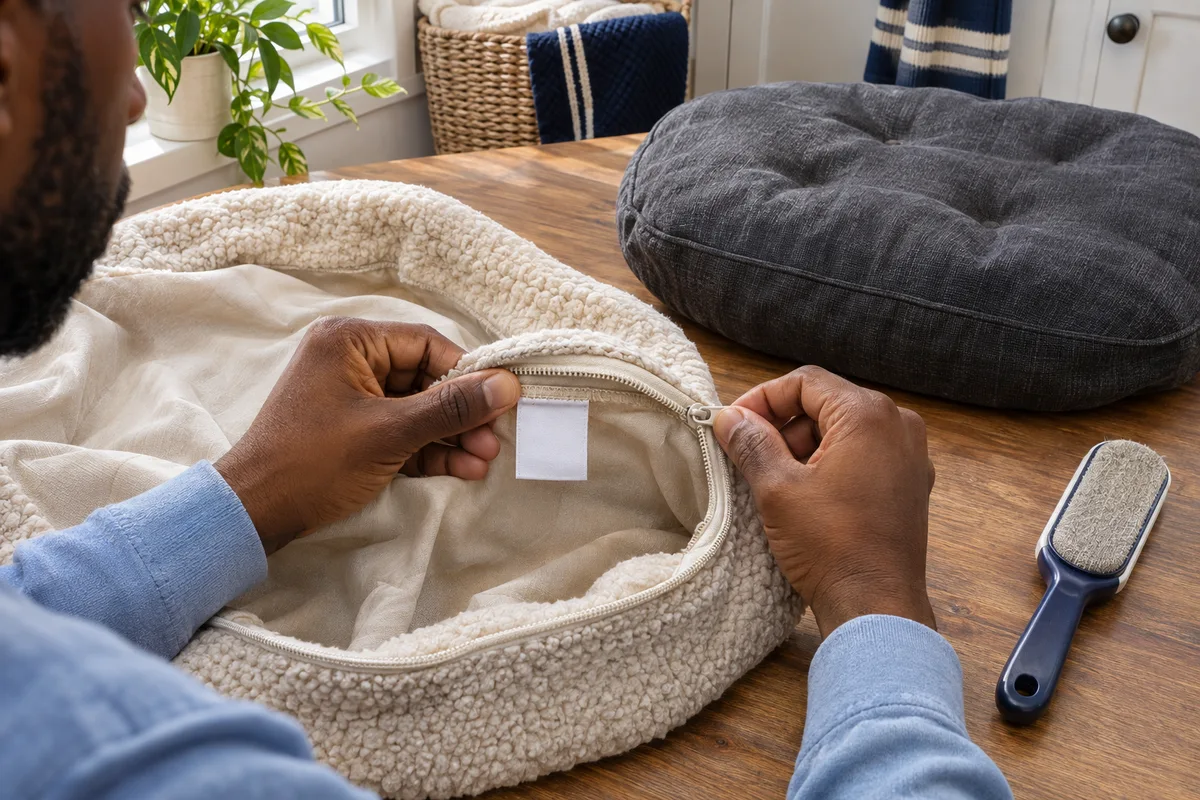
Spread out the instructions before dismantling anything. A removable cover, inner cushion, foam insert and base can have different care requirements. A zipper is useful access, but it does not prove the filling can go into a machine. Read the original label or the manufacturer’s instructions for that model. If the label has faded, look for reliable product information or ask the maker rather than choosing a hot cycle by guesswork.
Check seams, fastenings and accessible filling while the bed is empty. A loose zipper pull, ripped lining or escaping stuffing changes the task: the bed may need repair or replacement rather than another wash. Keep removed pieces where your dog cannot pick them up. Do not leave loose filling or damaged fabric out as a temporary resting surface.
Write down the instructions you actually need for today: which part can be washed, the permitted method and the drying restrictions. Keep a photograph or note of the care label for another adult who shares the job. This avoids relying on a vague memory that the whole bed was washable.
Separate the laundry job from the dog’s living space
Choose a collection point for used bedding and a different clear place for clean, dry pieces. In a narrow apartment, one basket can otherwise become both dirty storage and the container used to carry everything back. Set aside enough space to move the cover without dragging it through food preparation areas or blocking an exit. Remove loose hair using a method appropriate to the fabric and manage it without scattering it around the room.
Prepare the dog’s alternative resting arrangement away from the active cleaning area. Keep laundry products, machine doors, cords and loose textiles out of reach. If your dog finds the machine or cleaning movements upsetting, change the arrangement instead of expecting the dog to watch until they get used to it. Another adult can provide ordinary companionship in a quieter part of the home.
Plan the moment around your real household routine. The routine builder can help mark who handles care while someone does laundry; it does not prescribe how long the dog should wait for water, a toilet outing or attention. Meet those needs independently of whether the cover is ready.
Choose the method from the labels, not a universal recipe
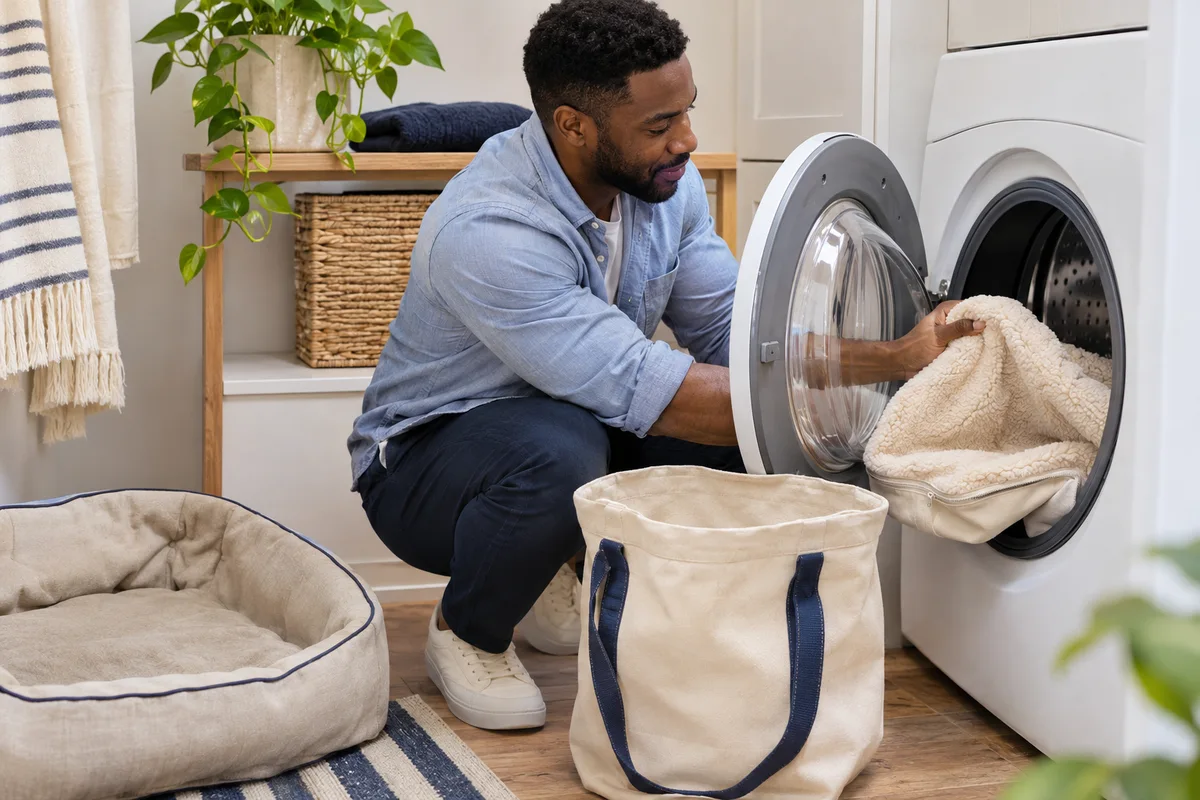
Use the care instructions for the bedding, the cleaning product and the machine together. Check that the item fits and can move as the appliance manufacturer requires. A bulky insert jammed into a small drum is not made suitable by selecting a different program. If the instructions call for a method you cannot provide at home, arrange an appropriate service or another permitted method before making the bed unusable.
CDC guidance on pet supplies distinguishes ordinary cleaning from additional disinfection and advises following item instructions. For this everyday task, focus on removing dirt with a suitable label-led wash and rinse. Do not invent a disinfectant mixture, copy a temperature from unrelated fabric or add fragrances to hide a problem. A strong smell is not evidence that a bed is hygienically ready.
If illness, contamination or a vulnerable household member means you need a specific hygiene plan, ask the relevant professional for one. This article does not provide chemical concentrations, infection-control cycles or medical cleaning instructions. Follow any personal advice alongside the actual material restrictions, rather than improvising a treatment from household products.
CDC: cleaning pet supplies and following instructions
Allow enough drying space before the wash begins
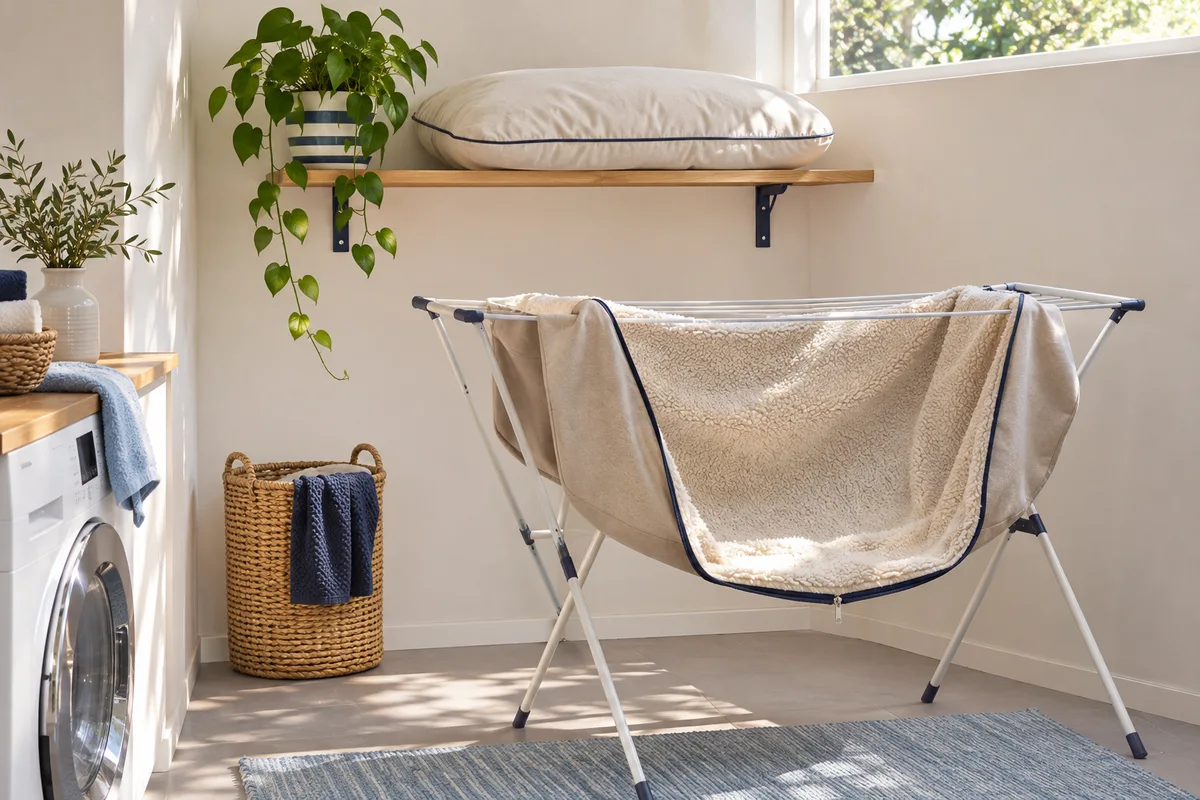
Drying is a separate part of the job, not whatever fits into the time left before bedtime. Check whether the cover and insert require different methods. If air drying is permitted, plan a place with appropriate airflow where pieces can open out without making a walkway unsafe. Do not drape bedding over a heater or use unapproved heat to meet a deadline.
A thick edge or inner pad may remain damp when the outside feels dry. Follow the manufacturer’s drying guidance and check the whole item, including seams and enclosed areas you can inspect without damaging it. If you cannot tell whether the filling is dry, do not reassemble it simply because the surface looks ready. Keep using the suitable alternative and seek product-specific advice.
In a small home, weather and available floor space matter. You may be able to wash a removable cover on a day when the insert does not need cleaning, if the instructions and its condition allow that. Do not wash clean components unnecessarily just to complete a matching set. Equally, a dirty insert should not be hidden inside a fresh cover.
Return a complete bed and leave the choice open
Reassemble only when all required components are clean, fully dry and intact. Check that the cushion sits correctly, zippers are secured and no loose threads or small parts are accessible. Put the bed on a stable surface in an appropriate resting location. Remove the laundry basket and products rather than leaving the dog to investigate them around the freshly made bed.
Offer access without placing the dog on it, blocking the route away or repeatedly calling them back. A dog may choose the alternative resting place for now. That choice is useful information, not a failure of the wash. Check practical differences such as placement, a folded corner, slippery footing or an unfamiliar product scent; do not try to overcome hesitation with pressure.
If the bed has always been comfortable and the dog suddenly avoids it or struggles to lie down, seek veterinary advice rather than treating it as disobedience. If another animal shares the home, make sure one newly returned bed does not remove everyone else’s options. Resting arrangements need to work for each animal.
Make the handover between adults specific
Use a small status note with facts rather than a general message that the bed is done. For example: cover washed, insert checked according to its instructions, cover still drying, spare bed remains available. This tells the next adult what is usable and what still needs attention. A machine finishing its program is only one stage in the process.
Keep the care information with the household instructions so nobody has to guess next time. Record a repair that needs checking, the location of a spare cover and the agreed drying method. If a shared laundry room or outside service is involved, check its own rules for pet bedding before taking items there. Do not assume public equipment accepts every filling or fabric.
You can keep general household tasks alongside the printable resources you already use. A brief paper checklist is sufficient: alternative rest ready, item instructions checked, cleaning complete, drying confirmed, bed reassembled. Leave the final item unchecked while anything is still uncertain. The value is a clear handover, not another complicated tracking system.
Keep a simple household checklist with your printable resources
Review what made this wash manageable
Afterward, identify the actual bottleneck. Was it a missing label, too little drying space, a cover that was awkward to remove or no comfortable alternative for the dog? Solve that specific issue before the next wash. A spare suitable cover may help one household, while another first needs a genuinely usable second resting place. Buying more equipment is not automatically the answer.
Inspect bedding regularly and clean it appropriately when its condition or your household’s needs call for it, alongside any product or professional instructions. Do not wait for an overwhelming odor, but do not use this guide as a fixed medical cleaning schedule either. Persistent soiling, unusual smells linked to your dog’s health, itching or a change in toileting or sleep deserve individual advice.
For the next ordinary wash, keep one achievable improvement: find the instructions, clear the drying rack or agree who checks the final dry bed. That small preparation makes the whole job more coherent. Your dog should retain access to comfortable rest while the household manages the textiles around it.
Questions
Can I put the whole dog bed in the washing machine?
Only if the instructions for that exact bed and all its components allow it, and the appliance can handle the item as specified. A removable washable cover does not mean foam, filling or the base is machine washable. Ask the manufacturer when the label is missing rather than guessing.
What should my dog use while the bed is drying?
Arrange a suitable, comfortable resting option before washing. It should meet your dog’s support, space and access needs and be somewhere they can rest undisturbed. Do not replace a substantial bed with an unsuitable thin cloth or remove an occupied bed to force a change.
Does a dry cover mean the bed is ready?
Not necessarily. Inserts, seams and thicker sections may need different drying arrangements. Follow the product instructions and confirm that all components are fully dry and intact before reassembly. Keep the alternative available if you are unsure; a bedtime deadline does not make damp filling ready.
Should I disinfect the bed every time?
Ordinary cleaning and disinfection are different tasks. Follow item and product instructions for normal washing. If illness, contamination or particular household risks require a specific hygiene plan, seek professional advice. Do not mix cleaners or invent stronger concentrations as a substitute for that plan.